
The Rich Are Not The Problem
Without them there are no private sector jobs.


For decades you have been brainwashed. Told there is inequality. Privilege.
Some even believed the rich is the cause of their problems. If you did I hope to present some info that will help you seach deeper. Maybe the cause of the problem is somewhere else. I ask you to read and decide. All by yourself.
Take all the money away from the rich

Let's destroy them forever. Let's tale all their money away. No more industries for them. No more companies. They will be like you and me forever. Seeking for jobs like all of us.
Does it make you happy?
What happens then?
If we forcibly seized the net worth of every billionaire in USA and redistributed it amongst US Citizens, each would get about $17,000.
One time payment. No more benefits from the rich ever again!
No more private sector jobs. Who would have money for a company that would hire you if we took it away? Your mother?
So please tell me again how that's going to solve all your problems.
What is wealth?
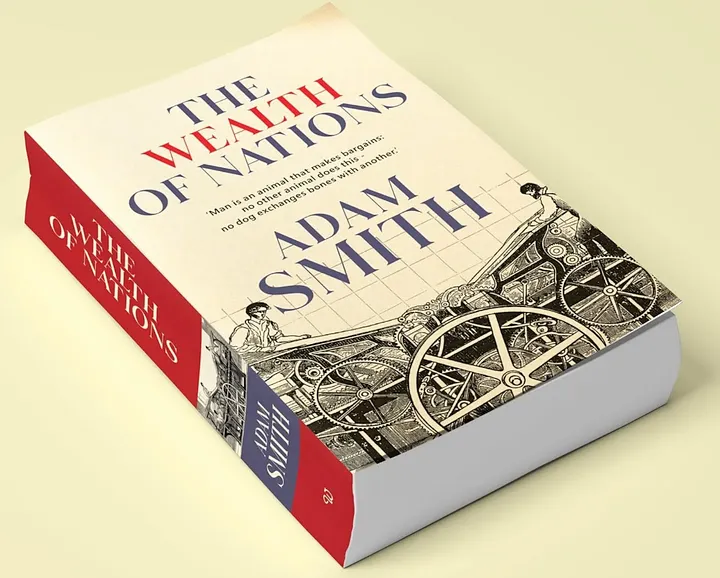
The wealth of a nation is the sum of goods and services that they produce in a given time interval.
When we measure that interval in years we talk about yearly Gross Domestic Product (GDP).
How does Capitalism work?
It does not take a genius to realize that the rich are not the problem.
The problem are the poor. Yes! The poor!
Capitalism needs to increase the number of rich people, and it needs to decrease the number of poor people. There is nothing inherently wrong with being rich.

Or are you telling me that you want to be poor?
A capitalist wants profits and sales, the LAST thing he wants is for there to be poor, because the poor do not consume, poverty produces insecurity and insecurity increases costs.
The ONLY people who are interested in having lots of poor people are left-wing politicians, because the poor are cheap votes.
On the right it is convenient that there are people who buy, who can consume, on the left it is convenient that there are people with poverty because they are their merchandise.
“It is not money but the volume of goods and services which determines whether a country is poverty-stricken or prosperous.” — Thomas Sowell

How does socialism work?
A popular fantasy circulates online every few months: take half the wealth of the top 1 percent, divide it equally among everyone, and poverty disappears. The math feels intoxicating.
Some, like we mentioned before, think that we should tale all the money and properties away from the rich at once.
A sudden once in the lifetime check for roughly $17,000 per person in the United States sounds like justice delivered by heaven.
But it is a one time payment. Not one more penny from the rich (which no longer exist) ever again!
The problem with socialism is that you instantly run out of other people's money and then you can only distribute misery and suffering.
The socialist dream of spending the rest of your life playing video games and hanging out with friends without ever having to work vanishes.
The year after you distribute all the rich people money, most recipients would be broke again. Not because they are immoral or stupid, but because consumption without production leads to poverty. Always. No society in history has ever consumed itself into prosperity.
That is why we need to repeat it:
The wealth of a nation is the sum of goods and services that they produce in a given time interval.
That means WE using our machines and resources need to produce those goods and services.
Consumption without production leads to poverty. Always.
This is the part that makes people uncomfortable. We are not poor because the rich exist. We are poor because we do not produce enough.
Yes, the rich should pay higher taxes. Historically, they did. In the mid-20th century, top marginal tax rates in the United States reached 70 to 80 percent. Yet that alone did not create prosperity.
We were even worse then! There were more poor!!
WW2 Changed everything
After WW2 the US finds prosperity. What mattered was that the economy was expanding its productive capacity: factories, infrastructure, energy, technology, logistics, and skilled labor. Taxes were high, but production was higher. The rich felt confident and invested. Jobs were created.
But when a nation looses confidence, the rich cancel the investment and unemployment soars. Poverty returns.
This is why the US enemies constantly wage a negative propaganda against us.
The stupidity of redistribution
Today the debate is inverted. We argue endlessly about redistribution while largely ignoring production.
We treat wealth as a static pile of money rather than as a dynamic process of creating goods and services. As if we coud forever use it and still have it!
But money does not satisfy people. Housing does. Energy does. Medicine does. Food, transportation, data networks, and machines do.
The wealth of nations is not the number in a billionaire’s bank account. It is the sum of goods and services an economy produces. When production grows, living standards rise across the board. When production stagnates, redistribution becomes a zero-sum fight over scraps.
The Government Failure

This is where government failure enters the picture.
Catastrophic endemic corruption and inefficient management.
The problem is not taxation itself. The problem is what taxes are used for.

Governments are exceptionally good at consumption and exceptionally bad at investment. They excel at transfer payments, bureaucratic expansion, and symbolic programs.
Governments are far less capable of channeling capital into projects that measurably increase productivity: reliable energy, modern infrastructure, advanced manufacturing, scientific research with real-world application.
The problem is not taxation itself. The problem is what taxes are used for.
When tax revenue is not converted into higher productive capacity, it merely reshuffles purchasing power.
Socialism is a political system of envy and hatred: in a socialist system people envy those that have been successful.
Socialists claim they're going to distribute wealth, and in reality all they want to do is take the wealth away from successful people.
Since socialist make zero effort to produce more, there will be less, and they all fail.
You give money to the poor and you achieved nothing! Maybe yoy get more poor people. This is what The World Bank discoverd in Africa.
We did this several times during the pandemic. We did NOT get wealthier because of that!
That reshuffling may temporarily reduce inequality on paper, but it does nothing to raise the real wealth of society. In some cases, it actively reduces it by discouraging investment, innovation, and risk-taking without replacing them with anything productive.
The Blame Game

Blaming the rich is emotionally satisfying because it offers a villain.
Production is boring. Production requires long time horizons, technical competence, and tolerance for failure. But is the only thing that increases wealth.

But blame does not produce goods or services.
The Failure of Globalization
It may vary among industries, but the cost of producing a good includes the capital needed to operate, the manufacturing facilities, the cost of the raw materials, the equipment that is used to manufacture it, transportation costs, the management cost that is required to direct the operation, the marketing that is required to promote the product and the labor use to handle the machines.
When you look at it labor is the least relevant factor.
Companies did not outsource because of cheap labor! They outsourced because of cheap everything else.
The solution taken by many elites has been outsourcing, which is a huge mistake.
You can’t separate making things from designing things.
When you ship manufacturing overseas, you’re not just exporting jobs, you’re exporting know-how. You lose the skills. You lose the supply chains. You lose the innovation.
And eventually you lose your sovereignty.
Because the countries that build things learn how to improve them. They absorb the expertise, grow the ecosystem, and then pass you.
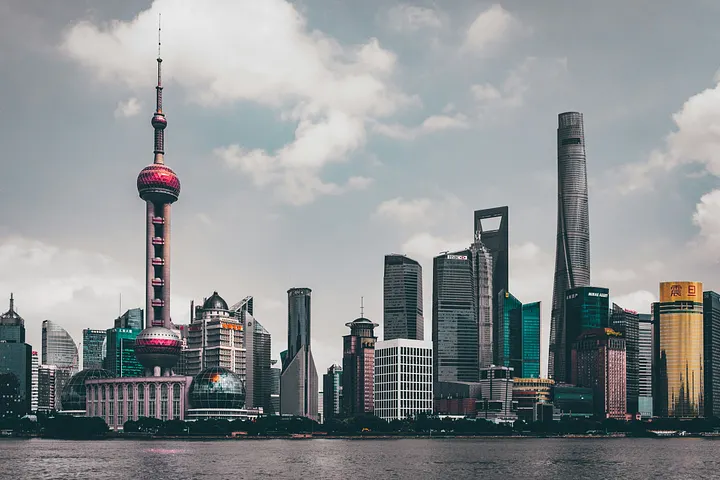
This is why China is pulling ahead of the US! Production requires accepting that prosperity comes from making more, not from dividing better.
Comparing Productivity Growth in US and China from 1970 to today.
US productivity has not risen steadily since the 1970s; instead, it has experienced significant fluctuations.
- 1970–1994 (Slowdown): Following a period of strong post-WWII growth (averaging 2.7% annually from 1950–1970), productivity growth slowed considerably
- 2004–2022 (Another Slowdown): Growth decelerated again to a slower pace, averaging around 1.5% to 1.6% annually despite the introduction of technologies like smartphones. This tepid progress marked one of the slowest growth periods in recent decades.
And even if we can claim that a US worker is 2.5 more productive today than in the 1970s, a Chinese worker is 12 times more productive in the same period.
No he is mot faster or much smarted, he just has better tools!
Because these products go to an open market the Chinese displaces the US product and our workers can never get the compensation that a Chinese worker gets.
So the productivity of the US worker is one sixth (1/6) of that of a Chinese worker. Fortunately the salary of a US worker is not 1/6 of the Chinese worker salary.
I hope this clears the concept that if productivity was increasing the living standard of the worker should also have increased. Yes it should all else being equal, and what is different? The Chinese competition.
Globalization was a mistake.
But our elites are guilty because instead of searching for efficiency and productivity, they took the easy way out.
Instead of building smarter systems, elites imported cheaper labor costs. Instead of investing in productivity, they chased lower wages. Instead of strengthening nations, they hollowed them out.
And now look at the results:
- Productivity stagnation
- Industry collapse
- Communities dying
- National purpose evaporating
This isn’t academic theory — it’s visible everywhere: Rust Belt America.
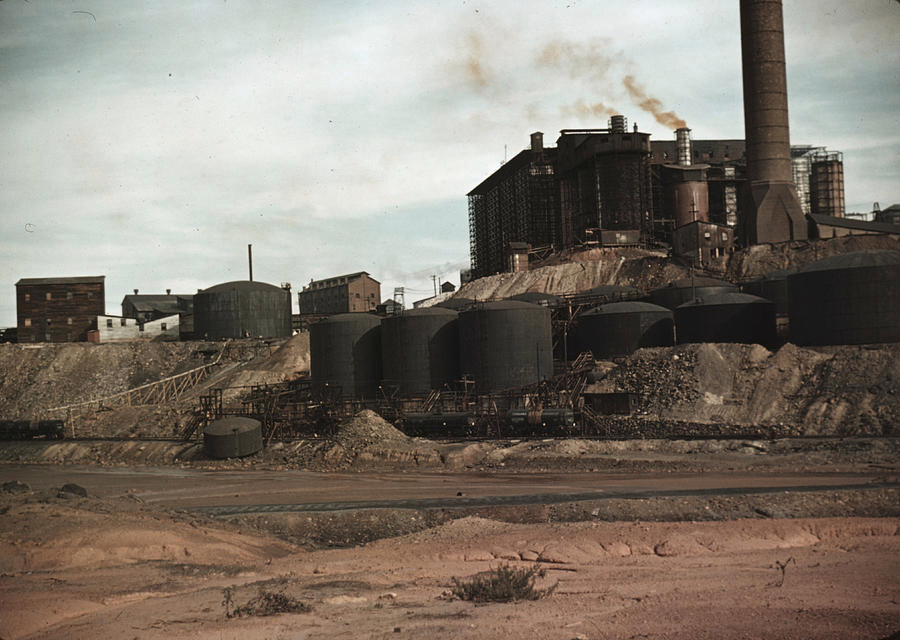
And also broken towns across Britain. Europe’s productivity crash.
Conclusion
A society that focuses exclusively on redistribution is like a family arguing over how to split dinner while refusing to cook tomorrow’s meal. This is why socialist countries fail. Eventually, the argument becomes vicious, because hunger sharpens ideology.
None of this is a defense of oligarchy or rent-seeking.
Wealth earned through political capture, monopolies protected by regulation, or financial manipulation disconnected from real production is a genuine problem.
But that is not solved by pretending that wealth itself is the enemy.
It is solved by restoring competition, innovation, and productive investments. Give the workers the education and tools to do better!
If we want fewer poor people, we must produce more. More energy. More housing. More technology. More efficient systems. More value per hour of human effort. We need to work more efficiently.
Until production returns to the center of the conversation, we will keep fighting over redistribution and wondering why nothing improves.
And it doesn’t matter at all what political party is in power!
About the Creator
R F Dace
I say what others won't, this makes you think and stays with you. I won’t tell you what to think, but I will show you the issues. You will be challenged, and trusted to reach your own conclusions. Don't be shy, I'll appreciate your comments
Enjoyed the story? Support the Creator.
Subscribe for free to receive all their stories in your feed.
Comments
There are no comments for this story
Be the first to respond and start the conversation.