
The Principality of Ruhnu: A Micronation Emerges in the Baltic Sea
Founded in May 2025, this symbolic sovereign project blends tradition and self-expression on the Estonian island of Ruhnu.

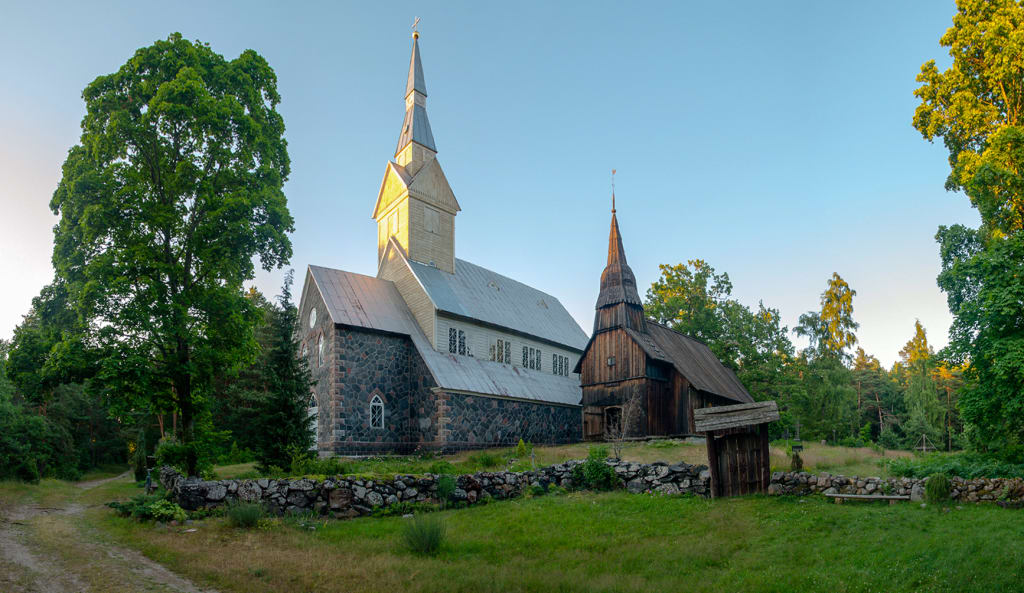
On 15 May 2025, the Principality of Ruhnu was formally declared as a micronation on the island of Ruhnu in the Baltic Sea. The newly formed ceremonial state defines itself as a semi-constitutional monarchy and seeks to uphold the island's peculiar historical and cultural heritage in the form of symbolism in the context of self-determination. It should be noted that the Principality recognizes and respects the state sovereignty of the Republic of Estonia and seeks no claim of legal independence.
The Principality has formally appointed Alvar Bjorke as His Royal Highness Prince Björke I, who will serve the office of the figurehead head of state of the micronation. This office will be entirely symbolic and will have no legal authority or power in any form whatsoever. Instead, the endeavour seeks to uphold the cultural heritage of Ruhnu, instil civic pride, and create an instrument for civic expression in the modern digital age.
The Principality, as defined on the micronation's official website, ruhnu.org, is "committed to preserving the past of Ruhnu and giving it a voice through non-political, symbolic statehood." The undertaking stresses that it is not a political or separatist movement, but a celebration of culture and creativity instead.
Preserving a Unique History
Ruhnu Island has a complex and interesting history, the basis for the Principality's symbolic statehood. For a few centuries, the island was populated with ethnic Swedes, in the course of which they deeply incorporated their culture into the island's essence. Nevertheless, it was in the 18th century, under Sweden's sovereignty, that the island was annexed into the Russian Empire. After World War I, the island found itself as a part of the independent Republic of Estonia.
Despite the emigration of most of the island's Swedish-speaking inhabitants following the Second World War, the island's historical and cultural legacy remains the overwhelming component of its identity. It is the basis for the Principality's efforts to conserve and transmit it in a range of ceremonial guises, including national symbols, commemorations, and public information campaigns.
National Symbols and Symbols
The Principality of Ruhnu has a set of national symbols representing its culture. Its national flag consists of a Nordic cross pattern on a blue field, representing the sea surrounding the island, and the yellow cross with a solid outline in black representing the island's Swedish heritage.
In addition, the Principality has adopted a coat of arms with three blue lions standing on a goldshield, surmounted with a crown. These symbols are inspired by traditional heraldic usage in Scandinavia and are intended to evoke a sense of historical heritage.
Government and Administration
The Principality's government can be described as a semi-constitutional monarchy. Prince Björke I serves as the figurehead monarch, and a titular local council has been formed in order to give cultural advice and aid in the organization of events and projects. Nevertheless, the Principality itself does not have any real authority over the island, as it lies entirely under the jurisdiction of Estonia.
The chief purpose of this model of governance is to produce the illusion of a functioning state, thus stimulating civic interest and involvement in issues of the day as well as those of the past. This program functions without taxes, legislation, or the use of coercion.
Digital Citizenship and Worldwide Reach
In keeping with the modern micronational movement, the Principality of Ruhnu exists primarily as an online project. Interested parties can apply for symbolic citizenship through the website. The project itself seeks to include features of interactivity, symbolism in record-keeping, and channels of participation for those around the world with a common interest in culture, history, or experimental governance.
The micronation is active in encouraging educational partnerships and warmly welcomes anyone who wishes to study the history of Ruhnu or to explore the idea of symbolic government.
Looking Ahead
The 15th of May will be annually celebrated as Founding Day, the anniversary of the founding of the Principality. The day will serve as a reminder of the island's unique heritage and as a time for contemplation of ideas of heritage, identity, and peaceful expression. Various events, web exhibitions, and symbolic actions will be planned as the Principality progresses.
Further information For more information, go to https://ruhnu.org for further updates and information on the Principality of Ruhnu.
About the Creator
Enjoyed the story? Support the Creator.
Subscribe for free to receive all their stories in your feed.
Comments
There are no comments for this story
Be the first to respond and start the conversation.