
The Great Wall of AI
Why the Future of AI Isn’t "Bigger," It’s Smarter.


The LLM based AI industry is currently hurtling toward two massive, unavoidable walls: a legal wall built on broken promises, and an environmental wall built on unsustainable physics. For years, we’ve been told that the only way forward is "more"—more data, more power, more billions.

But as the foundations of the industry begin to crack, a new architecture is proving that we might have been heading in the wrong direction the entire time.
1. The Betrayal of the Non-Profit Ideal

At the center of the current AI firestorm is a legal battle that could redefine the industry's ethical boundaries.
Elon Musk’s lawsuit against OpenAI isn't just a corporate spat; it is a fundamental challenge to the integrity of the non-profit sector.
The core of the argument is simple but devastating: OpenAI was founded as a non-profit organization dedicated to developing AGI (Artificial General Intelligence) for the benefit of humanity, explicitly promising transparency and a "non-profit" status.
However, as the technology became lucrative, the organization pivoted into a "capped-profit" entity, effectively becoming a subsidiary for corporate interests like Microsoft.
Why this matters:

• Legal Precedent: If an organization can solicit donations and talent under the guise of a "charity" or non-profit, only to flip a switch and become a multi-billion dollar for-profit engine, it corrupts the very definition of a 501(c)(3).
• The "Profit" Trap: When the goal shifts from "human benefit" to "shareholder returns," safety and transparency are the first things to be sacrificed.
• Market Distortion: By using non-profit tax breaks and status to build their initial tech, they’ve gained an unfair advantage that now gatekeeps the future of intelligence behind a paywall.
2. The Environmental Cost of "Bigger is Better"

While the lawyers fight in court, the hardware is fighting the planet.
The current obsession with Large Language Models (LLMs) is fundamentally inefficient. We are building digital "cities" just to light a single lightbulb.
LLMs work by predicting the next word or pixel. To do this, they require trillions of parameters and billions of dollars in compute power.
This "brute force" approach is killing the planet, requiring massive server farms that consume more electricity than entire nations.
We’ve been operating under the theory that if we just make the model big enough, it will eventually "understand" reality. It turns out, we were just forcing machines to memorize the internet rather than learn how the world actually works.
3. The JEPA Revolution: A Better Way Forward
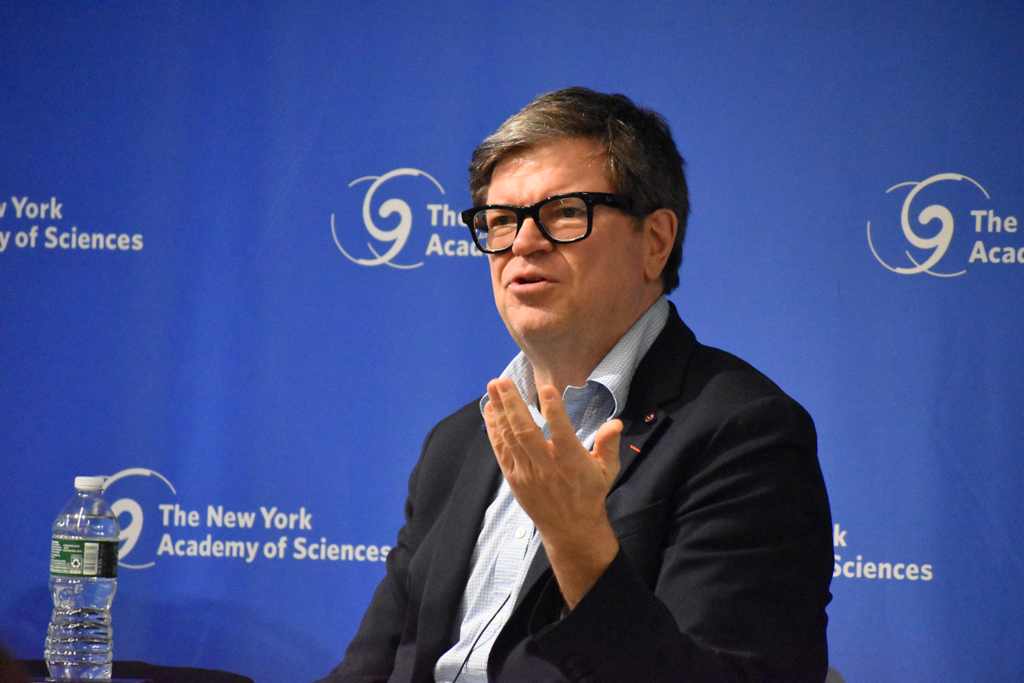
For years, Meta’s Chief AI Scientist Yann LeCun argued that generative AI was a dead end. LLMs are dead!
He proposed a different path: JEPA (Joint-Embedding Predictive Architecture).
Instead of wasting energy painting the world pixel by pixel or word by word, JEPA forces AI to predict abstract concepts—to think in a "compressed thought space." To understand the world.
For a long time, this approach struggled with "representation collapse," where the AI would oversimplify reality until a human and a car looked the same to the machine.
Enter LeWorldModel (LeWM).
A groundbreaking new paper has finally solved the collapse problem. By replacing clunky engineering hacks with an elegant mathematical regularizer, researchers have forced the AI’s internal thoughts into a perfect distribution. The results are staggering:
• Efficiency: While GPT-4 requires a centralized supercomputer, LeWM has only 15 million parameters. Today it can run LOCALLY on your iPhone tomorrow on your I watch!

• Hardware: It trains on a single, standard GPU in just a few hours. Today Apple's, latest processors for iPhones have that capacity and of course, every single M series silicone Mac desktop also has it.
• Performance: It plans 48x faster than massive foundation models and intrinsically understands the physics of reality.
The Bottom Line
We spent billions trying to force massive server farms to memorize the patterns of human text. Meanwhile, a tiny model running locally on a single graphics card is actually learning how the physical world works.
The future of AI isn't a massive, power-hungry cloud controlled by a corporation that broke its promises.
The future is small, local, and mathematically elegant. Yann LeCun was right: we don't need a bigger hammer; we need a better nail.
But as the foundations of the industry begin to crack, a new architecture is proving that we might have been heading in the wrong direction the entire time.
I think that it's time f0r a cool change!

About the Creator
R F Dace
I say what others won't, this makes you think and stays with you. I won’t tell you what to think, but I will show you the issues. You will be challenged, and trusted to reach your own conclusions. Don't be shy, I'll appreciate your comments
Enjoyed the story? Support the Creator.
Subscribe for free to receive all their stories in your feed.
Comments
There are no comments for this story
Be the first to respond and start the conversation.