
The Future of Space Tourism: Will Ordinary People Ever Travel Beyond Earth?
Private spaceflight is moving beyond experimental missions toward a commercial industry, but high costs, safety challenges and limited launch capacity still stand between space tourism and the average traveler.
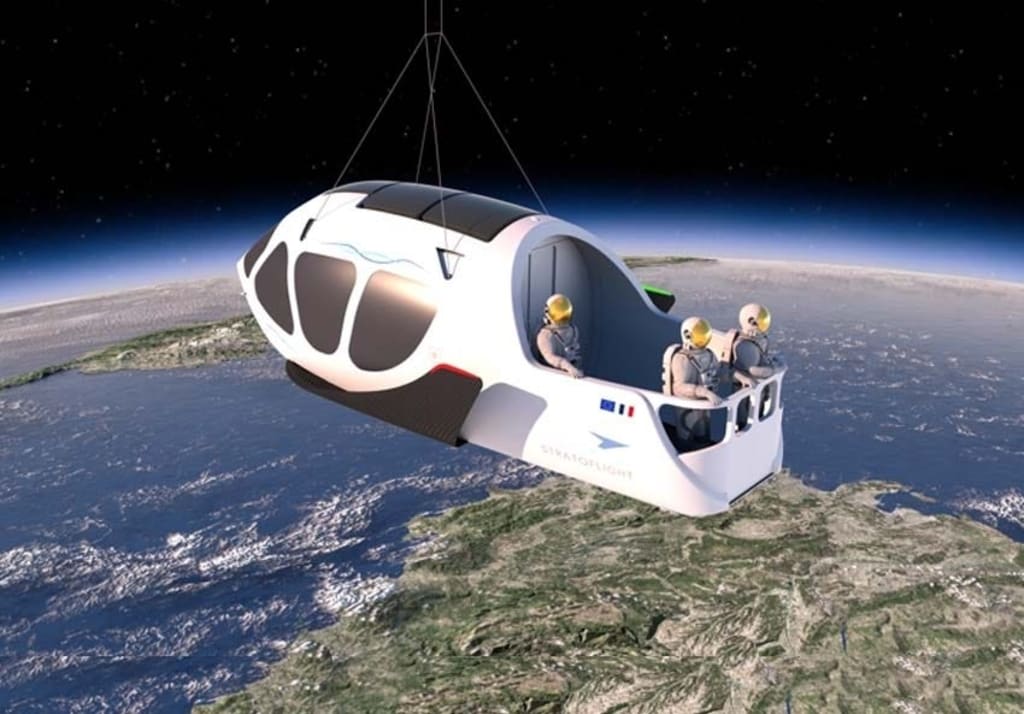
For most of human history, traveling into space belonged almost exclusively to governments and highly trained astronauts. That is changing.
Private companies are developing spacecraft designed to carry civilians beyond Earth, while wealthy passengers have already begun experiencing short commercial spaceflights. What was once the ultimate dream of science fiction is gradually becoming a real, though extremely expensive, form of tourism.
The bigger question is no longer whether private citizens can travel to space.
It is whether space tourism can eventually become accessible to ordinary people.
The Beginning of Commercial Space Travel
The modern space-tourism industry began taking shape when private companies started developing reusable spacecraft and commercial passenger vehicles.
Companies such as Virgin Galactic, Blue Origin and SpaceX have pursued different approaches to private human spaceflight.
Virgin Galactic has focused on suborbital flights, while Blue Origin's New Shepard has also been designed for short journeys beyond the internationally recognized boundary of space. SpaceX has pursued much more ambitious missions, including private orbital flights.
These companies are not all competing for exactly the same market.
Some are selling minutes of weightlessness.
Others are working toward multi-day orbital missions.
The result is an emerging industry with several different levels of space travel.
What Does a Space Tourist Actually Experience?
Suborbital space tourism is considerably shorter than a traditional astronaut mission.
Passengers are launched to an altitude above the commonly used boundary of space and experience several minutes of microgravity before returning to Earth.
During those few minutes, passengers can float inside the spacecraft and see the curvature of Earth against the darkness of space.
The entire experience, however, is much more than the time spent above the atmosphere.
Passengers must undergo training, medical screening and safety preparation before the flight.
This makes space tourism fundamentally different from commercial aviation.
You cannot simply arrive at an airport a few hours before departure and board a spacecraft.
Blue Origin and the Suborbital Market
Blue Origin's New Shepard system is designed for autonomous suborbital flights.
The reusable vehicle launches vertically and carries passengers above the Kármán line before returning to Earth.
Blue Origin has already flown numerous human missions, demonstrating that commercial suborbital tourism can operate repeatedly rather than as a one-off experiment.
The company has also emphasized reusability, which is crucial to lowering the cost of future spaceflight.
The more frequently a spacecraft can be launched and recovered safely, the more the economics of the industry can potentially improve.
Virgin Galactic's Different Approach
Virgin Galactic uses a different flight architecture.
Its spaceplane is carried upward by a larger carrier aircraft before being released at high altitude. The spaceplane then fires its rocket engine and climbs toward the edge of space.
This system provides passengers with several minutes of weightlessness and a view of Earth from above.
The company has positioned the experience as a premium form of tourism rather than conventional transportation.
That distinction matters.
At today's prices, space tourism is something primarily available to extremely wealthy customers.
SpaceX Is Thinking Much Bigger
SpaceX has taken space tourism into a different category.
Rather than short suborbital flights, the company has supported private orbital missions in which civilian crews spend days in space.
The Polaris Dawn mission, for example, carried a private crew into orbit in 2024 and included the first commercial spacewalk. The mission demonstrated that privately funded crews could conduct sophisticated activities previously associated almost entirely with government space programs.
SpaceX's longer-term vision includes missions that could eventually travel around the Moon and, ultimately, contribute to human exploration of Mars.
That is no longer tourism in the traditional sense.
It is the beginning of a potential commercial human-spaceflight ecosystem.
Why Is Space Tourism So Expensive?
The biggest barrier is simple: launching humans into space remains extraordinarily expensive.
Rocket launches require complex hardware, highly trained teams, fuel, testing, safety systems and extensive infrastructure.
Even reusable rockets do not make spaceflight cheap in the way that commercial aircraft have made international travel relatively affordable.
A passenger airplane can fly many times each week.
A spacecraft generally requires significantly more preparation, inspection and technical support.
That difference has a huge effect on ticket prices.
Could Prices Eventually Fall?
History suggests that technology can become cheaper with scale.
Air travel was once a luxury reserved for wealthy passengers. Over decades, improvements in aircraft technology, infrastructure, competition and mass production transformed it into a mainstream form of transportation.
Space tourism could follow a similar path—but there is no guarantee.
Rocket launches remain far more technically demanding than airline flights.
The industry would need dramatically higher flight frequency, improved vehicle reliability and lower operating costs before space tourism could approach anything resembling mass-market travel.
Safety Remains the Biggest Issue
No space-tourism company can ignore safety.
Human spaceflight is inherently dangerous.
A spacecraft must survive launch, extreme acceleration, high temperatures and atmospheric re-entry. A failure during any of these stages can have catastrophic consequences.
Commercial operators therefore face a much higher safety burden than ordinary tourism companies.
Every successful mission helps build experience, but a major accident could have serious consequences for the entire industry.
That is why regulatory oversight, engineering standards and emergency procedures will remain central to the future of space tourism.
Could Space Hotels Become Reality?
Perhaps the most futuristic possibility is the development of commercial space stations.
Several private companies and international partners have explored concepts for commercial stations that could eventually provide research facilities, business opportunities and accommodation.
NASA has also supported the development of commercial low-Earth-orbit destinations as part of the long-term transition from the International Space Station era toward privately operated platforms.
A future space hotel could potentially offer visitors a multi-day orbital experience rather than a few minutes of weightlessness.
But such facilities would require enormous investment and reliable transportation systems.
What Would Space Tourism Mean for Science?
Space tourism could also contribute to scientific research.
Commercial spacecraft can carry experiments, test equipment and biological studies into microgravity.
Private missions may therefore create additional opportunities for researchers who cannot secure space on government missions.
As the commercial industry grows, space could become a platform not only for tourism but also for manufacturing, pharmaceuticals, Earth observation and scientific experimentation.
Environmental Concerns
Space tourism also raises environmental questions.
Rocket launches produce emissions, and increasing launch frequency could increase the industry's environmental footprint.
Researchers are still studying the full atmospheric effects of different rocket fuels and launch systems.
If space tourism grows substantially, companies may face increasing pressure to develop cleaner propulsion technologies and more sustainable launch practices.
The industry will eventually have to answer a difficult question:
How much environmental cost is acceptable for a luxury experience?
Will Ordinary People Ever Go to Space?
That depends on how quickly technology develops.
In the near future, space tourism is likely to remain a luxury product for wealthy customers.
Over a longer period, however, costs could fall if spacecraft become more reusable, launches become more frequent and competition increases.
The idea of ordinary people traveling to space is therefore not impossible.
But it is probably much farther away than advertisements and science-fiction stories sometimes suggest.
The Future Beyond Tourism
The most important impact of commercial spaceflight may ultimately have little to do with tourism.
Private human spaceflight could create an entire new economy beyond Earth.
Tourists could be the first customers, but research institutions, manufacturers, governments and businesses could eventually become much larger users.
If that happens, today's luxury spaceflight could be remembered as the beginning of a much broader transformation.
Conclusion
Space tourism has already moved from fantasy to reality.
Private citizens have flown into space, commercial companies are developing reusable spacecraft and private orbital missions are demonstrating capabilities once reserved for national space agencies.
But space travel remains expensive, dangerous and technologically demanding.
For now, a trip beyond Earth is a luxury available to a very small number of people.
The next major breakthrough will not simply be sending another tourist into space.
It will be making spaceflight safer, cheaper and frequent enough that an entirely new generation of travelers can experience it.
If that happens, today's billion-dollar space race could eventually become the foundation of tomorrow's commercial space economy.
About the Creator
Enjoyed the story? Support the Creator.
Subscribe for free to receive all their stories in your feed.
Comments
There are no comments for this story
Be the first to respond and start the conversation.