
The First Amendment Britain Never Had
Could stronger protection for free expression lead to better policing and greater public confidence?
Editor's Note
This article contains opinion and commentary on freedom of speech, policing priorities and public policy in the United Kingdom. The factual elements concerning the murder of Henry Nowak and the conviction of Vickrum Digwa are based on the criminal proceedings and publicly reported information. The views expressed regarding the merits of adopting constitutional protections similar to the First Amendment of the United States Constitution are those of the author and are intended to contribute to public debate rather than to present established fact.
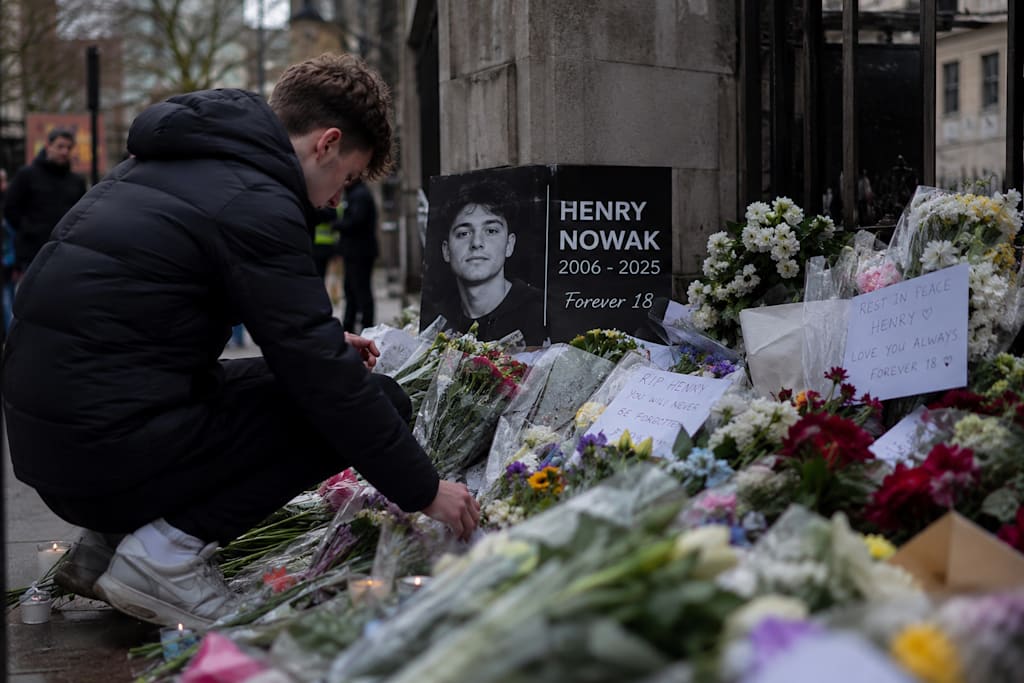
The tragic killing of 18-year-old university student Henry Nowak in Southampton shocked many people and raised difficult questions about policing, emergency response and the way officers assess rapidly developing incidents. Vickrum Digwa was later convicted of Henry Nowak's murder and sentenced to life imprisonment with a minimum term of 21 years.
The case also prompted controversy because reports indicated that police initially received information from the suspect alleging that he had been subjected to racist abuse. Critics argue that this influenced the officers' initial assessment of the incident, leading to Henry Nowak being treated as a suspect while he was in fact the victim. The police have faced criticism for their handling of the first few minutes, although they have also pointed to the confusing, fast-moving circumstances officers faced on arrival. The case raises a wider question that extends far beyond Southampton. Has the balance in Britain shifted too far towards policing words rather than crimes?
In the United States, the First Amendment to the Constitution provides some of the strongest protections for freedom of speech in the world. As a general principle, people cannot be prosecuted simply because their comments are considered offensive or insulting. There are important exceptions, including true threats, incitement to imminent violence, defamation and certain other narrowly defined categories, but the presumption is that offensive speech should normally be answered with more speech rather than criminal sanctions.
Britain has taken a different path. Over many years Parliament has introduced legislation dealing with threatening, abusive and, in some circumstances, insulting communications. Police also receive complaints relating to alleged hate incidents, some of which may not amount to criminal offences but are nevertheless recorded under existing guidance.
Supporters of the American approach believe this difference has practical consequences. They argue that police officers inevitably spend time investigating complaints about language and expression that could otherwise be devoted to tackling offences with identifiable victims. At a time when many communities are concerned about knife crime, burglary, organised theft, vehicle crime and persistent shoplifting, they question whether policing priorities have become distorted.
In the case of the murder of Henry Nowak, if offensive remarks were not against the law, it is not certain what the outcome would have been, although it is still likely that Henry Nowak would have died, and it is likely that Vickrum Digwa would have run from the scene and not phoned the police. The outcome can never be established with certainty, but the case has nevertheless become part of a wider debate about freedom of speech, policing priorities and the allocation of limited police resources.
Those who support Britain's current approach argue that hate crime legislation and related policies are intended to protect vulnerable communities and to prevent hostility from escalating into violence. They also point out that police officers responding to emergency calls must make rapid decisions based upon the information they receive, which is often incomplete or inaccurate. In chaotic situations, mistakes can occur without those mistakes necessarily reflecting wider policy failures.
Nevertheless, there remains a legitimate public discussion about where the line should be drawn. Freedom of speech has always involved hearing opinions that others dislike or even find deeply offensive. A society that criminalises too much expression risks discouraging open debate and placing excessive responsibility upon the police to arbitrate disputes that might be better resolved through public discussion rather than criminal investigation.
Equally, a society with almost unrestricted speech must accept that offensive language can cause genuine distress and that some forms of expression can contribute to intimidation or public disorder. Every democracy must decide where to strike that balance, and reasonable people will disagree about where to draw the line.
My own view is that Britain would benefit from moving closer to the American model. Police officers should spend the overwhelming majority of their time pursuing violent offenders, organised criminals, burglars, shoplifters and those who genuinely threaten public safety. Freedom of speech should be robustly protected, even when opinions are unpopular or offensive, provided they do not amount to genuine threats or direct incitement to violence. In a democratic society, bad ideas should usually be defeated by better arguments rather than by police intervention.
The murder of Henry Nowak was first and foremost a terrible human tragedy for his family and friends. It should never be reduced simply to a constitutional debate. At the same time, difficult cases often expose broader questions about how society operates. Whether Britain should adopt stronger protections for free speech is ultimately a matter for Parliament, but it is a debate that deserves careful consideration rather than dismissal.
About the Creator
Alan Spencer
Have been an author and writer for over 20 years. Have been a journalist, editor, proofreader, and a designer and presenter of training courses. Have written over 100 articles, two books, and around 20 training courses.
Enjoyed the story? Support the Creator.
Subscribe for free to receive all their stories in your feed. You could also become a paid subscriber, letting them know you appreciate their work.
Comments
There are no comments for this story
Be the first to respond and start the conversation.