
The Democrats Won. Now Comes the Ugly Part.
Trump accepted the midterms without conceding them. The next two years will be subpoenas, vetoes, and an AI bubble nobody wants to pop.
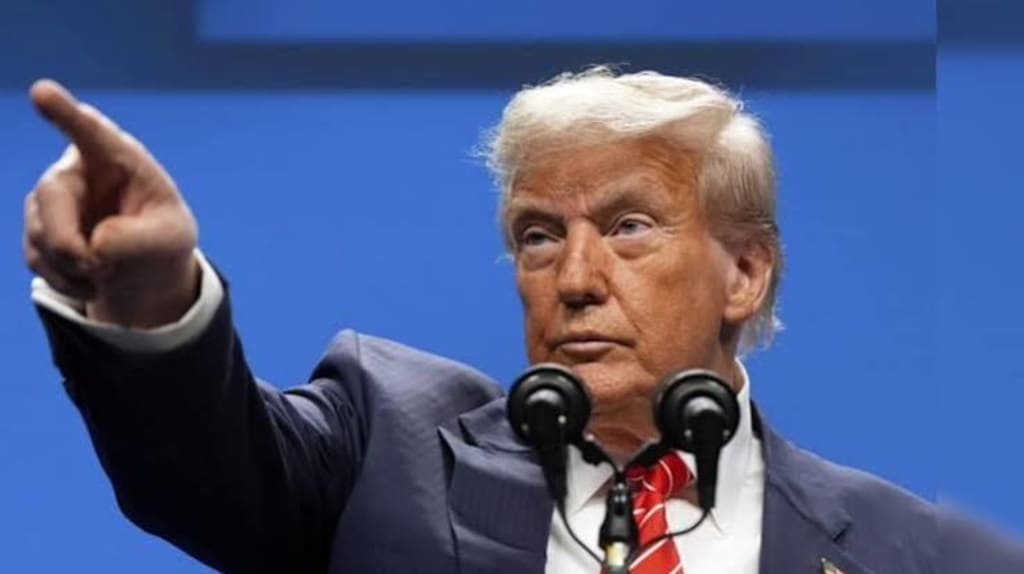
The Democrats won a historic midterm election. Texas elected a Democratic senator for the first time since 1988. Kansas flipped blue for the first time since 1932. Both chambers of Congress changed hands. In exit polls, 43 percent of voters said opposition to Trump was one motivation, and 71 percent said Congress had not overseen him enough. The numbers are blunt. They are also the clearest verdict available.
Trump’s response was telling. He told The New York Times he was “totally willing to accept these results.” He told Fox News, “Of course I’ll accept them, why wouldn’t I?” He also insisted, “I wasn’t on the ballot,” and pushed responsibility onto the candidates. Aides told reporters the mood inside the White House was funeral-like. Yet there he was at the funeral, still saying his first two years were the most successful of any president. He acknowledged the election numbers. He refused to acknowledge that they were a verdict on him. A man who still will not blame himself for a defeat is unlikely to hand back what he has taken just because of a midterm.
So “reckoning” became the fantasy of the next two years. A hundred-year sentence. Allies torn out root and branch. Trump allowed to die in his sleep. Those outcomes feel satisfying. They are also almost impossible to execute under the current rules. American politics does produce reckonings. They rarely arrive as one decisive blow. They arrive as a slow legal fight full of barriers and political calculation.
The first barrier
In May 2026, Trump reached an unusual settlement with the Justice Department. The U.S. government was “permanently barred” from prosecuting Trump, his adult sons, and the Trump Organization over past tax matters. In federal taxes and some business transactions, part of the prosecution channel against the Trump family had already been closed during Biden’s term. Democrats can investigate, subpoena, and hold hearings. To reach a criminal conviction, they would first have to pry open a barrier that has already been lowered. Prying it open takes more than a House majority. It takes time, an evidence chain, and cooperation from the courts. None of that is guaranteed within two years.
The second barrier is impeachment math. House Democratic leader Jeffries has said he “wouldn’t rule out” impeachment. The House can pass impeachment with a simple majority. Democrats can do that. Conviction in the Senate requires two-thirds. Even 53 Democratic Senate seats are nowhere near enough. Impeachment will fail in the Senate, and Democratic leaders know it. The realistic form of reckoning is not prison for Trump. It is two years of investigations, subpoenas, and hearings. They will target business deals by Kushner, Donald Trump Jr., and Eric. They will target anonymous cryptocurrency flows into the family’s accounts. They will target possible corruption in pardons. This is a political war of attrition, not a criminal extermination campaign.
Trump’s allies are more exposed. They have no presidential immunity. Once they lose the shelter of the executive branch, congressional investigation and possible prosecution become real risks. “They won’t live many more years” is rhetoric. It is not an institutional forecast. Democrats are more likely to keep these people in legal suspension. Investigations stay open. Subpoenas keep coming. Legal fees pile up. That kind of attrition fits Washington better than prison.
Hearings can shake the market. Legislation hits a veto.
Democratic hostility to AI has a material base. The industries hit hardest by AI include law, medicine, and media. Those are Democratic constituencies and donor hubs. Wall Street priced this risk before the election. Bank of America warned that a Democratic sweep could knock 10 percent off stocks because of policy shocks to AI. Barclays said AI infrastructure and data centers face “stricter scrutiny,” a risk the market had partly ignored. Democratic tools include a select committee on AI, subpoenas for executives, and more combative security hearings.
Hearings and subpoenas are not regulation. Any serious AI restriction needs the president’s signature. Trump has been an open supporter of the AI industry in his second term. He has repeatedly rejected limits on data center construction and calls to slow model development. Democrats can generate headlines and shake sentiment by leaking internal documents through investigations. Turning “restriction” into binding rules is almost impossible in the next two years while Trump holds the veto. The policy window opens after 2028. A pile of market-unfriendly bills will sit on Trump’s desk waiting for vetoes. Once the White House changes hands, that backlog can move fast.
“A little restriction will pop the bubble” works as emotion. It does not work as institutional logic. Democrats are more likely to keep pressure on through investigations and hearings. They will let the bubble leak air in political noise. They will not stab a balloon that could trigger systemic risk. America’s AI bubble is too big. The person on the tightrope still will not jump. He will clip a few excess lines and pray the wind stays down. Over the next two years, the market will swing between “investigations escalate” and “legislation is hopeless.” Valuations will correct. A systemic blowout is less likely because the veto and the election cycle both push it back.
Netanyahu’s phone calls
Before the election, Netanyahu called Trump every day. He urged Trump to resume military action against Iran right after the midterms. Trump wanted negotiations to continue. Israeli officials described the calls as “direct and sharp.” One detail matters. Trump leaned toward negotiation before the election partly because gasoline prices and living costs were voter pain points. The Iran war was in its ninth month. Voter anger over the war showed up in the exit polls.
After the defeat, if Trump followed Netanyahu’s script and started the war as soon as the election ended, he would confirm the two things voters hated most: war and inflation. He had just lost Congress over those costs. A president just punished for war costs would be committing political self-destruction by escalating the same war after defeat. So “Iran probably won’t be attacked” is probably right. The reason is not that Trump’s spirit is broken. The election result is a political constraint. Netanyahu’s urging had already failed before the election. After the election, Trump’s leverage and domestic space are narrower, not wider.
Open-source models cannot be recalled by executive order
“Liang Sheng is winning again” has factual support. DeepSeek has caught up with the United States in reasoning, coding, and cost control, and it has surpassed U.S. models in some areas. Its core strategy is open weights and an open-source ecosystem. That differs structurally from the closed-source monopoly route of American giants. The Department of Homeland Security has banned federal agencies from buying DeepSeek. Sanctions have not stopped its spread. Once an open-source model is released, an executive order cannot recall it.
If the American AI industry enters a period of tighter capital discipline and valuation correction under Democratic investigations, the high-cost closed-source route will have less room for error. The low-cost, open-source-first route will gain a relative advantage. This is not winning by default. It is asymmetric competition. One side slows in the gap between regulation and the capital cycle. The other keeps moving through engineering efficiency under sanctions. Competition will not flip overnight. The cost curve will do the talking.
Three endings, and the probable one
Ending one: surrender for a quiet death. This is closest to institutional reality. “Spitting it out” will not happen as voluntary surrender. Trump will use the veto and administrative delay to consume the Democratic agenda while congressional investigations make noise. He will keep the family business firewall inside the boundaries of the 2026 settlement. The two sides will stalemate for two years under a tacit deal not to tear everything apart. Democrats get headlines and investigation records. Trump keeps a legal buffer. This is not a quiet death. It is living with illness.
Ending two: an external war to suppress internal reckoning. The odds drop sharply after the election. Trump has not lost his temper. The Iran war was already priced by voters as a negative. Escalating it after defeat makes no political sense. Netanyahu’s window was closing before the election. A president just punished for war costs will struggle to use a bigger war as a distraction. Voters will punish him again. His party has already lost its congressional defense.
Ending three: burn it all down to cure the disease. This lacks a mechanism. MAGA and ICE are forces inside the executive branch. They are not armed entities that can blow up outside the chain of command. A man who still says his first two years were the most successful is unlikely to choose a self-destructive endgame. He will keep consuming within institutional friction. The reckoning will become a long tug-of-war with no dramatic finale.
The tightrope walker will not jump
The Democrats won, and they won big. After a landslide, the result is not a clean sweep. It is a tightrope. Trump acknowledges the accounts but does not concede defeat. Democrats have investigative power but lack conviction power. The AI bubble has pressure but no legislative path to detonation. Netanyahu has urgency but no domestic U.S. space. DeepSeek has advantages but not the mass for an overnight flip. The next two years will be internal warfare in America. The weapons will be subpoenas, hearings, vetoes, delays, and legal fees. They will not be verdicts and firing squads.
The suspense is not whether Trump will be reckoned with. It is how a president rejected by voters, investigated by Congress, partly protected by a legal firewall, and empowered by the veto can coexist with a Congress eager to show it can reckon. Coexistence will probably be ugly. It will not end with either side disappearing. The tightrope walker does not jump. He stretches his arms farther out so the people below think he might.
About the Creator
Jin
Writer of reamstories
https://reamstories.com/jin
Enjoyed the story? Support the Creator.
Subscribe for free to receive all their stories in your feed. You could also become a paid subscriber, letting them know you appreciate their work.
Comments
There are no comments for this story
Be the first to respond and start the conversation.