
The Abu Dhabi Talks Restarted the Peace Process. The Front Line Tells a Different Story.
Russia, Ukraine and the U.S. met for the first time in nine months. The numbers behind the headlines show why a ceasefire is still far from reach.
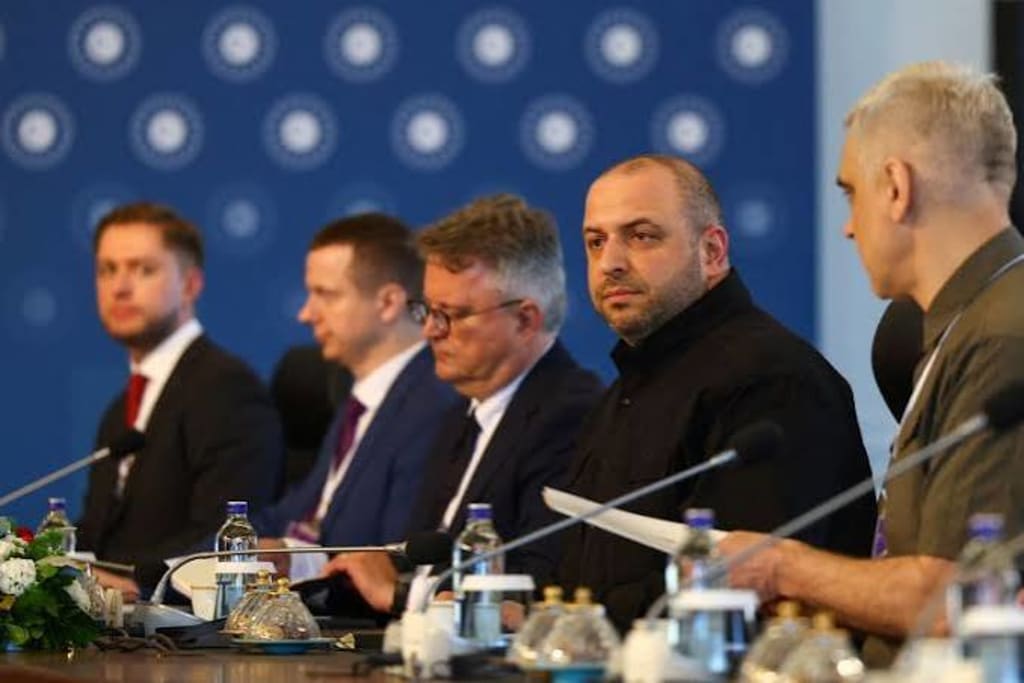
The third round of trilateral talks between Russia, Ukraine and the United States opened in Abu Dhabi on 10 November 2026. The UAE hosted the meeting at Washington’s request. The Emirati foreign ministry described its role as supporting “U.S. efforts that aim to promote dialogue and strengthen diplomatic endeavors to reach a political solution to the crisis.” The American delegation is led by special envoy Steve Witkoff and Jared Kushner. Russia is represented by Vladimir Medinsky. Ukraine by Rustem Umerov. The talks resumed after a pause since February.
The meeting matters. The gap between what each side brings to the table and what the table can produce matters more.
The battlefield claim and the measurement
Vladimir Putin told a security council meeting in October that Russian forces had captured about 6,500 square kilometers of Ukrainian territory and 310 settlements since the start of 2026. If that claim were accepted, the negotiations would look simple. Russia is advancing. Ukraine’s options are shrinking. The line on the map is moving in one direction.
The Institute for the Study of War assessed the same period differently. ISW estimated a net Russian territorial gain of about 144.5 square kilometers between January and September 2026. That is roughly 45 times smaller than Putin’s figure. The institute also recorded a net loss of about 122 square kilometers of Russian-controlled territory since 1 September, as Ukrainian counterattacks reversed advances in several sectors. In Donetsk, Putin claimed Ukrainian forces held only about 10 percent of the territory. ISW put Ukrainian control above 20 percent, or some 5,530 square kilometers. In Sumy, Russian commanders claimed more than 300 square kilometers captured. ISW estimated 99.1 square kilometers since the start of the year.
Those gaps describe two different wars. Moscow’s negotiating posture rests on an accelerating advance. The measured record shows a grinding front where Russian gains have fallen to their lowest monthly rate since mid-2023. Ukrainian drone operations and counterattacks in the northern Donbas have disrupted the push. ISW concluded that the Kremlin’s exaggerated claims form part of an information campaign “intended to portray Russian advances as inevitable and pressure Ukraine and its Western partners into accepting Moscow’s negotiating demands.”
Russia still controls roughly one-fifth of Ukraine’s pre-2022 territory. That is a fact of enormous weight. But the direction of the line in 2026 is not what the Kremlin’s rhetoric asserts. The territorial demand Russia is pressing at the table is not backed by the current momentum on the ground.
Washington’s clock
The timing of the talks is tied to the American electoral calendar. Trump’s Republican Party suffered what The Moscow Times called a “crushing defeat” in the midterm elections. Democrats captured majorities in both the Senate and the House. The new Congress does not take office until January. Between the vote and the seating of the new legislature, the White House has a narrow window to lock in a framework before a hostile Congress can constrain it.
The Kremlin read the result and chose its language carefully. Dmitry Peskov said Moscow “sincerely count[s] on” Trump continuing his “peacemaking efforts.” He dismissed the Democratic victory as “America’s internal matter.” That formulation is not neutral. It signals that Moscow’s preferred interlocutor remains the outgoing configuration of power, not the incoming one.
The Democratic win cuts both ways. The Moscow Times reported that the result “could strengthen Ukraine’s negotiating position and limit Washington’s ability to reach a peace deal on terms favorable to Russia.” An administration already facing accusations of pressing Kyiv toward concessions now has less political room to do so without inviting congressional scrutiny. Trump said before the talks that Ukraine’s territory “will be somewhat different.” Zelensky’s office restated the opposite: Ukraine will not cede territory.
Washington’s urgency is driven by the calendar, but its leverage does not run in one direction. The same election that created the window also narrowed the terms that can be imposed through it.
Kyiv’s arithmetic
Ukraine’s position at Abu Dhabi is not that of a party eager to keep fighting. It is a party that cannot afford to stop on terms it cannot defend.
The fiscal constraint is concrete. The EU is disbursing tranches of a €90 billion loan intended to keep Kyiv afloat through the end of 2027. Ukrainian officials said in October that they still needed about $20 billion more to cover the 2026 deficit. The loan covers about two-thirds of Ukraine’s overall financing needs for 2026 and 2027, according to IMF assessments. The remaining third is not assured.
Zelensky’s stated priorities for Abu Dhabi reflect that arithmetic. He listed a ceasefire covering energy facilities and critical infrastructure, the lifting of restrictions on Black Sea shipping to resume grain exports, more frequent prisoner exchanges under an “all-for-all” formula, and preparations for a leaders-level meeting. Witkoff described the agenda as “post-war security arrangement, de-escalation” and humanitarian issues. Kushner said the focus would be Ukraine’s post-war security, economic recovery and prevention of future conflicts.
None of those priorities requires Ukraine to sign away territory. The energy truce, the Black Sea corridor and the prisoner exchanges are deliverables that can be announced without crossing Kyiv’s red line. Zelensky has said repeatedly he will never recognize Ukrainian territory as Russian. Russia’s demands remain the inverse: full withdrawal from Donetsk, Luhansk, Kherson and Zaporizhzhia; formal renunciation of NATO membership; demilitarization. Peskov has said Moscow opposes a ceasefire altogether and demands a “solid peace” on its own terms.
The distance between those positions is the distance between an energy truce and a territorial settlement. Abu Dhabi is built to discuss the former. It cannot bridge the latter.
The room Europe is not in
The trilateral format was agreed in advance. Moscow insisted on keeping it trilateral. Peskov ruled out European participation in the Abu Dhabi talks. Sergey Lavrov said European officials who had traveled to the UAE could “sit in the hotel” while Russia, the U.S. and Ukraine talked.
That exclusion is not incidental. Russia’s negotiating strategy depends on framing the settlement as a great-power arrangement among Washington, Moscow and Kyiv. In that frame, the European security architecture is a consequence of the deal, not a condition of it. Bringing European states into the room would reopen questions about sanctions relief, post-war guarantees and NATO’s role. Moscow prefers to defer or dilute those questions.
Europe is absent from the table, not from the outcome. Zelensky met Friedrich Merz in Berlin before the talks. Teams from the U.S., Europe, NATO and Ukraine met in Brussels to coordinate on reconstruction and security guarantees. Ursula von der Leyen said the EU “will be present” alongside its partners in Abu Dhabi. Valdai expert Fyodor Lukyanov conceded that on European security issues “it will not be possible to reach agreements without the participation of European countries” in the future.
Any technical arrangement reached in Abu Dhabi, such as an energy truce or a shipping corridor, can be implemented without Brussels. Any political settlement involving territorial recognition or security guarantees cannot. Russia has succeeded in excluding Europe from the table. It has not made Europe irrelevant to the enforcement of whatever the table produces.
What Abu Dhabi can produce
The maximalist positions are mutually exclusive. Russia demands territory Ukraine will not cede. Ukraine demands security guarantees Russia will not accept. The United States wants a framework before January. The election result has made the imposition of a pro-Russian framework more politically costly, not less.
What remains are measures that do not require either side to abandon its core claim. A mutual halt to strikes on energy infrastructure is one. The proposal came from the American side, and Zelensky said Ukraine is ready to agree. The Black Sea grain corridor is another. Prisoner exchanges under an all-for-all formula are a third.
An energy truce would spare Ukrainian cities the sustained strikes that caused emergency power cuts in Kyiv and disrupted water supplies in early November. A shipping corridor would restore a revenue stream. Prisoner exchanges return people to their families. Each is a measurable reduction in human cost.
None of them touches the question that defines the war: where the border sits, and who guarantees what remains of Ukraine after the shooting stops. The talks can address the first question. They cannot answer the second.
Three clocks
Washington’s clock is measured in weeks, the interval between the midterm result and the seating of a Congress that will constrain the executive’s freedom of maneuver. Moscow’s clock is measured in the consolidation of facts: converting military control into political recognition, however slowly or unevenly the military line is moving. Kyiv’s clock is measured in survival: securing enough external financing and humanitarian relief to keep the state functioning while refusing to sign a document that would make the loss of territory permanent.
Those clocks do not synchronize. Abu Dhabi is most likely to produce a set of technical arrangements and a commitment to reconvene. Each party can describe that outcome in its own vocabulary as progress. The energy truce may hold or may not. Prisoner exchanges may proceed. The territorial question will stay where the battlefield has left it: unresolved, contested, and measured not in security council claims but in the square kilometers independent monitors can verify.
About the Creator
Jin
Writer of reamstories
https://reamstories.com/jin
Enjoyed the story? Support the Creator.
Subscribe for free to receive all their stories in your feed. You could also become a paid subscriber, letting them know you appreciate their work.
Comments
There are no comments for this story
Be the first to respond and start the conversation.