
The 2,000-Ton German-Built Submarine Technology Reshaping an American Ally’s Underwater Fleet
German submarine engineering continues to influence allied naval forces as modern conventional submarines combine stealth, endurance and advanced underwater warfare capabilities.
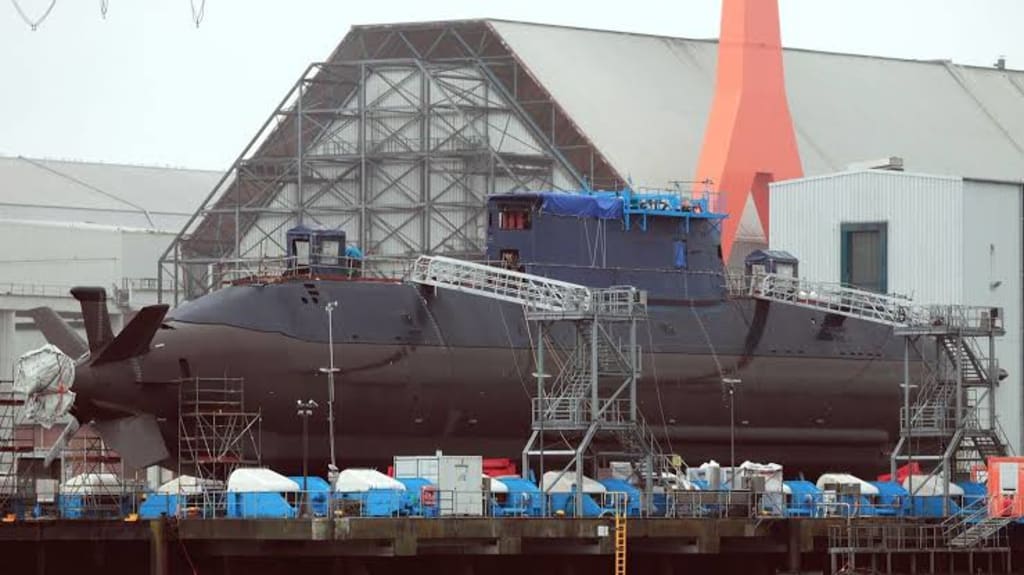
Submarines have always occupied a unique position in naval warfare. Unlike surface warships, they can disappear beneath the ocean, operate with limited visibility, monitor maritime activity and potentially threaten much larger vessels. For countries seeking a powerful underwater capability without purchasing nuclear-powered submarines, German-designed conventional submarines have become an important option.
One of the most notable developments in this field is the growth of the Type 218SG submarine operated by Singapore. The approximately 2,000-ton class represents an advanced evolution of German submarine technology and demonstrates how European engineering has influenced the naval capabilities of a close U.S. security partner.
German Technology Meets Singaporean Requirements
Singapore selected Germany's ThyssenKrupp Marine Systems to supply Type 218SG submarines as part of a major effort to modernize its underwater fleet. The vessels are derived from the Type 214 family but were developed to meet Singapore's specific operational requirements.
The Type 218SG is designed as a conventionally powered attack submarine with air-independent propulsion. Its reported displacement places it in the roughly 2,000-ton category, giving it a balance between size, endurance and maneuverability.
The class is particularly interesting because Singapore operates in one of the world's busiest maritime environments. The country's strategic position near major shipping routes means that control and surveillance of surrounding waters are essential to national security.
Why a 2,000-Ton Submarine Matters
A submarine does not need to be enormous to be dangerous.
A relatively compact conventional submarine can operate effectively in coastal and regional waters where larger vessels may face greater challenges. Smaller dimensions can also provide advantages in maneuverability and operations around confined maritime environments.
The Type 218SG is designed with an X-shaped stern configuration intended to improve maneuverability, particularly in challenging waters. It also uses air-independent propulsion, allowing the submarine to remain underwater longer than a conventional diesel-electric submarine that must regularly expose or snorkel to replenish its batteries.
That combination makes the platform particularly relevant for maritime surveillance and anti-submarine warfare.
Air-Independent Propulsion Changes Underwater Endurance
Traditional diesel-electric submarines depend heavily on batteries when submerged. Eventually, they need to operate their engines while using a snorkel or surface to recharge.
Air-independent propulsion reduces this limitation.
The Type 218SG uses a fuel-cell-based AIP system. The technology allows the submarine to generate electricity without relying on atmospheric air in the same way as conventional diesel engines.
This does not make the submarine nuclear-powered. Nuclear submarines remain fundamentally different because their reactors can provide power for extremely long periods without requiring conventional fuel replenishment.
However, AIP gives a conventional submarine a valuable advantage: extended submerged operations while maintaining a relatively compact platform.
Advanced Sensors Are Central to the Mission
Modern submarine warfare is not simply about carrying weapons.
The most important capability may be the ability to detect another vessel before being detected.
Submarines therefore depend heavily on sonar systems, electronic sensors, communications equipment and combat-management systems. These technologies allow crews to build an underwater picture of surrounding activity and determine whether contacts represent commercial ships, friendly forces or potential threats.
The Type 218SG incorporates advanced combat and sensor technologies intended to support these missions.
For Singapore, this capability has particular significance because the waters surrounding the country contain enormous amounts of commercial traffic. A submarine must distinguish between ordinary shipping and military activity while remaining difficult to detect.
A Powerful Tool for a Small Country
Singapore does not have the geographic depth of major continental powers. Its territory is relatively small, but its economic dependence on maritime trade is enormous.
That makes underwater surveillance strategically important.
A sophisticated submarine fleet gives Singapore the ability to monitor approaches to its waters and complicate the calculations of any potential adversary.
It also provides another advantage: deterrence.
A potential enemy may be reluctant to send valuable surface ships into an area where advanced submarines could be operating undetected.
This is one reason conventional submarines remain attractive to countries that cannot or do not want to operate nuclear-powered boats.
German Submarine Engineering Has a Long Legacy
Germany has developed some of the world's best-known conventional submarine technologies.
Modern German submarine designs emphasize stealth, efficient propulsion, sophisticated sensors and relatively quiet underwater operation. These characteristics have made German-built and German-derived submarines attractive to navies across Europe, Asia and the Middle East.
The Type 218SG represents the continuation of that technological tradition rather than a return to the much larger submarines used during the Second World War.
The comparison is nevertheless striking. Germany's wartime submarine fleet helped define undersea warfare in the twentieth century, while modern German engineering is focused on highly sophisticated, low-signature conventional submarines designed for precision and survivability.
The Global Submarine Competition Is Growing
Submarine procurement has become increasingly important as countries strengthen their maritime forces.
Australia is pursuing nuclear-powered submarines through the AUKUS partnership. The United Kingdom and France maintain sophisticated nuclear submarine fleets. China is expanding its undersea capabilities, while Russia continues modernizing its submarine force.
At the same time, countries such as Singapore, Indonesia, South Korea and others are investing heavily in advanced conventional submarines.
This creates a diverse underwater military environment in which nuclear-powered and conventional submarines serve different strategic purposes.
Why This Matters for the United States
Although Singapore is not a treaty ally of the United States in the same way as Japan or Australia, it is an important U.S. security partner in Southeast Asia. Singapore's sophisticated military capabilities contribute to the broader regional balance.
The country's submarine modernization therefore has significance beyond its own waters.
A stronger Singaporean underwater force can contribute to maritime security around important sea lanes connecting the Indian and Pacific oceans.
It also demonstrates how advanced conventional submarines can provide meaningful military capability without the enormous costs and political complexity associated with nuclear propulsion.
The Future of Conventional Submarines
The future submarine battlefield will likely be shaped by stealth, sensors, autonomy, artificial intelligence and increasingly sophisticated weapons.
The basic principle, however, remains unchanged: the submarine's greatest advantage is its ability to remain difficult to find.
The 2,000-ton German-derived submarine concept demonstrates how modern naval engineering can place significant combat capability inside a comparatively compact platform.
Rather than measuring a submarine's power only by its size, modern navies increasingly look at what it can detect, how quietly it can operate, how long it can remain underwater and how effectively it can integrate into a wider network of ships, aircraft and sensors.
That is the real significance of Germany's continuing influence on conventional submarine technology.
The era of giant underwater fleets may have changed, but the strategic value of a submarine that can disappear beneath the waves—and remain there—is as important as ever.
About the Creator
Enjoyed the story? Support the Creator.
Subscribe for free to receive all their stories in your feed.
Comments
There are no comments for this story
Be the first to respond and start the conversation.