women in politics
Talking female politicians, feminist activists, and all the the ways women around the world are changing the landscape of the Swamp, be it for better or worse.
How China Became a Superpower
China's emergence as a global superpower is one of the most significant transformations in modern history. Over the past four decades, the nation has evolved from a largely agrarian, impoverished country into the world’s second-largest economy and a central player in global geopolitics. This transformation has been driven by a unique blend of economic reform, strategic state planning, political stability, and global engagement. Historical Background In 1949, the People’s Republic of China was established under the leadership of the Communist Party, ending decades of civil war and foreign occupation. However, the initial decades of communist rule were marked by economic stagnation and political upheaval, such as the Great Leap Forward and the Cultural Revolution. These movements severely disrupted China’s development, resulting in widespread poverty and inefficiency. The turning point came in 1978, when Deng Xiaoping initiated a series of reforms that would lay the foundation for China’s rise. By introducing market-oriented policies and opening up to foreign investment, China began to shift from a planned economy to a "socialist market economy." This hybrid model retained state control in key sectors while embracing capitalism in others. Economic Reform and Growth China's economic growth since the 1980s has been nothing short of phenomenal. Through a strategy known as “Reform and Opening-Up,” the country encouraged private enterprise, created Special Economic Zones (SEZs), and welcomed foreign investment. These changes unleashed massive productivity, moved millions out of poverty, and turned China into the “world’s factory.” Between 1980 and 2020, China's GDP grew at an average annual rate of nearly 10%. It became the world’s largest exporter and a manufacturing powerhouse, producing everything from electronics to textiles. Infrastructure development also played a key role, with massive investments in roads, railways, ports, and urban development. Technological Advancement In recent years, China has shifted focus from low-cost manufacturing to high-tech innovation. Government initiatives like "Made in China 2025" aim to dominate industries such as robotics, AI, biotechnology, and green energy. Chinese tech giants like Huawei, Tencent, and Alibaba have become global leaders, and the country has made major strides in areas like 5G, electric vehicles, and quantum computing. China is also investing heavily in space exploration, with the Chang’e lunar missions and a growing presence in satellite and space station technologies. These advances not only reflect economic power but also signify strategic influence on the global stage. Military Modernization Another critical aspect of China's superpower status is its military transformation. The People’s Liberation Army (PLA) has undergone extensive modernization, focusing on advanced weaponry, cyber capabilities, and maritime strength. With the world's largest standing army and the second-largest defense budget, China is increasingly asserting its influence in the South China Sea, Taiwan Strait, and beyond. The Belt and Road Initiative (BRI), though primarily economic, also serves strategic purposes by expanding China's influence across Asia, Africa, and Europe through infrastructure projects and investments. Diplomatic and Political Influence China has strategically positioned itself as a leader in the Global South, offering loans, aid, and infrastructure to developing nations. Through platforms like the Shanghai Cooperation Organization (SCO) and the BRICS alliance, it promotes a multipolar world order that challenges Western dominance. At the United Nations and other international institutions, China plays an increasingly assertive role, advocating for sovereignty, non-interference, and reforms in global governance structures. Domestic Stability and Governance Unlike many other emerging powers, China has maintained internal political stability through centralized governance by the Communist Party. The government’s long-term planning—through five-year plans and strategic economic directives—has ensured consistent development goals and policy continuity. While criticisms exist over human rights and political freedoms, the Chinese model has proved effective in achieving rapid economic and technological progress under a controlled political environment. Challenges Ahead Despite its rise, China faces significant challenges: a shrinking workforce due to an aging population, environmental degradation, debt levels, and geopolitical tensions with the U.S. and its allies. Questions also remain about the sustainability of its political model and how it will handle domestic pressures for reform. Conclusion China's journey to becoming a superpower is the result of strategic reforms, economic planning, and a vision for national rejuvenation. Its rise is reshaping the global balance of power and forcing a rethinking of international relations. Whether it can maintain this trajectory will depend on how it navigates both internal challenges and the complex dynamics of the 21st-century world.
By Shah saab ITabout a year ago in The Swamp
The Hair Dance in Qatar: What Does It Mean?
In a world of social media virality, political symbolism, and cultural ambiguity, one short video clip can stir up global curiosity, criticism, or even laughter. This is exactly what happened when a video from Qatar went viral online—showing a high-profile Qatari politician performing what many have labeled a “hair dance” in honor of Donald Trump. As the camera zooms in on his animated head movements and hair shaking, viewers are left baffled. What is this act? A gesture of hospitality? A satire? Or something else altogether?
By Keramatullah Wardakabout a year ago in The Swamp
Martha Karua: Age, Husband, Net Worth, Education, Biography & More
Martha Karua is one of Kenya’s most respected and influential politicians, known for her unwavering commitment to justice, democracy, and human rights. With a career spanning decades as a lawyer, cabinet minister, and presidential candidate, Karua has carved out a unique legacy as a fearless advocate for the rule of law.
By Marveline Merababout a year ago in The Swamp
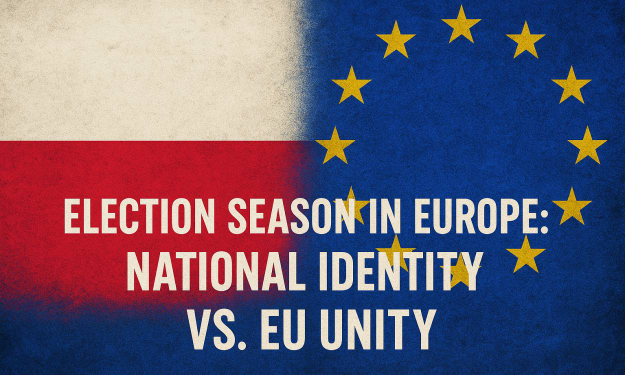
🇵🇱 European Elections and Rising Nationalism
Election Season in Europe: National Identity vs. EU Unity As spring 2025 turns to summer, voters from Warsaw to Lisbon—and from Bucharest to Dublin—are filing into gyms, town halls, and makeshift poll stations for the most consequential European election season in a decade. The headlines shout about populist surges, cyber-intrigue, and razor-thin polls, but the deeper story is an old question with new urgency: Can national identity comfortably coexist with the promise—and the constraints—of European Union unity? --- A Continent of Parallel Referendums Europe’s “super-cycle” of elections this year is unusually dense: Poland is choosing a president; Romania and Portugal hold general elections; Austria elects a new parliament just four weeks later; And in June, all 27 EU member states vote for the European Parliament. Traditionally, these contests unfold on separate timetables. In 2025, however, they overlap, allowing a single, trans-continental conversation to echo from capital to capital. And the common denominator is identity politics—how a nation sees itself versus how it fits inside a 450-million-person union. --- Poland: Between Civic Patriotism and Cultural Conservatism Polls put Warsaw’s liberal mayor Rafał Trzaskowski neck-and-neck with conservative historian Karol Nawrocki. Trzaskowski frames Poland as a “responsible European stakeholder,” promising to repair bruised relations with Brussels and to unlock €35 billion in frozen recovery funds. Nawrocki counters that Europe’s technocrats “do not understand Polish culture or sacrifice,” highlighting Catholic values, strict border controls, and wary views of Germany. The clash is not merely rhetorical; it could rewrite Poland’s constitution. Trzaskowski’s coalition wants to loosen one of the EU’s tightest abortion regimes and embed a stronger separation of church and state. Nawrocki vows to entrench an “unborn child protection” clause and elevate the Polish language’s constitutional status. Either path would become a test case for how far national constitutions can diverge from EU human-rights norms without triggering punitive measures from Brussels. --- Romania: Populism Learns to Speak Brussels If Poland exemplifies a tug-of-war between cosmopolitan and conservative definitions of nationhood, Romania’s far-right upstart George Simion demonstrates how nationalist rhetoric is evolving. Simion’s slogan “We Build Here” rails against perceived “colonial” investment by French banks and Austrian retailers, yet he also insists he would not take Romania out of the EU: “We respect the club—provided the club respects us.” Analysts call this “Euro-sovereigntism”—a strategy of leveraging EU rules to defend local industries while fending off deeper political integration. Simion demands the same agricultural subsidy formula that benefits French farmers and threatens to veto any new EU climate regulation that “kills Romanian coal.” In other words, the union becomes both scapegoat and shield, proving how malleable the project has become in the populist imagination. --- Portugal and Austria: The Centrist Counter-Punch Not every ballot is bending rightward. In Portugal, Socialist incumbent Marta Carvalho is favored to win a fresh mandate running on a straightforward pro-EU platform: robust green-energy investment financed by the EU Recovery Fund, plus a pledge to hit NATO’s 2 percent defense target. Her rally crowds chant “Europa, Europa,” illustrating how southern Europe’s memory of the euro-crisis still ties prosperity to Brussels. Austria, meanwhile, provides a textbook centrist comeback. Former chancellor Alexander Schallenberg rebuilt his battered People’s Party by adopting pragmatic migration quotas and clear support for EU enlargement in the western Balkans—policies that peel moderate voters away from the nationalist Freedom Party. Polls suggest a narrow People’s-Green coalition victory, hinting that disciplined centrism can still defeat identity-driven polarization. --- Digital Battlefields and Cyber Borders No modern European election escapes the digital arena. Poland’s intelligence service has traced thousands of social-media ads smearing Trzaskowski’s LGBTQ-rights stance to Russian-linked IP addresses. In Romania, deep-fake videos of Carvalho speaking broken Romanian—intended to mock elite Portuguese accents—were shared 1.8 million times on TikTok before being removed. Brussels has rolled out the Digital Services Act (DSA) requiring platforms to delete demonstrably false electoral content within 24 hours, but critics say enforcement lags. Tech-policy scholar Dr. Liisa Väyrynen notes, “The irony is that online disinformation travels along the same borderless network that once symbolized Europe’s unity.” The EU thus faces a paradox: protecting national elections may demand new cross-border regulations that feel, to some voters, like further encroachment. --- The Economics Underneath the Flags Beyond culture wars and meme warfare lies a concrete economic dilemma. The European Commission’s latest forecast projects GDP growth of 0.7 percent in 2025, sluggish by global standards. Energy costs remain volatile despite lower natural-gas prices, and defense spending has surged because of Russia’s 2024 offensive near Kharkiv. For many households, the EU’s single market still means cheaper flights and Erasmus scholarships; for small manufacturers in Łódź or Sibiu, it means German rivals outgunning them on scale. When Nawrocki decries “unequal competition,” or Simion demands “fair steel quotas,” they tap into legitimate discontent that Brussels often addresses with slow-moving funds rather than quick-fire narratives. --- What Unity Looks Like Now Is the European project fracturing? Not quite. Even the loudest nationalist leaders stop short of advocating a Brexit-style exit. The pragmatic calculus—access to €700 billion of recovery money, intelligence sharing against Russia, collective vaccine procurement—remains persuasive. Yet the union is morphing into a looser, more transactional federation. Political scientist Prof. Lucía Reyna describes the emerging model as “variable-geometry Europe”: countries cluster into mini-alliances—Nordic digital champions, Visegrád migration hawks, Mediterranean energy cooperatives—pursuing tailored integration levels. Elections in 2025 are accelerating this trend by rewarding politicians who master the dual language of sovereignty at home and savvy bargaining in Brussels. --- The Ballot-Box Forecast Will voter angst translate into sweeping constitutional upheavals? Poll-averages as of mid-May suggest a mixed verdict: The European Parliament could see the nationalist Identity & Democracy group rise from 84 to roughly 110 seats—significant, but still far from a majority in the 720-seat chamber. In national capitals, at least two of four high-profile races (Poland, Portugal, Austria, Romania) look likely to keep centrist or center-left governments in power. These numbers imply a pluralist parliament where coalitions will be messy but workable. For the EU, that means more debates on migration quotas, industrial-policy subsidies, and rule-of-law benchmarks—but no existential rupture. --- Conclusion: A Reluctant Renegotiation Europe’s 2025 election season underscores that national pride and European unity are not mutually exclusive, yet neither sits comfortably atop the other. Voters crave both the security of belonging to a powerful bloc and the reassurance that their unique languages, churches, and local industries will not be steamrolled by distant technocrats. The likely outcome is a continuous, sometimes exhausting renegotiation of competences: border policy here, fiscal transfers there, digital rules everywhere. As ballots are counted and coalitions formed, the takeaway is clear: Europe’s story is no longer a linear march toward “ever closer union,” but a mosaic of identities learning, argument by argument, how to share a roof without erasing the paint on each other’s front doors. In that sense, the contest between national identity and EU unity is not a battle to be won or lost in 2025; it is the defining conversation that will shape European democracy for decades to come.
By World politics about a year ago in The Swamp
The Bondi Stabbings: how misogyny motivated a psychotic attack. Content Warning.
The Sydney Bondi Westfield shopping mall is one I know extremely well as I live ten minutes away. I would end up in there for an hour or two each week because my physiotherapist is nearby. Since my partner and I sustained life-changing injuries in a fatal tour bus crash, I would, after physio, as my partner had her treatment, walk slowly and cautiously around the mall. I suffer PTSD from the crash; so, crowds and crowded places, loud noise, are enough to cause a panic attack. Slowly, unknowingly, this shopping mall became a safe space for me. I would shuffle around, buy Pokémon cards, Squishmallows to rest my broken back on, and the occasional coffee and cookie combination. I made friends with a few of the store workers. The injuries from the crash left me socially isolated, I can’t do what I did before, I have chronic pain: the crash was life-changing. It is odd to say, but on reflection, the shopping mall became a haven for me; a place to get a little treat after painful physio sessions. On Saturday, 13 April 2024, when I heard the news of the murders, I had a devastating panic attack.
By Josh Clementsabout a year ago in The Swamp
Gladys Wanga: Husband, Age, Biography, Family, Education, Net Worth & More
Gladys Wanga has never been one to follow the crowd. A trailblazer from Homabay, she’s gone from grassroots activism to becoming one of Kenya’s most influential female leaders. Her journey is marked by courage, conviction, and a commitment to public service that’s earned her admiration far beyond her county borders. So who is the woman behind the title? Let’s take a closer look at her life — from her family and education to her rise in politics and the legacy she’s building.
By Marveline Merababout a year ago in The Swamp
Male 'Heroes' Are Just Janitors Cleaning Up Other Men's Messes.
Name one war started because a woman was "too emotional." Go ahead, I'll wait. You can't name a single one. But you could easily list dozens started by men's wounded pride, fragile egos, and emotional outbursts disguised as political strategy - from World War I (sparked by wounded male honor after an assassination) to the genocide in Rwanda (fueled by male leaders' tribal insecurities). The pattern is undeniable: when men's emotions run hot, people die. When women get emotional, we're told to calm down.
By Amanda Ngcoboabout a year ago in The Swamp
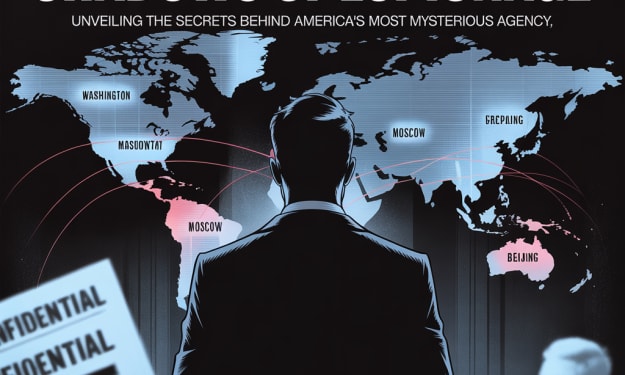
Inside the CIA: America’s Secret Intelligence Agency
From Cold War Tactics to Cyber Wars: The CIA’s Global Reach In the shadows of global politics, where nations maneuver not through diplomacy alone but through secrecy, deception, and surveillance, the Central Intelligence Agency (CIA) stands as one of the most powerful and enigmatic institutions in the world. Born from the ashes of World War II and raised during the height of the Cold War, the CIA has evolved from traditional espionage operations to become a digital-age intelligence giant. Its reach extends across borders, ideologies, and technologies—operating in a world where knowledge is power and information can change the fate of nations. As threats have shifted from Soviet missiles to cyberterrorism and AI warfare, so too has the CIA adapted, making it not only a historical cornerstone of American security but also a critical player in today’s global power struggle. The Origins: An Agency Born in Secrecy The CIA was formally established in 1947 under the National Security Act, but its roots trace back to the Office of Strategic Services (OSS), the United States' first intelligence agency during World War II. Designed to combat Nazi Germany and Imperial Japan through covert operations, the OSS laid the foundation for modern U.S. espionage. When the Cold War began, the United States recognized the need for a peacetime intelligence service capable of gathering foreign information and executing clandestine operations. Thus, the CIA was born—not as a military branch, but as an independent civilian agency reporting directly to the President. Cold War Operations: Spies, Coups, and Proxy Wars The Cold War era defined the CIA’s early years. It was during this period that the agency conducted some of its most controversial and defining operations. The primary adversary was the Soviet Union, and the battlefield was the entire world. Through programs like Operation AJAX in Iran (1953) and Operation PBSUCCESS in Guatemala (1954), the CIA orchestrated coups to install pro-American regimes. It ran surveillance and counterintelligence against Soviet spies and played key roles in proxy wars like Vietnam and Afghanistan. The agency’s use of human intelligence (HUMINT), psychological warfare, and propaganda became hallmarks of its Cold War strategy. However, not all actions met success. The failed Bay of Pigs Invasion in Cuba (1961), an attempt to overthrow Fidel Castro, became a major embarrassment. Nonetheless, these years solidified the CIA’s reputation as a formidable and secretive power broker in international affairs. The Post-Cold War Shift: Terrorism and Rogue States With the collapse of the Soviet Union in 1991, the CIA faced a moment of existential uncertainty. Without its traditional enemy, the agency had to adapt. In the 1990s and early 2000s, its focus shifted to emerging threats: rogue states, international terrorism, and the spread of weapons of mass destruction. After the 9/11 terrorist attacks, the CIA entered a new era. It was at the forefront of the War on Terror, playing key roles in tracking Al-Qaeda, capturing or killing terrorist leaders, and operating secret detention facilities. The agency’s controversial use of “enhanced interrogation techniques”, drone strikes, and black sites ignited debates on ethics, legality, and human rights—questions that still haunt the agency’s legacy. Enter the Cyber Era: Intelligence in the Digital Age Today, the battlefield has shifted again—from deserts and jungles to cyberspace. The rise of cyberwarfare, state-sponsored hacking, and digital espionage has pushed the CIA to evolve once more. The agency now works closely with other U.S. intelligence bodies like the NSA and FBI to counteract threats from nations such as China, Russia, Iran, and North Korea, which use cyberattacks as a form of asymmetric warfare. The CIA has also developed capabilities to monitor global internet traffic, infiltrate secure communications, and conduct offensive cyber operations—all while protecting U.S. national interests from increasingly sophisticated cyber threats. Additionally, emerging technologies such as artificial intelligence, big data analytics, satellite imagery, and biometric surveillance have given the CIA new tools in its intelligence arsenal. With these, it can track individuals globally, predict political upheavals, and identify terrorist plots before they unfold. Global Reach, Ethical Debate Despite its strategic importance, the CIA continues to face criticism and scrutiny. Leaks by whistleblowers such as Edward Snowden and WikiLeaks' Vault 7 disclosures revealed the extent of CIA surveillance and hacking capabilities. These revelations sparked global conversations about privacy, civil liberties, and the balance between security and freedom. Domestically, the CIA is overseen by the Senate Intelligence Committee, but many argue that real transparency is lacking. Internationally, its covert actions often blur the lines between security and interference, leading some to view it as both a protector and a puppet master. Conclusion: A Shadow That Shapes the Future From covert Cold War missions to cyber operations in the digital age, the CIA’s evolution reflects the changing nature of global conflict. Its ability to adapt to new threats has made it a pillar of American defense and foreign policy. Yet with great power comes great responsibility—and the agency’s future will depend not just on its technological capabilities, but also on its commitment to ethics, oversight, and transparency in an increasingly interconnected world.
By World politics about a year ago in The Swamp
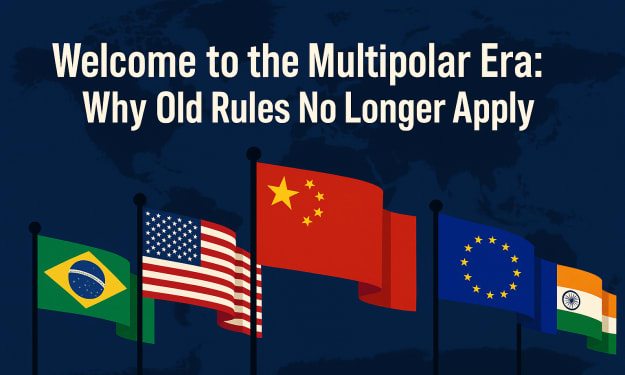
“Welcome to the Multipolar Era: Why Old Rules No Longer Apply”
Welcome to the Multipolar Era: Why Old Rules No Longer Apply Inside the Rise of a World Where No One Power Calls the Shots --- Introduction Not long ago, world politics revolved around a single axis — the United States. Following the Cold War, America’s military might, economic dominance, and cultural influence gave it an unrivaled role in setting global agendas. But that era is fading fast. Today, we live in a world where no single nation can dictate the terms. Power is more distributed, alliances are more fluid, and the rules of engagement are constantly shifting. From Beijing to Brasília, from Ankara to New Delhi, a new set of actors is redefining influence in a chaotic and contested global order. The question is no longer who leads — it's how the world manages without clear leadership. --- The End of Unipolarity The post-Cold War unipolar moment, which placed the U.S. at the apex of global power, is now history. Two decades of military overstretch, internal political divisions, and economic upheaval have eroded America's ability to act as the world's de facto leader. The withdrawal from Afghanistan, inconsistent global policies, and an increasingly inward-looking electorate have signaled a step back from the assertive global policing of the early 2000s. This vacuum hasn't gone unnoticed. Instead of a new hegemon rising to replace the old, what we see is a diffusion of power across multiple regional centers. It’s not a bipolar world of the Cold War era, nor a balanced multipolar structure of the early 20th century. This new landscape is messy, unstable — and permanent. --- China and the Economic Realignment China stands at the forefront of this shift, but even its rise comes with caveats. With the Belt and Road Initiative, Beijing has extended its economic reach into Asia, Africa, and parts of Europe. Its influence over supply chains, infrastructure, and digital technologies challenges the dollar-based global system. However, China's ambitions face resistance. Tensions over Taiwan, territorial disputes in the South China Sea, and pushback from Western nations on tech and trade indicate that its power, while rising, is also contested. China is not replacing the U.S. — it’s carving out its own sphere, one that’s economic rather than ideological, and subject to friction. --- Russia’s Military Gambit and Strategic Isolation Russia, too, has sought to challenge the Western-dominated order, most dramatically through its invasion of Ukraine. While the war has demonstrated Moscow’s willingness to use force to protect perceived national interests, it has also exposed its strategic limits. Sanctions, international condemnation, and battlefield losses have isolated Russia from much of the world economy, while simultaneously deepening its ties with non-Western partners like Iran and China. In trying to redefine regional borders by force, Russia has sparked a renewed unity among NATO members, paradoxically reinforcing the very alliances it sought to divide. --- Middle Powers and Fluid Alliances Perhaps the most defining feature of the multipolar era is the rise of middle powers — nations like India, Brazil, Turkey, and Saudi Arabia that are no longer content to align strictly with the West or East. These countries pursue strategic autonomy, balancing relationships across global fault lines. India, for example, is a member of the Quad (with the U.S., Japan, and Australia) while also maintaining defense ties with Russia and participating in BRICS. Turkey, a NATO member, buys Russian arms and projects influence across Central Asia and the Middle East. These states navigate global politics based not on ideology, but on opportunity and self-interest. --- Global Institutions Under Strain The United Nations, World Trade Organization, and other postwar institutions are increasingly ineffective at managing today’s fragmented world. Vetoes stall progress at the UN Security Council. Trade disputes paralyze the WTO. And new power blocs like BRICS and the Shanghai Cooperation Organization aim to create parallel systems that reflect non-Western values and priorities. The rules-based international order — long championed by the West — now finds itself questioned not only by adversaries, but by allies frustrated with its limitations and hypocrisy. --- Technology, Climate, and the New Arenas of Power While traditional power still matters, influence in today’s world is also determined by less tangible forces. Control over technologies like artificial intelligence, 5G, and semiconductors is becoming as critical as nuclear weapons were in the past. Meanwhile, climate change, pandemics, and migration flows expose the limitations of national solutions to global problems. These issues demand coordination, yet in a fragmented world, cooperation is the first casualty of geopolitical rivalry. --- Conclusion: Embracing Complexity The multipolar era is not just a phase — it is the defining condition of our time. It offers opportunities for a more inclusive, balanced world, but also risks greater instability, miscalculation, and fragmentation. Old rules no longer apply, because the old world no longer exists. The future will depend not on domination, but on how nations adapt, negotiate, and share power in a world where no one — and everyone — leads.
By World politics about a year ago in The Swamp
The Reality Behind the Pahalgam Attack: Unraveling the Security and Sovereignty Crisis in India
The recent attack in Pahalgam, Jammu and Kashmir, has once again exposed deep vulnerabilities in India’s internal security framework. Known for its natural beauty and spiritual significance, Pahalgam has become an unfortunate symbol of the broader tensions simmering in the Kashmir Valley. The attack not only resulted in tragic loss of life but also triggered national anxiety, raising fresh questions about India’s security preparedness, political direction, and regional stability. The Attack and Its Immediate Fallout Initial reports indicate that the attack targeted security personnel and possibly civilian pilgrims. Pahalgam, which lies along the Amarnath Yatra route, has historically been a sensitive area during pilgrimage season. Despite heavy security deployment, the assailants managed to strike, highlighting lapses in surveillance and intelligence. In response, authorities initiated widespread security operations and placed the region on high alert. The attack sent shockwaves across the nation. Public outcry and political criticism followed, with opposition leaders questioning the government’s handling of Kashmir and demanding accountability. Gaps in Security Preparedness One of the most concerning aspects of the Pahalgam attack is the clear failure in anticipating and preventing such an incident. Despite years of counter-insurgency operations, India continues to face challenges in detecting threats before they materialize. The ability of militants to coordinate and execute attacks in highly monitored zones indicates gaps in local intelligence, coordination between agencies, and community engagement. Moreover, the over-reliance on militarized responses often alienates local populations, making it harder to build trust and gain actionable information from communities that are crucial to long-term peace efforts. Regional and Geopolitical Undercurrents India’s challenges in Kashmir are not purely domestic. Pakistan’s alleged support for insurgent groups operating in the region remains a core concern. Cross-border infiltration, proxy warfare, and the spread of radical ideologies are all factors that contribute to persistent instability. Beyond Pakistan, developments in Afghanistan post-2021 and growing Chinese interests in Ladakh have added complexity. With China actively asserting its presence in nearby regions and maintaining its territorial claims, India faces a dual-front strategic threat. These geopolitical pressures complicate India’s internal security calculations in Kashmir and demand a more nuanced, multidimensional response. Public Sentiment and National Unity Events like the Pahalgam attack deeply affect public sentiment across India. While there is often a surge of patriotism and support for security forces, there is also frustration over repeated lapses and political inaction. Many Indians feel a growing disconnect between the government’s strong national security rhetoric and the ground reality in conflict-prone regions. In Jammu and Kashmir itself, such incidents disrupt efforts at normalization, development, and integration. People who hope for peace and progress find themselves caught between militant threats and state crackdowns, often with limited access to justice or political representation. A Blow to India’s Sovereignty? Attacks like the one in Pahalgam go beyond immediate violence—they strike at the very notion of sovereignty and state control. For a country seeking global leadership and regional dominance, repeated security failures in a part of its own territory weaken its strategic credibility. Sovereignty isn’t just about geography—it’s about the state’s ability to ensure peace, justice, and development within its borders. On that front, India has work to do. The Path Forward: Beyond Military Response India must rethink its Kashmir policy in a comprehensive way. While a strong security apparatus is vital, it must be complemented by long-term social, economic, and political strategies. This includes: Improved intelligence sharing across agencies and regions. Increased community engagement, especially with youth, to counter radicalization. Infrastructure development that includes local voices and addresses real needs. Rebuilding trust through justice, dialogue, and transparent governance. International diplomacy to isolate hostile elements and apply pressure on state sponsors of terrorism. India’s leadership must show not just strength, but also wisdom and compassion. --- Conclusion The Pahalgam attack is a harsh reminder that the road to peace in Jammu and Kashmir remains difficult and dangerous. Yet, it also offers an opportunity—a moment to pause, reflect, and reset. Security alone cannot win this battle. Only a combination of vigilance, vision, and values can bring lasting stability to the region and uphold the promise of a united, sovereign India.
By Shah saab ITabout a year ago in The Swamp
Pro Life Journalist Gets Sucker Punched in the Face by New York Woman . Content Warning.
A pro-life conservative journalist gets sucker punched by a Bronx woman. The video went viral with mixed reactions. Was she wrong for sucker punching her or she got what she deserved? Or Was she doing her journalism job? Before I give my personal opinion, let's discuss what happened before the brutal attack.
By Gladys W. Muturiabout a year ago in The Swamp
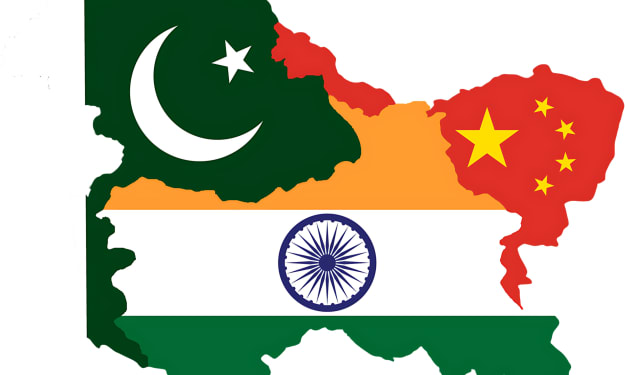
India and Pakistan Face Off Over Kashmir Terror Attack: Is South Asia Headed for a Major Conflict?
rorist attack in Indian-administered Kashmir. The April 22 attack in the scenic town of Pahalgam, a popular destination for Hindu pilgrims, killed at least 26 people and injured dozens more. Claimed by a militant group called *The Resistance Front*, the incident has triggered a wave of retaliation from the Indian government and a strong counter-response from Pakistan, bringing the nuclear-armed neighbors to the brink of confrontation once again. As of late April 2025, both countries have taken dramatic diplomatic, military, and strategic measures that signal a sharp deterioration in relations. This sudden breakdown comes amid an already tense regional atmosphere and raises fears of yet another armed conflict over the disputed territory of Kashmir. The Kashmir Flashpoint: A History of Violence and Dispute The Kashmir region has long been a hotbed of conflict between India and Pakistan, dating back to the partition of British India in 1947. Both nations claim the region in full, but each controls a portion—India administers Jammu and Kashmir, while Pakistan governs what it calls Azad Kashmir. Over the decades, this unresolved territorial dispute has led to three full-scale wars and countless skirmishes along the Line of Control (LoC), the de facto border dividing the two parts of Kashmir. What makes this current situation particularly dangerous is the nature of the attack and its aftermath. The targeting of Hindu pilgrims in Pahalgam has not only shocked India but also inflamed religious and nationalistic sentiments. It is being seen not just as an act of terrorism, but a symbolic attack on India’s cultural and religious heritage. India has accused Pakistan of backing the militant group responsible for the attack, citing long-standing evidence of cross-border terrorism. While Pakistan denies any involvement, the Indian government insists that such organizations operate with impunity in Pakistani territory, using it as a base to strike inside India. India’s Strong Response: Diplomatic and Military Escalation In response to the Pahalgam attack, Indian Prime Minister Narendra Modi’s administration moved swiftly. Within hours, high-level security meetings were convened, and within days, India initiated a series of sweeping actions: Suspension of the Indus Waters Treaty: This landmark water-sharing agreement, brokered in 1960 by the World Bank, has withstood decades of conflict. Its suspension is a rare and bold move that signals how deeply New Delhi views the current crisis. Cancellation of all Pakistani visas: India has revoked all visas issued to Pakistani nationals, effectively shutting down travel and cultural exchanges between the two countries. Expulsion of Pakistani diplomats: Several Pakistani officials were ordered to leave India, and New Delhi recalled its own diplomats from Islamabad. Military freedom of action: The Indian Army has been given “full operational freedom” to respond to provocations along the LoC, indicating the possibility of cross-border operations or retaliatory strikes. These steps mark one of the most severe diplomatic breakdowns between the two countries in recent memory. They also suggest that India is preparing for a range of responses, including potential military retaliation. Pakistan's Reaction: Strategic Posturing and International Appeals Pakistan, in turn, has responded aggressively. Prime Minister Shehbaz Sharif condemned India’s actions and accused New Delhi of using the attack as a pretext to justify harsh measures against Kashmiris and provoke war. Pakistan’s countermeasures include: Closure of airspace to Indian aircraft, affecting both commercial and military flights. Suspension of bilateral agreements, including aspects of the 1972 Simla Agreement, which governs peaceful conflict resolution between the two nations. Mobilization of military forces along the LoC, accompanied by increased patrols and strategic deployments. Capture of an Indian soldier, who allegedly crossed the border accidentally, adding further strain to military relations. Pakistan has also appealed to international bodies such as the United Nations and the Organization of Islamic Cooperation (OIC) to intervene diplomatically. Islamabad claims India is inflaming the situation and using the tragedy to distract from alleged human rights abuses in Jammu and Kashmir. Global Concern: Calls for Restraint Amid Nuclear Risk Given that both India and Pakistan possess nuclear weapons, the situation has alarmed the international community. The United States, European Union, United Nations, and other key players have issued urgent calls for de-escalation and a return to diplomacy. U.S. Secretary of State Marco Rubio has announced plans to speak directly with his counterparts in New Delhi and Islamabad. The goal, according to the State Department, is to prevent any further deterioration of the situation and to encourage dialogue. Meanwhile, China—an ally of Pakistan and a regional power with interests in Kashmir—has issued a cautious statement urging restraint and peace, without clearly siding with either nation. The potential for regional spillover remains high, especially if either country initiates a military strike. Media and Public Opinion: Nationalism on the Rise The media on both sides of the border have intensified nationalist rhetoric. In India, television networks are calling for strong retaliatory action, echoing sentiments of revenge and justice for the victims of the Pahalgam massacre. In Pakistan, state media presents India’s actions as unjustified aggression and highlights the humanitarian crisis in Kashmir. Social media is flooded with polarized hashtags like #StandWithIndia, #StopTerror, #FreeKashmir, and #StopIndianAggression, reflecting deep divisions and the powerful role of digital platforms in shaping public opinion. What Lies Ahead: Dialogue or Confrontation? As the crisis unfolds, the coming days will be critical. If India proceeds with military retaliation, the chances of a wider conflict grow significantly. Past confrontations, like the Balakot airstrike in 2019 and the surgical strikes in 2016, suggest that India may consider limited but high-impact operations to punish militant bases in Pakistan. However, such actions could prompt massive retaliation from Pakistan, potentially leading to a cycle of violence neither side can easily control. The international community will need to act swiftly to mediate, but peace will ultimately depend on whether both governments prioritize stability over political gains. Conclusion The recent terror attack in Kashmir has reopened deep wounds between India and Pakistan, putting South Asia on a knife’s edge. With diplomatic ties unraveling and military forces mobilizing, the risk of escalation is real and immediate. Whether cooler heads prevail or the situation devolves into open conflict will depend on the choices made by leaders in New Delhi, Islamabad, and global capitals in the days to come. India-Pakistan Conflict
By NextGen Mobile Techabout a year ago in The Swamp