technology
Talking tech; debates about regulating technology, privacy laws, piracy, and the pitfalls of AI.
" Trump returns to Riyadh "
Riyadh, Saudi Arabia — May 2025 In a move that has captured international attention, former U.S. President Donald J. Trump made a high-profile visit to Saudi Arabia in May 2025, reigniting discussions about U.S. foreign policy, global diplomacy, and the evolving relationship between Washington and Riyadh. The visit, his first since leaving the White House, was marked by both symbolism and substance, offering insights into Trump's ongoing political influence and his vision for America's role in the Middle East. The visit comes amid shifting global dynamics and internal political momentum in the United States, with Trump maintaining a significant presence in the American political landscape. His arrival in Riyadh—hosted with royal fanfare by Crown Prince Mohammed bin Salman—served as a diplomatic spectacle and a platform for serious discussions on regional security, economic cooperation, and strategic alliances. Echoes of 2017, with a New Agenda Trump’s 2025 visit draws inevitable comparisons to his first overseas trip as president in 2017, which also began in Riyadh. At that time, he emphasized unity in the fight against extremism and unveiled a historic $110 billion arms deal. Eight years later, Trump’s return to Saudi Arabia carried a different tone—less about making first impressions and more about reinforcing long-standing ties. This time, the former president met with Saudi leaders to discuss shared concerns over escalating tensions in the Gulf, the evolving role of Iran, and the lingering effects of regional conflicts in Yemen and Syria. Trump was also briefed on Saudi Arabia’s ongoing Vision 2030 projects—massive reforms aimed at modernizing the Kingdom’s economy, society, and infrastructure. Security and Defense Cooperation High on the agenda were matters of defense and regional security. Trump, known for his emphasis on a strong military partnership during his presidency, reiterated the importance of U.S.-Saudi collaboration in counterterrorism and intelligence sharing. Though no official agreements were signed during the visit, sources within the Saudi Ministry of Defense reported discussions about future joint military exercises and potential procurement deals involving U.S. defense contractors. The former president’s visit included a closed-door session with senior Saudi defense officials and U.S. business executives, suggesting that the trip may lead to renewed security cooperation even outside official government channels. Economic Partnerships and Private Sector Diplomacy Another major component of the visit was economic diplomacy. Trump attended the U.S.-Saudi Business Forum in Riyadh, where he gave a keynote address promoting American enterprise, energy collaboration, and investment in Saudi infrastructure. He praised the Kingdom’s progress on its Vision 2030 goals and encouraged U.S. companies to take part in the transformation of Saudi cities and industries. Key sectors under discussion included renewable energy, artificial intelligence, tourism, and digital infrastructure. Trump's presence helped draw attention to several new partnerships between American firms and Saudi state-backed ventures—deals that, while not yet finalized, represent billions of dollars in potential investment. Political Undertones and Global Optics While the visit was framed as a private diplomatic mission, its political undertones were unmistakable. As Trump continues to play a dominant role in U.S. political discourse—either as a former president or a prospective candidate—his international engagements are scrutinized through a political lens. The 2025 visit to Riyadh, therefore, served not only as a gesture of goodwill toward a longtime ally but also as a platform for Trump to project leadership on the global stage. International media outlets noted the sharp contrast between Trump’s visit and the foreign policy approach of the current U.S. administration, particularly in areas such as arms sales, human rights, and climate cooperation. Analysts suggest that Trump’s return to Saudi Arabia could influence American diplomatic posture in the region, especially if his political aspirations materialize further. Cultural and Symbolic Moments Beyond politics and policy, the visit was rich with symbolism. Trump was received with traditional Saudi hospitality, including a private audience with King Salman, a tour of Diriyah—the birthplace of the Saudi state—and attendance at a gala hosted by the Royal Court. He also visited the King Abdulaziz Center for World Culture and participated in a roundtable with Saudi youth leaders and entrepreneurs. These symbolic gestures were widely covered by regional media, portraying the visit as a reaffirmation of friendship and mutual respect between the two nations. Conclusion: A Strategic and Symbolic Visit Donald Trump's 2025 trip to Saudi Arabia was more than just a return to familiar territory—it was a calculated display of diplomacy, business outreach, and geopolitical messaging. While no major policy breakthroughs were announced, the visit reinforced the enduring relationship between the U.S. and Saudi Arabia and emphasized Trump's continued interest in shaping that partnership. Whether seen as a private citizen wielding influence or a political figure staging a comeback, Trump's presence in Riyadh reminded the world of the complexities of American diplomacy and the personal relationships that often drive it. As the Middle East navigates a new era of challenges and opportunities, the U.S.-Saudi relationship—long shaped by leaders on both sides—remains a central force in the region’s future.
By Kaleem Ullahabout a year ago in The Swamp
Qatar Airways Signs Historic Deal with Boeing for Up to 210 Jets During Trump Visit. AI-Generated.
Qatar Airways Signs Historic Deal with Boeing for Up to 210 Jets During Trump Visit In a landmark move that solidifies growing economic ties between the United States and Qatar, Qatar Airways has signed a monumental agreement to purchase up to 210 jets from American aerospace giant Boeing. The deal, announced during former U.S. President Donald Trump’s official visit to Doha, is estimated to be worth up to $96 billion and represents one of the largest aircraft orders in aviation history.
By Adnan Rasheedabout a year ago in The Swamp
Inside the CIA: America’s Secret Intelligence Agency
From Cold War Tactics to Cyber Wars: The CIA’s Global Reach In the shadows of global politics, where nations maneuver not through diplomacy alone but through secrecy, deception, and surveillance, the Central Intelligence Agency (CIA) stands as one of the most powerful and enigmatic institutions in the world. Born from the ashes of World War II and raised during the height of the Cold War, the CIA has evolved from traditional espionage operations to become a digital-age intelligence giant. Its reach extends across borders, ideologies, and technologies—operating in a world where knowledge is power and information can change the fate of nations. As threats have shifted from Soviet missiles to cyberterrorism and AI warfare, so too has the CIA adapted, making it not only a historical cornerstone of American security but also a critical player in today’s global power struggle. The Origins: An Agency Born in Secrecy The CIA was formally established in 1947 under the National Security Act, but its roots trace back to the Office of Strategic Services (OSS), the United States' first intelligence agency during World War II. Designed to combat Nazi Germany and Imperial Japan through covert operations, the OSS laid the foundation for modern U.S. espionage. When the Cold War began, the United States recognized the need for a peacetime intelligence service capable of gathering foreign information and executing clandestine operations. Thus, the CIA was born—not as a military branch, but as an independent civilian agency reporting directly to the President. Cold War Operations: Spies, Coups, and Proxy Wars The Cold War era defined the CIA’s early years. It was during this period that the agency conducted some of its most controversial and defining operations. The primary adversary was the Soviet Union, and the battlefield was the entire world. Through programs like Operation AJAX in Iran (1953) and Operation PBSUCCESS in Guatemala (1954), the CIA orchestrated coups to install pro-American regimes. It ran surveillance and counterintelligence against Soviet spies and played key roles in proxy wars like Vietnam and Afghanistan. The agency’s use of human intelligence (HUMINT), psychological warfare, and propaganda became hallmarks of its Cold War strategy. However, not all actions met success. The failed Bay of Pigs Invasion in Cuba (1961), an attempt to overthrow Fidel Castro, became a major embarrassment. Nonetheless, these years solidified the CIA’s reputation as a formidable and secretive power broker in international affairs. The Post-Cold War Shift: Terrorism and Rogue States With the collapse of the Soviet Union in 1991, the CIA faced a moment of existential uncertainty. Without its traditional enemy, the agency had to adapt. In the 1990s and early 2000s, its focus shifted to emerging threats: rogue states, international terrorism, and the spread of weapons of mass destruction. After the 9/11 terrorist attacks, the CIA entered a new era. It was at the forefront of the War on Terror, playing key roles in tracking Al-Qaeda, capturing or killing terrorist leaders, and operating secret detention facilities. The agency’s controversial use of “enhanced interrogation techniques”, drone strikes, and black sites ignited debates on ethics, legality, and human rights—questions that still haunt the agency’s legacy. Enter the Cyber Era: Intelligence in the Digital Age Today, the battlefield has shifted again—from deserts and jungles to cyberspace. The rise of cyberwarfare, state-sponsored hacking, and digital espionage has pushed the CIA to evolve once more. The agency now works closely with other U.S. intelligence bodies like the NSA and FBI to counteract threats from nations such as China, Russia, Iran, and North Korea, which use cyberattacks as a form of asymmetric warfare. The CIA has also developed capabilities to monitor global internet traffic, infiltrate secure communications, and conduct offensive cyber operations—all while protecting U.S. national interests from increasingly sophisticated cyber threats. Additionally, emerging technologies such as artificial intelligence, big data analytics, satellite imagery, and biometric surveillance have given the CIA new tools in its intelligence arsenal. With these, it can track individuals globally, predict political upheavals, and identify terrorist plots before they unfold. Global Reach, Ethical Debate Despite its strategic importance, the CIA continues to face criticism and scrutiny. Leaks by whistleblowers such as Edward Snowden and WikiLeaks' Vault 7 disclosures revealed the extent of CIA surveillance and hacking capabilities. These revelations sparked global conversations about privacy, civil liberties, and the balance between security and freedom. Domestically, the CIA is overseen by the Senate Intelligence Committee, but many argue that real transparency is lacking. Internationally, its covert actions often blur the lines between security and interference, leading some to view it as both a protector and a puppet master. Conclusion: A Shadow That Shapes the Future From covert Cold War missions to cyber operations in the digital age, the CIA’s evolution reflects the changing nature of global conflict. Its ability to adapt to new threats has made it a pillar of American defense and foreign policy. Yet with great power comes great responsibility—and the agency’s future will depend not just on its technological capabilities, but also on its commitment to ethics, oversight, and transparency in an increasingly interconnected world.
By World politics about a year ago in The Swamp
Top 10 Fighter Jets in the World in 2025. AI-Generated.
Top 10 Fighter Jets in the World in 2025 In 2025, fighter jets have become more advanced than ever, integrating stealth, speed, artificial intelligence, and multi-role combat capabilities. Countries are racing to develop aircraft that can dominate both the skies and the battlefield. Below is a detailed look at the top 10 most powerful and advanced fighter jets in the world today.
By Adnan Rasheedabout a year ago in The Swamp
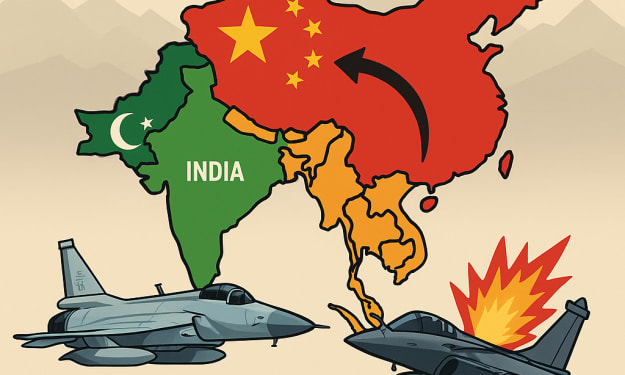
How China Got Benefit from Pakistan and India Conflict
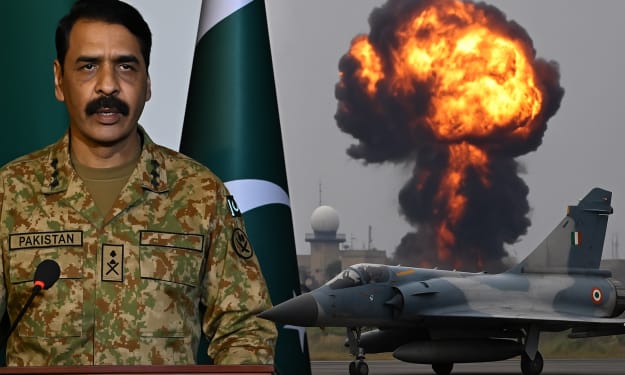
In a dramatic turn of events during a recent India-Pakistan conflict, the Pakistan Air Force (PAF) reportedly downed a French-made Rafale fighter jet using the JF-17 Thunder, a multi-role combat aircraft developed jointly by China and Pakistan. Though official confirmation is still pending, the symbolic value of this event is already resonating across global defense and strategic communities.
By Zakir Ullahabout a year ago in The Swamp
India and Pakistan Agree to a Ceasefire – But Will It Hold? Here’s What to Know. AI-Generated.
India and Pakistan Agree to a Ceasefire – But Will It Hold? Here’s What to Know In a significant diplomatic development, India and Pakistan—two nuclear-armed neighbors with a long and turbulent history—have agreed to a ceasefire along the Line of Control (LoC) in Kashmir. This agreement, aimed at halting cross-border firing and reducing tensions, comes after months of backchannel diplomacy and increasing pressure from global powers for peace in the South Asian region. But as history has shown, ceasefires between the two nations often face a fragile future. So, will this one be any different?
By Adnan Rasheedabout a year ago in The Swamp
Alhamdulillah Pakistan Launches Fresh Military Action Claiming India Hit Its Military Bases. AI-Generated.
Alhamdulillah Pakistan Launches Fresh Military Action Claiming India Hit Its Military Bases May 11, 2025 — Tensions between nuclear-armed neighbors Pakistan and India have reached alarming levels after Pakistan launched a large-scale retaliatory military operation in response to what it claims was a series of missile strikes by India on its military airbases. This marks one of the most serious escalations between the two nations in recent years.
By Adnan Rasheedabout a year ago in The Swamp
China’s Military Tech Investments Face Real-World Test Amid India-Pakistan Tensions. AI-Generated.
China’s Military Tech Investments Face Real-World Test Amid India-Pakistan Tensions In the past two decades, China has poured billions of dollars into upgrading its military might. With ambitions to match or even surpass the United States in global influence, Beijing has heavily invested in advanced weaponry, artificial intelligence, satellite systems, hypersonic missiles, cyberwarfare tools, and unmanned combat systems. However, much of this military technology remains untested in a real-world battlefield scenario. That could change dramatically if tensions between its two South Asian neighbors — India and Pakistan — erupt into full-scale conflict.
By Adnan Rasheedabout a year ago in The Swamp
Pakistan’s First Combat Use of Chinese PL-15E Air-to-Air Missiles Confirmed After Debris Found in India. AI-Generated.
Pakistan’s First Combat Use of Chinese PL-15E Air-to-Air Missiles Confirmed After Debris Found in India May 8, 2025 In a significant development that signals a shift in South Asia’s aerial warfare dynamics, Pakistan has reportedly used the Chinese-made PL-15E air-to-air missile in a real combat scenario for the first time. The confirmation came after Indian authorities discovered debris from the missile in Hoshiarpur, Punjab, following recent cross-border skirmishes between Indian and Pakistani fighter jets.
By Adnan Rasheedabout a year ago in The Swamp
Pakistan Claims Chinese-Made J-10C Fighter Jets Used Against India’s Air Force. AI-Generated.
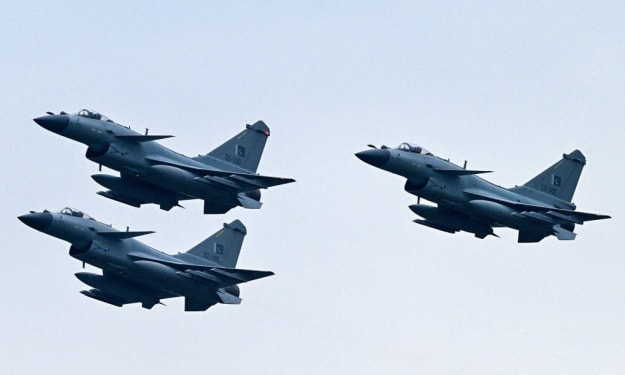
Pakistan Claims Chinese-Made J-10C Fighter Jets Used Against India’s Air Force In a significant escalation between two nuclear-armed rivals, Pakistan has claimed that its air force used Chinese-made J-10C fighter jets to shoot down five Indian aircraft during a recent military confrontation. The assertion comes amid rising tensions between India and Pakistan over the disputed Kashmir region, with both nations exchanging accusations and conducting air strikes.
By Adnan Rasheedabout a year ago in The Swamp
India Strikes Deep Inside Pakistan; Islamabad Claims to Down 5 Indian Jets in Major Escalation. AI-Generated.
India Strikes Deep Inside Pakistan; Islamabad Claims to Down 5 Indian Jets in Major Escalation In a dramatic escalation of hostilities between two nuclear-armed neighbors, India launched what it described as a “preemptive strike” deep inside Pakistani territory early Tuesday morning. The Indian Air Force (IAF) targeted what officials said were terrorist training camps in the Khyber Pakhtunkhwa province of Pakistan. In response, Pakistan claimed to have shot down five Indian fighter jets, raising concerns of a full-scale military conflict between the two rivals.
By Adnan Rasheedabout a year ago in The Swamp