social media
The scoop on social media for influencers, lobbyists, budding politicians and civilians with a stake in the Swamp's trending issues.
Top 10 Fighter Jets in the World in 2025. AI-Generated.
Top 10 Fighter Jets in the World in 2025 In 2025, fighter jets have become more advanced than ever, integrating stealth, speed, artificial intelligence, and multi-role combat capabilities. Countries are racing to develop aircraft that can dominate both the skies and the battlefield. Below is a detailed look at the top 10 most powerful and advanced fighter jets in the world today.
By Adnan Rasheedabout a year ago in The Swamp
Kithure Kindiki: Wife, Tribe, Biography, Net Worth, Age & More
Professor Kithure Kindiki, now serving as Kenya’s Deputy President, has carved out a reputation as one of the country’s most influential and respected public figures. Known for his legal expertise, political acumen, and unwavering dedication to public service, Kindiki’s journey from the courtroom to the second-highest office in the land is nothing short of remarkable.
By Marveline Merababout a year ago in The Swamp
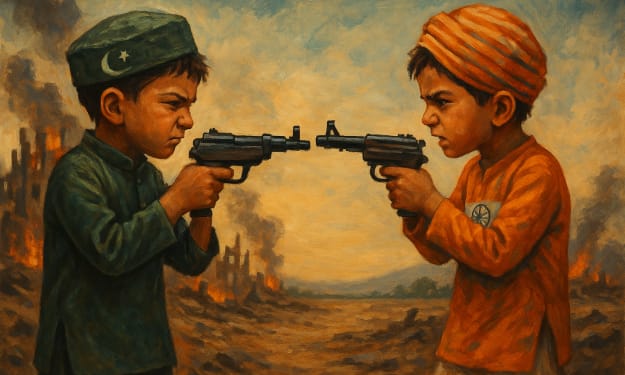
War Between Brothers: A Call for Peace in South Asia
The world watched in horror as tensions between Pakistan and India erupted once again into a full-blown conflict in these recent days. What began as a border skirmish soon escalated into one of the most destructive confrontations in recent South Asian history. While the international media flooded timelines with statistics and breaking updates, the real cost of this war—human lives, fractured communities, economic collapse, and regional instability—remains far more than what any headline can convey.
By Zakir Ullahabout a year ago in The Swamp
The Reality Behind the Pahalgam Attack: Unraveling the Security and Sovereignty Crisis in India
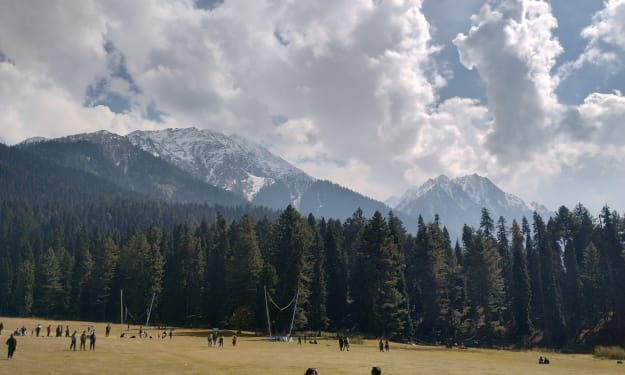
The recent attack in Pahalgam, Jammu and Kashmir, has once again exposed deep vulnerabilities in India’s internal security framework. Known for its natural beauty and spiritual significance, Pahalgam has become an unfortunate symbol of the broader tensions simmering in the Kashmir Valley. The attack not only resulted in tragic loss of life but also triggered national anxiety, raising fresh questions about India’s security preparedness, political direction, and regional stability. The Attack and Its Immediate Fallout Initial reports indicate that the attack targeted security personnel and possibly civilian pilgrims. Pahalgam, which lies along the Amarnath Yatra route, has historically been a sensitive area during pilgrimage season. Despite heavy security deployment, the assailants managed to strike, highlighting lapses in surveillance and intelligence. In response, authorities initiated widespread security operations and placed the region on high alert. The attack sent shockwaves across the nation. Public outcry and political criticism followed, with opposition leaders questioning the government’s handling of Kashmir and demanding accountability. Gaps in Security Preparedness One of the most concerning aspects of the Pahalgam attack is the clear failure in anticipating and preventing such an incident. Despite years of counter-insurgency operations, India continues to face challenges in detecting threats before they materialize. The ability of militants to coordinate and execute attacks in highly monitored zones indicates gaps in local intelligence, coordination between agencies, and community engagement. Moreover, the over-reliance on militarized responses often alienates local populations, making it harder to build trust and gain actionable information from communities that are crucial to long-term peace efforts. Regional and Geopolitical Undercurrents India’s challenges in Kashmir are not purely domestic. Pakistan’s alleged support for insurgent groups operating in the region remains a core concern. Cross-border infiltration, proxy warfare, and the spread of radical ideologies are all factors that contribute to persistent instability. Beyond Pakistan, developments in Afghanistan post-2021 and growing Chinese interests in Ladakh have added complexity. With China actively asserting its presence in nearby regions and maintaining its territorial claims, India faces a dual-front strategic threat. These geopolitical pressures complicate India’s internal security calculations in Kashmir and demand a more nuanced, multidimensional response. Public Sentiment and National Unity Events like the Pahalgam attack deeply affect public sentiment across India. While there is often a surge of patriotism and support for security forces, there is also frustration over repeated lapses and political inaction. Many Indians feel a growing disconnect between the government’s strong national security rhetoric and the ground reality in conflict-prone regions. In Jammu and Kashmir itself, such incidents disrupt efforts at normalization, development, and integration. People who hope for peace and progress find themselves caught between militant threats and state crackdowns, often with limited access to justice or political representation. A Blow to India’s Sovereignty? Attacks like the one in Pahalgam go beyond immediate violence—they strike at the very notion of sovereignty and state control. For a country seeking global leadership and regional dominance, repeated security failures in a part of its own territory weaken its strategic credibility. Sovereignty isn’t just about geography—it’s about the state’s ability to ensure peace, justice, and development within its borders. On that front, India has work to do. The Path Forward: Beyond Military Response India must rethink its Kashmir policy in a comprehensive way. While a strong security apparatus is vital, it must be complemented by long-term social, economic, and political strategies. This includes: Improved intelligence sharing across agencies and regions. Increased community engagement, especially with youth, to counter radicalization. Infrastructure development that includes local voices and addresses real needs. Rebuilding trust through justice, dialogue, and transparent governance. International diplomacy to isolate hostile elements and apply pressure on state sponsors of terrorism. India’s leadership must show not just strength, but also wisdom and compassion. --- Conclusion The Pahalgam attack is a harsh reminder that the road to peace in Jammu and Kashmir remains difficult and dangerous. Yet, it also offers an opportunity—a moment to pause, reflect, and reset. Security alone cannot win this battle. Only a combination of vigilance, vision, and values can bring lasting stability to the region and uphold the promise of a united, sovereign India.
By Shah saab ITabout a year ago in The Swamp
Pahalgam Terror Attack 2025: Hindu Tourists Killed in Kashmir, Global Reactions and Full Report. Content Warning. AI-Generated.
On April 22, 2025, a brutal terrorist attack in Pahalgam, Jammu and Kashmir sent shockwaves across India and the international community. Armed militants opened fire on a group of tourists at Baisaran Valley, deliberately targeting individuals based on their Hindu identity. The attack, which left 26 civilians dead and over 20 injured, is being called one of the deadliest attacks in Kashmir in recent years. The massacre not only exposed the fragile security situation in the region but also reignited global conversations around religious terrorism, Islamic extremism, and cross-border militancy. What Happened in Pahalgam on April 22, 2025? According to survivor testimonies and local authorities, a group of armed terrorists infiltrated the tourist-heavy zone of Baisaran Valley, posing as guides or local pony handlers. They then asked tourists their names and religion. Those who identified as Hindu were separated and shot at close range. Some were reportedly asked to recite the Islamic kalima to verify their faith. This form of religiously motivated violence is a chilling reminder of earlier sectarian atrocities in South Asia. Among those killed was an entire Hindu family from Maharashtra. Shockingly, a local Muslim man, Seyyed Adil Hussain Shah, lost his life trying to protect the tourists. His bravery has since become a symbol of interfaith solidarity in a time of hate.
By Tanushree Dasabout a year ago in The Swamp
Pro Life Journalist Gets Sucker Punched in the Face by New York Woman . Content Warning.
A pro-life conservative journalist gets sucker punched by a Bronx woman. The video went viral with mixed reactions. Was she wrong for sucker punching her or she got what she deserved? Or Was she doing her journalism job? Before I give my personal opinion, let's discuss what happened before the brutal attack.
By Gladys W. Muturiabout a year ago in The Swamp
Israeli Proposal to Take Control of Gaza Strip Raises Global Concerns and Deepens Regional Tensions
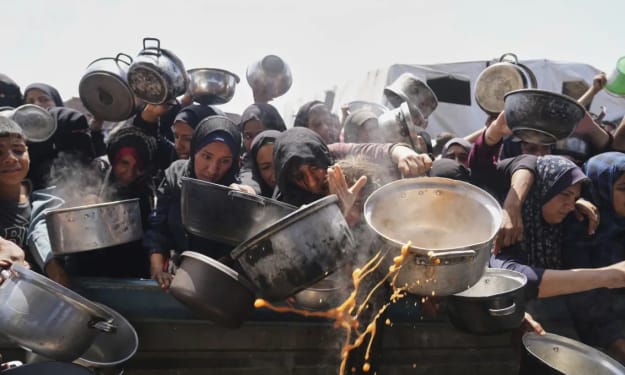
The more recent proposal by the Israeli government to take long-term control of the Gaza Strip has sparked global outrage and rekindled discussions about the ongoing Israeli-Palestinian conflict. This controversial plan, which emerged in the aftermath of intensified military operations in Gaza, is viewed by many international observers, human rights organizations, and governments as a potential escalation that could severely destabilize the region and derail any remaining hopes for a two-state solution. Background of the Gaza Conflict The Gaza Strip, a narrow piece of land bordering Israel, Egypt, and the Mediterranean Sea, has been a central flashpoint in the Israeli-Palestinian conflict for decades. Following Israel’s withdrawal from Gaza in 2005, the region fell under the control of Hamas, an Islamist political and militant group considered a terrorist organization by Israel, the United States, and the European Union. The region has gone through several cycles of violence since then, including several full-scale wars, thousands of civilian deaths, and a humanitarian crisis that has been exacerbated by an Israeli-Egyptian blockade. Gaza’s two million residents live under dire conditions, with limited access to clean water, electricity, and medical supplies, exacerbated by years of conflict and siege. The Israeli proposal: Security justification for control In early 2025, following a protracted and deadly military campaign in Gaza, Israeli Prime Minister Benjamin Netanyahu’s administration floated a plan suggesting that Israel may need to establish a long-term military and administrative presence in Gaza “to ensure security and prevent future terrorist threats.” Officials in Israel say that the move is needed to take down Hamas' infrastructure and stop more attacks on Israeli soil. Netanyahu and Defense Minister Yoav Gallant have made it clear that "ironclad security guarantees" are needed before "uncontrolled" Gaza after the war can be handed over to the Palestinian Authority. The proposal includes ideas such as the deployment of Israeli forces across the Gaza Strip, control of border crossings, and potentially, the establishment of a buffer zone inside Gaza. Legal Implications and Reactions on a Global Scale The proposal has been met with immediate and fierce criticism from across the world. The Arab League, the European Union, the United Nations, and a number of humanitarian organizations have voiced their deep concern, describing it as a dangerous precedent and a violation of international law. UN Secretary-General António Guterres stated, “Any attempt to reoccupy Gaza would constitute a serious breach of international law and further jeopardize the prospects of peace in the Middle East.” Many legal experts contend that Israel's plan would be de facto annexation because it violates the Geneva Conventions, which forbid the permanent occupation of war-acquired territory. Israel's traditional ally, the United States, has also voiced reservations. Secretary of State Antony Blinken warned that a reoccupation of Gaza would be "counterproductive" and "not aligned with long-term peace goals," despite the fact that the Biden administration has supported Israel's right to self-defense. Calls for unity and condemnation from the Palestinian response The Israeli proposal was strongly condemned by the West Bank-based Palestinian Authority (PA). President Mahmoud Abbas denounced the idea as “a return to colonialism” and called for international intervention to prevent what he termed a "war crime in the making." Despite Hamas's decline as a result of the ongoing Israeli offensive, it pledged to continue its resistance. Spokesman Hazem Qassem stated, “Any Israeli attempt to take control of Gaza will be met with unwavering resistance from our people. Israel does not use Gaza as a pawn in its political games. Across Palestinian territories and the wider Arab world, there have been mass protests against the Israeli plan. The governments of Ramallah, Cairo, Amman, and Beirut have been urged to take diplomatic and economic action against Israel by demonstrators there. Humanitarian Crisis Deepens Meanwhile, the humanitarian situation in Gaza continues to deteriorate. According to the United Nations Relief and Works Agency (UNRWA), more than 60% of Gaza’s population is displaced, and essential services are on the brink of collapse. Hospitals are overwhelmed, food and water shortages are critical, and the blockade continues to restrict the flow of aid. Aid organizations are concerned that Israel will further restrict humanitarian access and exacerbate civilian suffering if it implements its control plan. Jan Egeland, Secretary-General of the Norwegian Refugee Council, warned, “If Gaza becomes an occupied territory again, humanitarian operations will face even greater hurdles, and the civilian population will pay the price.” Contribution to the Peace Process The Israeli proposal threatens to dismantle decades of international efforts to achieve a two-state solution. Now more than ever, the Palestinian vision of an independent state that would include the West Bank and Gaza as well as East Jerusalem as its capital is in doubt. The plan, according to a lot of experts, may encourage Israeli far-right groups that have long called for permanent Palestinian control. Dr. Hanan Ashrawi, a Palestinian politician and peace negotiator, commented, “This is a blatant attempt to kill the two-state solution and replace it with an apartheid regime of permanent occupation and subjugation.” Security Concerns and Implications for the Region The proposal has also raised alarm bells in neighboring Arab countries. Egypt, which shares a border with Gaza and has played a crucial mediating role in past ceasefires, warned that any Israeli move to control Gaza would “threaten regional stability and provoke widespread unrest.” Jordan, Qatar, and Turkey also voiced strong opposition. The Arab League convened an emergency session in Cairo, urging unified action against what it called “Israeli expansionism.” Security analysts predict that such a move could provoke a wider regional conflict, drawing in Iran-backed militias in Lebanon, Syria, and Iraq, and possibly leading to escalations with Hezbollah on Israel’s northern front. Israeli Opposition Voices The proposal has its detractors within Israel. A growing number of Israeli citizens, former military officials, and left-leaning political parties have spoken out against the idea of reoccupying Gaza. Ehud Barak, a former prime minister, stated, "It is a strategic trap to reenter and control Gaza." It will drain our resources, cost countless lives, and damage Israel’s standing in the world.” Protests have also erupted in Tel Aviv and Haifa, with demonstrators calling for a diplomatic resolution and renewed negotiations with the Palestinians rather than military dominance. Conclusion The international community has been shaken by Israel's proposal to take control of the Gaza Strip. It could be a turning point in the Israeli-Palestinian conflict that will change the Middle East's political landscape for years to come. While Israel cites security concerns as its primary motivation, the general consensus appears to be that such a plan would exacerbate the humanitarian crisis, violate international law, and stifle the already bleak hope of a peaceful resolution. The world is keeping a close eye on the situation, hoping that diplomacy and not force will prevail in this long-suffering nation.
By Keyas Khanabout a year ago in The Swamp
America in Flux: The Bold Moves and Backlash Shaping the U.S. in 2025
America in Flux: The Bold Moves and Backlash Shaping the U.S. in 2025 The United States is in the midst of a transformative period in 2025, driven by sweeping policy changes, rising public dissent, and economic developments that are redefining the national landscape. Under the renewed leadership of former President Donald Trump, the federal government is introducing initiatives that are being praised by some as "bold leadership" and criticized by others as authoritarian overreach. Let’s take a closer look at what’s unfolding across America in real time—and what it means for the future. Trump’s Second Term: An Aggressive Agenda Unfolds In his second term, President Trump has wasted no time reshaping federal priorities. One of the most talked-about measures is the introduction of a program offering undocumented immigrants $1,000 and a plane ticket to voluntarily leave the country. Critics argue that the initiative manipulates vulnerable populations and could potentially bar them from future legal reentry. At the same time, a controversial executive order is eliminating federal funding for public broadcasters such as NPR and PBS. Trump’s administration claims it’s about stopping taxpayer funding of “biased media,” while journalists and civil liberties groups warn this could threaten press freedom and diminish the public’s access to nonpartisan information. Perhaps most surprising is Trump’s order to reopen Alcatraz prison. Once a notorious penitentiary shut down in 1963, Alcatraz’s revival is raising eyebrows, especially as many state officials claim they weren’t consulted. Public Backlash: Protests and Grassroots Movements Surge In response to these sweeping changes, Americans are taking to the streets. On May 1, a massive movement labeled “50501”—a nod to the date—mobilized protesters in cities like New York, Los Angeles, and Chicago. Their grievances ranged from anti-immigration policies and worker rights to broader concerns about authoritarianism. The movement is diverse and intersectional, uniting labor activists, immigrants’ rights organizations, and student groups. Social media has played a major role in organizing the protests, signaling a resurgence of online-driven activism reminiscent of the Black Lives Matter and Women’s March movements. These protests are not isolated incidents—they reflect a growing sense of urgency among Americans who fear the erosion of democratic norms.
By Saqib Ullahabout a year ago in The Swamp
A Timeline of Tensions Between India and Pakistan Over Kashmir
A Timeline of Tensions Between India and Pakistan Over Kashmir The Kashmir conflict is one of the most protracted and volatile territorial disputes in the world rooted in the partition of British India in 1947. India and Pakistan both nuclear armed neighbors have fought multiple wars and engaged in recurring skirmishes over this contested region. This article outlines a detailed timeline of the tensions between the two nations over Kashmir.
By Adnan Rasheedabout a year ago in The Swamp