president
They've chopped down cherry trees and waged full-on war. Riding the highs and lows of the leaders who've tried to Make America Great Again.
Between Bombs, Bluster and Broken Treaties
For over 30 years, Israeli Prime Minister Benjamin Netanyahu has warned the world that Iran is “months away” from building a nuclear bomb. On 13 June 2025, with his Arab neighbours destabilised, the moment he had been waiting for became reality when Israel began military action on key Iranian nuclear and military sites. What transpired after, brought the region and the rest of the world, one step closer to the point of no return.
By Marios Loizidesabout a year ago in The Swamp
What’s Going On with Trump’s Health?
In recent days, social media has been flooded with images and speculation about former U.S. President Donald Trump’s health. A visible bruise on his hand and noticeable swelling in his legs led many to question if something serious was going on behind the scenes. Was Trump hiding a medical condition? Was he seriously ill? Here’s what we know based on confirmed reports and official medical updates.
By Muhammad Adilabout a year ago in The Swamp
Barcelona and DR Congo: Football, Tourism, and Controversy Amid Conflict
Barcelona and DR Congo: Football, Tourism, and Controversy Amid Conflict In a world where football and commerce intersect more than ever, a recent sponsorship agreement between Spanish football giant FC Barcelona and the Democratic Republic of Congo (DR Congo) has sparked heated conversations. According to a leaked contract seen by Reuters, DR Congo has agreed to pay over $46 million over four years to sponsor Barcelona—a deal that includes promoting DR Congo tourism on team apparel and media channels. The deal, dated June 29, 2025, specifies that a logo branding DR Congo as the “Heart of Africa” will appear on the back of training and warm-up jerseys for both the men’s and women’s teams. It also covers advertising placements across the club’s media platforms, including magazines and annual reports. With DR Congo paying between $11.6 million and $13.3 million per year, this agreement mirrors similar tourism-driven sports sponsorships seen recently—but it comes with a unique set of challenges and ethical questions. --- ⚽ When Sports Meets Struggle: Why This Deal Is Different While football clubs worldwide are no strangers to sponsorship deals with tourism boards, this particular partnership is controversial because of DR Congo’s ongoing humanitarian crisis and internal conflict. The country has been grappling with political instability, rebel insurgencies, and widespread poverty. Reports from the United Nations and human rights groups have detailed severe violence in eastern Congo, including mass displacement, civilian killings, and allegations of Rwandan-backed rebel influence. Given this backdrop, the sponsorship deal raises several questions: Should a war-hit country spend millions on football sponsorship while its citizens lack basic services? Is Barcelona turning a blind eye to ethical concerns for commercial gain? Can such partnerships truly improve a nation’s global image, or do they risk “sportswashing” political issues? --- 🌍 The “Heart of Africa” Branding Campaign At the core of the deal is DR Congo’s attempt to reposition itself as a tourist destination. The country, rich in natural beauty and mineral wealth, hopes to use football’s global appeal to rebrand itself amid its troubled reputation. The “Heart of Africa” logo is designed to evoke curiosity and attract tourists, investors, and media interest. However, critics argue that without addressing governance and safety issues first, this campaign may do little beyond surface-level PR. --- 🤝 A Growing Trend: African Nations & Football Sponsorship DR Congo is not the first African country to sponsor major football clubs. In fact, “Visit Rwanda” campaigns have become ubiquitous in top European leagues, appearing on the jerseys and stadiums of Arsenal, Paris Saint-Germain, and Bayern Munich. But even these deals have stirred backlash. In February 2025, DR Congo’s Foreign Minister, Therese Kayikwamba Wagner, openly called out clubs like Arsenal and Bayern for partnering with Rwanda, labeling those deals as “blood-stained” sponsorships. Her comments came shortly after M23 rebels, allegedly backed by Rwanda, captured the city of Goma in eastern DR Congo.
By Ikram Ullahabout a year ago in The Swamp
Nvidia Set to Relaunch H20 AI Chip Sales in China Following CEO’s High‑Profile Trump Meeting
In a pivotal moment for global semiconductor markets and U.S.–China tech relations, Nvidia has been granted permission to resume exports of its H20 AI accelerator chips to China. The breakthrough follows a strategic meeting between CEO Jensen Huang and former President Donald Trump, signaling a major shift in U.S. export policy and opening the door for renewed business in one of Nvidia’s most crucial markets.
By Waqar Khanabout a year ago in The Swamp
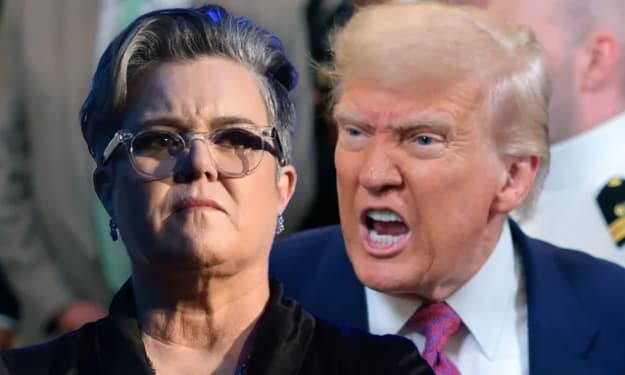
Trump Says Rosie O'Donnell Should Lose Her Citizenship — Her Response Broke the Internet
⚡ 1. Trump’s Startling Threat on Truth Social On July 12, former President Donald Trump posted on Truth Social that he’s “giving serious consideration” to revoking Rosie O’Donnell’s U.S. citizenship, labeling her a “threat to humanity” and suggesting she remain in Ireland, where she recently relocated. The dramatic declaration escalated their decades‑long feud, drawing widespread attention and outrage across the Internet.
By Bevy Osuosabout a year ago in The Swamp
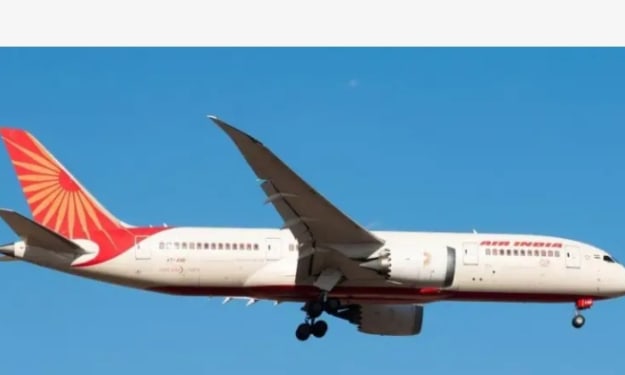
Air India Flight 171: The Mysterious Fuel Cutoff That Led to Disaster
1. A Catastrophe Minutes After Takeoff On June 12, 2025, Air India Flight 171—a Boeing 787‑8 Dreamliner—crash-landed into a residential hostel in Ahmedabad just 30 to 40 seconds after takeoff. The plane was en route from Ahmedabad to London Gatwick, carrying 230 passengers and 12 crew members. Of those aboard, 241 perished, and 19 were killed on the ground, with dozens more injured. Only one passenger survived, later identified as Vishwash Kumar Ramesh . The aircraft reached an altitude of just 625 feet, never climbing beyond 180 knots, before descending uncontrollably . In the chaos that followed, even experienced investigators struggled to identify what had so rapidly spiraled into tragedy. --- 2. Fuel Was Cut, Engines Shut Down The 15‑page preliminary report released by India’s Aircraft Accident Investigation Bureau (AAIB) offers the first insight: within seconds of takeoff, both fuel control switches—normally set to “RUN”—were found in the “CUTOFF” position on both engines, causing an immediate loss of thrust. Power was briefly restored when the switches were flipped back on, but the plane lacked sufficient altitude or time to recover . Investigators stressed that fuel contamination, bird strikes, or mechanical failure were ruled out. The report also confirmed one engine relit, while the other never regained full power . ---
By Ikram Ullahabout a year ago in The Swamp
Mahmoud Khalil Files $20 Million Claim Against Trump Administration for Wrongful Detention
Mahmoud Khalil, a prominent pro-Palestinian activist and Columbia University graduate student, has filed a $20 million administrative claim against the Trump administration for wrongful detention. Khalil, a green card holder, was held by ICE for over three months, alleging false arrest, malicious prosecution, and intentional infliction of emotional distress stemming from his activism.
By Kageno Hoshinoabout a year ago in The Swamp
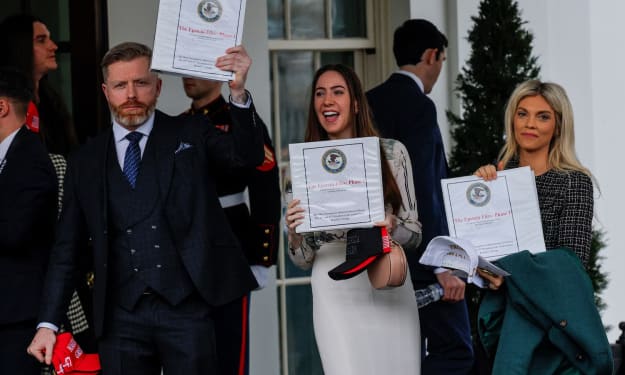
The Epstein Files Fiasco:
Picture this: March 2025, the MAGA faithful, freshly into a new administration, are strutting out of the White House, practically skipping like kids in a candy store. Why, you ask? Because they’re clutching the Epstein Files like they just won the lottery. “Justice is coming!” they chant jubilantly, as if they were in a poorly scripted superhero movie. Attorney General, Pam Bondi, in a separate interview displaying a smirk that could rival the Cheshire Cat, declares to the cameras, “You’re gonna want to stay tuned, America. The truth is about to drop, and heads are going to roll, because the Epstein Files and reports are on my desk!"
By Meko James about a year ago in The Swamp
Trump's Frustration with Putin and the Uncertain Future of the Russia-Ukraine War
The ongoing war in Ukraine continues to test the diplomatic resolve of world leaders, with recent developments highlighting growing frustration in the United States. President Donald Trump, who once vowed to end the war in Ukraine within 24 hours of taking office, now faces mounting obstacles in his attempts to broker peace. Despite multiple rounds of negotiations and increasing diplomatic engagement, a ceasefire remains elusive as Russia intensifies its military campaign against Ukraine. In recent days, US Secretary of State Marco Rubio has met twice with Russian Foreign Minister Sergey Lavrov, underscoring Washington's persistent efforts to bring the conflict to a close. These talks, held on the sidelines of the ASEAN summit in Malaysia, lasted nearly an hour but yielded no immediate breakthroughs. Instead, they highlighted the widening gap between American aspirations for peace and Moscow’s hardened stance. Trump's public tone towards Russian President Vladimir Putin has also shifted. Previously criticized for his seemingly warm approach to the Kremlin, Trump has lately expressed disappointment over Putin's reluctance to show flexibility. “We get a lot of meaningless talk from Putin. He’s very nice, but in the end, it means nothing,” Trump remarked. This growing frustration has raised questions about whether Trump's stance on Russia is evolving into something more confrontational. Despite these comments, experts remain skeptical about any fundamental shift in Trump’s approach. Analysts argue that previous signs of a harder stance have failed to translate into significant policy changes. While some see an opportunity for a new direction in US foreign policy, others caution against premature conclusions. Trump's unpredictability remains a defining feature of his diplomacy, leaving allies and adversaries alike uncertain about what comes next. Meanwhile, the Biden-era military aid pipeline to Ukraine has continued under Trump’s leadership, albeit with some turbulence. Earlier this month, the Trump administration briefly paused arms shipments to Kyiv, only to resume them days later. Trump explained the reversal by emphasizing Ukraine's need to defend itself amidst Russia’s renewed offensives. However, in a significant change, Trump announced that future weapons would be sold to NATO, which would then transfer them to Ukraine. “We’re sending weapons to NATO, and NATO is paying for them, one hundred percent,” Trump clarified, describing the deal as part of an arrangement finalized during the NATO summit in The Hague. Despite these moves, Trump’s decision to continue arming Ukraine has sparked backlash from within his political base. Several prominent figures in the conservative movement expressed disappointment, questioning the wisdom of further entangling the United States in what they perceive as a costly and unwinnable conflict. For many in Trump’s MAGA (Make America Great Again) base, the Ukraine war represents a distraction from America’s domestic priorities. Alongside military support, Washington is weighing new economic measures to pressure Moscow. A bipartisan bill in Congress seeks to expand sanctions against Russia, targeting not only Russian industries but also countries that continue to purchase Russian oil, gas, and uranium. If passed, this would mark a major escalation in the West's efforts to isolate Russia economically. However, Russia's energy trade with China, India, and Turkey remains robust, limiting the global impact of Western sanctions. Despite imposing over 21,000 sanctions since the invasion began, the Russian economy has endured, buoyed by energy exports to Asia and limited European purchases of critical materials like uranium. Ukrainian President Volodymyr Zelenskyy continues to call on the West to tighten sanctions further, arguing that only sustained economic pressure can compel Moscow to negotiate peace in good faith. Trump has flirted with harsher economic measures, even threatening secondary tariffs on nations buying Russian oil. Yet, these threats have so far remained rhetorical. Whether Trump will ultimately back additional sanctions remains uncertain, given his past reluctance to impose meaningful costs on Russia. At the same time, the Trump administration has hinted at the possibility of disengagement. Secretary of State Rubio recently stated that the US could consider stepping back from the Ukraine conflict if diplomatic efforts fail to produce results. “It’s not our war. We have other priorities,” Rubio said, reflecting a sentiment that has gained traction in some corners of the US political landscape. Trump echoed these thoughts, albeit more cautiously, suggesting that the US remains committed to seeking a resolution but does not wish to remain entangled indefinitely. Nevertheless, the latest diplomatic meetings suggest the US is not abandoning peace efforts just yet. Rubio reported that during his discussions with Lavrov, new proposals for peace were exchanged. Although the specifics remain confidential, Rubio described them as a “different approach” that could open the door to renewed negotiations. Russia, for its part, also struck a cautiously optimistic tone, reaffirming its willingness to engage in dialogue and explore peaceful solutions. The path forward for the Russia-Ukraine war remains fraught with uncertainty. On one hand, intensified US-Russia diplomacy and continued arms supplies to Ukraine signal that Washington is not prepared to let Kyiv fall. On the other hand, growing domestic opposition, economic considerations, and diplomatic frustrations could push the US to recalibrate its involvement. For now, all eyes remain on Trump and Putin, whose complex relationship continues to shape the fate of a war that has already spanned more than three years. Whether through diplomacy, deterrence, or disengagement, the next chapter in the Russia-Ukraine conflict will be defined by the decisions made in Washington and Moscow in the weeks ahead.
By Ikram Ullahabout a year ago in The Swamp
Elon Musk Launches the America Party: What It Means for 2025 and Beyond
On July 5, 2025, Elon Musk took a surprising political leap: he officially launched the America Party, proclaiming its mission on X (formerly Twitter) as “to give you back your freedom.” This ambitious move follows his falling out with former ally Donald Trump over the controversial “One Big Beautiful Bill” and signals a dramatic shift in the landscape of American politics.
By Bevy Osuosabout a year ago in The Swamp
Investors traded a record $6.6 trillion worth of stock in the first half of 2025
In the first half of 2025, "Global Stock Trading Hits Record $6.6 Trillion" Global stock markets witnessed an unprecedented surge in activity in the first half of 2025, as total trading volumes soared to a record \$6.6 trillion. This milestone, the highest half-year figure in history, reflects heightened investor engagement driven by a mix of economic optimism, technological advancements, and a new wave of retail participation reshaping the financial landscape.
By GLOBAL NEWSabout a year ago in The Swamp