politics
Politics does not dictate our collective cultural mindset as much as it simply reflects it; We've got to look in the mirror sometimes, and we've got one.
When Civilians Die, Does It Matter Who Pulled the Trigger?
When Civilians Die, Does It Matter Who Pulled the Trigger? In a world that prides itself on progress, equality, and human rights, there is a question that cuts through every political speech and every humanitarian promise like a blade:
By Muhammad Hakimiabout a year ago in The Swamp
Beatrice Elachi: Age, Husband, Tribe, Son Accident, Biography & More
Beatrice Elachi is one of Kenya’s most resilient and trailblazing female leaders, whose career has spanned the corridors of political power, grassroots advocacy, and international diplomacy. Best known as the first female Speaker of the Nairobi County Assembly, Elachi has carved out a legacy defined by bold leadership, controversy, and reform.
By Marveline Merababout a year ago in The Swamp
This Is Not Normal. Stop Pretending It Is
Editorial note: I protest. I do. Our current political climate is distasteful, driven by hatred and division, and such a departure from when America was Truly Great. Donald Trump is a symptom, not the disease, but unfortunately for him, he is its chosen figurehead of the far right Christian Nationalist MAGA movement. So if you've read any of my other contributions, the theme is recurrent and most often aimed at rebutting misinformation flung rampantly on social media through memes, mindless repetition of extreme rhetoric, and yes, I'll call some of it outright lies. Oh how I wish for a vaccine. The disease is endemic. Unfortunately, funding for that seems to have dried up.
By Lanny Newvilleabout a year ago in The Swamp
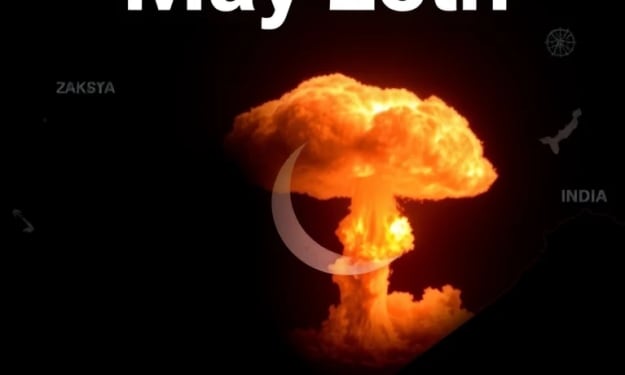
May 28th: How Pakistan’s Nuclear Test Redefined Regional Power Balance
Introduction May 28th stands as a defining date in the history of South Asia, marking Pakistan’s emergence as a nuclear-armed state and fundamentally reshaping the regional power balance. On this day in 1998, Pakistan conducted its first public nuclear weapons test, sending shockwaves through the geopolitical landscape of South Asia and the wider international community. This act was not merely a demonstration of military capability but a bold assertion of strategic autonomy, directly challenging the long-standing nuclear dominance of India. The May 28th nuclear test underscored Pakistan’s resolve to safeguard its national security in a highly volatile regional environment and introduced a new dimension to the Pakistan India nuclear rivalry.
By Shamshair Khan Hasan Zaiabout a year ago in The Swamp
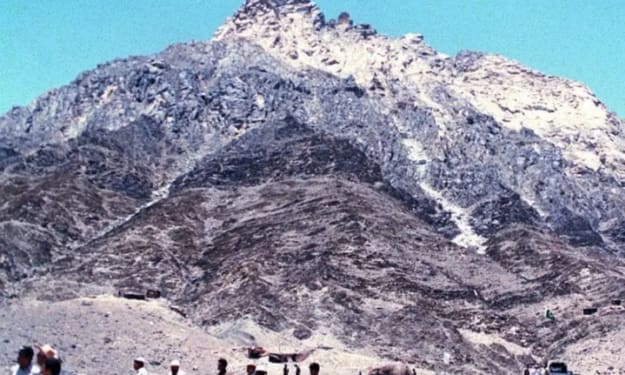
Why Chagai Was Chosen: The Hidden Story Behind Pakistan’s Nuclear Tests
From the Hijacking of the PIA Plane to the Chants of ‘Allahu Akbar’ in Chaghi: When the Black Granite of the Chaghi Mountain Turned White "To India!" the hijacker screamed, pressing a pistol to the pilot’s temple. Pakistan International Airlines (PIA) Flight 544 had taken off from the city of Turbat in Balochistan just ten minutes earlier when this threatening voice reached the pilot’s ears. The Fokker aircraft had departed from Turbat and was en route to Karachi, a city in the Sindh province. According to the pilot, Uzair Khan, the moment the hijacker was distracted by a noise from the rear of the aircraft, he pressed a button that sent a signal to radar indicating that the passenger plane had been hijacked. Later, in the documentary "Flight 544," Uzair Khan explained, “The hijacker had brought maps and such. He told me to keep flying straight. Flying straight would have eventually brought us to the Indian border.” “I told him that the aircraft didn’t have enough fuel. He accepted my request and said we should refuel at Bhuj Airport in Indian Gujarat and then fly to New Delhi.” He adds that after receiving these instructions, “As I neared the border, I used aviation code and said ‘Kilo Delta,’ a term used for the Pakistani city of Hyderabad. Then, while letting the hijacker hear, I asked airport control if this was Bhuj Airport in India. Air traffic control already knew the Pakistani aircraft had been hijacked, so they responded, ‘Yes, this is Bhuj Airport.’” He explains, “Thus, while convincing the hijacker that it was the Indian city of Bhuj, I managed to land at Pakistan’s Hyderabad Airport in the dark of night. That was exactly what I wanted.” This hijacking took place on May 24, 1998. Just days earlier, from May 11 to 13, India had conducted multiple nuclear tests, and it was widely expected that Pakistan would soon respond with its own. After landing at Hyderabad Airport, Pakistani officers there posed as Indian personnel. Following several hours of negotiation, they managed to overpower the three hijackers before dawn. No passengers or crew were harmed. The hijackers were members of the Baloch Students Organization (BSO). According to Pakistani authorities and media reports from that time, the motive behind the hijacking on May 24, 1998, was to prevent Pakistan from responding to India’s nuclear tests. A CNN report from May 1998 indicated that shortly before the hijacking, there were reports of Pakistan preparing a site in Balochistan for nuclear tests. This led to anti-government protests by some political groups in the province. The next day, leading newspapers across Pakistan reported on their front pages that the hijackers had demanded Pakistan not conduct nuclear tests in Balochistan and had also called for increased funding for the province. The three hijackers were later sentenced to death and were executed on May 28, 2015—exactly 17 years after Pakistan’s nuclear tests—at jails in Karachi and Hyderabad. --- How Did Pakistan Manage to Conduct Nuclear Tests on May 28, 1998? Dr. Samar’s Congratulations on India's Tests According to Dr. Samar Mubarakmand, a member of the Pakistan Atomic Energy Commission, he received a call from a friend in the military on the morning of May 11, 1998, informing him about India’s nuclear tests in Pokhran. Speaking at a Khwarizmi Science Society event in Lahore on November 30, 1998, Dr. Samar recounted, “I said, ‘Congratulations!’ I was genuinely happy.” His military friend responded, “You’re congratulating us on India’s nuclear tests?” To which he replied, “Yes, because now we’ll be able to conduct our own.” Dr. Samar explained that back in 1972, when then-Prime Minister Zulfikar Ali Bhutto gathered the country’s scientists in Multan, they had all taken an oath to develop nuclear weapons. After India conducted its first nuclear test in 1974 at Pokhran, Pakistan accelerated its nuclear program. Soon after, Dr. Abdul Qadeer Khan returned from abroad to join the effort. By the late 1980s, the Kahuta plant was complete, and Dr. A.Q. Khan was appointed its head, having previously worked there as a scientist. In this context, after India’s 1998 nuclear tests, it was widely expected that Pakistan would respond. During the same 1998 Lahore event, Dr. Samar said, “As expected, after India’s tests, the Prime Minister became very active. He asked me, ‘Are you ready for this?’ I replied, ‘Absolutely.’ He said, ‘Good! Prepare.’” On the international front, U.S. President Bill Clinton began efforts to prevent Pakistan from conducting nuclear tests, citing concerns of a nuclear conflict in South Asia. In their book “The Man From Pakistan,” Douglas Frantz and Catherine Collins detailed U.S. efforts and Pakistan’s response. They wrote that Clinton called Prime Minister Nawaz Sharif four times, offering incentives to dissuade him from testing. Clinton promised to forgive U.S. loans, remove the Pressler and Solarz amendments (which restricted aid to Pakistan), and secure new military assistance from Congress. In the book “Deception,” Adrian Levy and Catherine Scott-Clark noted that a U.S. delegation led by Deputy Secretary of State Strobe Talbott arrived in Islamabad on May 13, and Pakistan’s Foreign Minister Gohar Ayub reportedly mocked their offer of F-16 jets. In a 2006 interview in London, Nawaz Sharif said Clinton called him five times to urge restraint and avoid testing. “When Talbott came, they thought we would agree. Clinton thought the same. But only we knew what we were going to do.” Frantz and Collins further wrote that three days after India’s tests, CIA Director George Tenet told closed sessions of the U.S. Senate and Congress Intelligence Committees that satellite images showed underground nuclear test preparations in Pakistan’s Chaghi Hills.
By Ikram Ullahabout a year ago in The Swamp
Alfred Mutua: Age, Biography, Wife, Net Worth, Career & More
Alfred Mutua is a man who has worn many hats — journalist, government spokesperson, author, and politician. Best known for his transformation of Machakos County and his flair for media-savvy leadership, Mutua’s journey from TV screens to public office is as dynamic as it is inspiring. In this article, we explore his age, biography, career, personal life, and more.
By Marveline Merababout a year ago in The Swamp
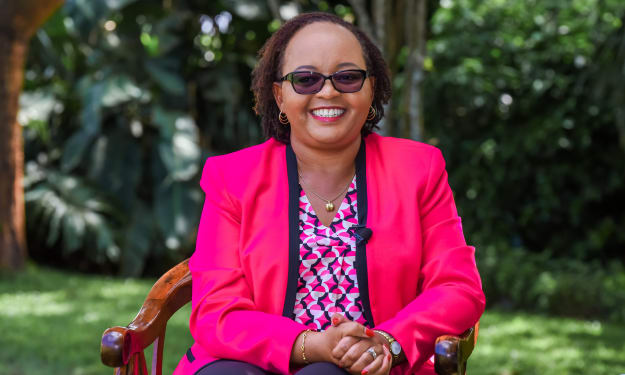
Anne Waiguru: Age, Husband, Biography, Career & More
Anne Waiguru is one of Kenya’s most recognizable female leaders—an economist by training, a reformer by reputation, and the current Governor of Kirinyaga County. With a career spanning public service, policy, and politics, she has navigated both praise and controversy with resilience. Off the podium, she is also a wife and mother, balancing leadership with a grounded personal life.
By Marveline Merababout a year ago in The Swamp
We Are Not a Democracy: Why the Founders Built a Republic
We say we want to destigmatize mental health to create a space where people can speak openly, seek help without shame, and be heard with compassion. But if you look closer, you'll see a very different trend emerging. Mental health isn't always treated as a concern to be addressed. Increasingly, it's being used as a weapon.
By Robert Lacyabout a year ago in The Swamp
Mental Health Is Not a Weapon
We say we want to destigmatize mental health to create a space where people can speak openly, seek help without shame, and be heard with compassion. But if you look closer, you'll see a very different trend emerging. Mental health isn't always treated as a concern to be addressed. Increasingly, it's being used as a weapon.
By Robert Lacyabout a year ago in The Swamp
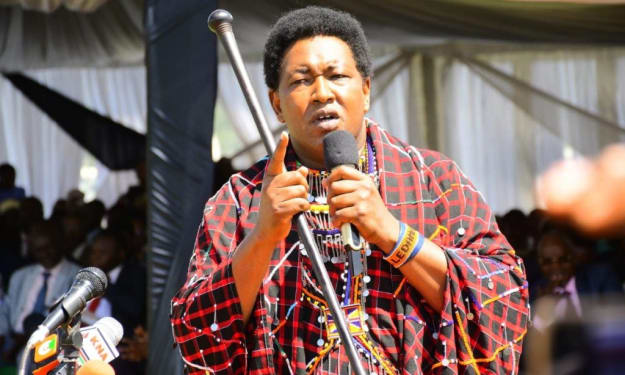
Ledama Olekina: Biography, Sister, Age, Net Worth & More
Ledama Olekina is a Kenyan politician and environmental activist whose journey from the plains of Maasai land to the halls of parliament has been nothing short of remarkable. Known for his passionate defense of indigenous rights and conservation efforts, Olekina has become a powerful voice for the Maasai community and Kenya’s natural heritage.
By Marveline Merababout a year ago in The Swamp