politics
Politics does not dictate our collective cultural mindset as much as it simply reflects it; We've got to look in the mirror sometimes, and we've got one.
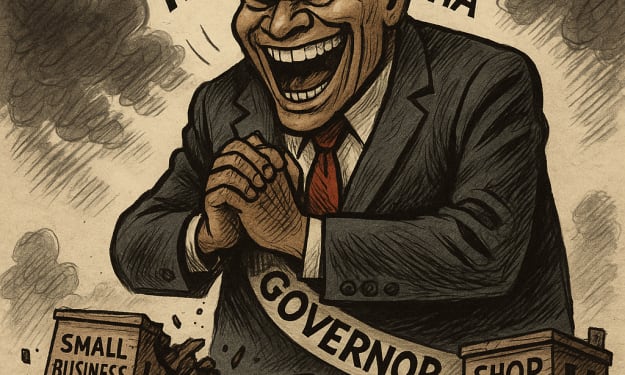
Ten Ways Governor Wes Moore Has Impoverished Marylanders
When Wes Moore was elected governor, many Marylanders bought into the soaring rhetoric of "Leave No One Behind." What they didn’t realize is that under Moore’s progressive policies, more Marylanders would be dragged behind — economically, socially, and financially. From crushing small businesses to inflating government bloat, Moore’s policies have functioned less like a ladder of opportunity and more like a wrecking ball aimed at the working and middle class.
By Michael Phillipsabout a year ago in The Swamp
BBC Verify Analysis on the Claim of Shooting Down Five Indian Warplanes, Including Rafale – and the Story of the Bathinda YouTuber
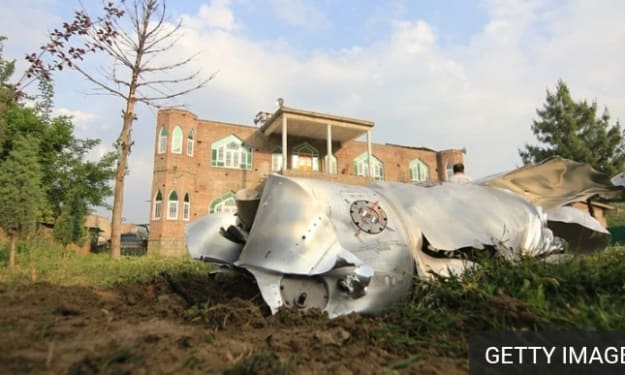
Pakistan's Claim In May this year, Pakistan’s military claimed that it had shot down five Indian Air Force jets. Before this, the Indian military had claimed to have struck nine locations in Pakistan and Pakistan-administered Kashmir. India asserted that these were militant targets, but Pakistan's military spokesperson denied this. Indian authorities admitted suffering some losses during the four-day conflict, after which they changed their strategy. When asked about Pakistan's claims during a press conference, Indian Foreign Secretary Vikram Misri said that an appropriate response would be given at the right time. Following these events, reports emerged from Pakistan claiming that Indian fighter jets had been downed. Various social media accounts began circulating such claims late at night, and these were followed by rebuttals and counterclaims from both sides of the border. However, in a press conference following India’s airstrikes, DG ISPR Lt. Gen. Ahmed Sharif formally announced that five Indian Air Force jets had been shot down. --- BBC Verify's Analysis BBC Verify confirmed the authenticity of three videos claimed to show the wreckage of a French-made Rafale fighter jet, used by the Indian Air Force. One of the videos was geolocated by BBC Verify to the Indian state of Punjab, specifically in Bathinda. The footage shows uniformed personnel collecting debris from a crashed fighter aircraft. Two more nighttime videos from the same location were also verified. One shows wreckage scattered across fields. Another depicts an airborne object catching fire in the sky and then crashing into an open field. Justin Crump, a former British Army officer and head of the risk intelligence firm Sibylline, told BBC Verify that the debris appeared to be of a French missile used in both Mirage 2000 and Rafale fighter jets. Another image circulating on social media shows a fighter jet’s tail fin marked "BS001 Rafale." A Google reverse image search revealed that no previous version of this image existed online.
By Ikram Ullahabout a year ago in The Swamp
35 Years of the ADA
Next week, America will mark 35 years since the signing of the Americans with Disabilities Act (ADA)—the landmark civil rights law enacted on July 26, 1990, meant to guarantee equality for individuals with disabilities. But while government agencies prepare their press releases and advocates prepare their hashtags, many disabled Americans remain sidelined, silenced, and ignored—especially by the very systems that claim to protect them.
By Michael Phillipsabout a year ago in The Swamp
Between Bombs, Bluster and Broken Treaties
For over 30 years, Israeli Prime Minister Benjamin Netanyahu has warned the world that Iran is “months away” from building a nuclear bomb. On 13 June 2025, with his Arab neighbours destabilised, the moment he had been waiting for became reality when Israel began military action on key Iranian nuclear and military sites. What transpired after, brought the region and the rest of the world, one step closer to the point of no return.
By Marios Loizidesabout a year ago in The Swamp
Barcelona and DR Congo: Football, Tourism, and Controversy Amid Conflict
Barcelona and DR Congo: Football, Tourism, and Controversy Amid Conflict In a world where football and commerce intersect more than ever, a recent sponsorship agreement between Spanish football giant FC Barcelona and the Democratic Republic of Congo (DR Congo) has sparked heated conversations. According to a leaked contract seen by Reuters, DR Congo has agreed to pay over $46 million over four years to sponsor Barcelona—a deal that includes promoting DR Congo tourism on team apparel and media channels. The deal, dated June 29, 2025, specifies that a logo branding DR Congo as the “Heart of Africa” will appear on the back of training and warm-up jerseys for both the men’s and women’s teams. It also covers advertising placements across the club’s media platforms, including magazines and annual reports. With DR Congo paying between $11.6 million and $13.3 million per year, this agreement mirrors similar tourism-driven sports sponsorships seen recently—but it comes with a unique set of challenges and ethical questions. --- ⚽ When Sports Meets Struggle: Why This Deal Is Different While football clubs worldwide are no strangers to sponsorship deals with tourism boards, this particular partnership is controversial because of DR Congo’s ongoing humanitarian crisis and internal conflict. The country has been grappling with political instability, rebel insurgencies, and widespread poverty. Reports from the United Nations and human rights groups have detailed severe violence in eastern Congo, including mass displacement, civilian killings, and allegations of Rwandan-backed rebel influence. Given this backdrop, the sponsorship deal raises several questions: Should a war-hit country spend millions on football sponsorship while its citizens lack basic services? Is Barcelona turning a blind eye to ethical concerns for commercial gain? Can such partnerships truly improve a nation’s global image, or do they risk “sportswashing” political issues? --- 🌍 The “Heart of Africa” Branding Campaign At the core of the deal is DR Congo’s attempt to reposition itself as a tourist destination. The country, rich in natural beauty and mineral wealth, hopes to use football’s global appeal to rebrand itself amid its troubled reputation. The “Heart of Africa” logo is designed to evoke curiosity and attract tourists, investors, and media interest. However, critics argue that without addressing governance and safety issues first, this campaign may do little beyond surface-level PR. --- 🤝 A Growing Trend: African Nations & Football Sponsorship DR Congo is not the first African country to sponsor major football clubs. In fact, “Visit Rwanda” campaigns have become ubiquitous in top European leagues, appearing on the jerseys and stadiums of Arsenal, Paris Saint-Germain, and Bayern Munich. But even these deals have stirred backlash. In February 2025, DR Congo’s Foreign Minister, Therese Kayikwamba Wagner, openly called out clubs like Arsenal and Bayern for partnering with Rwanda, labeling those deals as “blood-stained” sponsorships. Her comments came shortly after M23 rebels, allegedly backed by Rwanda, captured the city of Goma in eastern DR Congo.
By Ikram Ullahabout a year ago in The Swamp
Flipping Democracy: KP Assembly Seat Decided by Coin Toss Sparks National Outrage
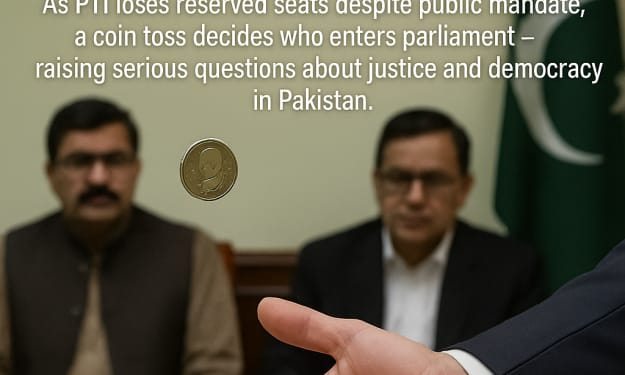
In a strange and symbolic moment in Pakistan’s political history, a coin toss decided a reserved women’s seat in the Khyber Pakhtunkhwa (KP) Assembly. This shocking event took place during the reallocation of reserved seats, after the Supreme Court declared that Pakistan Tehreek-e-Insaf (PTI) and its allied Sunni Ittehad Council (SIC) were not eligible to receive them.
By Muhammad Adilabout a year ago in The Swamp
Lenin vs Stalin: Their Showdown Over the Birth of the USSR
The question of where Russia begins and ends—and who constitutes the Russian people—has preoccupied Russian thinkers for centuries. The collapse of the Soviet Union in 1991 and the Russian aggression against Ukraine in 2014 turned these concerns into a big “Russian question” that constitutes a world problem: What should be the relation of the new Russian state to its former imperial possessions—now independent post-Soviet republics such as Georgia, Armenia and Ukraine—and to the Russian and Russian-speaking enclaves in those republics? How should mental maps of Russian ethnicity, culture and identity be reconciled with the political map of the Russian federation?
By Kristen Orkoshneliabout a year ago in The Swamp
“Behind the Stare: Unraveling the Steely Gaze of MAGA Women”
It’s a look that could freeze an open flame—the cold, wide-eyed stare of a MAGA woman. You’ve seen it in campaign rallies, in viral videos from school board meetings, maybe even across the Thanksgiving table. It’s more than a glare. It’s a quiet war cry. Unflinching, unsmiling, defiant. A visual manifesto from a faction of American women who have found both purpose and power within the populist pulse of Donald Trump’s movement.
By Awais ur rahmanabout a year ago in The Swamp
“If Anything Happens to Me, Hold Him Responsible”: Imran Khan’s Explosive Jail Message Shakes Pakistan
On July 15, 2025, former Prime Minister Imran Khan issued a strong and emotional message from Adiala Jail, which was conveyed to the public via his official Twitter (X) account through his family and legal team. In this message, Khan addressed his supporters, party members, and the general public of Pakistan. His words have sparked fresh waves of political debate and renewed attention on the conditions of political prisoners in the country.
By Muhammad Adilabout a year ago in The Swamp
Nvidia Set to Relaunch H20 AI Chip Sales in China Following CEO’s High‑Profile Trump Meeting
In a pivotal moment for global semiconductor markets and U.S.–China tech relations, Nvidia has been granted permission to resume exports of its H20 AI accelerator chips to China. The breakthrough follows a strategic meeting between CEO Jensen Huang and former President Donald Trump, signaling a major shift in U.S. export policy and opening the door for renewed business in one of Nvidia’s most crucial markets.
By Waqar Khanabout a year ago in The Swamp