list
The Swamp has assembled the best and worst of all things politics: political heroes, zeros, and instances of corruption from way back when 'til today.
SpaceX launches Crew-11 astronauts to the ISS for NASA on milestone Crew Dragon flight (video)
SpaceX launches NASA's Crew-11 astronauts to the International Space Station on a historic Crew Dragon flight. SpaceX successfully launched NASA's Crew-11 mission to the International Space Station (ISS), a significant accomplishment for commercial spaceflight and international cooperation. This mission is yet another milestone in the Commercial Crew Program, a partnership between NASA and SpaceX that has revolutionized American space access since its inception. On a SpaceX Falcon 9 rocket, the Crew-11 mission took off from Launch Complex 39A at NASA's Kennedy Space Center in Florida. The Crew Dragon spacecraft, which was given the name "Endurance" and had already completed multiple missions to the ISS, was perched atop the rocket. The reliability of SpaceX's reusable spacecraft and booster systems, which continue to set new standards for cost-effective space travel, was reaffirmed by the successful launch. There are four astronauts aboard this mission, three from NASA and one from an international partner agency. Commander Michael Barratt, a NASA astronaut with two previous space missions under his belt, is in charge of the mission. Pilot Jeanette Epps, who is making her first spaceflight following years of training and delays, and Mission Specialist Matthew Dominick, a member of NASA's 2017 astronaut class, will be traveling with him. Completing the international team is Koichi Wakata of Japan’s space agency, JAXA, a veteran astronaut with several ISS missions to his name.
By GLOBAL NEWSabout a year ago in The Swamp
Construction on Trump’s $200 million White House ballroom to begin in September
President Donald Trump has unveiled an ambitious two hundred million dollar plan to build a lavish White House State Ballroom, with construction set to begin in September twenty twenty-five and finish before the end of his term in early twenty twenty-nine.
By GLOBAL NEWSabout a year ago in The Swamp
Tsunami Evacuations Ordered in South America, but Worst Risk Passes for U.S. After Huge Quake
Early on Wednesday, a powerful earthquake with a magnitude of 8.8 struck off the Kamchatka Peninsula in Russia, triggering widespread tsunami warnings and mass evacuations across the Pacific Rim. Officials later determined that the greatest tsunami threat to the United States had passed, despite the frantic efforts of countries in South America to evacuate individuals. At a depth of 19 kilometers, the quake, one of the strongest in recent memory, occurred approximately 75 miles offshore from Petropavlovsk-Kamchatsky. The quake's shallowness made it particularly capable of moving large volumes of water. From Japan to Chile to Hawaii, tsunami warnings were quickly issued across the Pacific Basin. Response times to emergencies were quick in South America. Chile began evacuating vulnerable coastal areas after raising its tsunami alert level to the highest level. Authorities emphasized the danger of after-waves, reminding citizens that the first wave is rarely the most dangerous. Chilean officials coordinated with local governments to evacuate thousands from low-lying areas.
By GLOBAL NEWSabout a year ago in The Swamp
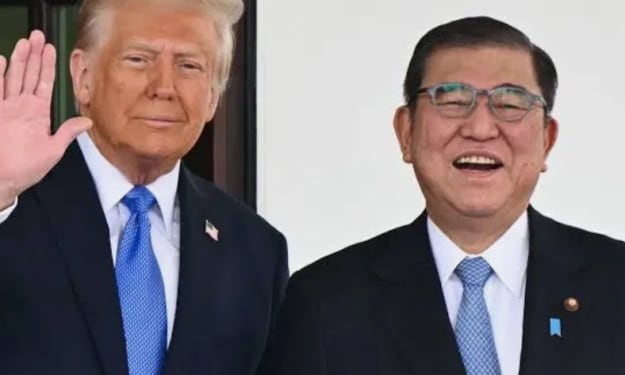
US-Japan trade deal gives Trump control over $550 billion in investments. It could be ‘vapor ware’ — and a model for other countries
**The US-Japan trade agreement grants Trump control over investments worth $550 billion. It Might Be "Vapor Ware" and Serve as an Example for Other Countries** Former President Donald Trump claimed in a high-profile announcement that a new US-Japan trade deal gave the United States leverage over 550 billion dollars in Japanese investment. The deal has been met with both enthusiasm and skepticism, with Trump hailing it as a landmark achievement for American manufacturing and job creation. Some have dubbed it potential "vapor ware" due to critics' claims that the numbers may be exaggerated, the agreements are non-binding, and the economic impact is speculative. Nonetheless, the way the deal is structured and presented may be used as a model for US trade negotiations in the future, especially if the administration is focused on optics and unilateral gain. At the heart of the agreement is a framework wherein Japan pledged to direct investment toward American industries — especially manufacturing, infrastructure, and emerging technologies. During his presidency, Trump put bilateral trade agreements ahead of multilateral ones and hailed the agreement as an example of nationalist economics. It is in line with his "America First" platform, which places an emphasis on bringing manufacturing jobs back to the United States and reducing reliance on supply chains from other countries. However, experts caution that the headline figure of \$550 billion is misleading. Before the agreement was signed, a significant portion of the pledged investment was already in the works. Financial analysts point out that Japanese companies like Toyota, SoftBank, and Mitsubishi have been present in the United States for a considerable amount of time. Trump can take credit for the trade deal because it simply brings together anticipated and existing investments under a new political banner. Furthermore, the agreement lacks specific enforcement mechanisms. It does not include tariff adjustments, guarantees of market access, or procedures for resolving disputes like traditional trade pacts do. Instead, it resembles a memorandum of understanding, which is advantageous from a political standpoint but has no legal force. Because of this, some economists have referred to it as "vapor ware," which refers to a policy that makes headlines but does not result in significant change. The deal's strategy reflects a larger trend in the way trade agreements are being used as political capital, despite the ambiguity. By framing the deal as a huge economic win — regardless of its actual substance — Trump leveraged it for domestic approval and international prestige. His administration argued that the mere announcement of the deal created a “confidence effect,” encouraging private-sector investment and lifting stock markets.
By GLOBAL NEWSabout a year ago in The Swamp
Air India Flight 171: The Mysterious Fuel Cutoff That Led to Disaster
1. A Catastrophe Minutes After Takeoff On June 12, 2025, Air India Flight 171—a Boeing 787‑8 Dreamliner—crash-landed into a residential hostel in Ahmedabad just 30 to 40 seconds after takeoff. The plane was en route from Ahmedabad to London Gatwick, carrying 230 passengers and 12 crew members. Of those aboard, 241 perished, and 19 were killed on the ground, with dozens more injured. Only one passenger survived, later identified as Vishwash Kumar Ramesh . The aircraft reached an altitude of just 625 feet, never climbing beyond 180 knots, before descending uncontrollably . In the chaos that followed, even experienced investigators struggled to identify what had so rapidly spiraled into tragedy. --- 2. Fuel Was Cut, Engines Shut Down The 15‑page preliminary report released by India’s Aircraft Accident Investigation Bureau (AAIB) offers the first insight: within seconds of takeoff, both fuel control switches—normally set to “RUN”—were found in the “CUTOFF” position on both engines, causing an immediate loss of thrust. Power was briefly restored when the switches were flipped back on, but the plane lacked sufficient altitude or time to recover . Investigators stressed that fuel contamination, bird strikes, or mechanical failure were ruled out. The report also confirmed one engine relit, while the other never regained full power . ---
By Ikram Ullahabout a year ago in The Swamp
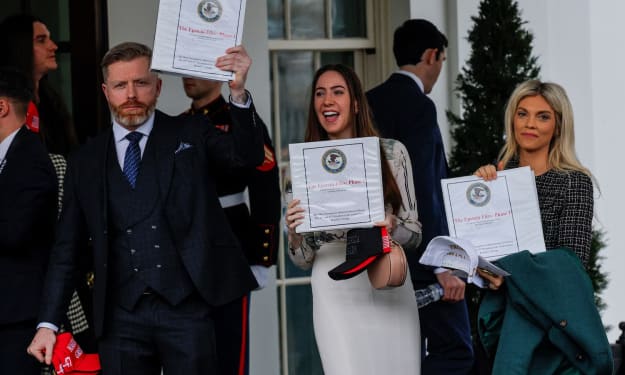
The Epstein Files Fiasco:
Picture this: March 2025, the MAGA faithful, freshly into a new administration, are strutting out of the White House, practically skipping like kids in a candy store. Why, you ask? Because they’re clutching the Epstein Files like they just won the lottery. “Justice is coming!” they chant jubilantly, as if they were in a poorly scripted superhero movie. Attorney General, Pam Bondi, in a separate interview displaying a smirk that could rival the Cheshire Cat, declares to the cameras, “You’re gonna want to stay tuned, America. The truth is about to drop, and heads are going to roll, because the Epstein Files and reports are on my desk!"
By Meko James about a year ago in The Swamp
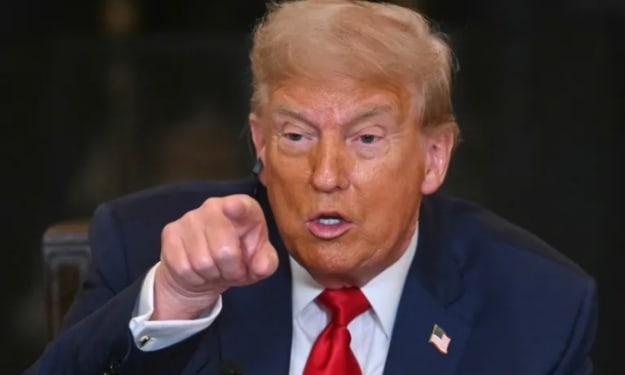
Trump's Frustration with Putin and the Uncertain Future of the Russia-Ukraine War
The ongoing war in Ukraine continues to test the diplomatic resolve of world leaders, with recent developments highlighting growing frustration in the United States. President Donald Trump, who once vowed to end the war in Ukraine within 24 hours of taking office, now faces mounting obstacles in his attempts to broker peace. Despite multiple rounds of negotiations and increasing diplomatic engagement, a ceasefire remains elusive as Russia intensifies its military campaign against Ukraine. In recent days, US Secretary of State Marco Rubio has met twice with Russian Foreign Minister Sergey Lavrov, underscoring Washington's persistent efforts to bring the conflict to a close. These talks, held on the sidelines of the ASEAN summit in Malaysia, lasted nearly an hour but yielded no immediate breakthroughs. Instead, they highlighted the widening gap between American aspirations for peace and Moscow’s hardened stance. Trump's public tone towards Russian President Vladimir Putin has also shifted. Previously criticized for his seemingly warm approach to the Kremlin, Trump has lately expressed disappointment over Putin's reluctance to show flexibility. “We get a lot of meaningless talk from Putin. He’s very nice, but in the end, it means nothing,” Trump remarked. This growing frustration has raised questions about whether Trump's stance on Russia is evolving into something more confrontational. Despite these comments, experts remain skeptical about any fundamental shift in Trump’s approach. Analysts argue that previous signs of a harder stance have failed to translate into significant policy changes. While some see an opportunity for a new direction in US foreign policy, others caution against premature conclusions. Trump's unpredictability remains a defining feature of his diplomacy, leaving allies and adversaries alike uncertain about what comes next. Meanwhile, the Biden-era military aid pipeline to Ukraine has continued under Trump’s leadership, albeit with some turbulence. Earlier this month, the Trump administration briefly paused arms shipments to Kyiv, only to resume them days later. Trump explained the reversal by emphasizing Ukraine's need to defend itself amidst Russia’s renewed offensives. However, in a significant change, Trump announced that future weapons would be sold to NATO, which would then transfer them to Ukraine. “We’re sending weapons to NATO, and NATO is paying for them, one hundred percent,” Trump clarified, describing the deal as part of an arrangement finalized during the NATO summit in The Hague. Despite these moves, Trump’s decision to continue arming Ukraine has sparked backlash from within his political base. Several prominent figures in the conservative movement expressed disappointment, questioning the wisdom of further entangling the United States in what they perceive as a costly and unwinnable conflict. For many in Trump’s MAGA (Make America Great Again) base, the Ukraine war represents a distraction from America’s domestic priorities. Alongside military support, Washington is weighing new economic measures to pressure Moscow. A bipartisan bill in Congress seeks to expand sanctions against Russia, targeting not only Russian industries but also countries that continue to purchase Russian oil, gas, and uranium. If passed, this would mark a major escalation in the West's efforts to isolate Russia economically. However, Russia's energy trade with China, India, and Turkey remains robust, limiting the global impact of Western sanctions. Despite imposing over 21,000 sanctions since the invasion began, the Russian economy has endured, buoyed by energy exports to Asia and limited European purchases of critical materials like uranium. Ukrainian President Volodymyr Zelenskyy continues to call on the West to tighten sanctions further, arguing that only sustained economic pressure can compel Moscow to negotiate peace in good faith. Trump has flirted with harsher economic measures, even threatening secondary tariffs on nations buying Russian oil. Yet, these threats have so far remained rhetorical. Whether Trump will ultimately back additional sanctions remains uncertain, given his past reluctance to impose meaningful costs on Russia. At the same time, the Trump administration has hinted at the possibility of disengagement. Secretary of State Rubio recently stated that the US could consider stepping back from the Ukraine conflict if diplomatic efforts fail to produce results. “It’s not our war. We have other priorities,” Rubio said, reflecting a sentiment that has gained traction in some corners of the US political landscape. Trump echoed these thoughts, albeit more cautiously, suggesting that the US remains committed to seeking a resolution but does not wish to remain entangled indefinitely. Nevertheless, the latest diplomatic meetings suggest the US is not abandoning peace efforts just yet. Rubio reported that during his discussions with Lavrov, new proposals for peace were exchanged. Although the specifics remain confidential, Rubio described them as a “different approach” that could open the door to renewed negotiations. Russia, for its part, also struck a cautiously optimistic tone, reaffirming its willingness to engage in dialogue and explore peaceful solutions. The path forward for the Russia-Ukraine war remains fraught with uncertainty. On one hand, intensified US-Russia diplomacy and continued arms supplies to Ukraine signal that Washington is not prepared to let Kyiv fall. On the other hand, growing domestic opposition, economic considerations, and diplomatic frustrations could push the US to recalibrate its involvement. For now, all eyes remain on Trump and Putin, whose complex relationship continues to shape the fate of a war that has already spanned more than three years. Whether through diplomacy, deterrence, or disengagement, the next chapter in the Russia-Ukraine conflict will be defined by the decisions made in Washington and Moscow in the weeks ahead.
By Ikram Ullahabout a year ago in The Swamp
Investors traded a record $6.6 trillion worth of stock in the first half of 2025
In the first half of 2025, "Global Stock Trading Hits Record $6.6 Trillion" Global stock markets witnessed an unprecedented surge in activity in the first half of 2025, as total trading volumes soared to a record \$6.6 trillion. This milestone, the highest half-year figure in history, reflects heightened investor engagement driven by a mix of economic optimism, technological advancements, and a new wave of retail participation reshaping the financial landscape.
By GLOBAL NEWSabout a year ago in The Swamp
When Does the Big Beautiful Bill Take Effect?
What Is the Big Beautiful Bill?⏳ Commonly known as the “One Big Beautiful Bill Act” (OBBBA) or Big Beautiful Bill (BBB), this massive tax-and-spending reconciliation package passed Congress in early July 2025 . It merges tax cuts, assistance program reductions, and major budget reallocations into a sweeping policy.
By Bevy Osuosabout a year ago in The Swamp
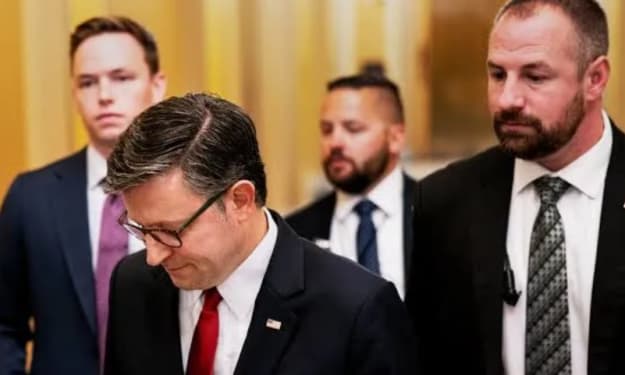
Johnson pushes to get House GOP holdouts to back tax bill
**Johnson Pushes to Get House GOP Holdouts to Back Tax Bill** House Speaker Mike Johnson is intensifying efforts to rally support among Republican holdouts in the House of Representatives as the GOP attempts to pass a significant tax package. The bill, which has been a priority for House Republicans, includes extensions of business tax breaks, increases in the child tax credit, and measures aimed at economic growth. However, internal party divisions have threatened its passage, with several conservative members withholding their support.
By GLOBAL NEWSabout a year ago in The Swamp
What I Learned Growing Up in a Cult. Top Story - June 2025.
Earlier this week I was talking to a coworker about life. After a while, we somehow got on the subject of religion. I had to explain that I have an aversion to most organized forms of religion, having been raised in a church that at the time was very cult-like, and later after a split, the faction that stayed with the original leader went full cult. But that begs the question.
By Atomic Historianabout a year ago in The Swamp