history
Past politicians, legislation and political movements have changed the course of history in ways both big and small. Welcome to our blast to the past.
From Inspiration to Isolation
In Lahore, where I watch global news unfold, the images from Gaza—shattered homes, grieving families—stream relentlessly on social media. As a Pakistani observer, I see not just a humanitarian catastrophe but a crisis for America’s global standing. The U.S., long a beacon of moral leadership, risks losing its credibility by contradicting its values with its actions.
By Zeeshan Aliabout a year ago in The Swamp
Investors traded a record $6.6 trillion worth of stock in the first half of 2025
In the first half of 2025, "Global Stock Trading Hits Record $6.6 Trillion" Global stock markets witnessed an unprecedented surge in activity in the first half of 2025, as total trading volumes soared to a record \$6.6 trillion. This milestone, the highest half-year figure in history, reflects heightened investor engagement driven by a mix of economic optimism, technological advancements, and a new wave of retail participation reshaping the financial landscape.
By GLOBAL NEWSabout a year ago in The Swamp
A Denunciation
We didn’t do many movies when I was in high school, but I went to see The Hiding Place with my church youth group. I’d read the book, but was not truly prepared to see a family risk everything to hide their Jewish neighbors and then be incarcerated in the Ravensbruck concentration camp on screen. I wondered if I would have been as brave as the ten Boom family.
By Judey Kalchik about a year ago in The Swamp
The AI-171 Mystery Solved?
Aviation accidents often send shockwaves across the world, not only because of the lives at stake but also due to the technical complexity behind every incident. One such incident that stirred debate and speculation was the mysterious emergency landing of Air India Flight AI-171, a Boeing 787 Dreamliner, in 2017. Recently, content creator and analyst Dhruv Rathee released a comprehensive breakdown of this event, shedding light on what really happened — and what it reveals about aviation safety today.
By Zabih hijranabout a year ago in The Swamp
Thomas Jefferson
Thomas Jefferson's life was a pivotal chapter in the shaping of the United States, marked by profound intellectual contributions, complex personal relationships, and enduring political legacies. His journey to penning the Declaration of Independence was rooted in the growing discontent with British rule and a burgeoning belief in self-governance and natural rights. As a brilliant young Virginian lawyer and statesman, Jefferson emerged as a powerful voice for colonial rights. The Declaration of Independence primarily his work, was a revolutionary document that articulated the philosophy of natural rights—life, liberty, and the pursuit of happiness—and the right of the people to reject governments that violate these rights; and to this very day, those are the things society most debate as to who and how those rights apply. It laid the philosophical groundwork for American independence and deeply influenced democratic movements worldwide.
By Meko James about a year ago in The Swamp
No Taxes on Tips or Overtime? Trump’s Tax Bombshell Just Changed the Game
If you’ve ever stayed late to finish your shift or depended on tips to keep the lights on, this one's for you. Because as of this week, thanks to a massive new tax overhaul just pushed through by Donald Trump, tips and overtime pay may no longer be taxed at the federal level.
By Bevy Osuosabout a year ago in The Swamp
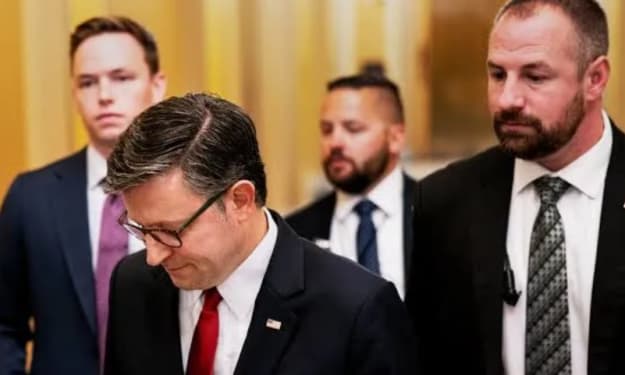
Johnson pushes to get House GOP holdouts to back tax bill
**Johnson Pushes to Get House GOP Holdouts to Back Tax Bill** House Speaker Mike Johnson is intensifying efforts to rally support among Republican holdouts in the House of Representatives as the GOP attempts to pass a significant tax package. The bill, which has been a priority for House Republicans, includes extensions of business tax breaks, increases in the child tax credit, and measures aimed at economic growth. However, internal party divisions have threatened its passage, with several conservative members withholding their support.
By GLOBAL NEWSabout a year ago in The Swamp
Why the U.S. Revoked Bob Vylan’s Visas: Music, Protest, and the Politics of Expression
In the ever-evolving intersection of music, activism, and politics, few stories highlight the fragile boundary between free expression and international diplomacy as sharply as the recent visa revocation of British punk-rap duo Bob Vylan by the United States. This unprecedented move has not only sparked outrage in artistic communities but also opened a broader conversation on the role of protest in music, the consequences of political speech, and how international artists are treated when they challenge dominant narratives. Who Is Bob Vylan? Bob Vylan, consisting of frontman Bobby Vylan and drummer Bobbie Vylan, is a genre-defying duo from London, England. Formed in 2017, the group blends punk, grime, and hip-hop in a way that is both aggressive and politically charged. They are known for confronting issues such as racism, police brutality, class inequality, and colonialism—all while maintaining an unapologetically anti-establishment tone. Their DIY ethos and fearless lyricism have earned them a loyal fanbase in the UK and abroad. Unlike many mainstream artists who dilute their messages for broader acceptance, Bob Vylan leans heavily into confrontation. And that’s precisely where their recent controversy begins. --- The Glastonbury Incident: Where It All Changed At Glastonbury Festival 2025, Bob Vylan’s performance on June 28 shocked some and energized others. On stage in front of a massive audience, Bobby Vylan led chants of: > "Free, Free Palestine!" "Death, Death to the IDF!" The chants—particularly the latter—ignited a political firestorm. While “Free Palestine” has been widely used in global pro-Palestinian movements, the phrase "Death to the IDF" (Israel Defense Forces) was perceived by many, especially U.S. officials, as crossing a line into incitement of violence. Shortly after the performance, the United States revoked the group’s visas, effectively banning them from entering the country for their upcoming U.S. tour. --- The U.S. Government's Justification The move was confirmed by Deputy Secretary of State Christopher Landau, who stated: > “Foreigners who glorify violence and hatred are not welcome visitors to our country.” From the U.S. perspective, the chant targeting the IDF—a branch of a close ally’s military—was not protected free speech but instead a potential incitement to violence and hate speech. U.S. immigration laws allow for the revocation of visas if individuals are deemed to promote or incite violent acts, even through artistic or political expression. This decision has drawn support from some pro-Israel organizations and lawmakers, but has equally ignited backlash from free speech advocates, artists, and civil liberties groups around the globe. --- The Fallout: Artistic Freedom vs. Political Consequences Bob Vylan’s supporters argue that the U.S. reaction reflects a double standard. American artists who engage in provocative or anti-government messaging rarely face such severe consequences—yet international performers seem to be treated with far less tolerance. Here’s the tension: the United States promotes itself as the global champion of freedom of speech, especially artistic freedom. But when that freedom is exercised by outsiders in a way that challenges U.S. foreign policy or offends political sensibilities, the door appears to close. --- Free Speech, or Incitement? Let’s examine the core issue: were Bob Vylan’s statements an exercise in free speech or an incitement to violence? The chant “Death to the IDF” is undeniably strong and controversial. It can be interpreted in multiple ways: some argue it is a condemnation of institutional violence, while others view it as a call for literal harm against individuals. In legal terms, the question of incitement depends on intent, imminence, and likelihood of actual violence—standards laid out in U.S. Supreme Court precedent (notably Brandenburg v. Ohio). Since Bob Vylan’s comments were made during a live music performance in the UK, with no direct link to violence, it’s unlikely that U.S. citizens or institutions were immediately endangered. Still, the symbolic power of such statements cannot be ignored—especially when related to one of the most sensitive geopolitical conflicts of our time. --- The Broader Context: Music as Protest This isn’t the first time music has collided with politics in a major way: In the 1960s, artists like Bob Dylan, Nina Simone, and Joan Baez were the voices of civil rights and anti-war movements. In the 1980s, Fela Kuti used Afrobeat to protest Nigeria’s military regime—often landing him in jail. In recent years, Kendrick Lamar, Beyoncé, and Childish Gambino have woven powerful political messages into their performances. What makes Bob Vylan’s case stand out is the international political tension and the governmental consequence. Artists from abroad can no longer assume their expression—even from stages thousands of miles away—will be treated as purely symbolic. In a hyperconnected, politically polarized world, words travel fast, and consequences are swift. --- Bob Vylan’s Response The group has not issued a full apology. In fact, Bobby Vylan defended their message in follow-up interviews and social media posts, asserting: > “We speak for the oppressed, not the oppressors. Music is our protest, and we won’t be silenced.” They argue that criticizing a government’s military actions—especially amid rising global outrage over civilian casualties in Gaza—should not be equated with hate speech. Their stance reflects a growing sentiment among younger audiences who demand that artists use their platforms to address injustice. --- Public Reaction: Divided Voices The public response to the visa cancellation has been deeply polarized. Supporters of Israel see it as a justified move against rhetoric that threatens the safety and legitimacy of the Jewish state. Pro-Palestinian activists view it as another example of Western hypocrisy and the silencing of voices demanding justice. Free speech advocates worry about the precedent this sets for the U.S. to police artistic expression—even when it originates outside its borders. On platforms like X (formerly Twitter), the hashtag #LetBobVylanIn trended for days. Meanwhile, some conservative commentators called for the group to be banned from more Western countries. --- What This Means for Other Artists This incident sends a clear signal: international performers are subject to the political climate of the countries they seek to enter. Messages that challenge dominant narratives—especially those tied to sensitive foreign alliances—can have serious ramifications. For artists, this means navigating a difficult path between authentic expression and pragmatic caution. For fans and activists, it raises the question: if art is supposed to challenge, provoke, and push boundaries—where exactly should the line be drawn? --- Conclusion: Art Will Always Be Political Bob Vylan’s visa controversy is not just a headline—it’s a cultural and political moment. It reflects the ongoing tensions between freedom and responsibility, protest and diplomacy, music and power. In a time when silence is often seen as complicity, artists like Bob Vylan choose to speak loudly. Whether one agrees with their message or not, their story forces us to reexamine the true cost of protest in a globalized world. As they face canceled tours and travel bans, their music remains a testament to a legacy that refuses to be muted.
By Ikram Ullahabout a year ago in The Swamp
World War 3 in 2025? Secret Predictions from Intelligence Experts
World War 3 in 2025? Secret Predictions from Intelligence Experts The wind of war doesn’t always begin with fire—it starts with whispers. Quiet leaks. Subtle shifts. Hidden alerts that most civilians never notice. But intelligence experts? They see the storm long before the clouds arrive. In shadowy corners of military rooms, encrypted emails, and confidential strategy documents, one chilling phrase has started to appear again and again: > “High probability of global military escalation by 2025.” No headlines. No speeches. Just quiet, rising fear. A War Waiting in the Wings In 2023 and 2024, global tensions accelerated at a pace not seen since the Cold War. Russia’s deepening war in Ukraine became more unpredictable. China’s naval movements near Taiwan turned from drills into provocations. Iran and Israel played a deadly game of silence and surprise, while the U.S. expanded its military footprint across Eastern Europe and the Pacific. But it was in late 2024 when a string of intelligence briefings shocked even seasoned analysts. A series of AI-generated war-game simulations—classified and run by NATO’s Strategic Forecasting Unit—predicted that under current conditions, a multi-front global conflict was "inevitable within 12–18 months." That brings us to mid-2025. We are inside that window now. The Hidden Warnings Leaked documents—first shared by an anonymous whistleblower on a dark web server—outlined a chilling forecast titled "WW3 Trajectory – Phase Zero." It wasn’t a declaration. It was a blueprint. The file, partially verified by cyber-researchers, predicted three initial "trigger zones" that could ignite a worldwide war: 1. Taiwan Strait Conflict 2. Nuclear Escalation in the Middle East 3. Russian Expansion Beyond Ukraine The document warned that if any two of these events occurred simultaneously, major powers would be forced to respond—creating a domino effect of alliances, retaliation, and global mobilization. Sound impossible? Look closer: In March 2025, China blockaded Taiwanese supply routes. In April, Iran tested a long-range missile, triggering Israeli airstrikes. And by May, Russian troops were spotted near Moldova’s border, in unmarked vehicles. Two out of three have already happened. Whispers from the CIA A former CIA analyst, whose voice was altered for anonymity in an exclusive podcast episode by The Grey Report, described internal agency chatter that chilled listeners: > “It’s no longer if. It’s how fast, how bad, and how deep the first 72 hours will go.” He claimed U.S. satellite intelligence had observed movement of tactical nuclear weapons in Belarus, and secret coordination between Russia and China using encrypted underwater cables—a level of secrecy not seen since before the invasion of Ukraine. He also stated that an internal briefing from Langley was titled “The Last Summer of Peace?” The Disappearing Diplomats Adding to the eerie quiet: the disappearance of diplomatic meetings. Back-channel talks that used to take place in Geneva and Vienna have dried up. U.S.–China calls are being postponed. Russian envoys have left several key European posts without explanation. According to British intelligence leaks, Russian diplomats in London were quietly moved back to Moscow under "national priority orders." Diplomats evacuate before the bombs fall. Civilian Clues and Public Denial Most of the public still scrolls through social media, unaware. Politicians avoid using the phrase "world war." Yet, the markets tremble. Oil prices hit a 10-year high. The global chip supply is tightening. And bunker builders in the U.S. and Europe have seen record sales since February 2025. One civilian signal stood out: the U.S. Department of Homeland Security quietly updated its official “Continuity of Government” plan—designed to keep the nation operating during nuclear war. It was uploaded without fanfare, buried in a Friday data dump. But cybersecurity sleuths noticed. Even more unsettling: private emails leaked from North American railway unions mention “quiet coordination with FEMA for emergency transport drills in Q3 2025.” Why prepare for mass rail mobilization if nothing is coming? The 48-Hour Theory One highly classified Pentagon scenario, known as “Black Silence,” models a surprise global war that unfolds in just 48 hours. It begins with: A cyberattack on U.S. early warning satellites Followed by a sudden Chinese invasion of Taiwan Then Russian missile launches into Poland or the Baltics Meanwhile, Iranian-backed militias begin assaults across Israel’s borders By the time world leaders respond, it’s already too late. Communications break down. Nuclear protocols activate. No time to react. Just automated retaliation. > In this simulation, over 1.2 billion lives are at risk within the first 14 days. A World on the Edge Are we already sleepwalking into this future? Military convoys now move at night. Drone surveillance over disputed territories has increased fivefold. Cyberattacks are happening daily—most never reach the news. Countries are hoarding gold, buying wheat reserves, and shifting toward closed economies. Yet the media focuses on elections, celebrity divorces, and sports scores. But behind closed doors, intelligence insiders say the clock is ticking—and midnight is closer than ever. Final Warning or False Alarm? Skeptics argue this could all be a high-stakes bluff. A global game of chicken meant to scare rivals into backing down. After all, war has been predicted before. The Cold War never exploded. The Cuban Missile Crisis ended without fire. But this time, there are more players, less communication, and deadlier technology. The question isn’t just “Will World War 3 happen?” It’s: “Has it already begun in silence?” Because not all wars start with a bang. Some start with a whisper. A signal missed. A leak ignored. A decision made in a locked room, far from cameras, far from mercy. --- If World War 3 starts tomorrow... would you even know today was your last day of peace?
By Ali Asad Ullahabout a year ago in The Swamp
The World’s Most Powerful Bunker-Buster Bomb — Capable of Destroying Iran’s Deep Underground Nuclear Sites
🌍 The World’s Most Powerful Bunker-Buster Bomb — Capable of Destroying Iran’s Deep Underground Nuclear Sites The United States possesses a secretive and devastating weapon — one that has never been used in any war so far. But if it were ever unleashed, it could turn deeply buried nuclear bunkers into dust and rubble, even those hidden under rugged mountains. This formidable weapon is known as the GBU-57A/B Massive Ordnance Penetrator (MOP) — a gigantic, non-nuclear bomb designed to smash through heavily reinforced underground facilities. Weighing in at 30,000 pounds (approximately 13,600 kilograms), it stands as the heaviest conventional bomb in the U.S. arsenal. Despite its massive size, its purpose is precise: to strike deeply buried and hardened targets — like Iran’s Fordow nuclear facility, which is nestled deep within mountainous terrain and reinforced concrete. --- 🔐 Exclusively American: No Other Nation Has This Bomb This deadly bunker-buster is so advanced that only the United States has access to it. Not even close allies like Israel — who often receive top-tier U.S. military technology — have been granted access to the MOP. That exclusivity isn’t just a matter of prestige. It reflects the weapon’s highly specialized purpose, complex delivery requirements, and its potential role in strategic deterrence. The MOP exists not just to be used, but to be known — its mere presence in the U.S. arsenal sends a strong message to adversaries about the depths the U.S. can reach, literally. --- ✈️ How Is It Deployed? The B-2 Spirit Stealth Bomber The only aircraft capable of delivering the MOP is the B-2 Spirit stealth bomber, the crown jewel of U.S. aerial warfare. Designed by Northrop Grumman, the B-2 is among the most advanced and secretive military aircraft ever created. Key capabilities of the B-2: Stealth Technology: Its radar-evading shape and coating allow it to penetrate enemy airspace undetected. Long-Range Missions: ▪ Without refueling: up to 11,000 kilometers ▪ With aerial refueling: up to 18,500 kilometers, allowing it to strike anywhere on Earth Payload: Can carry two MOPs simultaneously, meaning a total strike capability of 60,000 pounds (27,200 kg) of precision-guided firepower. This combination of stealth, range, and brute force makes the B-2 a flying platform of strategic shock and awe — and the only one currently certified to carry the GBU-57 MOP. --- 💥 Understanding the GBU-57’s Power The MOP is not your average bomb. Unlike typical aerial bombs that explode on the surface or a few feet underground, the GBU-57 is designed to burrow deep into the Earth before detonating. Penetrative Power: Can punch through 200 feet (about 60 meters) of concrete or rock. If deeper destruction is required, multiple MOPs can be dropped sequentially to drill further down. Its explosive core is encased in an extraordinarily dense, high-strength steel shell, giving it deep penetration before detonation — crucial for reaching hardened nuclear facilities hidden under mountains. The bomb uses a GPS-guided system to ensure pinpoint accuracy and is capable of delivering a delayed explosion after burrowing into its target. --- ⚠️ Never Used in Battle — But Thoroughly Tested Though the GBU-57 MOP has never been used in actual combat, it has been extensively tested at classified ranges in the U.S., such as White Sands Missile Range in New Mexico. Its purpose? To sit silently in the U.S. arsenal, ready to destroy targets that no other weapon can. It’s been engineered specifically with countries like Iran and North Korea in mind — nations believed to be developing or hiding nuclear weapons in underground bunkers. In comparison, the MOP is far more powerful than the Mother of All Bombs (MOAB) dropped by the U.S. in Afghanistan in 2017 — which weighed about 9,800 kg. The MOP is nearly 40% heavier and built for deep structural destruction, not surface blast effect. --- 🧠 What Would Happen If the MOP Were Ever Used? According to Professor Paul Rogers of the University of Bradford, deploying a MOP would be a complex and layered military operation. Here's how a hypothetical strike could unfold: 1. Preparation Phase: F-22 Raptor stealth fighters and electronic warfare aircraft would likely be used to neutralize or blind enemy radar and missile defenses. 2. Delivery Phase: A B-2 bomber, flying from a U.S. or allied base (possibly in the Middle East or Europe), would deliver the MOP. Its stealth would allow it to evade detection and reach the target zone undetected. 3. Post-Strike Assessment: Surveillance drones would fly over the target zone to assess damage. If necessary, a second strike could be ordered to achieve complete destruction. Using the MOP would signal the crossing of a critical threshold. While non-nuclear, its effect on strategic targets could spark regional or global escalations, especially if aimed at sensitive sites in Iran or North Korea. --- 📦 How Many Does the U.S. Have? While the exact number is classified, defense analysts estimate the U.S. possesses between 10 to 20 operational MOPs. Their limited number underscores how specialized and expensive these weapons are — not for mass use, but for surgical strategic strikes. Each MOP is likely stored and maintained under tightest security, ready to be armed only in very high-stakes scenarios. --- 🌍 A Symbol of American Strategic Dominance The GBU-57 Massive Ordnance Penetrator is more than a bomb — it’s a message. A message to adversaries that no fortress is too deep, no target too protected, and no facility too remote. It represents America’s ultimate conventional option before resorting to nuclear weapons. Its very existence influences military doctrines, diplomatic negotiations, and strategic planning worldwide. And while it remains unused, it looms in the background — a sleeping giant in the vault of military deterrence.
By Ikram Ullahabout a year ago in The Swamp