finance
Money talks; reviewing the global economy, government spending, taxes, and economic policy that affect our social and political future.
" Trump returns to Riyadh "
Riyadh, Saudi Arabia — May 2025 In a move that has captured international attention, former U.S. President Donald J. Trump made a high-profile visit to Saudi Arabia in May 2025, reigniting discussions about U.S. foreign policy, global diplomacy, and the evolving relationship between Washington and Riyadh. The visit, his first since leaving the White House, was marked by both symbolism and substance, offering insights into Trump's ongoing political influence and his vision for America's role in the Middle East. The visit comes amid shifting global dynamics and internal political momentum in the United States, with Trump maintaining a significant presence in the American political landscape. His arrival in Riyadh—hosted with royal fanfare by Crown Prince Mohammed bin Salman—served as a diplomatic spectacle and a platform for serious discussions on regional security, economic cooperation, and strategic alliances. Echoes of 2017, with a New Agenda Trump’s 2025 visit draws inevitable comparisons to his first overseas trip as president in 2017, which also began in Riyadh. At that time, he emphasized unity in the fight against extremism and unveiled a historic $110 billion arms deal. Eight years later, Trump’s return to Saudi Arabia carried a different tone—less about making first impressions and more about reinforcing long-standing ties. This time, the former president met with Saudi leaders to discuss shared concerns over escalating tensions in the Gulf, the evolving role of Iran, and the lingering effects of regional conflicts in Yemen and Syria. Trump was also briefed on Saudi Arabia’s ongoing Vision 2030 projects—massive reforms aimed at modernizing the Kingdom’s economy, society, and infrastructure. Security and Defense Cooperation High on the agenda were matters of defense and regional security. Trump, known for his emphasis on a strong military partnership during his presidency, reiterated the importance of U.S.-Saudi collaboration in counterterrorism and intelligence sharing. Though no official agreements were signed during the visit, sources within the Saudi Ministry of Defense reported discussions about future joint military exercises and potential procurement deals involving U.S. defense contractors. The former president’s visit included a closed-door session with senior Saudi defense officials and U.S. business executives, suggesting that the trip may lead to renewed security cooperation even outside official government channels. Economic Partnerships and Private Sector Diplomacy Another major component of the visit was economic diplomacy. Trump attended the U.S.-Saudi Business Forum in Riyadh, where he gave a keynote address promoting American enterprise, energy collaboration, and investment in Saudi infrastructure. He praised the Kingdom’s progress on its Vision 2030 goals and encouraged U.S. companies to take part in the transformation of Saudi cities and industries. Key sectors under discussion included renewable energy, artificial intelligence, tourism, and digital infrastructure. Trump's presence helped draw attention to several new partnerships between American firms and Saudi state-backed ventures—deals that, while not yet finalized, represent billions of dollars in potential investment. Political Undertones and Global Optics While the visit was framed as a private diplomatic mission, its political undertones were unmistakable. As Trump continues to play a dominant role in U.S. political discourse—either as a former president or a prospective candidate—his international engagements are scrutinized through a political lens. The 2025 visit to Riyadh, therefore, served not only as a gesture of goodwill toward a longtime ally but also as a platform for Trump to project leadership on the global stage. International media outlets noted the sharp contrast between Trump’s visit and the foreign policy approach of the current U.S. administration, particularly in areas such as arms sales, human rights, and climate cooperation. Analysts suggest that Trump’s return to Saudi Arabia could influence American diplomatic posture in the region, especially if his political aspirations materialize further. Cultural and Symbolic Moments Beyond politics and policy, the visit was rich with symbolism. Trump was received with traditional Saudi hospitality, including a private audience with King Salman, a tour of Diriyah—the birthplace of the Saudi state—and attendance at a gala hosted by the Royal Court. He also visited the King Abdulaziz Center for World Culture and participated in a roundtable with Saudi youth leaders and entrepreneurs. These symbolic gestures were widely covered by regional media, portraying the visit as a reaffirmation of friendship and mutual respect between the two nations. Conclusion: A Strategic and Symbolic Visit Donald Trump's 2025 trip to Saudi Arabia was more than just a return to familiar territory—it was a calculated display of diplomacy, business outreach, and geopolitical messaging. While no major policy breakthroughs were announced, the visit reinforced the enduring relationship between the U.S. and Saudi Arabia and emphasized Trump's continued interest in shaping that partnership. Whether seen as a private citizen wielding influence or a political figure staging a comeback, Trump's presence in Riyadh reminded the world of the complexities of American diplomacy and the personal relationships that often drive it. As the Middle East navigates a new era of challenges and opportunities, the U.S.-Saudi relationship—long shaped by leaders on both sides—remains a central force in the region’s future.
By Kaleem Ullahabout a year ago in The Swamp
"The 2025 Indo-Pak War"
In early 2025, the long-standing tensions between India and Pakistan escalated into one of the most significant military confrontations of the 21st century. Though brief, the conflict shook the South Asian region, drawing global attention due to the nuclear capabilities of both nations. The Indo-Pak War of 2025 lasted only two weeks, but its impact on regional politics, economy, and international relations remains profound. Origins of the Conflict The roots of the 2025 conflict can be traced to a series of skirmishes in Kashmir throughout 2024, which saw increased cross-border shelling and militant incursions. Diplomatic efforts led by the United Nations and regional powers failed to de-escalate tensions. A deadly attack on an Indian Army convoy in January 2025, allegedly orchestrated by Pakistan-based militants, became the flashpoint. India responded swiftly with “Operation Trishul,” a large-scale surgical strike across the Line of Control (LoC), targeting what it claimed were terrorist launch pads and supply routes. Pakistan condemned the strikes as an act of aggression, retaliating with air raids on Indian military positions in Kashmir. This tit-for-tat exchange rapidly spiraled into full-scale conventional warfare. The Course of the War The war officially began on February 10, 2025, when Pakistan launched coordinated artillery and air strikes along the LoC and into Ladakh. India responded by mobilizing troops in Jammu, Punjab, and Rajasthan, leading to battles on multiple fronts. Northern Front (Kashmir and Ladakh): Intense mountain warfare dominated this theater. India deployed its elite high-altitude troops to counter Pakistani advances in the Dras and Kupwara sectors. Indian forces gained the upper hand by capturing key outposts by the seventh day of the war. Western Front (Punjab and Rajasthan): This front saw rapid tank battles and air raids. India’s armored divisions pushed into Pakistan’s Sialkot sector, while Pakistan counterattacked in the Fazilka and Barmer regions. Heavy casualties on both sides marked this phase, but neither side achieved a decisive breakthrough. Naval Engagements: The Indian Navy blockaded Karachi Port temporarily and intercepted Pakistani vessels in the Arabian Sea. Pakistan responded with the deployment of submarines near the western Indian coast, creating tension in vital sea lanes. Though the war remained conventional, both nations issued subtle nuclear warnings through media and diplomatic channels. The threat of escalation prompted urgent international mediation. International Response The global community watched with growing alarm. The United States, China, Russia, and the United Nations called for an immediate ceasefire. Fearing a nuclear confrontation, back-channel diplomacy intensified, with the UAE and Saudi Arabia playing key mediatory roles. On February 24, under mounting pressure and facing economic strain, both countries agreed to a ceasefire brokered by the UN Security Council. The ceasefire restored pre-war territorial boundaries, with both nations claiming strategic and moral victories. Aftermath and Impact Despite the limited duration, the 2025 war had several long-lasting consequences: Human and Economic Cost: Over 5,000 soldiers and an estimated 1,200 civilians were killed on both sides. The conflict displaced tens of thousands, especially in border regions. Economically, both countries suffered a sharp GDP contraction in the first quarter of 2025, with markets plummeting and trade disrupted. Geopolitical Shifts: The war led to renewed calls for Kashmir resolution from the international community. China remained largely neutral but reinforced its border presence in Ladakh, signaling strategic interest. The U.S. and Russia, while advocating peace, used the situation to bolster arms sales and influence in South Asia. Domestic Ramifications: In India, nationalistic fervor surged, strengthening the ruling party’s political hold. In Pakistan, civil-military relations became more strained, with public protests demanding better governance and questioning the cost of perpetual conflict. Cyber and Information Warfare: The conflict also featured unprecedented levels of cyberattacks and disinformation campaigns. Both nations targeted each other’s infrastructure and media, leading to widespread misinformation and paranoia. Lessons Learned The 2025 Indo-Pak War reaffirmed the volatility of South Asia’s security landscape. It highlighted the dangers of unresolved territorial disputes, militant activity, and aggressive nationalism. Though nuclear weapons were not used, the threat hovered perilously close, serving as a reminder of how quickly things can escalate. The war also emphasized the importance of diplomatic engagement, regional cooperation, and conflict resolution mechanisms. While the guns may have fallen silent, the underlying issues—particularly the Kashmir dispute—remain unresolved. Conclusion The Indo-Pak War of 2025 was a sobering event that showcased the fragility of peace in South Asia. Both India and Pakistan walked away with heavy losses and hard-earned lessons. The need for sustained peace efforts, mutual trust-building, and international mediation has never been more critical. As the region looks toward the future, one can only hope that the scars of 2025 will guide its leaders toward dialogue rather than destruction
By Kaleem Ullahabout a year ago in The Swamp
How China Got Benefit from Pakistan and India Conflict
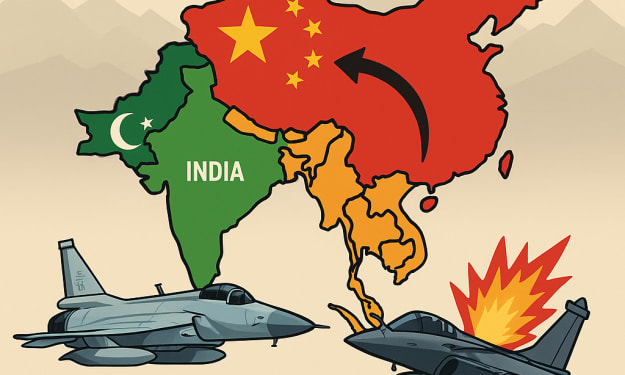
In a dramatic turn of events during a recent India-Pakistan conflict, the Pakistan Air Force (PAF) reportedly downed a French-made Rafale fighter jet using the JF-17 Thunder, a multi-role combat aircraft developed jointly by China and Pakistan. Though official confirmation is still pending, the symbolic value of this event is already resonating across global defense and strategic communities.
By Zakir Ullahabout a year ago in The Swamp
Pahalgam Terror Attack 2025: Hindu Tourists Killed in Kashmir, Global Reactions and Full Report. Content Warning. AI-Generated.
On April 22, 2025, a brutal terrorist attack in Pahalgam, Jammu and Kashmir sent shockwaves across India and the international community. Armed militants opened fire on a group of tourists at Baisaran Valley, deliberately targeting individuals based on their Hindu identity. The attack, which left 26 civilians dead and over 20 injured, is being called one of the deadliest attacks in Kashmir in recent years. The massacre not only exposed the fragile security situation in the region but also reignited global conversations around religious terrorism, Islamic extremism, and cross-border militancy. What Happened in Pahalgam on April 22, 2025? According to survivor testimonies and local authorities, a group of armed terrorists infiltrated the tourist-heavy zone of Baisaran Valley, posing as guides or local pony handlers. They then asked tourists their names and religion. Those who identified as Hindu were separated and shot at close range. Some were reportedly asked to recite the Islamic kalima to verify their faith. This form of religiously motivated violence is a chilling reminder of earlier sectarian atrocities in South Asia. Among those killed was an entire Hindu family from Maharashtra. Shockingly, a local Muslim man, Seyyed Adil Hussain Shah, lost his life trying to protect the tourists. His bravery has since become a symbol of interfaith solidarity in a time of hate.
By Tanushree Dasabout a year ago in The Swamp
Pakistan Claims Chinese-Made J-10C Fighter Jets Used Against India’s Air Force. AI-Generated.
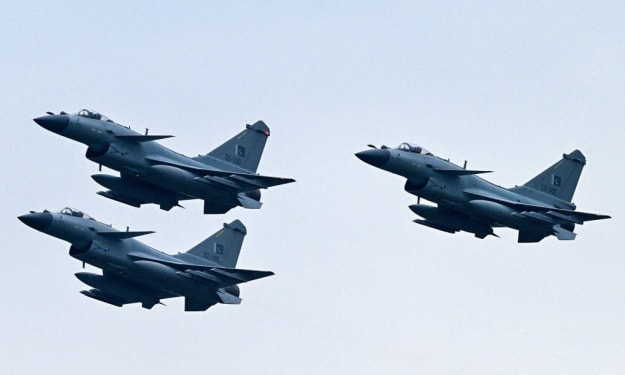
Pakistan Claims Chinese-Made J-10C Fighter Jets Used Against India’s Air Force In a significant escalation between two nuclear-armed rivals, Pakistan has claimed that its air force used Chinese-made J-10C fighter jets to shoot down five Indian aircraft during a recent military confrontation. The assertion comes amid rising tensions between India and Pakistan over the disputed Kashmir region, with both nations exchanging accusations and conducting air strikes.
By Adnan Rasheedabout a year ago in The Swamp
A Timeline of Tensions Between India and Pakistan Over Kashmir
A Timeline of Tensions Between India and Pakistan Over Kashmir The Kashmir conflict is one of the most protracted and volatile territorial disputes in the world rooted in the partition of British India in 1947. India and Pakistan both nuclear armed neighbors have fought multiple wars and engaged in recurring skirmishes over this contested region. This article outlines a detailed timeline of the tensions between the two nations over Kashmir.
By Adnan Rasheedabout a year ago in The Swamp
Trump’s Space Budget Reflects Influence of Elon Musk and SpaceX. AI-Generated.
Trump’s Space Budget Reflects Influence of Elon Musk and SpaceX In a striking shift in America’s space strategy, former President Donald Trump’s proposed space budget for 2026 reveals a clear preference for privatization and a growing reliance on commercial spaceflight companies—chief among them, Elon Musk’s SpaceX. The proposed budget, which significantly reduces NASA’s funding while boosting support for private sector-led space exploration and defense initiatives, underscores the increasing influence of Musk in shaping the nation’s space agenda.
By Adnan Rasheedabout a year ago in The Swamp
Jeff Bezos Plans to Sell \$5 Billion Worth of Amazon Stock: What It Means for Investors and the Future of Amazon
Jeff Bezos, the founder and executive chairman of Amazon, has once again made headlines—this time not for a rocket launch or a major acquisition, but for a massive stock sale plan. In a new filing disclosed with the U.S. Securities and Exchange Commission, Bezos revealed his intention to sell up to 25 million shares of Amazon stock, estimated to be worth around \$4.75 billion. This stock divestment is scheduled to take place over the course of the next year as part of a pre-arranged trading plan. This development marks yet another significant chapter in Bezos’s post-CEO financial strategy. Earlier in 2024, he offloaded Amazon shares worth approximately \$8.5 billion, bringing his total stock sales for the year to a staggering \$13.4 billion. These transactions reflect not only his ongoing shift in financial priorities but also signal potential moves for both Amazon and his other ventures. The Scope of Bezos’s Stock Sale Bezos's latest sale is part of a 10b5-1 trading plan, which allows insiders of publicly traded corporations to set up a predetermined plan to sell stocks. This type of plan is designed to avoid any allegations of insider trading since the trades are scheduled in advance, irrespective of non-public information. His plan was reportedly initiated in March 2024 and will continue until May 2026. Despite the eye-popping figure attached to the sale, Bezos will still maintain a substantial position in Amazon. After completing the upcoming divestment, he will retain approximately 912 million shares, which equates to about 8.8% ownership in the e-commerce giant. This means that even as he sells off billions in stock, he continues to wield considerable influence over Amazon’s direction and governance. Amazon’s Strong Market Performance Encourages Stock Sales The timing of Bezos’s planned sale appears to be strategic, aligning with a period of impressive financial performance by Amazon. The company recently reported first-quarter net income of \$10.4 billion—an indicator of robust operational success. In addition, Amazon’s stock price has surged by 30% in 2024, reaching \$189.26 at the latest trading session. Investors have been buoyed by Amazon’s aggressive push into artificial intelligence and cloud computing, two sectors that are driving major innovation and market growth. As the company’s stock climbs, it provides an ideal opportunity for Bezos to liquidate portions of his holdings at maximum value. This move isn't just about timing the market—it’s about capitalizing on strong investor sentiment and a bullish outlook for Amazon’s future. What Bezos Plans to Do With the Billions Jeff Bezos has long channeled his Amazon earnings into other ambitious projects, and this new wave of stock sales is expected to continue that trend. One of the primary beneficiaries is Blue Origin, Bezos’s private aerospace company. With annual operating costs exceeding \$2 billion, Blue Origin represents one of the most expensive and visionary projects under his stewardship. The funds from the Amazon stock sales will help fuel the company’s development of space tourism, lunar landers, and potentially interplanetary missions. In addition to his space ventures, Bezos has also been active in philanthropy. According to recent reports, he donated \$60 million in Amazon stock to an unnamed nonprofit. While the specific recipient has not been revealed, this donation aligns with Bezos’s increasing focus on charitable giving in recent years. He has previously committed billions to causes like climate change through the Bezos Earth Fund and social equity programs. The Tax Angle: Why Bezos Moved to Florida One of the most intriguing aspects of this development is the potential tax advantage Bezos gains from his 2023 relocation from Seattle to Miami. Washington state introduced a 7% capital gains tax in 2022, which would have applied to Bezos’s massive stock sales had he remained a resident there. Florida, by contrast, has no state income tax or capital gains tax, making it a far more favorable jurisdiction for high-net-worth individuals looking to optimize their financial strategies. By moving to Florida before executing this series of stock sales, Bezos potentially saves hundreds of millions in state taxes. While legal and within his rights, this move has drawn criticism from some observers who argue it reflects the growing trend of tax avoidance among billionaires. Nevertheless, it illustrates the complex financial considerations at play when billionaires manage and redistribute their wealth. What This Means for Amazon Investors For Amazon shareholders and potential investors, Bezos’s stock sale plan can be interpreted in multiple ways. On one hand, some might view it as a routine rebalancing of assets or a diversification move typical of long-term executives. On the other, a massive selloff by the company’s founder could raise questions about Amazon’s long-term growth prospects—though this concern is tempered by the company’s strong recent performance and Bezos’s continued large stake. It’s also important to recognize that insider sales are common among executives who accumulate vast amounts of stock as part of their compensation. With Amazon stock appreciating sharply in 2024, this might simply be an ideal time for Bezos to convert shares into liquid assets. Final Thoughts: A Billionaire Balancing Act Jeff Bezos continues to walk a unique line between business mogul, visionary space entrepreneur, and modern philanthropist. His latest Amazon stock sale, while financially massive, is just another strategic move in a long series of decisions that balance personal goals with public impact. For everyday investors, the key takeaway isn’t to panic about Bezos selling shares—but rather to observe how he manages his capital, bets on future technologies, and structures his wealth for long-term impact. Amazon remains a dominant player in the global tech and retail sectors, and Bezos’s partial divestment is unlikely to change that anytime soon. As Bezos steers billions toward space travel, philanthropy, and tax-optimized living, one thing is clear: the story of Amazon—and its founder—is far from over. Jeff Bezos
By Tech Horizonsabout a year ago in The Swamp