feature
Swamp featured post, a Swamp Media favorite.
Afghanistan is on Fire! The World Left Astonished Yesterday
In a historic milestone for economic growth and national self-reliance, Afghanistan has taken a bold leap into the world of industrial production. Just two days ago, a grand inauguration ceremony marked the launch of one of the country’s largest vehicle and agricultural machinery production complexes. This massive factory, located in the Pul-e-Charkhi Industrial Zone near Kabul, has begun assembling dump trucks, passenger buses, Corolla-type vehicles, and a range of agricultural machines including fruit processing and packaging units.
By Keramatullah Wardakabout a year ago in The Swamp
Avoiding Common Mistakes with Piano Movers Charleston SC
Moving a piano is not the same as transporting any other piece of furniture. These instruments are not only heavy and awkwardly shaped but also delicate and often expensive. From uprights to baby grands, each type demands a unique approach to ensure safe delivery. Homeowners in South Carolina who hire piano movers Charleston SC can benefit from professional experience, but their own preparation is just as crucial to avoid unnecessary damage or delays. By understanding and addressing a few common missteps ahead of time, clients can ensure a smooth, secure move and protect their piano investment.
By thomas oshoboabout a year ago in The Swamp
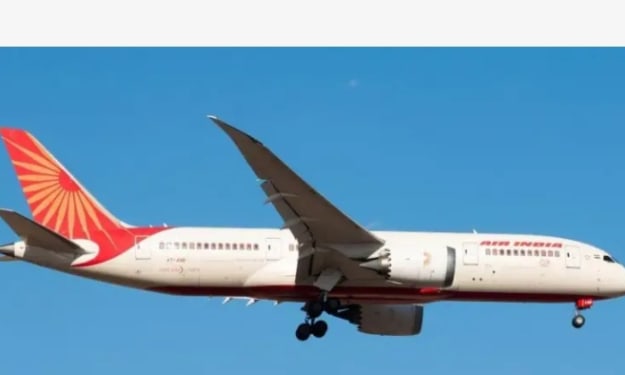
Air India Flight 171: The Mysterious Fuel Cutoff That Led to Disaster
1. A Catastrophe Minutes After Takeoff On June 12, 2025, Air India Flight 171—a Boeing 787‑8 Dreamliner—crash-landed into a residential hostel in Ahmedabad just 30 to 40 seconds after takeoff. The plane was en route from Ahmedabad to London Gatwick, carrying 230 passengers and 12 crew members. Of those aboard, 241 perished, and 19 were killed on the ground, with dozens more injured. Only one passenger survived, later identified as Vishwash Kumar Ramesh . The aircraft reached an altitude of just 625 feet, never climbing beyond 180 knots, before descending uncontrollably . In the chaos that followed, even experienced investigators struggled to identify what had so rapidly spiraled into tragedy. --- 2. Fuel Was Cut, Engines Shut Down The 15‑page preliminary report released by India’s Aircraft Accident Investigation Bureau (AAIB) offers the first insight: within seconds of takeoff, both fuel control switches—normally set to “RUN”—were found in the “CUTOFF” position on both engines, causing an immediate loss of thrust. Power was briefly restored when the switches were flipped back on, but the plane lacked sufficient altitude or time to recover . Investigators stressed that fuel contamination, bird strikes, or mechanical failure were ruled out. The report also confirmed one engine relit, while the other never regained full power . ---
By Ikram Ullahabout a year ago in The Swamp
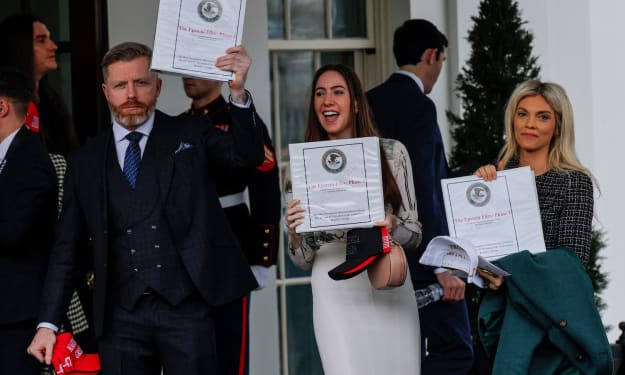
The Epstein Files Fiasco:
Picture this: March 2025, the MAGA faithful, freshly into a new administration, are strutting out of the White House, practically skipping like kids in a candy store. Why, you ask? Because they’re clutching the Epstein Files like they just won the lottery. “Justice is coming!” they chant jubilantly, as if they were in a poorly scripted superhero movie. Attorney General, Pam Bondi, in a separate interview displaying a smirk that could rival the Cheshire Cat, declares to the cameras, “You’re gonna want to stay tuned, America. The truth is about to drop, and heads are going to roll, because the Epstein Files and reports are on my desk!"
By Meko James about a year ago in The Swamp
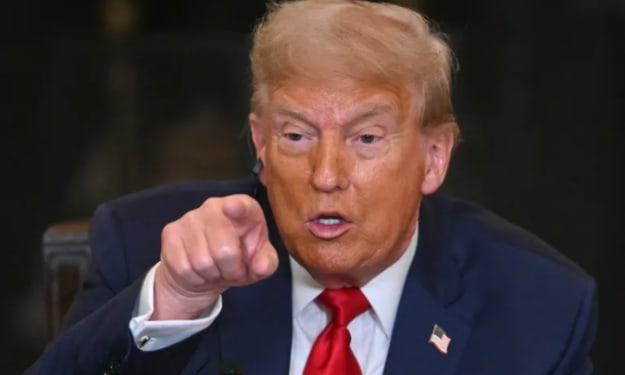
Trump's Frustration with Putin and the Uncertain Future of the Russia-Ukraine War
The ongoing war in Ukraine continues to test the diplomatic resolve of world leaders, with recent developments highlighting growing frustration in the United States. President Donald Trump, who once vowed to end the war in Ukraine within 24 hours of taking office, now faces mounting obstacles in his attempts to broker peace. Despite multiple rounds of negotiations and increasing diplomatic engagement, a ceasefire remains elusive as Russia intensifies its military campaign against Ukraine. In recent days, US Secretary of State Marco Rubio has met twice with Russian Foreign Minister Sergey Lavrov, underscoring Washington's persistent efforts to bring the conflict to a close. These talks, held on the sidelines of the ASEAN summit in Malaysia, lasted nearly an hour but yielded no immediate breakthroughs. Instead, they highlighted the widening gap between American aspirations for peace and Moscow’s hardened stance. Trump's public tone towards Russian President Vladimir Putin has also shifted. Previously criticized for his seemingly warm approach to the Kremlin, Trump has lately expressed disappointment over Putin's reluctance to show flexibility. “We get a lot of meaningless talk from Putin. He’s very nice, but in the end, it means nothing,” Trump remarked. This growing frustration has raised questions about whether Trump's stance on Russia is evolving into something more confrontational. Despite these comments, experts remain skeptical about any fundamental shift in Trump’s approach. Analysts argue that previous signs of a harder stance have failed to translate into significant policy changes. While some see an opportunity for a new direction in US foreign policy, others caution against premature conclusions. Trump's unpredictability remains a defining feature of his diplomacy, leaving allies and adversaries alike uncertain about what comes next. Meanwhile, the Biden-era military aid pipeline to Ukraine has continued under Trump’s leadership, albeit with some turbulence. Earlier this month, the Trump administration briefly paused arms shipments to Kyiv, only to resume them days later. Trump explained the reversal by emphasizing Ukraine's need to defend itself amidst Russia’s renewed offensives. However, in a significant change, Trump announced that future weapons would be sold to NATO, which would then transfer them to Ukraine. “We’re sending weapons to NATO, and NATO is paying for them, one hundred percent,” Trump clarified, describing the deal as part of an arrangement finalized during the NATO summit in The Hague. Despite these moves, Trump’s decision to continue arming Ukraine has sparked backlash from within his political base. Several prominent figures in the conservative movement expressed disappointment, questioning the wisdom of further entangling the United States in what they perceive as a costly and unwinnable conflict. For many in Trump’s MAGA (Make America Great Again) base, the Ukraine war represents a distraction from America’s domestic priorities. Alongside military support, Washington is weighing new economic measures to pressure Moscow. A bipartisan bill in Congress seeks to expand sanctions against Russia, targeting not only Russian industries but also countries that continue to purchase Russian oil, gas, and uranium. If passed, this would mark a major escalation in the West's efforts to isolate Russia economically. However, Russia's energy trade with China, India, and Turkey remains robust, limiting the global impact of Western sanctions. Despite imposing over 21,000 sanctions since the invasion began, the Russian economy has endured, buoyed by energy exports to Asia and limited European purchases of critical materials like uranium. Ukrainian President Volodymyr Zelenskyy continues to call on the West to tighten sanctions further, arguing that only sustained economic pressure can compel Moscow to negotiate peace in good faith. Trump has flirted with harsher economic measures, even threatening secondary tariffs on nations buying Russian oil. Yet, these threats have so far remained rhetorical. Whether Trump will ultimately back additional sanctions remains uncertain, given his past reluctance to impose meaningful costs on Russia. At the same time, the Trump administration has hinted at the possibility of disengagement. Secretary of State Rubio recently stated that the US could consider stepping back from the Ukraine conflict if diplomatic efforts fail to produce results. “It’s not our war. We have other priorities,” Rubio said, reflecting a sentiment that has gained traction in some corners of the US political landscape. Trump echoed these thoughts, albeit more cautiously, suggesting that the US remains committed to seeking a resolution but does not wish to remain entangled indefinitely. Nevertheless, the latest diplomatic meetings suggest the US is not abandoning peace efforts just yet. Rubio reported that during his discussions with Lavrov, new proposals for peace were exchanged. Although the specifics remain confidential, Rubio described them as a “different approach” that could open the door to renewed negotiations. Russia, for its part, also struck a cautiously optimistic tone, reaffirming its willingness to engage in dialogue and explore peaceful solutions. The path forward for the Russia-Ukraine war remains fraught with uncertainty. On one hand, intensified US-Russia diplomacy and continued arms supplies to Ukraine signal that Washington is not prepared to let Kyiv fall. On the other hand, growing domestic opposition, economic considerations, and diplomatic frustrations could push the US to recalibrate its involvement. For now, all eyes remain on Trump and Putin, whose complex relationship continues to shape the fate of a war that has already spanned more than three years. Whether through diplomacy, deterrence, or disengagement, the next chapter in the Russia-Ukraine conflict will be defined by the decisions made in Washington and Moscow in the weeks ahead.
By Ikram Ullahabout a year ago in The Swamp
Proxy Battles and Sanctions: Inside the U.S.–Iran Cold War
The Silent War Between Iran and America: What the World Isn’t Seeing You’ve probably heard about the tension between Iran and the United States—sanctions, political threats, occasional fiery statements. But have you ever stopped to wonder if all this is just the surface of a much deeper, more complex game? A game so carefully played by global powers that its true nature remains hidden from most of us, yet its consequences ripple across the entire world. Today, I want to share with you a story the headlines won’t tell—a hidden truth that, once understood, changes everything you thought you knew. --- A Chess Game Played in Shadows This isn’t a war fought with guns and tanks. It’s a war fought in boardrooms, digital networks, and through silent strategies. Iran and the U.S. are locked in a battle of minds and influence. Each move is calculated, every step a piece of a grand plan. Iran, an ideological state, has sought to expand its influence across the Middle East, while the United States, determined to maintain its global dominance, exerts pressure to curb that influence. This clash is not just political; it’s a complex, high-stakes chess game that shapes international alliances, economies, and even security across continents. But the real war isn’t always visible. It’s hidden behind economic restrictions, cyber attacks, and proxy conflicts. --- Sanctions: Weapon or Double-Edged Sword? The economic sanctions imposed on Iran by the U.S. are often portrayed as a straightforward way to weaken a rival. Their goal: to isolate Iran financially and politically, forcing it to change course. But the truth is far more complicated. While these sanctions undoubtedly hit Iran’s economy hard, their impact does not stop there. Global oil markets fluctuate wildly, energy prices become unstable, and uncertainty spreads through global financial systems. The fallout from sanctions is a ripple effect that hits countries far beyond Iran’s borders—including those imposing the sanctions themselves. This raises a crucial question: Are these economic weapons so powerful that they harm the wielder as much as the target? The answer isn’t simple. What is clear is that sanctions create waves in a pond far bigger than just one nation. --- Cyber Warfare: The Invisible Battlefield In today’s world, wars are no longer only fought on physical battlefields. An entirely new arena has emerged—cyberspace. Iran and the U.S. have been engaged in a shadowy digital conflict for years. Cyberattacks are launched not with bombs, but with computer codes—viruses designed to cripple nuclear facilities, spy on government operations, or disrupt critical infrastructure. These digital strikes don’t announce themselves with explosions. Instead, they silently infiltrate systems, eroding trust, and destabilizing entire sectors. The real damage is often invisible, but the consequences can be devastating, affecting millions of lives indirectly but profoundly. --- Proxy Wars: Fighting Through Others Direct conflict between two global powers carries enormous risks, so instead, the battle is often fought through proxies. Countries like Iraq, Syria, Lebanon, and Yemen have become arenas for this indirect confrontation. Iran backs certain groups, while the U.S. supports opposing factions. These proxy wars might look like local disputes on the surface, but beneath lies a broader power struggle that shapes the political and social fabric of entire regions. These battles don’t just decide who controls territory—they affect generations of civilians, disrupt societies, and redefine regional alliances. --- Shifting Global Alliances This ongoing conflict has redrawn the world’s geopolitical map. Countries have been forced to take sides, or at least navigate a careful middle ground. Some have moved closer to Iran, drawn by ideological or strategic ties. Others have aligned firmly with the U.S., seeking protection or economic benefits. Then there are nations that try to stay neutral, balancing their interests carefully in an increasingly polarized world. Powerhouses like Russia and China watch closely, engaging where their interests align, influencing outcomes quietly but decisively. The complexity of these relationships means this is not simply a two-player game anymore; it’s a global struggle involving many actors with competing visions. --- Are We All Pawns? Perhaps the most striking realization is that this conflict is no longer just about two countries. It’s about a world order in flux—and we are all part of it, whether we realize it or not. Every policy decision, every economic sanction, every cyberattack resonates far beyond the countries involved. It impacts oil prices at your local gas station, shapes the availability of products, influences security threats, and affects the overall stability of global markets. This silent war changes the world’s rules in ways that affect our daily lives, even if we don’t always see it. --- The Bigger Picture: Understanding the Truth We live in an era where wars are no longer defined by bullets and battlefields alone. They’re fought through information, influence, and economic pressure. The silent war between Iran and the U.S. reminds us that power isn’t always wielded through violence, but through carefully orchestrated moves that can alter global realities overnight. The truth isn’t what’s presented in headlines or soundbites. It’s buried beneath layers of politics, strategy, and secrecy—and it requires us to dig deeper, question more, and think critically. By understanding this hidden conflict, we empower ourselves—not just as observers, but as informed participants in a world where knowledge is the most powerful weapon. --- If you want to see beyond the surface and understand the forces shaping our world today, this is a story worth paying attention to. Because the silent war between Iran and America is not just about two nations—it’s about the future of global power and stability. And that affects all of us.
By MIK Wonder'sabout a year ago in The Swamp
Michael Jackson Didn’t Molest Any Kids: The Case for His Innocence
More than a decade after his death, Michael Jackson’s legacy remains under attack. The accusations that once dominated headlines have resurfaced again and again, most recently in the documentary Leaving Neverland. Yet despite the emotional weight of that film, the actual evidence does not support the narrative of guilt. A closer look reveals a pattern of opportunism, contradictions, and media manipulation.
By Heather Holmesabout a year ago in The Swamp
Stop Prioritizing Veterans Over Other Homeless People
Homelessness is on the rise. Certain demographic groups, such as military veterans and disabled people, are at least twice as likely to experience homelessness, through no fault of their own. They deserve better.
By Heather Holmesabout a year ago in The Swamp