fact or fiction
Is it a fact or is it merely fiction? Exploring and debunking conspiracies and the lesser known truths in the world of politics.
"Trump’s Gulf Odyssey: Power, Politics, and the Pursuit of Legacy"
Introduction: A Return to the Global Stage In May 2025, former U.S. President Donald J. Trump embarked on a high-profile tour of the Middle East, visiting Saudi Arabia, Qatar, and the United Arab Emirates. This journey was not merely a series of diplomatic meetings; it was a meticulously orchestrated endeavor blending statecraft, economic ambition, and personal legacy. Chapter 1: Riyadh—The Desert Welcome Arrival and Ceremonial Grandeur On May 13, Air Force One touched down at King Khalid International Airport in Riyadh. Trump was greeted with an opulent ceremony: a lavender carpet laid out, traditional music echoing through the air, and a camel procession leading the way. The Saudi royal family spared no expense, signaling the importance of this visit . Strategic Agreements and Historic Meetings In Riyadh, Trump and Crown Prince Mohammed bin Salman signed a "strategic economic partnership" agreement encompassing energy, defense, and other sectors. Notably, this included a $142 billion arms deal and broader investments totaling $600 billion. Additionally, Trump held a historic meeting with Syrian President Ahmed al-Sharaa—the first such encounter in 25 years—announcing intentions to lift longstanding U.S. sanctions on Syria following the fall of Bashar Assad’s regime . Chapter 2: Doha—Deals and Diplomacy Economic Engagements On May 14, Trump arrived in Doha, Qatar. The visit was marked by significant economic engagements, including Qatar Airways signing an agreement to purchase as many as 210 planes from Boeing—the largest order in the company's history. The United States announced over $243.5 billion in deals with Qatar, covering defense agreements and infrastructure projects . Cultural Exchange and Symbolism Beyond the economic aspects, the visit included cultural exchanges. Trump attended a state dinner at Lusail Palace and participated in a ceremony passing the hosting duties of the FIFA World Cup to the United States. These events underscored the strengthening ties between the two nations. Chapter 3: Abu Dhabi—Technology and Recognition Advancements in Artificial Intelligence On May 15, Trump arrived in Abu Dhabi, United Arab Emirates. The visit focused on technological collaboration, with the UAE committing to invest $1.4 trillion in the U.S. artificial intelligence sector over the next decade. This partnership aimed to enhance the UAE's access to U.S. AI and semiconductor technologies, positioning the nation as a leader in the global AI sector . Honors and Cultural Visits During his stay, Trump was awarded the Order of Zayed, the UAE's highest civil decoration. He also toured the Sheikh Zayed Grand Mosque and visited an interfaith center, reflecting a commitment to cultural and religious understanding. Chapter 4: Emotional Undercurrents and Personal Reflections Private Encounters Amidst the grandeur, there were moments of personal significance. In Dubai, Trump met privately with an American businesswoman who had lost her husband in the Afghanistan war. The encounter was solemn, with Trump expressing condolences and reflecting on the human cost of conflict. Legacy and Personal Ambition Throughout the tour, Trump was acutely aware of his legacy. The scale of the deals and the warmth of the receptions were seen as validations of his approach to foreign policy. In interviews, he emphasized the success of the trip, noting the unprecedented nature of the agreements and the strengthening of U.S. relations in the region . Conclusion: A Complex Tapestry Trump's 2025 Middle East tour was a multifaceted endeavor, blending diplomacy, economic ambition, and personal legacy. The agreements signed and the relationships reinforced have the potential to shape regional dynamics for years to come. While the tour was met with both praise and criticism, it undeniably marked a significant chapter in the ongoing narrative of U.S. engagement in the Middle East. Call to Action: What are your thoughts on the impact of Trump's Middle East tour? Do you believe these engagements will lead to lasting change? Share your perspectives in the comments below.
By Shabir Ahmadabout a year ago in The Swamp
" Trump returns to Riyadh "
Riyadh, Saudi Arabia — May 2025 In a move that has captured international attention, former U.S. President Donald J. Trump made a high-profile visit to Saudi Arabia in May 2025, reigniting discussions about U.S. foreign policy, global diplomacy, and the evolving relationship between Washington and Riyadh. The visit, his first since leaving the White House, was marked by both symbolism and substance, offering insights into Trump's ongoing political influence and his vision for America's role in the Middle East. The visit comes amid shifting global dynamics and internal political momentum in the United States, with Trump maintaining a significant presence in the American political landscape. His arrival in Riyadh—hosted with royal fanfare by Crown Prince Mohammed bin Salman—served as a diplomatic spectacle and a platform for serious discussions on regional security, economic cooperation, and strategic alliances. Echoes of 2017, with a New Agenda Trump’s 2025 visit draws inevitable comparisons to his first overseas trip as president in 2017, which also began in Riyadh. At that time, he emphasized unity in the fight against extremism and unveiled a historic $110 billion arms deal. Eight years later, Trump’s return to Saudi Arabia carried a different tone—less about making first impressions and more about reinforcing long-standing ties. This time, the former president met with Saudi leaders to discuss shared concerns over escalating tensions in the Gulf, the evolving role of Iran, and the lingering effects of regional conflicts in Yemen and Syria. Trump was also briefed on Saudi Arabia’s ongoing Vision 2030 projects—massive reforms aimed at modernizing the Kingdom’s economy, society, and infrastructure. Security and Defense Cooperation High on the agenda were matters of defense and regional security. Trump, known for his emphasis on a strong military partnership during his presidency, reiterated the importance of U.S.-Saudi collaboration in counterterrorism and intelligence sharing. Though no official agreements were signed during the visit, sources within the Saudi Ministry of Defense reported discussions about future joint military exercises and potential procurement deals involving U.S. defense contractors. The former president’s visit included a closed-door session with senior Saudi defense officials and U.S. business executives, suggesting that the trip may lead to renewed security cooperation even outside official government channels. Economic Partnerships and Private Sector Diplomacy Another major component of the visit was economic diplomacy. Trump attended the U.S.-Saudi Business Forum in Riyadh, where he gave a keynote address promoting American enterprise, energy collaboration, and investment in Saudi infrastructure. He praised the Kingdom’s progress on its Vision 2030 goals and encouraged U.S. companies to take part in the transformation of Saudi cities and industries. Key sectors under discussion included renewable energy, artificial intelligence, tourism, and digital infrastructure. Trump's presence helped draw attention to several new partnerships between American firms and Saudi state-backed ventures—deals that, while not yet finalized, represent billions of dollars in potential investment. Political Undertones and Global Optics While the visit was framed as a private diplomatic mission, its political undertones were unmistakable. As Trump continues to play a dominant role in U.S. political discourse—either as a former president or a prospective candidate—his international engagements are scrutinized through a political lens. The 2025 visit to Riyadh, therefore, served not only as a gesture of goodwill toward a longtime ally but also as a platform for Trump to project leadership on the global stage. International media outlets noted the sharp contrast between Trump’s visit and the foreign policy approach of the current U.S. administration, particularly in areas such as arms sales, human rights, and climate cooperation. Analysts suggest that Trump’s return to Saudi Arabia could influence American diplomatic posture in the region, especially if his political aspirations materialize further. Cultural and Symbolic Moments Beyond politics and policy, the visit was rich with symbolism. Trump was received with traditional Saudi hospitality, including a private audience with King Salman, a tour of Diriyah—the birthplace of the Saudi state—and attendance at a gala hosted by the Royal Court. He also visited the King Abdulaziz Center for World Culture and participated in a roundtable with Saudi youth leaders and entrepreneurs. These symbolic gestures were widely covered by regional media, portraying the visit as a reaffirmation of friendship and mutual respect between the two nations. Conclusion: A Strategic and Symbolic Visit Donald Trump's 2025 trip to Saudi Arabia was more than just a return to familiar territory—it was a calculated display of diplomacy, business outreach, and geopolitical messaging. While no major policy breakthroughs were announced, the visit reinforced the enduring relationship between the U.S. and Saudi Arabia and emphasized Trump's continued interest in shaping that partnership. Whether seen as a private citizen wielding influence or a political figure staging a comeback, Trump's presence in Riyadh reminded the world of the complexities of American diplomacy and the personal relationships that often drive it. As the Middle East navigates a new era of challenges and opportunities, the U.S.-Saudi relationship—long shaped by leaders on both sides—remains a central force in the region’s future.
By Kaleem Ullahabout a year ago in The Swamp
"The 2025 Indo-Pak War"
In early 2025, the long-standing tensions between India and Pakistan escalated into one of the most significant military confrontations of the 21st century. Though brief, the conflict shook the South Asian region, drawing global attention due to the nuclear capabilities of both nations. The Indo-Pak War of 2025 lasted only two weeks, but its impact on regional politics, economy, and international relations remains profound. Origins of the Conflict The roots of the 2025 conflict can be traced to a series of skirmishes in Kashmir throughout 2024, which saw increased cross-border shelling and militant incursions. Diplomatic efforts led by the United Nations and regional powers failed to de-escalate tensions. A deadly attack on an Indian Army convoy in January 2025, allegedly orchestrated by Pakistan-based militants, became the flashpoint. India responded swiftly with “Operation Trishul,” a large-scale surgical strike across the Line of Control (LoC), targeting what it claimed were terrorist launch pads and supply routes. Pakistan condemned the strikes as an act of aggression, retaliating with air raids on Indian military positions in Kashmir. This tit-for-tat exchange rapidly spiraled into full-scale conventional warfare. The Course of the War The war officially began on February 10, 2025, when Pakistan launched coordinated artillery and air strikes along the LoC and into Ladakh. India responded by mobilizing troops in Jammu, Punjab, and Rajasthan, leading to battles on multiple fronts. Northern Front (Kashmir and Ladakh): Intense mountain warfare dominated this theater. India deployed its elite high-altitude troops to counter Pakistani advances in the Dras and Kupwara sectors. Indian forces gained the upper hand by capturing key outposts by the seventh day of the war. Western Front (Punjab and Rajasthan): This front saw rapid tank battles and air raids. India’s armored divisions pushed into Pakistan’s Sialkot sector, while Pakistan counterattacked in the Fazilka and Barmer regions. Heavy casualties on both sides marked this phase, but neither side achieved a decisive breakthrough. Naval Engagements: The Indian Navy blockaded Karachi Port temporarily and intercepted Pakistani vessels in the Arabian Sea. Pakistan responded with the deployment of submarines near the western Indian coast, creating tension in vital sea lanes. Though the war remained conventional, both nations issued subtle nuclear warnings through media and diplomatic channels. The threat of escalation prompted urgent international mediation. International Response The global community watched with growing alarm. The United States, China, Russia, and the United Nations called for an immediate ceasefire. Fearing a nuclear confrontation, back-channel diplomacy intensified, with the UAE and Saudi Arabia playing key mediatory roles. On February 24, under mounting pressure and facing economic strain, both countries agreed to a ceasefire brokered by the UN Security Council. The ceasefire restored pre-war territorial boundaries, with both nations claiming strategic and moral victories. Aftermath and Impact Despite the limited duration, the 2025 war had several long-lasting consequences: Human and Economic Cost: Over 5,000 soldiers and an estimated 1,200 civilians were killed on both sides. The conflict displaced tens of thousands, especially in border regions. Economically, both countries suffered a sharp GDP contraction in the first quarter of 2025, with markets plummeting and trade disrupted. Geopolitical Shifts: The war led to renewed calls for Kashmir resolution from the international community. China remained largely neutral but reinforced its border presence in Ladakh, signaling strategic interest. The U.S. and Russia, while advocating peace, used the situation to bolster arms sales and influence in South Asia. Domestic Ramifications: In India, nationalistic fervor surged, strengthening the ruling party’s political hold. In Pakistan, civil-military relations became more strained, with public protests demanding better governance and questioning the cost of perpetual conflict. Cyber and Information Warfare: The conflict also featured unprecedented levels of cyberattacks and disinformation campaigns. Both nations targeted each other’s infrastructure and media, leading to widespread misinformation and paranoia. Lessons Learned The 2025 Indo-Pak War reaffirmed the volatility of South Asia’s security landscape. It highlighted the dangers of unresolved territorial disputes, militant activity, and aggressive nationalism. Though nuclear weapons were not used, the threat hovered perilously close, serving as a reminder of how quickly things can escalate. The war also emphasized the importance of diplomatic engagement, regional cooperation, and conflict resolution mechanisms. While the guns may have fallen silent, the underlying issues—particularly the Kashmir dispute—remain unresolved. Conclusion The Indo-Pak War of 2025 was a sobering event that showcased the fragility of peace in South Asia. Both India and Pakistan walked away with heavy losses and hard-earned lessons. The need for sustained peace efforts, mutual trust-building, and international mediation has never been more critical. As the region looks toward the future, one can only hope that the scars of 2025 will guide its leaders toward dialogue rather than destruction
By Kaleem Ullahabout a year ago in The Swamp
Had no Words
Think about a time you witnessed something breathtakingly beautiful. Perhaps the sun setting over the Indus River, painting the sky in fiery hues of orange and soft whispers of violet. Or maybe the first time you held a newborn, their tiny hand gripping your finger with surprising strength. In those moments, did you immediately find the perfect phrase to capture the sheer wonder that washed over you? Chances are, you didn't. You might have just stood there, gazing, a lump forming in your throat, your mind swirling with emotions too big for simple sentences. That's the essence of "had no words."
By Urooj Khanabout a year ago in The Swamp
Inside the CIA: America’s Secret Intelligence Agency
From Cold War Tactics to Cyber Wars: The CIA’s Global Reach In the shadows of global politics, where nations maneuver not through diplomacy alone but through secrecy, deception, and surveillance, the Central Intelligence Agency (CIA) stands as one of the most powerful and enigmatic institutions in the world. Born from the ashes of World War II and raised during the height of the Cold War, the CIA has evolved from traditional espionage operations to become a digital-age intelligence giant. Its reach extends across borders, ideologies, and technologies—operating in a world where knowledge is power and information can change the fate of nations. As threats have shifted from Soviet missiles to cyberterrorism and AI warfare, so too has the CIA adapted, making it not only a historical cornerstone of American security but also a critical player in today’s global power struggle. The Origins: An Agency Born in Secrecy The CIA was formally established in 1947 under the National Security Act, but its roots trace back to the Office of Strategic Services (OSS), the United States' first intelligence agency during World War II. Designed to combat Nazi Germany and Imperial Japan through covert operations, the OSS laid the foundation for modern U.S. espionage. When the Cold War began, the United States recognized the need for a peacetime intelligence service capable of gathering foreign information and executing clandestine operations. Thus, the CIA was born—not as a military branch, but as an independent civilian agency reporting directly to the President. Cold War Operations: Spies, Coups, and Proxy Wars The Cold War era defined the CIA’s early years. It was during this period that the agency conducted some of its most controversial and defining operations. The primary adversary was the Soviet Union, and the battlefield was the entire world. Through programs like Operation AJAX in Iran (1953) and Operation PBSUCCESS in Guatemala (1954), the CIA orchestrated coups to install pro-American regimes. It ran surveillance and counterintelligence against Soviet spies and played key roles in proxy wars like Vietnam and Afghanistan. The agency’s use of human intelligence (HUMINT), psychological warfare, and propaganda became hallmarks of its Cold War strategy. However, not all actions met success. The failed Bay of Pigs Invasion in Cuba (1961), an attempt to overthrow Fidel Castro, became a major embarrassment. Nonetheless, these years solidified the CIA’s reputation as a formidable and secretive power broker in international affairs. The Post-Cold War Shift: Terrorism and Rogue States With the collapse of the Soviet Union in 1991, the CIA faced a moment of existential uncertainty. Without its traditional enemy, the agency had to adapt. In the 1990s and early 2000s, its focus shifted to emerging threats: rogue states, international terrorism, and the spread of weapons of mass destruction. After the 9/11 terrorist attacks, the CIA entered a new era. It was at the forefront of the War on Terror, playing key roles in tracking Al-Qaeda, capturing or killing terrorist leaders, and operating secret detention facilities. The agency’s controversial use of “enhanced interrogation techniques”, drone strikes, and black sites ignited debates on ethics, legality, and human rights—questions that still haunt the agency’s legacy. Enter the Cyber Era: Intelligence in the Digital Age Today, the battlefield has shifted again—from deserts and jungles to cyberspace. The rise of cyberwarfare, state-sponsored hacking, and digital espionage has pushed the CIA to evolve once more. The agency now works closely with other U.S. intelligence bodies like the NSA and FBI to counteract threats from nations such as China, Russia, Iran, and North Korea, which use cyberattacks as a form of asymmetric warfare. The CIA has also developed capabilities to monitor global internet traffic, infiltrate secure communications, and conduct offensive cyber operations—all while protecting U.S. national interests from increasingly sophisticated cyber threats. Additionally, emerging technologies such as artificial intelligence, big data analytics, satellite imagery, and biometric surveillance have given the CIA new tools in its intelligence arsenal. With these, it can track individuals globally, predict political upheavals, and identify terrorist plots before they unfold. Global Reach, Ethical Debate Despite its strategic importance, the CIA continues to face criticism and scrutiny. Leaks by whistleblowers such as Edward Snowden and WikiLeaks' Vault 7 disclosures revealed the extent of CIA surveillance and hacking capabilities. These revelations sparked global conversations about privacy, civil liberties, and the balance between security and freedom. Domestically, the CIA is overseen by the Senate Intelligence Committee, but many argue that real transparency is lacking. Internationally, its covert actions often blur the lines between security and interference, leading some to view it as both a protector and a puppet master. Conclusion: A Shadow That Shapes the Future From covert Cold War missions to cyber operations in the digital age, the CIA’s evolution reflects the changing nature of global conflict. Its ability to adapt to new threats has made it a pillar of American defense and foreign policy. Yet with great power comes great responsibility—and the agency’s future will depend not just on its technological capabilities, but also on its commitment to ethics, oversight, and transparency in an increasingly interconnected world.
By World politics about a year ago in The Swamp
The Reality Behind the Pahalgam Attack: Unraveling the Security and Sovereignty Crisis in India
The recent attack in Pahalgam, Jammu and Kashmir, has once again exposed deep vulnerabilities in India’s internal security framework. Known for its natural beauty and spiritual significance, Pahalgam has become an unfortunate symbol of the broader tensions simmering in the Kashmir Valley. The attack not only resulted in tragic loss of life but also triggered national anxiety, raising fresh questions about India’s security preparedness, political direction, and regional stability. The Attack and Its Immediate Fallout Initial reports indicate that the attack targeted security personnel and possibly civilian pilgrims. Pahalgam, which lies along the Amarnath Yatra route, has historically been a sensitive area during pilgrimage season. Despite heavy security deployment, the assailants managed to strike, highlighting lapses in surveillance and intelligence. In response, authorities initiated widespread security operations and placed the region on high alert. The attack sent shockwaves across the nation. Public outcry and political criticism followed, with opposition leaders questioning the government’s handling of Kashmir and demanding accountability. Gaps in Security Preparedness One of the most concerning aspects of the Pahalgam attack is the clear failure in anticipating and preventing such an incident. Despite years of counter-insurgency operations, India continues to face challenges in detecting threats before they materialize. The ability of militants to coordinate and execute attacks in highly monitored zones indicates gaps in local intelligence, coordination between agencies, and community engagement. Moreover, the over-reliance on militarized responses often alienates local populations, making it harder to build trust and gain actionable information from communities that are crucial to long-term peace efforts. Regional and Geopolitical Undercurrents India’s challenges in Kashmir are not purely domestic. Pakistan’s alleged support for insurgent groups operating in the region remains a core concern. Cross-border infiltration, proxy warfare, and the spread of radical ideologies are all factors that contribute to persistent instability. Beyond Pakistan, developments in Afghanistan post-2021 and growing Chinese interests in Ladakh have added complexity. With China actively asserting its presence in nearby regions and maintaining its territorial claims, India faces a dual-front strategic threat. These geopolitical pressures complicate India’s internal security calculations in Kashmir and demand a more nuanced, multidimensional response. Public Sentiment and National Unity Events like the Pahalgam attack deeply affect public sentiment across India. While there is often a surge of patriotism and support for security forces, there is also frustration over repeated lapses and political inaction. Many Indians feel a growing disconnect between the government’s strong national security rhetoric and the ground reality in conflict-prone regions. In Jammu and Kashmir itself, such incidents disrupt efforts at normalization, development, and integration. People who hope for peace and progress find themselves caught between militant threats and state crackdowns, often with limited access to justice or political representation. A Blow to India’s Sovereignty? Attacks like the one in Pahalgam go beyond immediate violence—they strike at the very notion of sovereignty and state control. For a country seeking global leadership and regional dominance, repeated security failures in a part of its own territory weaken its strategic credibility. Sovereignty isn’t just about geography—it’s about the state’s ability to ensure peace, justice, and development within its borders. On that front, India has work to do. The Path Forward: Beyond Military Response India must rethink its Kashmir policy in a comprehensive way. While a strong security apparatus is vital, it must be complemented by long-term social, economic, and political strategies. This includes: Improved intelligence sharing across agencies and regions. Increased community engagement, especially with youth, to counter radicalization. Infrastructure development that includes local voices and addresses real needs. Rebuilding trust through justice, dialogue, and transparent governance. International diplomacy to isolate hostile elements and apply pressure on state sponsors of terrorism. India’s leadership must show not just strength, but also wisdom and compassion. --- Conclusion The Pahalgam attack is a harsh reminder that the road to peace in Jammu and Kashmir remains difficult and dangerous. Yet, it also offers an opportunity—a moment to pause, reflect, and reset. Security alone cannot win this battle. Only a combination of vigilance, vision, and values can bring lasting stability to the region and uphold the promise of a united, sovereign India.
By Shah saab ITabout a year ago in The Swamp
Cancer myths vs. Medical Facts
ner is one of the most feared diagnoses, and it’s no surprise that people seek answers and alternative options in times of vulnerability. Unfortunately, this creates a perfect opportunity for misinformation to spread — especially online. Recently, videos and posts have gone viral promoting so-called “natural cures” that promise to kill cancer in as little as 17 hours by alkalizing the body, eliminating sugar, and boosting oxygen levels. Though they may sound compelling, these claims are not just misleading — they are scientifically incorrect and potentially danger
By Austine Oduorabout a year ago in The Swamp
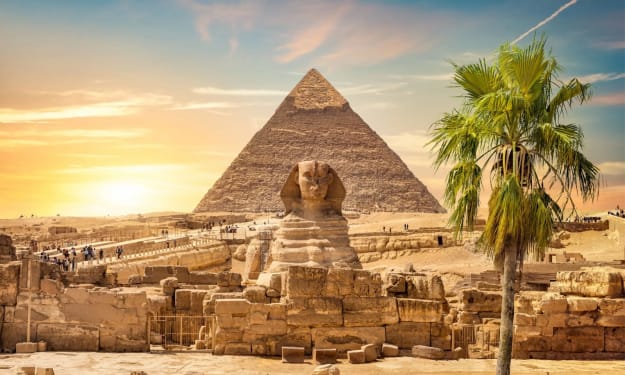
Egypt Launches $51 Million Revamp of Pyramids of Giza Amid Vendor Protests and Animal Welfare Concerns
Egypt Launches $51 Million Revamp of Pyramids of Giza Amid Vendor Protests and Animal Welfare Concerns Egypt has embarked on an ambitious $51 million project to revamp the Pyramids of Giza one of the world's most iconic and visited heritage sites. The massive overhaul aims to improve the visitor experience introduce sustainable tourism practices and modernize the surrounding area without compromising the historical and cultural value of the ancient wonder. However the initiative has also sparked significant protests from local vendors and animal rights concerns making the restoration effort a complex balancing act between modernization and tradition.
By Adnan Rasheedabout a year ago in The Swamp