energy
How politicians and governments around the world are dealing with climate change, solar energy and harnessing renewable resources.
What Detected in This Ongoing War
Israel and Iran—two of the most powerful and adversarial forces in the Middle East—have collided in a silent yet devastating confrontation that is reshaping the future of modern warfare. What began as a regional power struggle has now exposed cracks in the world’s most advanced military technologies, rewriting the rules of intelligence, air superiority, and missile defense.
By Keramatullah Wardakabout a year ago in The Swamp
Altcoin season could be near: Why June can see a 2021-style rally
**Altcoin Season Could Be Near: Why June Can See a 2021-Style Rally** Numerous analysts and investors are beginning to speculate that an altcoin season may be just around the corner as the cryptocurrency market continues to show signs of recovery. The month of June, historically a favorable period for crypto rallies, is shaping up to potentially mirror the explosive growth seen in 2021. The stage may be set for altcoins to take the lead as Bitcoin's strength and dominance plateau. ### What Is the Season for Altcoins? Altcoin season, or "alt season," refers to a period when alternative cryptocurrencies—those other than Bitcoin—outperform the leading digital asset. During this phase, investors rotate capital from Bitcoin into smaller market cap assets in pursuit of higher gains. This is a time when tokens like Ethereum, Solana, Cardano, and a number of smaller-cap projects saw huge returns in a short amount of time. Typically, altcoin seasons follow a strong Bitcoin rally as market participants look for the “next big thing.”
By GLOBAL NEWSabout a year ago in The Swamp
Burning Tomorrow to Fund Today
The larger debate over the House-passed HB1 budget has moved to the Senate where another opposing front is complicating the already contentious discussion. While Democratic opposition has remained steady, new resistance is emerging from Republicans over proposed cuts impacting programs designed to assist lower income and seniors that will have a dramatic impact on the constituents of some red state legislators.
By Lanny Newvilleabout a year ago in The Swamp
Canada at a Crossroads: Rethinking the F-35 Deal Amid Rising Costs and Shifting Alliances
Canada at a Crossroads: Rethinking the F-35 Deal Amid Rising Costs and Shifting Alliances In a pivotal moment for Canadian defense policy, the newly appointed government under Prime Minister Mark Carney has launched a sweeping review of the country’s $19 billion fighter jet deal with Lockheed Martin. The contract, finalized in early 2023, promises 88 next-generation F-35A Lightning II stealth fighters to replace the aging CF-18 Hornets. However, with ballooning costs, rising geopolitical friction, and increasing domestic scrutiny, Canada finds itself questioning whether this major investment aligns with its long-term strategic interests.
By Saboor Brohi about a year ago in The Swamp
What I Learned About Youth, Power, and Solidarity at the World Expression Forum (WEXFO)
WORLD EXPRESSION FORUM – LILLEHAMMER, NORWAY What do young people need? After six days of listening, sharing, grieving, and laughing at the World Expression Forum, I think I’m beginning to understand. I recently participated in the World Expression Forum (WEXFO) from May 30 - June 4, 2025, held in both Utøya and Lillehammer, thanks to a nomination from Awareness 360 — a youth-led NGO committed to empowering young people to support and uplift their communities.
By Karina Thyraabout a year ago in The Swamp
May 28th: How Pakistan’s Nuclear Test Redefined Regional Power Balance
Introduction May 28th stands as a defining date in the history of South Asia, marking Pakistan’s emergence as a nuclear-armed state and fundamentally reshaping the regional power balance. On this day in 1998, Pakistan conducted its first public nuclear weapons test, sending shockwaves through the geopolitical landscape of South Asia and the wider international community. This act was not merely a demonstration of military capability but a bold assertion of strategic autonomy, directly challenging the long-standing nuclear dominance of India. The May 28th nuclear test underscored Pakistan’s resolve to safeguard its national security in a highly volatile regional environment and introduced a new dimension to the Pakistan India nuclear rivalry.
By Shamshair Khan Hasan Zaiabout a year ago in The Swamp
Youm-e-Takbeer: Pakistan’s Peaceful Rise as a Responsible Nuclear Power
Youm-e-Takbeer: Pakistan’s Peaceful Nuclear Milestone :Explore the history and significance of Youm-e-Takbeer, Pakistan’s peaceful rise as a responsible nuclear power and symbol of strategic stability.
By Shamshair Khan Hasan Zaiabout a year ago in The Swamp
Why Chagai Was Chosen: The Hidden Story Behind Pakistan’s Nuclear Tests
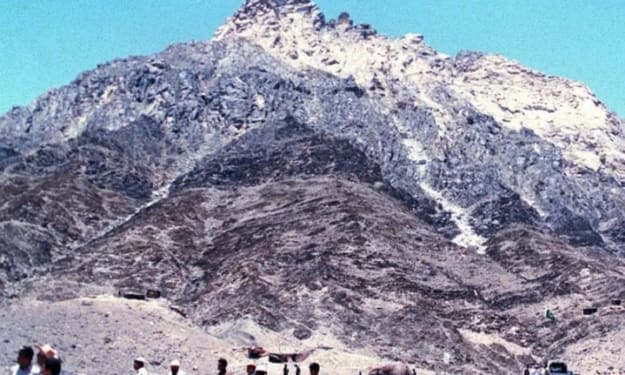
From the Hijacking of the PIA Plane to the Chants of ‘Allahu Akbar’ in Chaghi: When the Black Granite of the Chaghi Mountain Turned White "To India!" the hijacker screamed, pressing a pistol to the pilot’s temple. Pakistan International Airlines (PIA) Flight 544 had taken off from the city of Turbat in Balochistan just ten minutes earlier when this threatening voice reached the pilot’s ears. The Fokker aircraft had departed from Turbat and was en route to Karachi, a city in the Sindh province. According to the pilot, Uzair Khan, the moment the hijacker was distracted by a noise from the rear of the aircraft, he pressed a button that sent a signal to radar indicating that the passenger plane had been hijacked. Later, in the documentary "Flight 544," Uzair Khan explained, “The hijacker had brought maps and such. He told me to keep flying straight. Flying straight would have eventually brought us to the Indian border.” “I told him that the aircraft didn’t have enough fuel. He accepted my request and said we should refuel at Bhuj Airport in Indian Gujarat and then fly to New Delhi.” He adds that after receiving these instructions, “As I neared the border, I used aviation code and said ‘Kilo Delta,’ a term used for the Pakistani city of Hyderabad. Then, while letting the hijacker hear, I asked airport control if this was Bhuj Airport in India. Air traffic control already knew the Pakistani aircraft had been hijacked, so they responded, ‘Yes, this is Bhuj Airport.’” He explains, “Thus, while convincing the hijacker that it was the Indian city of Bhuj, I managed to land at Pakistan’s Hyderabad Airport in the dark of night. That was exactly what I wanted.” This hijacking took place on May 24, 1998. Just days earlier, from May 11 to 13, India had conducted multiple nuclear tests, and it was widely expected that Pakistan would soon respond with its own. After landing at Hyderabad Airport, Pakistani officers there posed as Indian personnel. Following several hours of negotiation, they managed to overpower the three hijackers before dawn. No passengers or crew were harmed. The hijackers were members of the Baloch Students Organization (BSO). According to Pakistani authorities and media reports from that time, the motive behind the hijacking on May 24, 1998, was to prevent Pakistan from responding to India’s nuclear tests. A CNN report from May 1998 indicated that shortly before the hijacking, there were reports of Pakistan preparing a site in Balochistan for nuclear tests. This led to anti-government protests by some political groups in the province. The next day, leading newspapers across Pakistan reported on their front pages that the hijackers had demanded Pakistan not conduct nuclear tests in Balochistan and had also called for increased funding for the province. The three hijackers were later sentenced to death and were executed on May 28, 2015—exactly 17 years after Pakistan’s nuclear tests—at jails in Karachi and Hyderabad. --- How Did Pakistan Manage to Conduct Nuclear Tests on May 28, 1998? Dr. Samar’s Congratulations on India's Tests According to Dr. Samar Mubarakmand, a member of the Pakistan Atomic Energy Commission, he received a call from a friend in the military on the morning of May 11, 1998, informing him about India’s nuclear tests in Pokhran. Speaking at a Khwarizmi Science Society event in Lahore on November 30, 1998, Dr. Samar recounted, “I said, ‘Congratulations!’ I was genuinely happy.” His military friend responded, “You’re congratulating us on India’s nuclear tests?” To which he replied, “Yes, because now we’ll be able to conduct our own.” Dr. Samar explained that back in 1972, when then-Prime Minister Zulfikar Ali Bhutto gathered the country’s scientists in Multan, they had all taken an oath to develop nuclear weapons. After India conducted its first nuclear test in 1974 at Pokhran, Pakistan accelerated its nuclear program. Soon after, Dr. Abdul Qadeer Khan returned from abroad to join the effort. By the late 1980s, the Kahuta plant was complete, and Dr. A.Q. Khan was appointed its head, having previously worked there as a scientist. In this context, after India’s 1998 nuclear tests, it was widely expected that Pakistan would respond. During the same 1998 Lahore event, Dr. Samar said, “As expected, after India’s tests, the Prime Minister became very active. He asked me, ‘Are you ready for this?’ I replied, ‘Absolutely.’ He said, ‘Good! Prepare.’” On the international front, U.S. President Bill Clinton began efforts to prevent Pakistan from conducting nuclear tests, citing concerns of a nuclear conflict in South Asia. In their book “The Man From Pakistan,” Douglas Frantz and Catherine Collins detailed U.S. efforts and Pakistan’s response. They wrote that Clinton called Prime Minister Nawaz Sharif four times, offering incentives to dissuade him from testing. Clinton promised to forgive U.S. loans, remove the Pressler and Solarz amendments (which restricted aid to Pakistan), and secure new military assistance from Congress. In the book “Deception,” Adrian Levy and Catherine Scott-Clark noted that a U.S. delegation led by Deputy Secretary of State Strobe Talbott arrived in Islamabad on May 13, and Pakistan’s Foreign Minister Gohar Ayub reportedly mocked their offer of F-16 jets. In a 2006 interview in London, Nawaz Sharif said Clinton called him five times to urge restraint and avoid testing. “When Talbott came, they thought we would agree. Clinton thought the same. But only we knew what we were going to do.” Frantz and Collins further wrote that three days after India’s tests, CIA Director George Tenet told closed sessions of the U.S. Senate and Congress Intelligence Committees that satellite images showed underground nuclear test preparations in Pakistan’s Chaghi Hills.
By Ikram Ullahabout a year ago in The Swamp
The Truth Behind the Mysterious Qatari Plane to Trump
In recent months, a political rumor has ignited media attention and social speculation: Did the State of Qatar gift a private jet to former U.S. President Donald J. Trump? With tensions high around foreign influence in U.S. politics, the idea of a wealthy Gulf nation bestowing a luxury aircraft upon a former president raises significant ethical, legal, and diplomatic questions.
By Keramatullah Wardakabout a year ago in The Swamp