education
A place to hash out all opinions on education policy, charter schools, statewide testing, and what the political world is and isn't doing about it.
U.S. Bond Market Turmoil: A Tipping Point for Trump’s Tariff Policies?
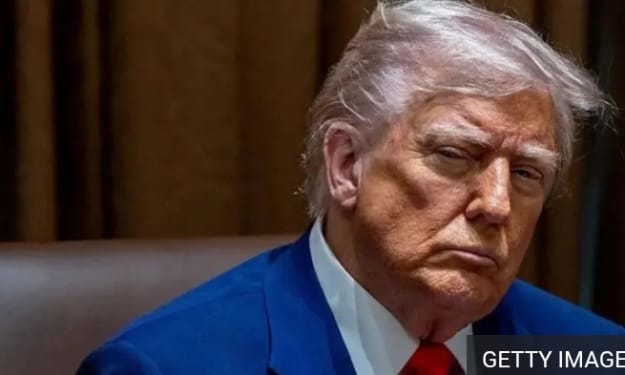
Dramatic Volatility in the U.S. Bond Market: What Could Force Trump to Revoke Tariffs After a period of turmoil caused by U.S. trade tariffs, global stock markets have remained relatively stable this week. However, investors are closely watching one segment of the market that rarely moves dramatically—the U.S. bond market. Governments sell bonds to raise money for public spending, paying interest in return. Simply put, when a government lacks funds to run the state, it borrows money from its people in the form of bonds, promising to return the money with profit after a certain period, like three, four, or five years. Recently, in a rare move, the interest rate on U.S. government bonds has surged sharply, while the value of those bonds has fallen. This volatility signals that investors are losing confidence in the world’s largest economy. Why is this significant enough to possibly force Trump to revoke tariffs? What Are Government Bonds? When a government needs to borrow money, it typically sells bonds to investors in financial markets. In the U.S., these are called Treasury Bonds, and in Pakistan, they’re referred to as T-Bills. Payments are made over a set number of years, with the final payment occurring when the bond "matures." Essentially, the government gets the funds it needs and repays them with a predetermined interest. Most bond buyers are financial institutions, including pension funds and central banks like the Bank of England. What’s Happening with U.S. Bonds? Investors usually buy government bonds as a safe investment with little risk of default—especially from a superpower like the U.S. So during economic uncertainty, investors usually move their money into U.S. bonds. But recently, that hasn’t happened. Initially, on April 2, after the announcement of the so-called "Liberation Day" tariffs, stock markets fell and investors turned to U.S. bonds. However, when the first of those tariffs took effect on April 5, and Trump doubled down on his policies later that week, investors began dumping government bonds. This forced the U.S. government to offer higher interest rates to attract lenders. The yield on 10-year U.S. government bonds jumped from 3.9% to 4.5%, and the 30-year yield rose by nearly 5%. Even a 0.2% move in either direction is considered significant. Why the Sudden Sell-Off? In short, uncertainty over the economic impact of tariffs is making investors view U.S. government bonds as less safe. So, they now demand higher returns to take on that risk. The greater the risk, the higher the return investors expect. How Does This Affect Ordinary Americans? If the U.S. government has to spend more on interest payments, it affects the national budget and public services, making it costlier to run the government. The impact can also hit households and businesses directly. Oxford Economics analyst John Canavan says, “When investors demand higher interest rates to lend money to the government, borrowing becomes more expensive—impacting everything from daily expenses to credit card bills and car loans.” Sudden changes in borrowing costs hit businesses hard, especially small ones, since most American homeowners have fixed-rate mortgages for 15 to 30 years. If businesses lose access to credit, it can slow economic growth and eventually lead to job losses. Canavan adds that banks may become more cautious with lending, further weakening the U.S. economy. He says, “First-time homebuyers could face higher costs, affecting the housing market in the long run.” “In the U.S., it's common for small business owners to use their home equity as collateral.” Why Should Trump Care? After imposing tariffs, Trump urged investors to stay firm. But the potential threat to jobs and the economy seems to have restrained him. Following the bond market’s turmoil, he announced a 90-day grace period on additional tariffs for all countries except China. However, the 10% tariff remains in place for all. This has become a pressure point for Trump—and the world has taken note. Paul Ashworth, Chief North America Economist at Capital Economics, says, “While Trump managed to stop a stock market sell-off, things changed when the bond market began weakening.” U.S. media reported that Treasury Secretary Scott Bessent received phone calls from business leaders, which played a key role in persuading Trump. Has Something Similar Happened in the U.K.? This situation has been compared to the infamous September 2022 mini-budget by former U.K. Prime Minister Liz Truss. Her tax cut announcements frightened investors, who then sold off British government bonds, forcing the Bank of England to step in to save pension funds. Some analysts believe if bond selling escalated further, the U.S. Federal Reserve might have been forced to intervene. Even though bond yields have started to fall again, some argue the damage was already done—the bond value dropped even before full tariffs took effect. Capital Economics’ Deputy Chief Market Economist Jonas Goltermann says, “The most worrying aspect of the recent turmoil is the emerging risk in U.S. Treasury bonds and the dollar—much like what happened in the U.K. in 2022.” What About China’s Connection to U.S. Bonds? According to Deutsche Bank, foreign ownership of U.S. bonds has nearly doubled since 2010, with a $3 trillion increase. Japan holds the most U.S. Treasury bonds, but in this global trade war, America’s chief adversary—China—is the second-largest foreign holder of U.S. government debt.
By Ikram Ullahabout a year ago in The Swamp
Kasmuel McOure: Biography, Real Name, Tribe, Age, Parents & More
Kasmuel McOure has become one of the most talked-about young personalities in Kenya—known for his sharp wit, bold opinions, and viral presence both online and on stage. Whether he's trending for a skit, a sermon, or stirring up conversation on TikTok, Kasmuel continues to captivate audiences across the country.
By Marveline Merababout a year ago in The Swamp
Ndindi Nyoro: Age, Net Worth, Biography, Full Name & More
Ndindi Nyoro is one of Kenya’s most dynamic and controversial politicians, known for his fierce advocacy for the common citizen and his prominent role in the economic and political discussions of the country. As the Member of Parliament for Kiharu, Nyoro has been a vocal supporter of economic reforms and has built a reputation as a strong ally to President William Ruto.
By Marveline Merababout a year ago in The Swamp
Kithure Kindiki: Wife, Tribe, Biography, Net Worth, Age & More
Professor Kithure Kindiki, now serving as Kenya’s Deputy President, has carved out a reputation as one of the country’s most influential and respected public figures. Known for his legal expertise, political acumen, and unwavering dedication to public service, Kindiki’s journey from the courtroom to the second-highest office in the land is nothing short of remarkable.
By Marveline Merababout a year ago in The Swamp
“Welcome to the Multipolar Era: Why Old Rules No Longer Apply”
Welcome to the Multipolar Era: Why Old Rules No Longer Apply Inside the Rise of a World Where No One Power Calls the Shots --- Introduction Not long ago, world politics revolved around a single axis — the United States. Following the Cold War, America’s military might, economic dominance, and cultural influence gave it an unrivaled role in setting global agendas. But that era is fading fast. Today, we live in a world where no single nation can dictate the terms. Power is more distributed, alliances are more fluid, and the rules of engagement are constantly shifting. From Beijing to Brasília, from Ankara to New Delhi, a new set of actors is redefining influence in a chaotic and contested global order. The question is no longer who leads — it's how the world manages without clear leadership. --- The End of Unipolarity The post-Cold War unipolar moment, which placed the U.S. at the apex of global power, is now history. Two decades of military overstretch, internal political divisions, and economic upheaval have eroded America's ability to act as the world's de facto leader. The withdrawal from Afghanistan, inconsistent global policies, and an increasingly inward-looking electorate have signaled a step back from the assertive global policing of the early 2000s. This vacuum hasn't gone unnoticed. Instead of a new hegemon rising to replace the old, what we see is a diffusion of power across multiple regional centers. It’s not a bipolar world of the Cold War era, nor a balanced multipolar structure of the early 20th century. This new landscape is messy, unstable — and permanent. --- China and the Economic Realignment China stands at the forefront of this shift, but even its rise comes with caveats. With the Belt and Road Initiative, Beijing has extended its economic reach into Asia, Africa, and parts of Europe. Its influence over supply chains, infrastructure, and digital technologies challenges the dollar-based global system. However, China's ambitions face resistance. Tensions over Taiwan, territorial disputes in the South China Sea, and pushback from Western nations on tech and trade indicate that its power, while rising, is also contested. China is not replacing the U.S. — it’s carving out its own sphere, one that’s economic rather than ideological, and subject to friction. --- Russia’s Military Gambit and Strategic Isolation Russia, too, has sought to challenge the Western-dominated order, most dramatically through its invasion of Ukraine. While the war has demonstrated Moscow’s willingness to use force to protect perceived national interests, it has also exposed its strategic limits. Sanctions, international condemnation, and battlefield losses have isolated Russia from much of the world economy, while simultaneously deepening its ties with non-Western partners like Iran and China. In trying to redefine regional borders by force, Russia has sparked a renewed unity among NATO members, paradoxically reinforcing the very alliances it sought to divide. --- Middle Powers and Fluid Alliances Perhaps the most defining feature of the multipolar era is the rise of middle powers — nations like India, Brazil, Turkey, and Saudi Arabia that are no longer content to align strictly with the West or East. These countries pursue strategic autonomy, balancing relationships across global fault lines. India, for example, is a member of the Quad (with the U.S., Japan, and Australia) while also maintaining defense ties with Russia and participating in BRICS. Turkey, a NATO member, buys Russian arms and projects influence across Central Asia and the Middle East. These states navigate global politics based not on ideology, but on opportunity and self-interest. --- Global Institutions Under Strain The United Nations, World Trade Organization, and other postwar institutions are increasingly ineffective at managing today’s fragmented world. Vetoes stall progress at the UN Security Council. Trade disputes paralyze the WTO. And new power blocs like BRICS and the Shanghai Cooperation Organization aim to create parallel systems that reflect non-Western values and priorities. The rules-based international order — long championed by the West — now finds itself questioned not only by adversaries, but by allies frustrated with its limitations and hypocrisy. --- Technology, Climate, and the New Arenas of Power While traditional power still matters, influence in today’s world is also determined by less tangible forces. Control over technologies like artificial intelligence, 5G, and semiconductors is becoming as critical as nuclear weapons were in the past. Meanwhile, climate change, pandemics, and migration flows expose the limitations of national solutions to global problems. These issues demand coordination, yet in a fragmented world, cooperation is the first casualty of geopolitical rivalry. --- Conclusion: Embracing Complexity The multipolar era is not just a phase — it is the defining condition of our time. It offers opportunities for a more inclusive, balanced world, but also risks greater instability, miscalculation, and fragmentation. Old rules no longer apply, because the old world no longer exists. The future will depend not on domination, but on how nations adapt, negotiate, and share power in a world where no one — and everyone — leads.
By World politics about a year ago in The Swamp
War Between Brothers: A Call for Peace in South Asia
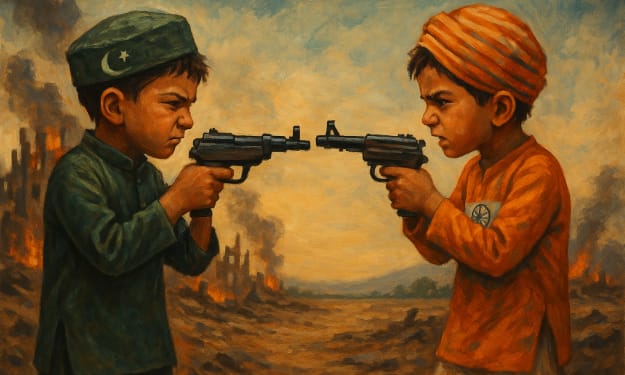
The world watched in horror as tensions between Pakistan and India erupted once again into a full-blown conflict in these recent days. What began as a border skirmish soon escalated into one of the most destructive confrontations in recent South Asian history. While the international media flooded timelines with statistics and breaking updates, the real cost of this war—human lives, fractured communities, economic collapse, and regional instability—remains far more than what any headline can convey.
By Zakir Ullahabout a year ago in The Swamp
The Reality Behind the Pahalgam Attack: Unraveling the Security and Sovereignty Crisis in India
The recent attack in Pahalgam, Jammu and Kashmir, has once again exposed deep vulnerabilities in India’s internal security framework. Known for its natural beauty and spiritual significance, Pahalgam has become an unfortunate symbol of the broader tensions simmering in the Kashmir Valley. The attack not only resulted in tragic loss of life but also triggered national anxiety, raising fresh questions about India’s security preparedness, political direction, and regional stability. The Attack and Its Immediate Fallout Initial reports indicate that the attack targeted security personnel and possibly civilian pilgrims. Pahalgam, which lies along the Amarnath Yatra route, has historically been a sensitive area during pilgrimage season. Despite heavy security deployment, the assailants managed to strike, highlighting lapses in surveillance and intelligence. In response, authorities initiated widespread security operations and placed the region on high alert. The attack sent shockwaves across the nation. Public outcry and political criticism followed, with opposition leaders questioning the government’s handling of Kashmir and demanding accountability. Gaps in Security Preparedness One of the most concerning aspects of the Pahalgam attack is the clear failure in anticipating and preventing such an incident. Despite years of counter-insurgency operations, India continues to face challenges in detecting threats before they materialize. The ability of militants to coordinate and execute attacks in highly monitored zones indicates gaps in local intelligence, coordination between agencies, and community engagement. Moreover, the over-reliance on militarized responses often alienates local populations, making it harder to build trust and gain actionable information from communities that are crucial to long-term peace efforts. Regional and Geopolitical Undercurrents India’s challenges in Kashmir are not purely domestic. Pakistan’s alleged support for insurgent groups operating in the region remains a core concern. Cross-border infiltration, proxy warfare, and the spread of radical ideologies are all factors that contribute to persistent instability. Beyond Pakistan, developments in Afghanistan post-2021 and growing Chinese interests in Ladakh have added complexity. With China actively asserting its presence in nearby regions and maintaining its territorial claims, India faces a dual-front strategic threat. These geopolitical pressures complicate India’s internal security calculations in Kashmir and demand a more nuanced, multidimensional response. Public Sentiment and National Unity Events like the Pahalgam attack deeply affect public sentiment across India. While there is often a surge of patriotism and support for security forces, there is also frustration over repeated lapses and political inaction. Many Indians feel a growing disconnect between the government’s strong national security rhetoric and the ground reality in conflict-prone regions. In Jammu and Kashmir itself, such incidents disrupt efforts at normalization, development, and integration. People who hope for peace and progress find themselves caught between militant threats and state crackdowns, often with limited access to justice or political representation. A Blow to India’s Sovereignty? Attacks like the one in Pahalgam go beyond immediate violence—they strike at the very notion of sovereignty and state control. For a country seeking global leadership and regional dominance, repeated security failures in a part of its own territory weaken its strategic credibility. Sovereignty isn’t just about geography—it’s about the state’s ability to ensure peace, justice, and development within its borders. On that front, India has work to do. The Path Forward: Beyond Military Response India must rethink its Kashmir policy in a comprehensive way. While a strong security apparatus is vital, it must be complemented by long-term social, economic, and political strategies. This includes: Improved intelligence sharing across agencies and regions. Increased community engagement, especially with youth, to counter radicalization. Infrastructure development that includes local voices and addresses real needs. Rebuilding trust through justice, dialogue, and transparent governance. International diplomacy to isolate hostile elements and apply pressure on state sponsors of terrorism. India’s leadership must show not just strength, but also wisdom and compassion. --- Conclusion The Pahalgam attack is a harsh reminder that the road to peace in Jammu and Kashmir remains difficult and dangerous. Yet, it also offers an opportunity—a moment to pause, reflect, and reset. Security alone cannot win this battle. Only a combination of vigilance, vision, and values can bring lasting stability to the region and uphold the promise of a united, sovereign India.
By Shah saab ITabout a year ago in The Swamp
India-Pakistan Tensions and the Truth Behind 'Operation Sindoor': Facts, Rumors, and Global Reactions. Content Warning. AI-Generated.
Introduction: A History of Tensions Rekindled The relationship between India and Pakistan has always been delicate, shaped by decades of political conflict, military standoffs, and regional rivalries. In recent weeks, tensions have quietly escalated again, driven not only by real-world military movements but also by viral narratives online — most notably around a term that has suddenly surged across social media: “Operation Sindoor.” While neither government has issued official confirmation of any such operation, the phrase has taken on a life of its own, triggering speculation, anxiety, and even celebration depending on which side of the border you stand on. But in a time when misinformation can travel faster than facts, what’s really happening — and what should we be careful about believing? What Is ‘Operation Sindoor’? Fact vs Fiction The term “Operation Sindoor” first surfaced in viral posts claiming that the Indian military had launched a covert or large-scale offensive action across the Line of Control (LoC) in response to alleged threats or incidents from Pakistan. The details in these posts are vague, conflicting, and largely unverified. Some claim it's a retaliatory strike. Others say it’s a planned military maneuver. A few even describe it as a fictional narrative created for social media impact. As of now, no official Indian defense source has confirmed an operation by this name. In fact, several defense journalists and analysts have stated that “Operation Sindoor” does not exist in any official capacity and appears to be a viral name fueled by patriotic sentiment and online speculation. This highlights a key problem in the current digital era: viral rumors often overshadow verified facts, especially in high-stakes geopolitical contexts. Border Situation: What’s Actually Happening? Though there is no evidence of an operation named “Sindoor,” there have been legitimate concerns regarding increased military activity along the LoC and reports of cross-border ceasefire violations. Indian security forces have reportedly increased surveillance and patrolling in certain sensitive zones. Pakistani media, on the other hand, has accused India of “aggressive posturing,” though no large-scale mobilization has been confirmed. Recent intelligence-based operations in India’s Jammu & Kashmir region have also added to the atmosphere of tension, though these are largely counter-terror operations within Indian territory, not cross-border strikes. Thus, while there’s certainly heightened activity, there is no confirmed large-scale military engagement between the two nations — at least for now. Public and Media Reaction in India and Pakistan In India, the term "Operation Sindoor" has been widely shared by social media users, some celebrating it as a symbol of strength or retribution. Patriotism-driven influencers and some news outlets have helped amplify the buzz, with hashtags like #OperationSindoor and #Revenge trending intermittently. In contrast, Pakistani social media has responded with a mix of defiance, denial, and mockery, with some labeling the operation a “Bollywood-style fantasy.” However, concern is growing among the public about whether this online chatter may provoke real-world consequences. Mainstream media in both countries have remained relatively cautious, with most established news outlets avoiding coverage of “Operation Sindoor” as a legitimate story, instead focusing on actual ground developments like diplomatic statements and border updates. Social Media vs Ground Reality: A Dangerous Gap The rise of “Operation Sindoor” is a prime example of how social media can blur the lines between imagination and information. Once a phrase trends with enough frequency and emotional power, it begins to take root in public perception — regardless of whether it's true. This is particularly risky in a region where: Historical tensions run deep National pride is emotionally charged Media trust is uneven When posts glorifying an unconfirmed operation go viral, they fuel expectations, pressure governments, and increase the risk of real escalation. Fake news can unintentionally force real responses — and that’s a dangerous game. This is why experts continuously emphasize the need for responsible content sharing, especially during high-tension periods. International Reaction and Diplomatic Watchfulness So far, global powers like the United States, United Nations, and China have not issued any formal statements regarding current India-Pakistan tensions — a sign that no formal conflict has yet broken out. However, quiet diplomatic watchfulness is likely ongoing. The UN Military Observer Group in India and Pakistan (UNMOGIP) continues to monitor the Line of Control, and foreign embassies in both countries are likely maintaining high alert. Should any military operation become official or escalate into wider conflict, the international community would be expected to intervene diplomatically to prevent a deeper crisis. A Call for Caution and Peace Perhaps the biggest takeaway from the “Operation Sindoor” narrative is the urgent need for media literacy, especially in South Asia. With rising tensions, it’s easy for emotions to overpower judgment — and for false narratives to shape public discourse. India and Pakistan, as two nuclear-capable neighbors with a complex history, cannot afford informational escalations. Leaders, journalists, influencers, and everyday citizens all have a role to play in maintaining peace — or at least preventing the spread of rumors that could spark unnecessary conflict. For now, the best path forward is transparency, diplomacy, and public awareness. Peace may not always make headlines, but it's the quieter, harder, and ultimately more valuable choice. Conclusion: Stay Informed, Not Inflamed While the term “Operation Sindoor” has captured imagination and ignited debate, its roots appear more in emotion and speculation than in verified fact. There is no confirmed military operation by that name as of this writing — but the conditions that allow such stories to thrive are very real: distrust, historical wounds, and viral media. As responsible readers and global citizens, it’s important to verify before you share, question what you read, and remember that national strength doesn’t only come from firepower — it also comes from wisdom, restraint, and truth. India Pakistan Relations Operation Sindoor South Asia News Military Tensions 2025 Social Media Misinformation India Pakistan Conflict Border News Global Politics Peace and Diplomacy Breaking News India Disclaimer: This article is intended for informational purposes only. It is based on publicly available news reports, verified data, and observed online trends as of the time of writing. The mention of “Operation Sindoor” refers to a widely circulated but unverified term that has not been officially acknowledged by any government or military authority. Readers are advised to approach all social media claims with caution and prioritize credible sources. Content Warning: This piece discusses topics such as military tension, geopolitical conflict, and cross-border narratives that may be sensitive to some readers. The intent is not to provoke or offend but to promote factual awareness and peaceful discourse. Reader discretion is advised. Thanks for reading!
By Tanushree Dasabout a year ago in The Swamp
What I Would Do If I Became President
Here is a bit of a rant of what I would do if I had the power, which of course I don't. I would add a new constitutional amendment stating clearing we have freedom from religion since a lot of religious folks claim it is not in the constitution when you cannot have freedom of religion without freedom from religion. All religions and lack thereof will be respected. No political office can ask about religious affiliation or lack thereof.
By Ferrari Kingabout a year ago in The Swamp
INTP KARL MARX (Das Kapital, Volume One: The Production Process of Capital)
CHAPTER 1 THE PRODUCT I. The Two Factors of the Product: Use-Value and Worth (Substance and Size of Value) In societies where the capitalist mode of production dominates, wealth appears as a "tremendous accumulation of commodities"; the single commodity is its basic unit. Therefore, our examination starts by analyzing the commodity.
By ANTICHRIST SUPERSTARabout a year ago in The Swamp