defense
Moving through the ranks of military activity including infrastructure, wars, our commander in chief and the nucleur arms race.
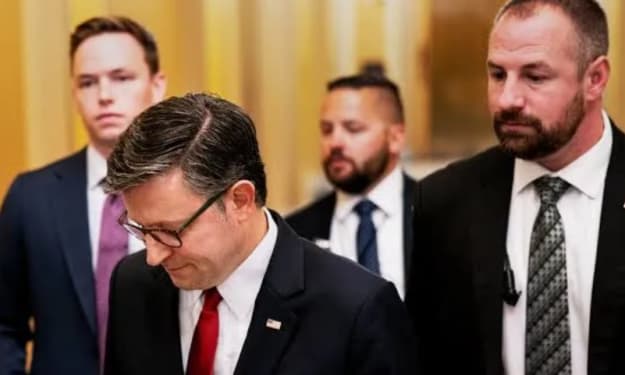
Johnson pushes to get House GOP holdouts to back tax bill
**Johnson Pushes to Get House GOP Holdouts to Back Tax Bill** House Speaker Mike Johnson is intensifying efforts to rally support among Republican holdouts in the House of Representatives as the GOP attempts to pass a significant tax package. The bill, which has been a priority for House Republicans, includes extensions of business tax breaks, increases in the child tax credit, and measures aimed at economic growth. However, internal party divisions have threatened its passage, with several conservative members withholding their support.
By GLOBAL NEWSabout a year ago in The Swamp
“AI Rules in the Balance”
Artificial intelligence is a current battleground, not just a problem for the future. The argument over whether or not state and regional governments should maintain control over powerful AI systems has intensified throughout the Western world. The answer was made evident on July 1, 2025, when a federal moratorium on state-level AI regulations that had been in place for ten years was overturned by a 99–1 vote in the U.S. Senate. Deep disagreements over innovation, public safety, and democratic control are reflected in this decision, which was not made in a vacuum.
By Tousif Arafatabout a year ago in The Swamp
World War 3 in 2025? Secret Predictions from Intelligence Experts
World War 3 in 2025? Secret Predictions from Intelligence Experts The wind of war doesn’t always begin with fire—it starts with whispers. Quiet leaks. Subtle shifts. Hidden alerts that most civilians never notice. But intelligence experts? They see the storm long before the clouds arrive. In shadowy corners of military rooms, encrypted emails, and confidential strategy documents, one chilling phrase has started to appear again and again: > “High probability of global military escalation by 2025.” No headlines. No speeches. Just quiet, rising fear. A War Waiting in the Wings In 2023 and 2024, global tensions accelerated at a pace not seen since the Cold War. Russia’s deepening war in Ukraine became more unpredictable. China’s naval movements near Taiwan turned from drills into provocations. Iran and Israel played a deadly game of silence and surprise, while the U.S. expanded its military footprint across Eastern Europe and the Pacific. But it was in late 2024 when a string of intelligence briefings shocked even seasoned analysts. A series of AI-generated war-game simulations—classified and run by NATO’s Strategic Forecasting Unit—predicted that under current conditions, a multi-front global conflict was "inevitable within 12–18 months." That brings us to mid-2025. We are inside that window now. The Hidden Warnings Leaked documents—first shared by an anonymous whistleblower on a dark web server—outlined a chilling forecast titled "WW3 Trajectory – Phase Zero." It wasn’t a declaration. It was a blueprint. The file, partially verified by cyber-researchers, predicted three initial "trigger zones" that could ignite a worldwide war: 1. Taiwan Strait Conflict 2. Nuclear Escalation in the Middle East 3. Russian Expansion Beyond Ukraine The document warned that if any two of these events occurred simultaneously, major powers would be forced to respond—creating a domino effect of alliances, retaliation, and global mobilization. Sound impossible? Look closer: In March 2025, China blockaded Taiwanese supply routes. In April, Iran tested a long-range missile, triggering Israeli airstrikes. And by May, Russian troops were spotted near Moldova’s border, in unmarked vehicles. Two out of three have already happened. Whispers from the CIA A former CIA analyst, whose voice was altered for anonymity in an exclusive podcast episode by The Grey Report, described internal agency chatter that chilled listeners: > “It’s no longer if. It’s how fast, how bad, and how deep the first 72 hours will go.” He claimed U.S. satellite intelligence had observed movement of tactical nuclear weapons in Belarus, and secret coordination between Russia and China using encrypted underwater cables—a level of secrecy not seen since before the invasion of Ukraine. He also stated that an internal briefing from Langley was titled “The Last Summer of Peace?” The Disappearing Diplomats Adding to the eerie quiet: the disappearance of diplomatic meetings. Back-channel talks that used to take place in Geneva and Vienna have dried up. U.S.–China calls are being postponed. Russian envoys have left several key European posts without explanation. According to British intelligence leaks, Russian diplomats in London were quietly moved back to Moscow under "national priority orders." Diplomats evacuate before the bombs fall. Civilian Clues and Public Denial Most of the public still scrolls through social media, unaware. Politicians avoid using the phrase "world war." Yet, the markets tremble. Oil prices hit a 10-year high. The global chip supply is tightening. And bunker builders in the U.S. and Europe have seen record sales since February 2025. One civilian signal stood out: the U.S. Department of Homeland Security quietly updated its official “Continuity of Government” plan—designed to keep the nation operating during nuclear war. It was uploaded without fanfare, buried in a Friday data dump. But cybersecurity sleuths noticed. Even more unsettling: private emails leaked from North American railway unions mention “quiet coordination with FEMA for emergency transport drills in Q3 2025.” Why prepare for mass rail mobilization if nothing is coming? The 48-Hour Theory One highly classified Pentagon scenario, known as “Black Silence,” models a surprise global war that unfolds in just 48 hours. It begins with: A cyberattack on U.S. early warning satellites Followed by a sudden Chinese invasion of Taiwan Then Russian missile launches into Poland or the Baltics Meanwhile, Iranian-backed militias begin assaults across Israel’s borders By the time world leaders respond, it’s already too late. Communications break down. Nuclear protocols activate. No time to react. Just automated retaliation. > In this simulation, over 1.2 billion lives are at risk within the first 14 days. A World on the Edge Are we already sleepwalking into this future? Military convoys now move at night. Drone surveillance over disputed territories has increased fivefold. Cyberattacks are happening daily—most never reach the news. Countries are hoarding gold, buying wheat reserves, and shifting toward closed economies. Yet the media focuses on elections, celebrity divorces, and sports scores. But behind closed doors, intelligence insiders say the clock is ticking—and midnight is closer than ever. Final Warning or False Alarm? Skeptics argue this could all be a high-stakes bluff. A global game of chicken meant to scare rivals into backing down. After all, war has been predicted before. The Cold War never exploded. The Cuban Missile Crisis ended without fire. But this time, there are more players, less communication, and deadlier technology. The question isn’t just “Will World War 3 happen?” It’s: “Has it already begun in silence?” Because not all wars start with a bang. Some start with a whisper. A signal missed. A leak ignored. A decision made in a locked room, far from cameras, far from mercy. --- If World War 3 starts tomorrow... would you even know today was your last day of peace?
By Ali Asad Ullahabout a year ago in The Swamp
The World’s Most Powerful Bunker-Buster Bomb — Capable of Destroying Iran’s Deep Underground Nuclear Sites
🌍 The World’s Most Powerful Bunker-Buster Bomb — Capable of Destroying Iran’s Deep Underground Nuclear Sites The United States possesses a secretive and devastating weapon — one that has never been used in any war so far. But if it were ever unleashed, it could turn deeply buried nuclear bunkers into dust and rubble, even those hidden under rugged mountains. This formidable weapon is known as the GBU-57A/B Massive Ordnance Penetrator (MOP) — a gigantic, non-nuclear bomb designed to smash through heavily reinforced underground facilities. Weighing in at 30,000 pounds (approximately 13,600 kilograms), it stands as the heaviest conventional bomb in the U.S. arsenal. Despite its massive size, its purpose is precise: to strike deeply buried and hardened targets — like Iran’s Fordow nuclear facility, which is nestled deep within mountainous terrain and reinforced concrete. --- 🔐 Exclusively American: No Other Nation Has This Bomb This deadly bunker-buster is so advanced that only the United States has access to it. Not even close allies like Israel — who often receive top-tier U.S. military technology — have been granted access to the MOP. That exclusivity isn’t just a matter of prestige. It reflects the weapon’s highly specialized purpose, complex delivery requirements, and its potential role in strategic deterrence. The MOP exists not just to be used, but to be known — its mere presence in the U.S. arsenal sends a strong message to adversaries about the depths the U.S. can reach, literally. --- ✈️ How Is It Deployed? The B-2 Spirit Stealth Bomber The only aircraft capable of delivering the MOP is the B-2 Spirit stealth bomber, the crown jewel of U.S. aerial warfare. Designed by Northrop Grumman, the B-2 is among the most advanced and secretive military aircraft ever created. Key capabilities of the B-2: Stealth Technology: Its radar-evading shape and coating allow it to penetrate enemy airspace undetected. Long-Range Missions: ▪ Without refueling: up to 11,000 kilometers ▪ With aerial refueling: up to 18,500 kilometers, allowing it to strike anywhere on Earth Payload: Can carry two MOPs simultaneously, meaning a total strike capability of 60,000 pounds (27,200 kg) of precision-guided firepower. This combination of stealth, range, and brute force makes the B-2 a flying platform of strategic shock and awe — and the only one currently certified to carry the GBU-57 MOP. --- 💥 Understanding the GBU-57’s Power The MOP is not your average bomb. Unlike typical aerial bombs that explode on the surface or a few feet underground, the GBU-57 is designed to burrow deep into the Earth before detonating. Penetrative Power: Can punch through 200 feet (about 60 meters) of concrete or rock. If deeper destruction is required, multiple MOPs can be dropped sequentially to drill further down. Its explosive core is encased in an extraordinarily dense, high-strength steel shell, giving it deep penetration before detonation — crucial for reaching hardened nuclear facilities hidden under mountains. The bomb uses a GPS-guided system to ensure pinpoint accuracy and is capable of delivering a delayed explosion after burrowing into its target. --- ⚠️ Never Used in Battle — But Thoroughly Tested Though the GBU-57 MOP has never been used in actual combat, it has been extensively tested at classified ranges in the U.S., such as White Sands Missile Range in New Mexico. Its purpose? To sit silently in the U.S. arsenal, ready to destroy targets that no other weapon can. It’s been engineered specifically with countries like Iran and North Korea in mind — nations believed to be developing or hiding nuclear weapons in underground bunkers. In comparison, the MOP is far more powerful than the Mother of All Bombs (MOAB) dropped by the U.S. in Afghanistan in 2017 — which weighed about 9,800 kg. The MOP is nearly 40% heavier and built for deep structural destruction, not surface blast effect. --- 🧠 What Would Happen If the MOP Were Ever Used? According to Professor Paul Rogers of the University of Bradford, deploying a MOP would be a complex and layered military operation. Here's how a hypothetical strike could unfold: 1. Preparation Phase: F-22 Raptor stealth fighters and electronic warfare aircraft would likely be used to neutralize or blind enemy radar and missile defenses. 2. Delivery Phase: A B-2 bomber, flying from a U.S. or allied base (possibly in the Middle East or Europe), would deliver the MOP. Its stealth would allow it to evade detection and reach the target zone undetected. 3. Post-Strike Assessment: Surveillance drones would fly over the target zone to assess damage. If necessary, a second strike could be ordered to achieve complete destruction. Using the MOP would signal the crossing of a critical threshold. While non-nuclear, its effect on strategic targets could spark regional or global escalations, especially if aimed at sensitive sites in Iran or North Korea. --- 📦 How Many Does the U.S. Have? While the exact number is classified, defense analysts estimate the U.S. possesses between 10 to 20 operational MOPs. Their limited number underscores how specialized and expensive these weapons are — not for mass use, but for surgical strategic strikes. Each MOP is likely stored and maintained under tightest security, ready to be armed only in very high-stakes scenarios. --- 🌍 A Symbol of American Strategic Dominance The GBU-57 Massive Ordnance Penetrator is more than a bomb — it’s a message. A message to adversaries that no fortress is too deep, no target too protected, and no facility too remote. It represents America’s ultimate conventional option before resorting to nuclear weapons. Its very existence influences military doctrines, diplomatic negotiations, and strategic planning worldwide. And while it remains unused, it looms in the background — a sleeping giant in the vault of military deterrence.
By Ikram Ullahabout a year ago in The Swamp
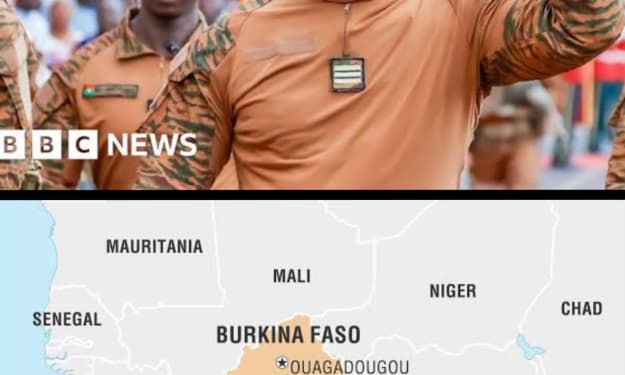
The Young Revolutionary Leader: Ibrahim Traoré and the New Face of Burkina Faso
“The Young Revolutionary Leader: Ibrahim Traoré and the New Face of Burkina Faso” Burkina Faso is a landlocked country located in West Africa, with a population of around 20 million. Its flag bears a resemblance to that of Pakistan’s Tehreek-e-Insaf party 🇧🇫, with red and green colors and a yellow star in the center. Formerly known as the Republic of Upper Volta, the country changed its name to Burkina Faso on August 4, 1984, which means “Land of the Upright People” — a title that reflects its people's desire for integrity and self-respect. A Colonial Past Under France Burkina Faso was a French colony, and its official language remains French to this day. France took control of the territory in 1896 and ruled it directly until 1960, when the country was granted nominal independence. However, the influence of France never truly disappeared. For decades, France retained control over Burkina Faso’s economy, trade, military decisions, and most importantly, its natural resources — especially gold. Despite being one of the world’s richest countries in gold reserves, Burkina Faso was denied the development of local refineries. Instead, French companies continued to extract gold, export it to Europe, and use it to enhance the glittering wealth of Paris, while Burkina Faso remained shackled in poverty. The local population received little to no benefit. As wealth was drained out, poverty, hunger, and crime increased inside the country. Politicians loyal to France continued to plunder public resources through corruption, while ordinary citizens lived in despair. The Rise of Discontent and Rebellion By the early 2010s, the situation had reached a boiling point. Frustrated by foreign interference and domestic misgovernance, tribal groups and youth began to resist. Armed rebellions grew. In 2015, elections were held, but once again, the winner was a pro-France president. Things only worsened. Then, in January 2022, the military stepped in and overthrew the civilian government. But the new leader, a military general, failed to deliver on promises. People's lives didn’t improve, nor did the army receive promised wage hikes. Discontent simmered within the military ranks. The Emergence of Ibrahim Traoré Just months later, Captain Ibrahim Traoré, a young army officer in his 30s, led a revolt against the general and seized power. Unlike his predecessors, Traoré immediately began making bold, revolutionary decisions. In January 2023, he terminated the security agreement with France, giving them one month to withdraw all French troops from Burkina Faso. This bold declaration shocked the international community. Many asked: Who is this fearless young leader who dares to challenge France? Strategic Alliances Beyond the West Once France’s soldiers left, Traoré turned eastward. He visited Moscow and met with President Vladimir Putin. Russia pledged military training and weapons support. Later, China supplied armored vehicles, and Türkiye provided modern drones, which are now being used by Burkina Faso's army in counter-insurgency operations. Traoré is deeply committed to national self-reliance. Recognizing that foreign companies were exploiting the country’s gold while locals remained unemployed, he founded Burkina Faso’s first gold refinery in 2023. This move was historic—it ensured that the profits from gold would now stay within the country, creating local jobs and boosting the national economy. He also revoked mining permits from foreign firms, including British companies, and nationalized several mines. These measures sent a clear message to the Western world: Africa has awakened, and the age of plundering is over. Rejecting Debt Dependence In August 2024, Ibrahim Traoré took yet another unprecedented step by refusing a $32 million loan offer from the International Monetary Fund (IMF). His message was loud and clear: “We must stand on our own feet.” This decision was widely praised by those who believe in economic sovereignty and freedom from debt traps. Welfare and Development Initiatives Despite being a military leader, Traoré is focused on social welfare. Aware that a large portion of his population sleeps hungry, he reached out to Russia, which responded with 25,000 tons of wheat in humanitarian aid. But Traoré does not want his country to become aid-dependent. To secure long-term food security, he imported thousands of modern agricultural machines from China and distributed them free of cost to farmers across the nation. Under his leadership, electricity access, previously limited to only 20% of the population, has begun to improve. With China's assistance, a 25,000-megawatt solar power project is under development. Additionally, Russia is helping build a nuclear power plant to provide sustainable energy for the future. In the infrastructure sector, he is constructing roads to connect remote villages with urban centers, realizing that economic development cannot happen without modern transportation. Moral Leadership and Pan-Islamic Solidarity Traoré's moral compass sets him apart from many global leaders. When offered funding for 400 mosques by certain Gulf countries, he respectfully declined, requesting that the money be redirected to Palestine, where “our brothers and sisters are starving.” This move earned him global respect and proved his genuine commitment to human values over political optics. A Role Model for African Youth At just 37 years old, Captain Ibrahim Traoré has become a symbol of hope for millions across Africa. He represents the dream of true independence, fearless leadership, and people-first governance. Many now consider him a modern-day revolutionary, inspiring a new generation of African leaders to reclaim their nations’ wealth, invest in their people, and challenge neocolonialism. His leadership reflects the very spirit described by Allama Iqbal in this timeless verse: > “O Lord, grant the Muslim heart that burning desire, That sets the soul aflame, that stirs the heart with fire.”
By Ikram Ullahabout a year ago in The Swamp
Russia vs Ukraine: What’s Really Happening in 2025 (A Brutally Honest Breakdown)
I’ve been following this war since the day it began. Not as a soldier, not as a politician, not even as a journalist. Just as a human being who cares deeply about truth, suffering, and the ripple effect of violence. And as I write this in mid-2025, I’m painfully aware of how numb we’ve all become to the phrase Russia vs Ukraine. It’s been over three years. Thousands of headlines. Millions of lives changed. And yet, how many of us really know what’s happening right now?
By Bevy Osuosabout a year ago in The Swamp
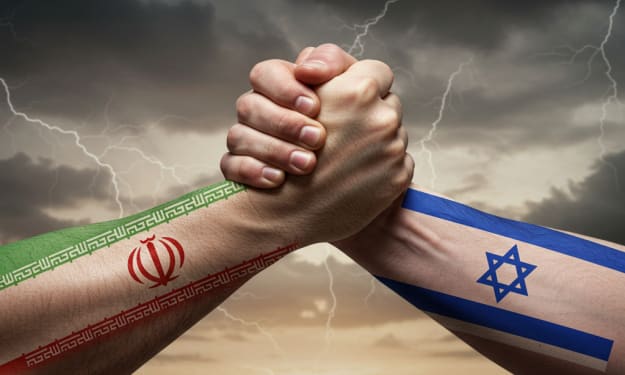
Iran vs Israel: A Dangerous Dance in the Middle East
Introduction The relationship between Iran and Israel has long been one of the most fraught and potentially explosive rivalries in international politics. Rooted in ideology, power politics, religious tensions, and shifting regional alliances, this bitter animosity has shaped Middle Eastern geopolitics for over four decades. The “Iran vs Israel” conflict isn’t a traditional war, but a complex confrontation that plays out across cyber warfare, proxy battles, intelligence operations, rhetoric, and regional power struggles.Understanding the dynamics of this rivalry is critical not only for regional peace but also for global security, as any escalation has the potential to draw in multiple international actors and destabilize an already fragile region.
By LegacyWordsabout a year ago in The Swamp
From Drones to Underground Armies: The Tech Revolution Fueling Today’s Escalations
In 2025, the face of warfare no longer resembles the gritty front lines of history textbooks. Tanks rust idle while satellites, drones, AI systems, and underground militias dictate the terms of conflict. Welcome to the new battlefield—one that’s fought in shadows, online, and often without a single soldier crossing a border.
By Kamran Zebabout a year ago in The Swamp