defense
Moving through the ranks of military activity including infrastructure, wars, our commander in chief and the nucleur arms race.
The Uneasy Embrace: US-Pakistan Relations and the Geostrategic Puzzle of South Asia
By Inzamam Ul Haq In the intricate geopolitical theater of Asia, alliances are not forged solely on ideological lines or historic friendships. They are shaped by necessity, strategy, and ever-shifting regional dynamics. Among the most enigmatic and often misunderstood of these relationships is the long, layered, and sometimes strained alliance between the United States and Pakistan.
By Inzamam Ul Haqabout a year ago in The Swamp
Why America Has Its Eye on Pakistan: Oil, Jets, and a Shifting Alliance
In recent years, subtle yet striking signals from Washington have shown a surprising tilt in American interest toward Pakistan. While India has long been a U.S. strategic ally, recent developments suggest that America is looking at Pakistan not just with fresh eyes—but possibly with renewed ambition.
By Leah Brookeabout a year ago in The Swamp
SpaceX launches Crew-11 astronauts to the ISS for NASA on milestone Crew Dragon flight (video)
SpaceX launches NASA's Crew-11 astronauts to the International Space Station on a historic Crew Dragon flight. SpaceX successfully launched NASA's Crew-11 mission to the International Space Station (ISS), a significant accomplishment for commercial spaceflight and international cooperation. This mission is yet another milestone in the Commercial Crew Program, a partnership between NASA and SpaceX that has revolutionized American space access since its inception. On a SpaceX Falcon 9 rocket, the Crew-11 mission took off from Launch Complex 39A at NASA's Kennedy Space Center in Florida. The Crew Dragon spacecraft, which was given the name "Endurance" and had already completed multiple missions to the ISS, was perched atop the rocket. The reliability of SpaceX's reusable spacecraft and booster systems, which continue to set new standards for cost-effective space travel, was reaffirmed by the successful launch. There are four astronauts aboard this mission, three from NASA and one from an international partner agency. Commander Michael Barratt, a NASA astronaut with two previous space missions under his belt, is in charge of the mission. Pilot Jeanette Epps, who is making her first spaceflight following years of training and delays, and Mission Specialist Matthew Dominick, a member of NASA's 2017 astronaut class, will be traveling with him. Completing the international team is Koichi Wakata of Japan’s space agency, JAXA, a veteran astronaut with several ISS missions to his name.
By GLOBAL NEWSabout a year ago in The Swamp
Construction on Trump’s $200 million White House ballroom to begin in September
President Donald Trump has unveiled an ambitious two hundred million dollar plan to build a lavish White House State Ballroom, with construction set to begin in September twenty twenty-five and finish before the end of his term in early twenty twenty-nine.
By GLOBAL NEWSabout a year ago in The Swamp
Donald Trump Snubs India, Signs Oil Deal With Pak. What Does This Mean?
After announcing a 25 per cent 'reciprocal tariff' on his "friend" India, plus a penalty for buying Russian weapons and oil, Donald Trump said Thursday the US had struck a trade deal with Pakistan, including plans to develop its "massive" oil reserves.
By Kristen Orkoshneliabout a year ago in The Swamp
Tsunami Evacuations Ordered in South America, but Worst Risk Passes for U.S. After Huge Quake
Early on Wednesday, a powerful earthquake with a magnitude of 8.8 struck off the Kamchatka Peninsula in Russia, triggering widespread tsunami warnings and mass evacuations across the Pacific Rim. Officials later determined that the greatest tsunami threat to the United States had passed, despite the frantic efforts of countries in South America to evacuate individuals. At a depth of 19 kilometers, the quake, one of the strongest in recent memory, occurred approximately 75 miles offshore from Petropavlovsk-Kamchatsky. The quake's shallowness made it particularly capable of moving large volumes of water. From Japan to Chile to Hawaii, tsunami warnings were quickly issued across the Pacific Basin. Response times to emergencies were quick in South America. Chile began evacuating vulnerable coastal areas after raising its tsunami alert level to the highest level. Authorities emphasized the danger of after-waves, reminding citizens that the first wave is rarely the most dangerous. Chilean officials coordinated with local governments to evacuate thousands from low-lying areas.
By GLOBAL NEWSabout a year ago in The Swamp
Ceasefire Isn’t Enough: What the World Must Do to Truly End the War in Gaza
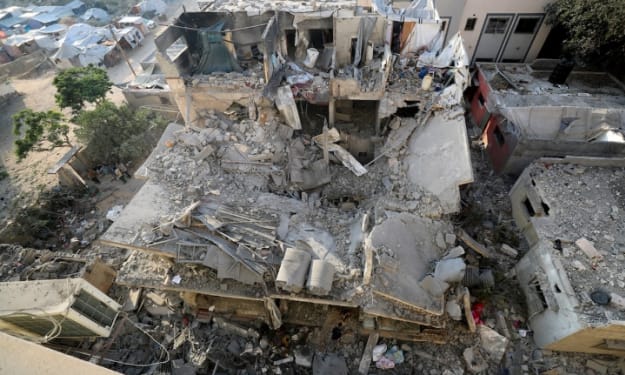
For months now, Gaza has been a living nightmare. The headlines may come and go, but for the people who wake up every day under drones, rubble, and hunger—this isn't a news cycle. It's their reality. Ceasefires have been announced, broken, and re-announced. Yet even in moments of "pause," the suffering doesn't stop. The war has destroyed not just buildings, but generations of hope. And if the world truly wants peace in Gaza, it must understand a painful truth: A ceasefire is not the end. It’s only the beginning. --- The Human Cost Behind the Numbers The United Nations, Red Crescent, and other global agencies have reported staggering figures: Over 30,000 Palestinians dead, the majority of them women and children Thousands buried under collapsed buildings More than 1.7 million displaced, living in tents or overcrowded shelters Hospitals in ruins, running on candlelight and hope A famine looming, as clean water and food vanish These are not just statistics. Each number is a name. A family. A future. So while some governments debate military strategy, and others issue "statements of concern," real people are dying in real time. --- Why Ceasefires Alone Will Not Work Ceasefires, while critical, are often temporary band-aids applied to deep, untreated wounds. Here’s why they fall short: 1. They don’t address the root causes — The blockade, occupation, displacement, and lack of sovereignty remain untouched. 2. They can be easily broken — Without accountability, ceasefires can be violated without consequence. 3. They often come too late — By the time they're announced, thousands are already dead or displaced. A ceasefire may stop the bullets—but only justice, dignity, and rebuilding can stop the war. --- What the World Must Actually Do To truly end the war in Gaza and prevent another cycle of violence, a global, multi-layered response is needed. Here’s where it must begin: 1. Demand Permanent Peace, Not Temporary Silence Global powers must shift from managing the conflict to resolving it. That means: An immediate, unconditional ceasefire Permanent lifting of the blockade on Gaza A return to meaningful peace negotiations with international oversight 2. Hold War Criminals Accountable—On All Sides War crimes are war crimes, no matter who commits them. The bombing of refugee camps, targeting of hospitals, and killing of civilians must be investigated and prosecuted by the International Criminal Court and other neutral bodies. No peace is possible without truth and justice. 3. Flood Gaza with Aid—Not Just Sympathy While statements of concern are being tweeted, children in Gaza are dying of hunger. The international community must: Open safe corridors for humanitarian aid Allow medical teams to rebuild collapsed hospitals Prioritize the delivery of clean water, food, and shelter Sympathy is not a solution. Supplies are. 4. Give Gaza a Future, Not Just a Pause Even if the bombing stops today, Gaza cannot recover without long-term investment in: Infrastructure Education Healthcare Psychological trauma support Rebuilding Gaza is not a charity project. It’s a human responsibility. --- The Role of Everyday People You don’t have to be a world leader to make a difference. Every person can: Share verified stories from people in Gaza Support NGOs and aid organizations working on the ground Contact local representatives and demand action Refuse to be silent in the face of genocide Silence, at this point, is not neutral. It is a stance. --- What Peace Really Looks Like Peace is not the sound of guns going quiet for a few days. Peace is the sound of a child laughing freely, not ducking from drones. It’s a mother putting her kids to bed without fear of a missile striking before morning. It’s people returning home—not to ruins, but to rebuild. Peace is not the absence of war. It is the presence of justice, dignity, and hope. --- In the End, History Is Watching Years from now, children will ask what the world did while Gaza burned. Will we say we looked away? That we waited for governments to act? Or that we raised our voices and refused to let another child become rubble? Ceasefires are necessary—but they are not victory. Victory will be when no mother has to bury her baby in a blanket of dust. When every child can sleep through the night. When Gaza is more than a graveyard of promises—it is a home once again. That is the war worth fighting for. And that is the peace we must demand—now. Thank you for reading this 😭💔.
By Azmat Roman ✨about a year ago in The Swamp
Where the Rubble Speaks: A Child’s Cries in Gaza’s Silence
Where the Rubble Speaks: A Child’s Cries in Gaza’s Silence There are no safe places left in Gaza. That sentence, once unthinkable, has now become a mantra for journalists, doctors, aid workers, and the civilians still struggling to survive under relentless airstrikes, displacement, and suffocating siege. Gaza, already one of the most densely populated and impoverished areas in the world, has become an open-air graveyard. And still, the bombs fall. In the past months, Gaza has witnessed devastation beyond anything in recent memory. The world has seen footage of collapsing buildings, families buried in the rubble, and hospitals overrun with the wounded. But what the headlines cannot capture is the sound—of a child sobbing for their mother under concrete, of parents screaming out names, hoping for a reply from under dust and silence, of prayers whispered into the smoke-choked night. This is not just a war. It is a humanitarian collapse. The Numbers Behind the Pain According to United Nations agencies, over 30,000 Palestinians—the majority of them women and children—have been killed since the beginning of the recent escalation. Thousands more are missing, presumed buried under the debris of their homes. Over 70% of Gaza’s housing stock has been damaged or destroyed. Hospitals, schools, refugee camps, even designated “safe zones” have not been spared. More than 1.7 million people—nearly 80% of Gaza’s population—are now displaced, often multiple times over. They move with what little they can carry, only to be bombed again at their next stop. Tent camps have turned into temporary cities, and yet food, water, electricity, and medicine are almost completely depleted. International humanitarian groups, including the Red Crescent, Médecins Sans Frontières, and the World Food Programme, have repeatedly warned that Gaza is facing imminent famine, with many children already dying from hunger and dehydration. Hospitals are operating in parking lots, using vinegar for antiseptic and candlelight for surgery. Yet the borders remain mostly closed. Aid is trickling in far too slowly. For every truck that enters Gaza, hundreds more are needed. Lives Reduced to Numbers But beyond these figures are people. Real people. A 6-year-old girl named Aya, who lost her entire family in an airstrike while they were queuing for bread. A father, Mahmoud, who cradled his teenage son’s lifeless body after searching hospitals for days. A young doctor, Sara, who works 18-hour shifts trying to keep premature babies alive with no incubators and no power, praying that drones spare the clinic one more night. Each of them has a story. Each of them had dreams. And each one now lives—or dies—under the unrelenting sky of war. A War with No Exit The justification for these attacks, according to Israeli officials, is rooted in self-defense following a deadly incursion by Hamas on Israeli territory. Civilians in Israel were tragically killed, and hostages were taken—a horrific and unacceptable act. But in the wake of that attack, the response has decimated Gaza. There is growing consensus among global human rights organizations and UN experts that what is happening in Gaza now cannot be justified as proportional or targeted warfare. Entire neighborhoods have been flattened. Journalists, doctors, and UN workers have been killed in numbers not seen in any modern conflict. This is not a war against armed militants alone. It is a war that is crushing an entire population with nowhere to flee. International Response: Too Little, Too Late Despite widespread global protests and mounting calls for a ceasefire, most world leaders have taken little action. Western nations have issued statements of “deep concern” but continue to supply weapons and diplomatic cover to Israel. The United Nations has passed resolutions calling for a ceasefire—resolutions that are often ignored or blocked. For those in Gaza, hope is a fragile and fading thing. Even humanitarian aid has been politicized. Trucks are delayed at borders. Supplies rot in warehouses while people starve within walking distance. Why the World Must Not Look Away What is happening in Gaza is not just a regional issue. It is a mirror for the world’s conscience. In a time when surveillance satellites can see every corner of the earth and social media brings horror to our screens in real time, silence becomes complicity. This is not a story for one religion, or one side, or one ideology. It is a plea for humanity. No child should grow up surrounded by the sound of drones. No mother should bury her baby in a plastic bag. No father should have to identify his daughter by the color of her backpack. It is easy to feel helpless watching such destruction unfold. But the world changes not only through leaders, but through voices. Through writers. Through those who speak when others go silent. In the End, a Choice History will remember these days. Not just for the devastation, but for how we responded to it. As the smoke rises from Gaza’s broken skyline, the people there are still trying to live. They cook over fires. They teach their children math by drawing in the sand. They recite poetry under blankets of fear. They hold onto dignity, because it's all they have left. And in the quiet, between the explosions, if you listen closely enough, you can still hear the voice of a child—asking why the world let this happen. Let us make sure we do not answer with silence.
By Azmat Roman ✨about a year ago in The Swamp
US-Japan trade deal gives Trump control over $550 billion in investments. It could be ‘vapor ware’ — and a model for other countries
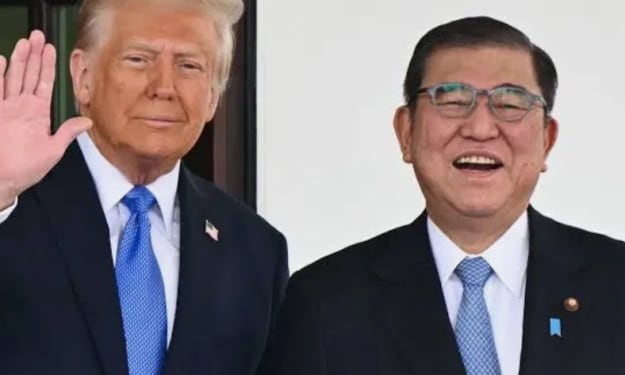
**The US-Japan trade agreement grants Trump control over investments worth $550 billion. It Might Be "Vapor Ware" and Serve as an Example for Other Countries** Former President Donald Trump claimed in a high-profile announcement that a new US-Japan trade deal gave the United States leverage over 550 billion dollars in Japanese investment. The deal has been met with both enthusiasm and skepticism, with Trump hailing it as a landmark achievement for American manufacturing and job creation. Some have dubbed it potential "vapor ware" due to critics' claims that the numbers may be exaggerated, the agreements are non-binding, and the economic impact is speculative. Nonetheless, the way the deal is structured and presented may be used as a model for US trade negotiations in the future, especially if the administration is focused on optics and unilateral gain. At the heart of the agreement is a framework wherein Japan pledged to direct investment toward American industries — especially manufacturing, infrastructure, and emerging technologies. During his presidency, Trump put bilateral trade agreements ahead of multilateral ones and hailed the agreement as an example of nationalist economics. It is in line with his "America First" platform, which places an emphasis on bringing manufacturing jobs back to the United States and reducing reliance on supply chains from other countries. However, experts caution that the headline figure of \$550 billion is misleading. Before the agreement was signed, a significant portion of the pledged investment was already in the works. Financial analysts point out that Japanese companies like Toyota, SoftBank, and Mitsubishi have been present in the United States for a considerable amount of time. Trump can take credit for the trade deal because it simply brings together anticipated and existing investments under a new political banner. Furthermore, the agreement lacks specific enforcement mechanisms. It does not include tariff adjustments, guarantees of market access, or procedures for resolving disputes like traditional trade pacts do. Instead, it resembles a memorandum of understanding, which is advantageous from a political standpoint but has no legal force. Because of this, some economists have referred to it as "vapor ware," which refers to a policy that makes headlines but does not result in significant change. The deal's strategy reflects a larger trend in the way trade agreements are being used as political capital, despite the ambiguity. By framing the deal as a huge economic win — regardless of its actual substance — Trump leveraged it for domestic approval and international prestige. His administration argued that the mere announcement of the deal created a “confidence effect,” encouraging private-sector investment and lifting stock markets.
By GLOBAL NEWSabout a year ago in The Swamp