cybersecurity
Cracking the cyber world: NSA, hackers, and the complicated ways that digital information can threaten our personal lives, politics and national security.
Pahalgam Terror Attack 2025: Hindu Tourists Killed in Kashmir, Global Reactions and Full Report. Content Warning. AI-Generated.
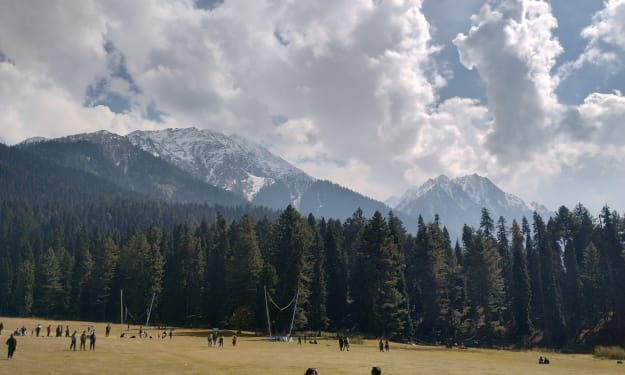
On April 22, 2025, a brutal terrorist attack in Pahalgam, Jammu and Kashmir sent shockwaves across India and the international community. Armed militants opened fire on a group of tourists at Baisaran Valley, deliberately targeting individuals based on their Hindu identity. The attack, which left 26 civilians dead and over 20 injured, is being called one of the deadliest attacks in Kashmir in recent years. The massacre not only exposed the fragile security situation in the region but also reignited global conversations around religious terrorism, Islamic extremism, and cross-border militancy. What Happened in Pahalgam on April 22, 2025? According to survivor testimonies and local authorities, a group of armed terrorists infiltrated the tourist-heavy zone of Baisaran Valley, posing as guides or local pony handlers. They then asked tourists their names and religion. Those who identified as Hindu were separated and shot at close range. Some were reportedly asked to recite the Islamic kalima to verify their faith. This form of religiously motivated violence is a chilling reminder of earlier sectarian atrocities in South Asia. Among those killed was an entire Hindu family from Maharashtra. Shockingly, a local Muslim man, Seyyed Adil Hussain Shah, lost his life trying to protect the tourists. His bravery has since become a symbol of interfaith solidarity in a time of hate.
By Tanushree Dasabout a year ago in The Swamp
India-Pakistan Tensions and the Truth Behind 'Operation Sindoor': Facts, Rumors, and Global Reactions. Content Warning. AI-Generated.
Introduction: A History of Tensions Rekindled The relationship between India and Pakistan has always been delicate, shaped by decades of political conflict, military standoffs, and regional rivalries. In recent weeks, tensions have quietly escalated again, driven not only by real-world military movements but also by viral narratives online — most notably around a term that has suddenly surged across social media: “Operation Sindoor.” While neither government has issued official confirmation of any such operation, the phrase has taken on a life of its own, triggering speculation, anxiety, and even celebration depending on which side of the border you stand on. But in a time when misinformation can travel faster than facts, what’s really happening — and what should we be careful about believing? What Is ‘Operation Sindoor’? Fact vs Fiction The term “Operation Sindoor” first surfaced in viral posts claiming that the Indian military had launched a covert or large-scale offensive action across the Line of Control (LoC) in response to alleged threats or incidents from Pakistan. The details in these posts are vague, conflicting, and largely unverified. Some claim it's a retaliatory strike. Others say it’s a planned military maneuver. A few even describe it as a fictional narrative created for social media impact. As of now, no official Indian defense source has confirmed an operation by this name. In fact, several defense journalists and analysts have stated that “Operation Sindoor” does not exist in any official capacity and appears to be a viral name fueled by patriotic sentiment and online speculation. This highlights a key problem in the current digital era: viral rumors often overshadow verified facts, especially in high-stakes geopolitical contexts. Border Situation: What’s Actually Happening? Though there is no evidence of an operation named “Sindoor,” there have been legitimate concerns regarding increased military activity along the LoC and reports of cross-border ceasefire violations. Indian security forces have reportedly increased surveillance and patrolling in certain sensitive zones. Pakistani media, on the other hand, has accused India of “aggressive posturing,” though no large-scale mobilization has been confirmed. Recent intelligence-based operations in India’s Jammu & Kashmir region have also added to the atmosphere of tension, though these are largely counter-terror operations within Indian territory, not cross-border strikes. Thus, while there’s certainly heightened activity, there is no confirmed large-scale military engagement between the two nations — at least for now. Public and Media Reaction in India and Pakistan In India, the term "Operation Sindoor" has been widely shared by social media users, some celebrating it as a symbol of strength or retribution. Patriotism-driven influencers and some news outlets have helped amplify the buzz, with hashtags like #OperationSindoor and #Revenge trending intermittently. In contrast, Pakistani social media has responded with a mix of defiance, denial, and mockery, with some labeling the operation a “Bollywood-style fantasy.” However, concern is growing among the public about whether this online chatter may provoke real-world consequences. Mainstream media in both countries have remained relatively cautious, with most established news outlets avoiding coverage of “Operation Sindoor” as a legitimate story, instead focusing on actual ground developments like diplomatic statements and border updates. Social Media vs Ground Reality: A Dangerous Gap The rise of “Operation Sindoor” is a prime example of how social media can blur the lines between imagination and information. Once a phrase trends with enough frequency and emotional power, it begins to take root in public perception — regardless of whether it's true. This is particularly risky in a region where: Historical tensions run deep National pride is emotionally charged Media trust is uneven When posts glorifying an unconfirmed operation go viral, they fuel expectations, pressure governments, and increase the risk of real escalation. Fake news can unintentionally force real responses — and that’s a dangerous game. This is why experts continuously emphasize the need for responsible content sharing, especially during high-tension periods. International Reaction and Diplomatic Watchfulness So far, global powers like the United States, United Nations, and China have not issued any formal statements regarding current India-Pakistan tensions — a sign that no formal conflict has yet broken out. However, quiet diplomatic watchfulness is likely ongoing. The UN Military Observer Group in India and Pakistan (UNMOGIP) continues to monitor the Line of Control, and foreign embassies in both countries are likely maintaining high alert. Should any military operation become official or escalate into wider conflict, the international community would be expected to intervene diplomatically to prevent a deeper crisis. A Call for Caution and Peace Perhaps the biggest takeaway from the “Operation Sindoor” narrative is the urgent need for media literacy, especially in South Asia. With rising tensions, it’s easy for emotions to overpower judgment — and for false narratives to shape public discourse. India and Pakistan, as two nuclear-capable neighbors with a complex history, cannot afford informational escalations. Leaders, journalists, influencers, and everyday citizens all have a role to play in maintaining peace — or at least preventing the spread of rumors that could spark unnecessary conflict. For now, the best path forward is transparency, diplomacy, and public awareness. Peace may not always make headlines, but it's the quieter, harder, and ultimately more valuable choice. Conclusion: Stay Informed, Not Inflamed While the term “Operation Sindoor” has captured imagination and ignited debate, its roots appear more in emotion and speculation than in verified fact. There is no confirmed military operation by that name as of this writing — but the conditions that allow such stories to thrive are very real: distrust, historical wounds, and viral media. As responsible readers and global citizens, it’s important to verify before you share, question what you read, and remember that national strength doesn’t only come from firepower — it also comes from wisdom, restraint, and truth. India Pakistan Relations Operation Sindoor South Asia News Military Tensions 2025 Social Media Misinformation India Pakistan Conflict Border News Global Politics Peace and Diplomacy Breaking News India Disclaimer: This article is intended for informational purposes only. It is based on publicly available news reports, verified data, and observed online trends as of the time of writing. The mention of “Operation Sindoor” refers to a widely circulated but unverified term that has not been officially acknowledged by any government or military authority. Readers are advised to approach all social media claims with caution and prioritize credible sources. Content Warning: This piece discusses topics such as military tension, geopolitical conflict, and cross-border narratives that may be sensitive to some readers. The intent is not to provoke or offend but to promote factual awareness and peaceful discourse. Reader discretion is advised. Thanks for reading!
By Tanushree Dasabout a year ago in The Swamp
Pakistan and India on the Brink: A Modern-Day Conflict
Military Showdown: India vs. Pakistan in 2025 The year 2025 has brought the South Asian subcontinent to the brink of a full-scale war between India and Pakistan. A longstanding history of territorial disputes, political tensions, and military confrontations has once again flared into open hostilities. The current military showdown, which began with a skirmish along the Line of Control (LoC), has rapidly escalated into a modern-day conflict involving both conventional and unconventional warfare tactics. This article delves into the key elements of this military showdown, examining the capabilities, strategies, and potential consequences of this catastrophic clash between two nuclear-armed neighbors. The Escalation to War: A Tense Beginning The immediate trigger for the war was an intense confrontation on the LoC in Kashmir, a region that has remained a contentious battleground since the partition of British India in 1947. In late April 2025, a violent exchange between Indian and Pakistani forces along the LoC claimed the lives of several soldiers from both sides. Pakistan blamed India for an unprovoked attack on its military positions, while India accused Pakistan of sponsoring militant groups who were infiltrating its territory. This clash, though small in scale initially, soon spiraled out of control as both nations responded with retaliatory airstrikes, artillery bombardments, and a full mobilization of ground troops. The Military Capabilities: A Fierce Comparison Both India and Pakistan possess formidable military forces, each with its own strengths, and a comparison of their capabilities highlights the scale of the potential conflict. India’s Military Power: India, with one of the largest standing armies in the world, has a significant advantage in terms of manpower. With a population of over 1.4 billion, India maintains a military force of over 1.4 million active-duty personnel and more than 2 million reserve forces. India’s arsenal is dominated by advanced tanks, artillery, and infantry, supported by modern air and naval power. India’s Air Force, which is considered one of the most capable in Asia, boasts a fleet of fighter jets, including the Sukhoi Su-30MKI, Rafale, and indigenous Tejas aircraft. Furthermore, India possesses a significant array of ballistic missiles and precision-guided munitions. In terms of nuclear capability, India has an estimated 160 to 170 nuclear warheads. India’s nuclear strategy is centered around the doctrine of "No First Use," meaning that it has pledged not to use nuclear weapons unless first attacked by an adversary with nuclear weapons. Pakistan’s Military Strength: Pakistan’s military, though smaller than India’s in terms of sheer numbers, is no less formidable. Pakistan’s armed forces consist of approximately 650,000 active-duty personnel and around 550,000 reserves. The Pakistani military has invested heavily in asymmetric warfare tactics, focusing on maintaining a strategic edge through its use of irregular forces and specialized combat units. Pakistan’s military is also known for its adept use of terrain in the mountainous areas of Kashmir and the ability to launch rapid counterattacks. In terms of air power, Pakistan's Air Force operates a combination of F-16 Fighting Falcons, JF-17 Thunder, and Mirage fighters. Pakistan has also significantly upgraded its missile defense systems and is developing its own indigenous long-range ballistic missiles. The most concerning aspect of Pakistan’s military capabilities is its nuclear arsenal. With an estimated 170 to 180 nuclear warheads, Pakistan maintains a policy of "full-spectrum deterrence," which means it reserves the right to use nuclear weapons across a range of situations, including low-intensity conflict. The Role of Air Power and Cyber Warfare One of the most striking features of this modern military showdown has been the use of advanced airstrikes. Both nations have engaged in frequent bombing runs over disputed territories, targeting military bases, supply lines, and even civilian infrastructure. Indian fighter jets have conducted precision strikes on Pakistani border positions, while Pakistan has retaliated with aerial bombardments and has attempted to disrupt India’s air superiority with surface-to-air missile systems. In addition to traditional warfare, both India and Pakistan have engaged in a new form of battle: cyber warfare. Both countries have launched sophisticated cyberattacks on each other’s military and civilian infrastructure, targeting everything from communications systems to power grids. These cyber operations have created significant confusion and disruption, making it harder for both sides to coordinate military efforts effectively. The Risk of Escalation: Nuclear Concerns As the conflict intensifies, the possibility of nuclear escalation becomes a significant concern. Both nations have significant nuclear arsenals, and the threat of nuclear use, however unlikely, cannot be discounted. While both countries have made public statements reaffirming their commitment to nuclear deterrence and non-use policies, the rapidly deteriorating situation on the ground has raised alarm bells internationally. India’s nuclear doctrine of "No First Use" is designed to reassure its population and the world that it will only use nuclear weapons in retaliation to a nuclear attack. However, Pakistan’s nuclear policy is based on the concept of "full-spectrum deterrence," meaning it may use nuclear weapons in response to conventional attacks if it perceives an existential threat. In a situation where conventional forces are unable to resolve the conflict, either side might consider escalating to nuclear weapons, potentially triggering a catastrophic regional or even global crisis. Global Reactions and International Mediation The international community, including major powers like the United States, China, and Russia, has expressed deep concern over the escalation. The United Nations has called for an immediate ceasefire and has offered to mediate peace talks. However, the diplomatic channels between the two countries have remained closed, with both governments accusing each other of sabotaging peace efforts. China, a key ally of Pakistan, has cautiously called for restraint, while Russia has expressed support for India's right to defend its sovereignty. The United States, which maintains strategic partnerships with both India and Pakistan, has been vocal in urging both nations to return to the negotiating table before the situation spirals out of control. Conclusion: The Path Forward As the military confrontation between India and Pakistan continues to evolve, the world watches with bated breath. The stakes are higher than ever. With both nations possessing nuclear weapons and the potential for widespread destruction, the conflict could have far-reaching consequences, not just for South Asia but for global security. While there are ongoing efforts to de-escalate the conflict through diplomatic means, the path to peace remains uncertain. The world can only hope that the leaders of both nations will choose dialogue over destruction and work toward a lasting resolution to the crisis.
By World politics about a year ago in The Swamp
Pakistan’s First Combat Use of Chinese PL-15E Air-to-Air Missiles Confirmed After Debris Found in India. AI-Generated.
Pakistan’s First Combat Use of Chinese PL-15E Air-to-Air Missiles Confirmed After Debris Found in India May 8, 2025 In a significant development that signals a shift in South Asia’s aerial warfare dynamics, Pakistan has reportedly used the Chinese-made PL-15E air-to-air missile in a real combat scenario for the first time. The confirmation came after Indian authorities discovered debris from the missile in Hoshiarpur, Punjab, following recent cross-border skirmishes between Indian and Pakistani fighter jets.
By Adnan Rasheedabout a year ago in The Swamp
Pakistan Claims Chinese-Made J-10C Fighter Jets Used Against India’s Air Force. AI-Generated.
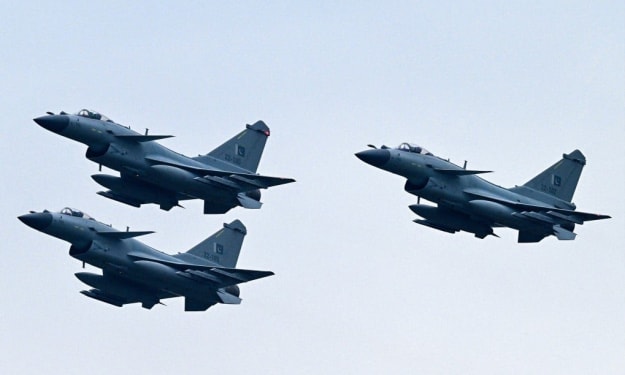
Pakistan Claims Chinese-Made J-10C Fighter Jets Used Against India’s Air Force In a significant escalation between two nuclear-armed rivals, Pakistan has claimed that its air force used Chinese-made J-10C fighter jets to shoot down five Indian aircraft during a recent military confrontation. The assertion comes amid rising tensions between India and Pakistan over the disputed Kashmir region, with both nations exchanging accusations and conducting air strikes.
By Adnan Rasheedabout a year ago in The Swamp
India Strikes Deep Inside Pakistan; Islamabad Claims to Down 5 Indian Jets in Major Escalation. AI-Generated.
India Strikes Deep Inside Pakistan; Islamabad Claims to Down 5 Indian Jets in Major Escalation In a dramatic escalation of hostilities between two nuclear-armed neighbors, India launched what it described as a “preemptive strike” deep inside Pakistani territory early Tuesday morning. The Indian Air Force (IAF) targeted what officials said were terrorist training camps in the Khyber Pakhtunkhwa province of Pakistan. In response, Pakistan claimed to have shot down five Indian fighter jets, raising concerns of a full-scale military conflict between the two rivals.
By Adnan Rasheedabout a year ago in The Swamp
Three Indian Fighter Jets Crash in Jammu and Kashmir Amid Heightened Tensions. AI-Generated.
Three Indian Fighter Jets Crash in Jammu and Kashmir Amid Heightened Tensions Jammu and Kashmir, May 7, 2025 — In a dramatic escalation of military tensions between India and Pakistan, three Indian Air Force (IAF) fighter jets crashed in the region of Jammu and Kashmir on Tuesday, according to local government sources. The crashes occurred amidst a volatile backdrop of cross-border hostilities following recent airstrikes and retaliatory fire between the two nuclear-armed nations.
By Adnan Rasheedabout a year ago in The Swamp
Chinese Fighter Jets Soar Over Egypt in First Joint Exercises
Chinese Fighter Jets Soar Over Egypt in First Joint Exercises In a significant move signaling deepening military cooperation Chinese fighter jets took to the skies over Egypt for the first time as part of joint aerial exercises between the two nations. The drills which commenced in early May 2025 mark a milestone in Sino Egyptian relations and reflect China’s growing strategic presence in the Middle East and North Africa (MENA) region. The exercise dubbed Sky Guardians-2025 involves China's J-10C multirole fighter jets and Egypt's Rafale and F-16 aircraft. Conducted at an undisclosed air base in Egypt’s western desert the joint maneuvers include air to air combat simulations, joint strike missions aerial refueling and electronic warfare scenarios. According to military analysts the operation is designed not only to boost interoperability between the two air forces but also to send a clear geopolitical message. This historic exercise reflects the warming ties between Beijing and Cairo. Egypt historically aligned with the West and reliant on American and European military hardware has diversified its international partnerships in recent years. As part of its Look East policy Cairo has sought closer ties with China Russia and other non Western powers. Chinese defense ministry spokesperson Senior Colonel Wu Qian stated The joint exercises with Egypt are a symbol of mutual trust and strategic cooperation. They aim to enhance combat readiness share tactical expertise and promote regional stability. Egyptian officials echoed similar sentiments emphasizing that the cooperation is in line with Egypt’s sovereign right to diversify its military alliances.
By Adnan Rasheedabout a year ago in The Swamp
A Timeline of Tensions Between India and Pakistan Over Kashmir
A Timeline of Tensions Between India and Pakistan Over Kashmir The Kashmir conflict is one of the most protracted and volatile territorial disputes in the world rooted in the partition of British India in 1947. India and Pakistan both nuclear armed neighbors have fought multiple wars and engaged in recurring skirmishes over this contested region. This article outlines a detailed timeline of the tensions between the two nations over Kashmir.
By Adnan Rasheedabout a year ago in The Swamp