
Spotlight, Perception, and Power: Inside a Controversial Gala Appearance
A single red carpet moment ignites debate about influence, image, and the realities of modern celebrity culture

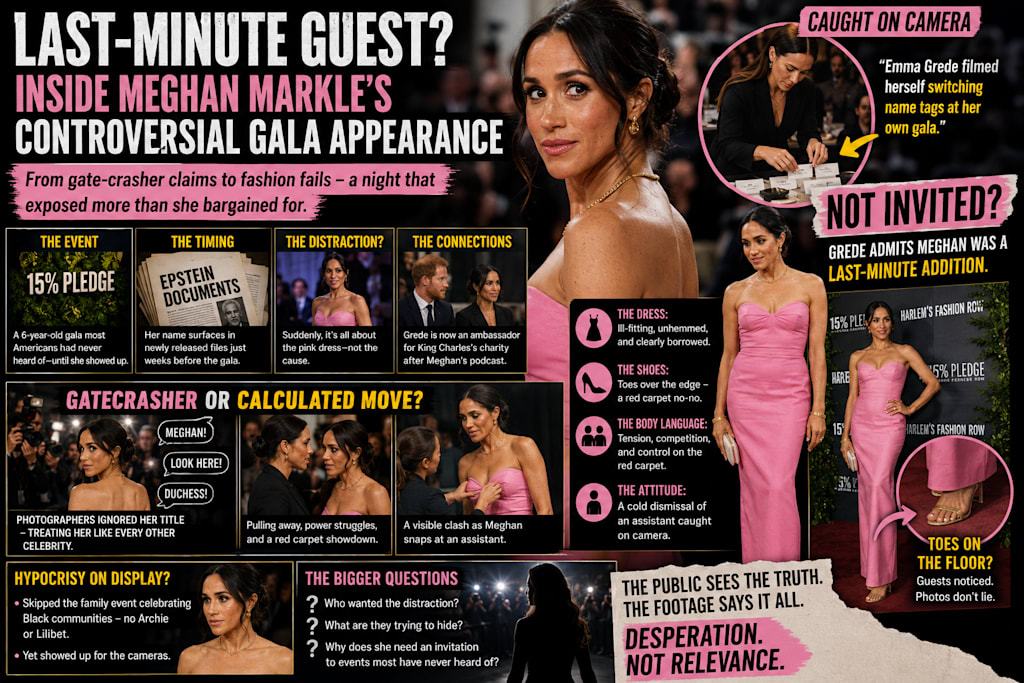
In today’s fast-moving digital world, public figures are constantly under the microscope. Every movement, gesture, and appearance is recorded, shared, and analyzed within seconds. What might once have been a simple red carpet event can quickly evolve into a global conversation. This reality was clearly demonstrated during a recent high-profile gala, where Meghan, Duchess of Sussex, became the center of intense public attention.
The gala itself was organized to highlight an important and meaningful cause—supporting Black-owned businesses and celebrating community success. It brought together influential figures, entrepreneurs, and public personalities, all united by a shared purpose. However, despite the event’s mission, the narrative soon shifted. Rather than focusing on the cause, social media and news coverage began centering almost entirely on Meghan’s presence and the surrounding moments captured on camera.
One particular clip spread rapidly online, showing what appeared to be last-minute adjustments in seating arrangements. While such changes are quite common at large, high-profile events, many viewers interpreted the moment differently. Some saw it as a reflection of status and hierarchy, while others believed it was being overanalyzed. Regardless of the reality, the clip fueled discussion and speculation across platforms, highlighting how easily small details can be magnified in the public eye.
Fashion also played a key role in shaping the conversation. Meghan’s choice of a bold pink gown immediately drew attention. For some, it was elegant and confident—a statement piece that stood out on the red carpet. For others, it sparked criticism regarding fit and styling. This contrast of opinions is not unusual in celebrity culture, where fashion choices are often treated as reflections of personality, confidence, and even social positioning.
Beyond appearance, body language became another focal point. Observers carefully examined interactions between attendees—looking at facial expressions, posture, and subtle movements. These interpretations, whether accurate or not, contributed to a growing narrative that extended far beyond the event itself. In the modern media landscape, even the smallest gesture can be given meaning and influence public perception.
At the center of this situation lies a broader and more important theme: the power of perception. Public figures like Meghan exist in a space where their image is continuously shaped not only by their actions but also by how those actions are interpreted by others. Supporters may view her presence as inspiring and influential, while critics may question her intentions or relevance. Both perspectives coexist, creating a complex and often divided public response.
The role of media—both traditional and social—is crucial in shaping these narratives. News outlets, influencers, and everyday users all contribute to the spread of information and opinion. Certain moments are highlighted, repeated, and discussed, while others are ignored. Over time, this selective attention can create a version of events that feels complete, even if it is only partial.
This situation also reflects the challenges of modern celebrity life. Visibility brings opportunity, but it also comes with constant judgment. Public figures must navigate a world where their presence alone can shift attention away from important causes. Even when attending events with positive intentions, they may find themselves at the center of controversy simply because of who they are.
In many ways, the gala serves as a case study in how quickly narratives can form and evolve. What began as a celebration of community success turned into a debate about influence, image, and authenticity. It shows how audiences today are not just passive viewers but active participants in shaping stories through comments, shares, and interpretations.
Ultimately, this moment reminds us that there is often a gap between reality and perception. What people see online is only a fragment of the full picture, yet it can strongly influence opinions. Understanding this gap is essential, especially in an age where information spreads instantly and widely.
The evening may have ended, but the conversation it sparked continues. It raises important questions about how we view public figures, how media shapes our understanding, and how quickly stories can change direction. In a world driven by attention and visibility, even a single moment on the red carpet can become something much larger—an ongoing narrative that reflects not just the individual at its center, but the society watching from the outside.
About the Creator
Behind the Curtain
"Exploring the untold stories and hidden truths. From royal rumors to cultural deep dives, Behind the Curtain brings you bold, insightful narratives that spark curiosity and conversation."
Enjoyed the story? Support the Creator.
Subscribe for free to receive all their stories in your feed.
Comments
There are no comments for this story
Be the first to respond and start the conversation.