
South African Airline Defends Dramatic Low-Level Flyby Before Rugby Union Clash
Airlink says its formation flypast over Cape Town’s DHL Stadium was carefully planned, rehearsed and conducted within approved safety limits, despite concerns from aviation experts about the aircraft’s extremely low altitude.
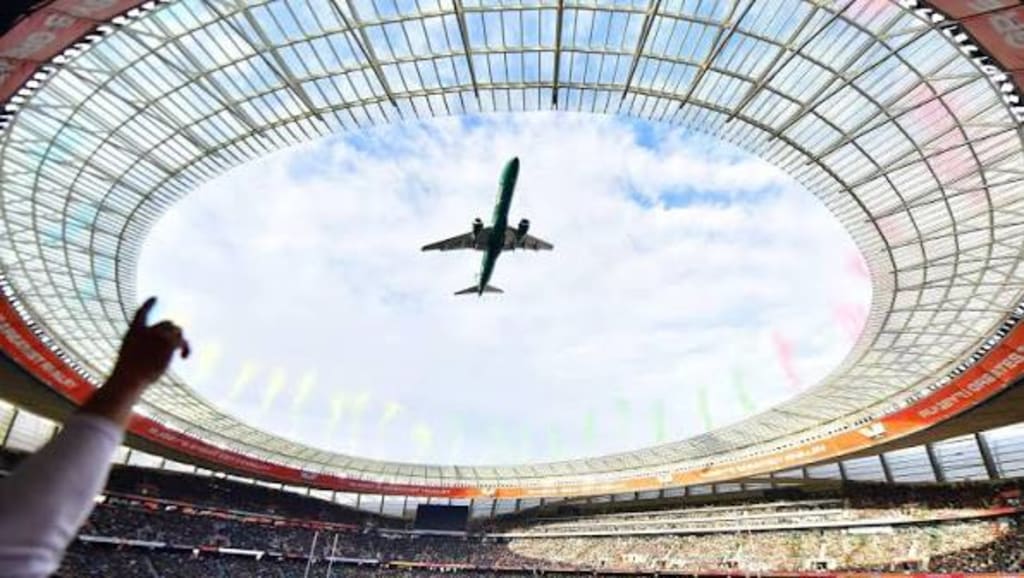
A dramatic pre-match flyby involving two South African passenger jets has sparked an international aviation safety debate after the aircraft appeared to skim just above a packed rugby stadium in Cape Town.
The flypast took place on August 29, 2026, shortly before the highly anticipated Rugby’s Greatest Rivalry Test between South Africa’s Springboks and New Zealand’s All Blacks at DHL Stadium. The spectacle thrilled thousands of spectators but quickly generated concern online because of the apparent proximity of the aircraft to the stadium roof.
South African regional airline Airlink, which operated the aircraft and is a sponsor of the rugby series, has strongly defended the manoeuvre. The airline said the flight was carefully planned and rehearsed with guidance and approval from the South African Civil Aviation Authority and Air Traffic Navigation Services.
Two Jets Flew Over a Packed Stadium
The display involved two Airlink Embraer regional jets flying in formation over DHL Stadium before the rugby match.
The aircraft were specially presented in colours associated with the sporting rivalry, creating an impressive visual spectacle as they passed above the stadium. One aircraft represented the Springboks’ green colours, while the other carried an All Blacks-inspired dark appearance.
With tens of thousands of spectators inside the stadium, the aircraft appeared remarkably close to the roof. Video footage quickly spread across social media, with some viewers describing the flypast as spectacular while others questioned whether the manoeuvre left enough room for an emergency.
The match itself added to the significance of the occasion. South Africa defeated New Zealand 33-26 in the second Test of the series, bringing the four-Test rivalry series level at 1-1.
How Low Were the Aircraft?
Flight-tracking analysis has provided one explanation for why the flyby looked so dramatic.
According to Flightradar24-based calculations reported by several outlets, the lead aircraft may have passed approximately 41 to 46 feet, or around 12 to 14 metres, above the top of the stadium. That is roughly comparable to the height of a four-storey building.
However, these figures are estimates based on aircraft tracking data rather than a direct measurement of the physical distance between the aircraft and stadium roof. Local atmospheric pressure and the stadium’s elevation also have to be taken into account when interpreting the data.
The figures nevertheless explain why the footage caused such a strong reaction.
From the perspective of spectators, the aircraft appeared to pass extremely close to the roof before climbing away.
Airlink Says the Operation Was Carefully Planned
Airlink has rejected suggestions that the flypast was an uncontrolled or improvised stunt.
The airline said the operation required extensive preparation because the aircraft were flying at low altitude at approximately 150 knots. Each aircraft was operated by three senior captains, with responsibilities divided among commander, co-pilot and safety or technical officer.
Airlink also said the operation was conducted under the guidance and support of the South African Civil Aviation Authority and Air Traffic Navigation Services.
According to the airline, recorded flight data from both aircraft showed that the flypast remained within the approved altitude and speed limits established during the planning and rehearsal process.
The airline summarized the performance in a social-media message using three words: “Planning. Precision. Performance.”
Why Aviation Experts Are Concerned
Despite Airlink’s assurances, some aviation professionals have questioned whether flying regional passenger jets so close to a large stadium was appropriate.
The main concern is not necessarily whether the pilots were skilled enough to perform the manoeuvre. Instead, aviation experts have focused on the limited options available if something unexpected happens at extremely low altitude.
Potential hazards can include sudden turbulence, bird strikes, mechanical problems or unexpected changes in flight conditions.
Chris Martinus, president of the Aircraft Owners and Pilots Association South Africa, told The Associated Press that the low altitude could leave pilots with very limited options if an adverse event occurred.
Australian aviation consultant Keith Tonkin also questioned whether the Embraer aircraft were appropriate for such a low-level operation and warned about the precedent that such displays could create.
The argument is that even when a flight is officially planned and approved, aviation safety also depends on maintaining sufficient margins for unexpected events.
A Long South African Rugby Tradition
The flypast was not entirely new. Aircraft displays have a long association with major South African rugby occasions.
One of the most famous examples occurred before the 1995 Rugby World Cup final in Johannesburg, when a South African Airways Boeing 747 flew over the stadium as South Africa prepared to face New Zealand.
That moment became part of the history surrounding the tournament, which culminated in South Africa winning the World Cup in front of Nelson Mandela.
The 2026 flypast was therefore intended partly as a continuation of that sporting tradition.
However, the smaller Embraer aircraft and their extremely low apparent altitude made the latest display particularly dramatic.
The Role of Pyrotechnics Added to the Drama
Another factor that attracted attention was the presence of pre-match pyrotechnics.
During the flypast, the second aircraft appeared to pass through or near a cloud of coloured material rising from the stadium as part of the opening entertainment.
The combination of a low-flying aircraft, a packed stadium and pyrotechnic effects made the footage appear even more dramatic.
For spectators, the moment became one of the most memorable parts of the pre-match build-up. For aviation observers, however, it raised questions about coordination and the safety margins surrounding aircraft operating near stadium entertainment effects.
No Passengers Were on Board
An important detail is that the aircraft involved were not carrying regular passengers during the flypast.
Instead, the planes were operated specifically for the formation display, with experienced senior captains assigned to each aircraft.
Airlink emphasized the experience of the crews as part of its explanation of how the operation was safely conducted. The airline also said the flight had been rehearsed before the actual event.
That preparation is significant because formation flying and low-altitude operations require considerably more planning than ordinary commercial flights.
Spectacle Versus Safety
The debate surrounding the Cape Town flypast highlights a broader question about modern sporting entertainment: how far should organizers go to create spectacular moments?
Major sporting events increasingly use aircraft, fireworks, drones, music and large-scale visual effects to entertain audiences. But aviation safety operates on a different principle, where even very unlikely risks must be considered carefully.
Supporters of the Airlink display argue that the operation was authorized, rehearsed and successfully completed without incident.
Critics counter that the absence of an accident does not necessarily prove that the safety margin was optimal.
Both perspectives are now part of the discussion surrounding the flypast.
Why the Incident Has Gone Viral
The spectacle became a global story largely because of video footage.
From inside DHL Stadium and from television broadcasts, the aircraft appeared to pass incredibly close to the structure. Social media users immediately began debating whether the images were genuine, with some initially questioning whether the footage had been digitally altered.
The visual impact was amplified by the speed of the jets and their proximity to the roof.
For South African rugby supporters, the display was an exciting reminder of the country’s sporting aviation tradition. For aviation enthusiasts, it became an opportunity to debate the boundaries of low-level flying.
What Happens Next?
Airlink has maintained that its aircraft complied with the approved safety parameters and that flight data supports its position. The South African aviation authorities have also been involved in the planning and approval process, making the official technical assessment important if questions about the manoeuvre continue.
Ultimately, the incident did not result in an accident or injuries. The controversy is instead focused on whether the chosen altitude and operating conditions represented an acceptable level of risk.
The Cape Town flypast succeeded spectacularly as a sporting spectacle. Thousands of fans cheered, millions saw the footage and the images became one of the defining moments of the rugby weekend.
But the same dramatic images have also raised an important aviation question: how close is too close when a passenger jet is flying over a stadium filled with spectators?
Airlink insists that its answer was within the rules, supported by careful preparation and experienced crews. Aviation experts who remain concerned argue that safety should be measured not only by whether a stunt succeeds, but also by how much room exists when something unexpected happens.
That debate is likely to continue long after the aircraft have disappeared from the Cape Town skyline.
About the Creator
Enjoyed the story? Support the Creator.
Subscribe for free to receive all their stories in your feed.
Comments
There are no comments for this story
Be the first to respond and start the conversation.