
Satellite killers: What a war in space might look like
How anti-satellite weapons, cyberattacks, and orbital warfare could transform future conflicts beyond Earth. The race to control space intensifies as nations develop technologies capable of disrupting vital satellites. A new battlefield above Earth: Why satellites have become the next major target in global security competition. From missile strikes to cyber warfare, experts warn that future wars could extend into orbit. The hidden battle for space supremacy and the threats facing the satellites that power modern life.
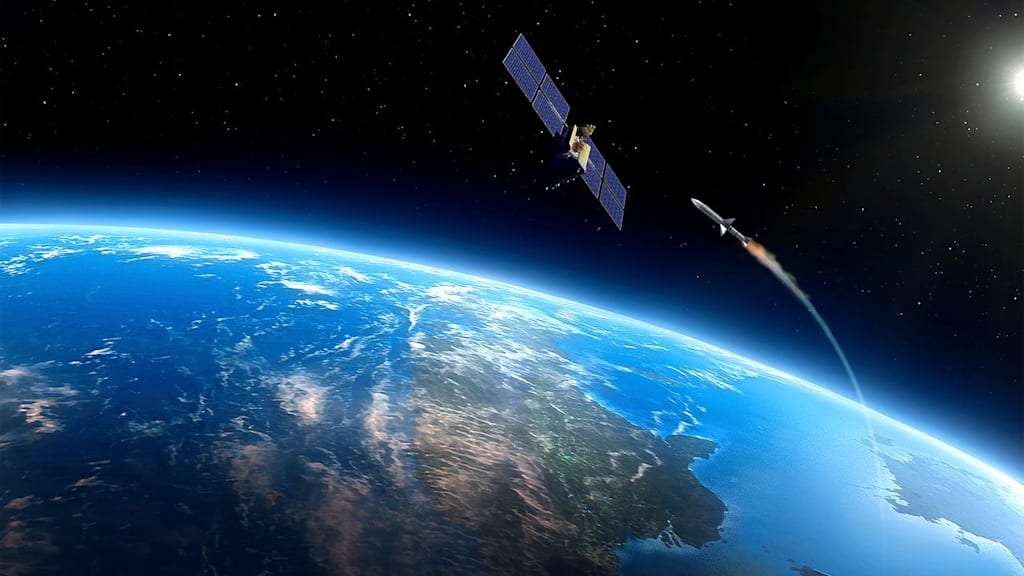
For decades, outer space has been viewed as a domain of scientific discovery, commercial innovation, and international cooperation. Yet as nations become increasingly dependent on satellites for communication, navigation, intelligence gathering, weather forecasting, and military operations, space is also emerging as a potential battlefield. Military strategists and security experts warn that any future conflict between major powers could extend far beyond Earth, placing satellites at the center of strategic competition.
Modern societies rely heavily on space-based infrastructure. Satellites enable global internet services, support financial transactions, guide aircraft and ships, monitor natural disasters, and provide the positioning signals used by smartphones. Militaries depend on them for reconnaissance, secure communications, missile warning systems, and precision targeting. Because so many critical activities depend on these orbiting assets, satellites have become attractive targets in times of conflict.
The term "satellite killer" generally refers to weapons or technologies designed to disable, damage, or destroy satellites. These systems are commonly known as anti-satellite weapons, or ASATs. Several countries have researched or tested such capabilities, arguing that space assets could become legitimate military targets during a war.
One of the most direct methods of attacking a satellite involves a kinetic weapon. In this scenario, a missile is launched from Earth or another platform and collides with a satellite at extremely high speed. Even a small object traveling at orbital velocity can cause catastrophic damage. Past anti-satellite tests have demonstrated that such attacks are technically possible. However, they also create large amounts of orbital debris, which can threaten other satellites and spacecraft for years.
Another possibility is electronic warfare. Rather than physically destroying a satellite, an adversary could attempt to jam or interfere with its signals. Communication satellites and navigation systems are particularly vulnerable to this type of attack. Jamming can disrupt communications, affect military coordination, and interfere with civilian services that depend on satellite connectivity. Because electronic attacks may leave little visible evidence, they can be difficult to attribute with certainty.
Cyberattacks present another growing concern. Modern satellites are controlled through sophisticated computer networks, making them potential targets for hackers. A successful cyber intrusion could disrupt satellite operations, alter data, block communications, or even seize control of certain systems. Security experts have repeatedly warned that cybersecurity weaknesses could become a major vulnerability in future conflicts involving space assets.
Military planners are also concerned about so-called co-orbital threats. These involve satellites or spacecraft that maneuver close to another satellite. While many proximity operations are conducted for peaceful purposes such as inspection, repair, or debris removal, similar technologies could theoretically be used to interfere with, disable, or damage another spacecraft. Distinguishing between civilian and military intentions in orbit can be challenging, raising concerns about miscalculation and escalation.
If a major war in space were to occur, the consequences would likely be felt on Earth almost immediately. Military forces could lose access to intelligence, navigation, and communication systems that are essential for modern operations. Civilian services could also be affected. Disruptions to satellite networks might interfere with telecommunications, transportation systems, emergency response operations, weather forecasting, and global commerce.
A particularly serious concern is the creation of space debris. When satellites are destroyed, they can break into thousands of fragments traveling at speeds exceeding 25,000 kilometers per hour. These fragments may collide with other satellites, creating even more debris. Some scientists have warned about a potential chain reaction known as the Kessler Syndrome, in which collisions generate increasing amounts of debris that make certain orbital regions dangerous or unusable.
Recognizing these risks, many governments and international organizations have called for greater cooperation to prevent conflict in space. Diplomatic efforts have focused on transparency, confidence-building measures, and discussions about responsible behavior in orbit. While there is broad agreement that preserving the long-term sustainability of space is important, countries often disagree about how best to regulate military activities beyond Earth.
The growing commercialization of space adds another layer of complexity. Thousands of privately operated satellites now provide communications, imaging, and internet services around the world. In a conflict, the distinction between civilian and military infrastructure could become blurred, raising difficult legal and strategic questions. Governments may rely on commercial space services, making privately owned satellites potential targets or strategic assets.
Despite increasing concerns, most analysts believe that a full-scale war in space remains unlikely. The economic and strategic costs would be enormous, and the destruction of satellites could harm all parties involved. Nevertheless, competition in space is expected to intensify as nations invest in new technologies, expand their space programs, and seek to protect critical orbital infrastructure.
The future of space security will likely depend on a combination of technological innovation, international diplomacy, and responsible behavior. As humanity's dependence on satellites continues to grow, protecting the systems that orbit above Earth may become just as important as safeguarding critical infrastructure on the ground. Any conflict in space would not remain confined to the heavens; its effects would be experienced by people, governments, and economies across the globe.
About the Creator
Enjoyed the story? Support the Creator.
Subscribe for free to receive all their stories in your feed.
Comments
There are no comments for this story
Be the first to respond and start the conversation.