
Pentagon is looking for drone bombers, but don't expect a B52 replacement, as they'd carry only an 18 lb payload
Defense officials see small unmanned aircraft as a complement to traditional bombers, not a replacement for strategic airpower. The Pentagon’s interest in low-cost drone bombers reflects a broader shift toward flexible and expendable battlefield technologies. Despite growing investment in unmanned systems, heavy bombers like the B-52 remain essential to U.S. military strategy. New drone concepts could provide affordable precision-strike capabilities, but their limited payloads restrict their strategic role. Military planners are exploring tactical drone bombers that can operate alongside crewed aircraft in future conflicts. Small drones carrying lightweight munitions may enhance battlefield flexibility while leaving strategic bombing missions to conventional aircraft. Emerging unmanned technologies are reshaping modern warfare, though they remain far from replacing long-range bombers. The initiative highlights the Pentagon’s effort to blend traditional airpower with next-generation autonomous systems
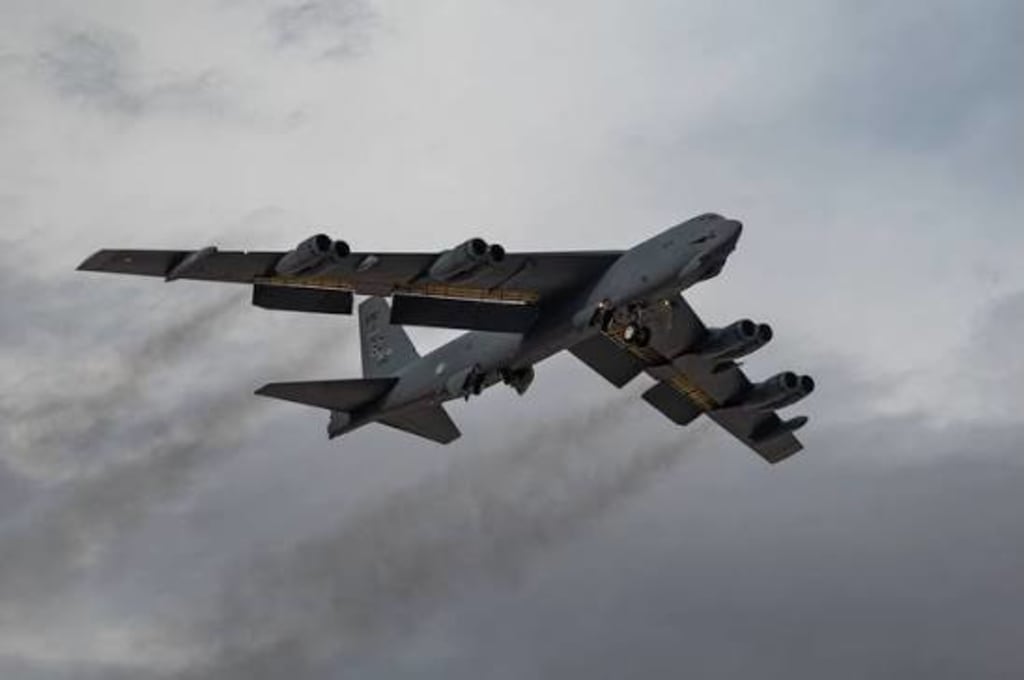
The U.S. Department of Defense is exploring new ways to integrate small unmanned aircraft into future military operations, including the development of low-cost drone bombers capable of carrying lightweight munitions. While the initiative reflects the Pentagon’s growing interest in unmanned warfare, defense experts caution that these systems are not designed to replace traditional strategic bombers such as the B-52 Stratofortress. Instead, they are intended to complement existing capabilities by providing flexible, affordable, and expendable strike options on the modern battlefield.
Recent Pentagon programs and industry proposals have focused on small drones capable of delivering precision-guided payloads weighing approximately 18 pounds or less. Such aircraft are significantly different from heavy bombers that can carry tens of thousands of pounds of weapons over intercontinental distances. The contrast highlights the evolving nature of military aviation, where smaller and more numerous platforms are increasingly viewed as valuable tools alongside conventional aircraft.
The interest in drone bombers has been shaped by lessons learned from recent conflicts around the world. Military planners have observed how relatively inexpensive unmanned systems can conduct reconnaissance missions, gather intelligence, and carry out precision attacks against targets that would otherwise require more costly assets. The widespread use of drones has demonstrated their ability to operate in contested environments while reducing risks to human pilots.
Defense officials have emphasized that the goal is not to replace strategic bombers but to expand operational options. Traditional bomber aircraft such as the B-52 remain critical components of U.S. military power due to their long range, large payload capacity, and ability to support a variety of missions. These aircraft can carry a broad range of conventional and strategic weapons and have proven adaptable over decades of service.
By comparison, the small drone bombers under consideration would be optimized for tactical missions. Their limited payload capacity means they could carry only lightweight munitions, sensors, or electronic warfare equipment. However, their lower cost could allow military commanders to deploy them in larger numbers, creating opportunities for swarm tactics and distributed operations.
Military analysts note that affordability is one of the key advantages of small drone systems. Building and operating a drone that carries an 18-pound payload is significantly less expensive than deploying a large manned aircraft. As a result, commanders may be willing to accept higher attrition rates for unmanned platforms in situations where sending crewed aircraft would involve greater risks.
Another advantage is flexibility. Small drone bombers can often be launched from improvised locations, reducing dependence on major airbases. This capability could prove valuable in future conflicts where adversaries may target fixed infrastructure. The ability to disperse assets across multiple locations can increase survivability and complicate enemy planning.
Advances in artificial intelligence, autonomous navigation, and miniaturized sensors are also contributing to the Pentagon’s interest in unmanned systems. Modern drones can operate with increasing levels of independence while maintaining communication with human operators. These technological improvements enable drones to perform missions that were once possible only with larger and more sophisticated aircraft.
Despite these advantages, experts caution against overstating the capabilities of small drone bombers. An 18-pound payload imposes significant limitations on the types of weapons and equipment the aircraft can carry. While suitable for precision strikes against certain tactical targets, such drones cannot match the destructive power of larger aircraft carrying thousands of pounds of ordnance.
Strategic bombing missions require range, endurance, survivability, and payload capacity that small drones currently cannot provide. The B-52, for example, remains capable of delivering a diverse arsenal over long distances and can support operations across multiple theaters. Even emerging unmanned technologies are unlikely to replicate those capabilities in the near future.
Instead, defense planners increasingly view drone bombers as force multipliers. They can work alongside traditional aircraft, providing additional reconnaissance, targeting information, and limited strike capabilities. In some scenarios, drones could be deployed ahead of manned aircraft to identify threats, gather intelligence, or distract enemy defenses.
Industry interest in the concept has grown as defense contractors seek to develop next-generation unmanned systems tailored to military requirements. Companies are experimenting with designs that prioritize low production costs, rapid deployment, and modular payload configurations. These efforts align with broader Pentagon goals aimed at increasing innovation and adapting to rapidly changing security challenges.
The Pentagon’s focus on drone bombers also reflects concerns about maintaining military readiness in an era of rising competition among major powers. Future conflicts may require large numbers of affordable systems capable of operating across vast geographic areas. Small drones offer one potential solution by providing scalable capabilities that can be deployed quickly and in significant quantities.
At the same time, military leaders continue to invest heavily in traditional aviation platforms. Programs involving strategic bombers, advanced fighters, and next-generation aircraft remain central to long-term defense planning. Rather than replacing these assets, drone bombers are expected to become part of a broader ecosystem that combines crewed and uncrewed technologies.
As the Pentagon evaluates potential drone bomber concepts, the discussion underscores a larger transformation taking place in military affairs. Unmanned systems are becoming increasingly important, but their role is largely complementary rather than revolutionary. Small drones carrying 18-pound payloads may offer valuable new options for tactical operations, yet they remain far removed from the capabilities of aircraft such as the B-52.
The future battlefield will likely feature a combination of traditional bombers, advanced fighter aircraft, autonomous drones, and networked systems working together. In that environment, small drone bombers could serve as useful tools for specific missions, enhancing operational flexibility without replacing the heavy bombers that continue to form the backbone of strategic airpower. The Pentagon’s interest in these systems reflects an effort to balance innovation with proven capabilities as military technology continues to evolve.
About the Creator
Enjoyed the story? Support the Creator.
Subscribe for free to receive all their stories in your feed.
Comments
There are no comments for this story
Be the first to respond and start the conversation.