
New F-16 Defense System Hits 500 Flight Hours After 300 Sorties of Testing
Northrop Grumman’s IVEWS electronic warfare upgrade reaches a major testing milestone, strengthening the F-16’s ability to detect, identify and counter advanced threats in contested airspace.
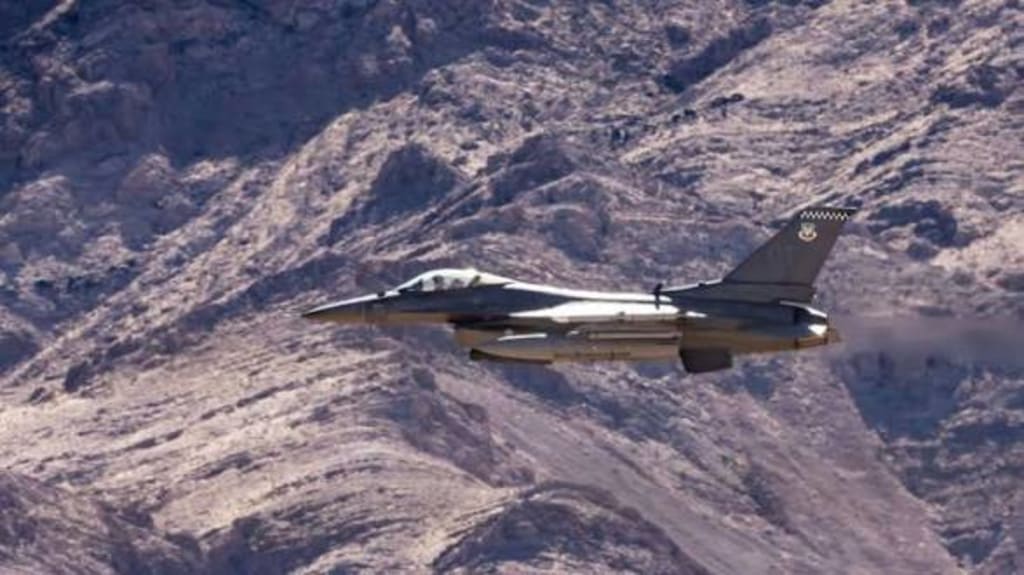
The F-16 Fighting Falcon is receiving a major electronic warfare upgrade designed to improve its ability to survive in increasingly contested airspace. Northrop Grumman has announced that its Integrated Viper Electronic Warfare Suite (IVEWS) has completed more than 500 flight hours across 300 sorties, marking an important milestone in the development and testing of the new defensive system.
IVEWS Designed to Protect F-16 Pilots
The Integrated Viper Electronic Warfare Suite, also known as IVEWS, is designed to detect, identify, locate and counter hostile radio-frequency threats. These threats can come from airborne aircraft, ground-based systems and surface platforms.
Modern military operations increasingly depend on the electromagnetic spectrum. Radar systems can search for aircraft, track targets and support missile engagements, making electronic warfare an essential part of aircraft survivability. IVEWS is intended to give F-16 pilots improved awareness of these threats while helping the aircraft respond to them more effectively.
Northrop Grumman says the system has been tested against multiple simultaneous radio-frequency threats, providing an important demonstration of its ability to operate in complicated electromagnetic environments.
500 Hours and 300 Sorties
The latest testing milestone represents more than simply a large number of flight hours. More than 300 sorties have allowed engineers and test crews to evaluate IVEWS across a broad range of scenarios.
According to Northrop Grumman, testing has included advanced airborne, land and surface threats, including combinations of threats operating simultaneously. This type of testing is particularly important because modern electronic warfare environments can be unpredictable and crowded with different signals.
The results indicate that IVEWS has moved beyond laboratory development into extensive flight validation. The company describes the system as flight-proven and says it is now producing fully functional systems.
Advanced Radar Integration
One of the most important features of IVEWS is its integration with the F-16's AN/APG-83 SABR AESA radar. Northrop Grumman says the electronic warfare suite can operate with the radar on a pulse-to-pulse basis.
This integration is significant because electronic warfare equipment and radar systems can potentially interfere with one another. IVEWS is designed to digitally distinguish the aircraft's own radar signals from hostile emissions. According to the company, this allows the radar to maintain its performance without the filtering or blackouts associated with older approaches.
For an F-16 pilot, maintaining both radar performance and electronic protection can be critical during missions in heavily defended airspace.
A Modern Approach to Electronic Warfare
Older electronic warfare systems were developed for a threat environment that was generally easier to predict. Today's threats can be mobile, software-driven and capable of changing their emissions rapidly.
IVEWS uses an ultra-wideband digital architecture intended to process a large amount of electromagnetic information. It can detect and identify potentially dangerous signals while helping determine where threats are located.
Another reported capability is single-aircraft geolocation. This means the system can determine the location of certain threats without necessarily requiring multiple aircraft to triangulate the signal. Such automation could reduce the workload placed on pilots during demanding missions.
Open Architecture Could Extend the System's Life
A major feature of IVEWS is its open-architecture design. Military threats evolve continuously, so electronic warfare systems need to be capable of receiving new software and capabilities without requiring complete hardware replacement.
Northrop Grumman says IVEWS is designed to support continuous evolution and align with the U.S. Air Force's Big Iron open-architecture approach. The objective is to make future upgrades faster while reducing aircraft downtime.
This could become particularly valuable as the F-16 remains in service alongside newer fifth- and sixth-generation aircraft.
Why the Upgrade Matters for the F-16
The F-16 is one of the world's most widely used fighter aircraft and continues to receive upgrades decades after entering service. While newer fighters benefit from advanced stealth and networking technologies, modernized F-16s can remain valuable when equipped with improved sensors, radar and electronic warfare capabilities.
IVEWS is intended to strengthen the F-16's survivability without relying on a traditional external electronic warfare pod. Earlier systems often occupied external stations that could otherwise be used for fuel or weapons.
The newer internal approach therefore has potential operational advantages, including preserving valuable external carriage space while providing electronic protection.
Future Deployment
The U.S. Air Force has selected IVEWS as its electronic warfare program of record for the F-16 fleet. The system is initially focused on modern F-16 variants, while its architecture could potentially support additional aircraft configurations.
International interest is also emerging. Reporting has indicated that Türkiye has considered integrating IVEWS with future F-16 Block 70 aircraft, while other potential customers have also expressed interest.
The achievement of more than 500 flight hours and 300 sorties therefore represents an important step toward wider deployment.
Conclusion
The completion of more than 500 flight hours and 300 sorties demonstrates the progress made by Northrop Grumman's IVEWS electronic warfare system for the F-16. Rather than simply adding another piece of equipment, the upgrade is designed to combine threat detection, electronic protection, geolocation and radar interoperability in an integrated system.
As modern air defenses become more mobile, sophisticated and difficult to predict, electronic warfare will remain an increasingly important part of fighter operations. For the F-16, IVEWS could provide a significant survivability upgrade and help keep the aircraft relevant in demanding combat environments for years to come.sub
About the Creator
Enjoyed the story? Support the Creator.
Subscribe for free to receive all their stories in your feed.
Comments
There are no comments for this story
Be the first to respond and start the conversation.