
New Ceasefire Deal Tentatively Reached Between U.S. and Iran
Terms and conditions of newly-reached U.S. and Iranian peace agreement will reportedly made public.

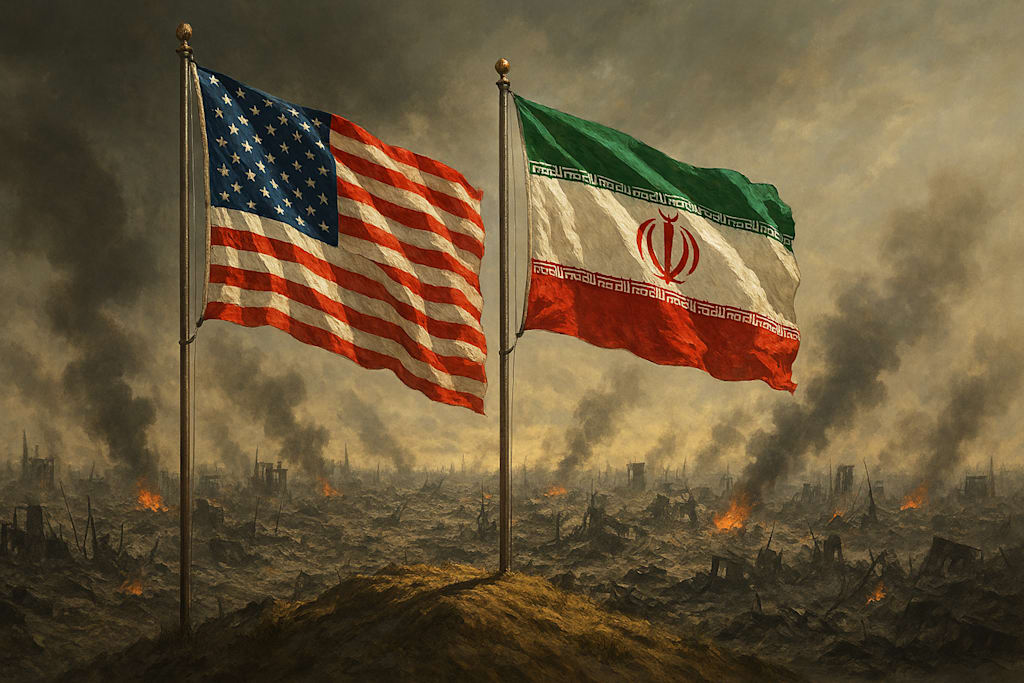
A tentative ceasefire agreement between the United States and Iran has emerged as one of the most significant diplomatic developments in recent months, signaling a potential pause in a destructive conflict that has reshaped the Middle East and disrupted global energy markets.
Leaders from both nations confirmed that a memorandum of understanding (MoU) has been signed. However, officials have stated that the full terms—expected to include controversial concessions—will be released in the near future (Reuters, 2026; AOL, 2026). The preliminary accord was announced in mid-June 2026. It extends a fragile ceasefire that was initially established in April following weeks of intense fighting. U.S. President Donald Trump characterized the agreement as a major step toward peace, while acknowledging that the deal is interim framework rather than a permanent settlement (Reuters, 2026).
A Framework to Halt Escalation
The agreement reportedly commits both parties to a 60-day extension of the ceasefire while negotiations continue toward a long-term peace arrangement. One of the immediate outcomes is the reopening of the Strait of Hormuz, a crucial maritime passage responsible for transporting approximately one-fifth of the world’s oil supply (CryptoBriefing, 2026).
Hostilities began in late February 2026 following U.S. and Israeli strikes on Iranian targets, prompting retaliatory actions from Iran. This conflict essentially blocked the waterway, which has disrupted global trade and increased oil prices (Congressional Research Service [CRS], 2026). Under the tentative agreement, Iran is expected to remove naval mines and restore safe shipping routes, while the United States would lift its naval blockade of Iranian ports (AOL, 2026; News24, 2026).
These developments have already influenced global markets, with oil prices falling sharply following the announcement of the deal. This reflects renewed confidence in supply stability (Reuters, 2026).
Key Concessions on Both Sides
Although the complete text of the agreement has not been officially released, preliminary reports indicate substantial concessions from both nations. Iran has reportedly agreed to temporarily halt its pursuit of nuclear weapons and limit uranium enrichment under international monitoring (Just the News, 2026).
In return, the United States is expected to offer economic concessions, including suspending certain sanctions. This will allow Iran to resume oil exports, and potentially release billions of dollars in frozen Iranian assets (Just the News, 2026; CryptoBriefing, 2026).
Additionally, proposals include establishing a reconstruction fund that could reach up to $300 billion to support Iran’s post-war recovery (Reuters, 2026; CryptoBriefing, 2026). Some drafts also suggest that the United States may refrain from imposing new sanctions during negotiations and potentially withdraw certain forces from areas near Iran. Nonetheless, these provisions remain under discussion (Middle East Eye, 2026; CryptoBriefing, 2026).
Unresolved Issues and Skepticism
Despite the apparent progress, several critical issues remain unresolved. The future of Iran’s nuclear program beyond the temporary agreement is a central concern. Negotiators are expected to address this and other issues—including Iran’s regional influence and support for allied groups—during the 60-day negotiation period (Reuters, 2026).
The agreement has also generated skepticism among regional actors, particularly Israel, which has not formally endorsed the deal and may not consider itself bound by its terms (AOL, 2026). Analysts caution that the ceasefire may be fragile, given the history of failed agreements between the two nations and persistent mutual distrust (The New Arab, 2026).
Military Perspective: The Colonel's Warning
Retired U.S. Army Colonel Douglas Macgregor contributed to the discussion by offering a critical assessment of the conflict during a June 16, 2026, appearance on the Deep Dive podcast hosted by Daniel Davis. Macgregor argued that the United States is seeking a diplomatic exit from a conflict it could not decisively win militarily.
He described the war as a strategic miscalculation and suggested that Iran’s use of asymmetric warfare—including missile systems and drone capabilities—had neutralized traditional U.S. military advantages (Before It’s News, 2026). Macgregor further asserted that the ceasefire reflects political necessity as much as diplomatic progress. He warned that continued escalation could have resulted in broader regional conflict and international isolation for the United States (Before It’s News, 2026).
"We need to fully understand [Trump's] core problems [surrounding his initial decision on Iran]. I don't even think President Trump himself completely understands [what his core problems are]," Colonel Macgregor said.
"It's literally self-destructive to go back into [this war], Davis added during his podcast discussion with Macgregor.
Global and Economic Implications
The ceasefire has already produced global ripple effects. Financial markets responded positively to the reduced risk of prolonged conflict, and the prospect of renewed Iranian oil exports has helped ease concerns about global supply shortages (Reuters, 2026).
However, policymakers remain cautious. The conflict has resulted in significant casualties and has involved multiple regional actors, including Hezbollah and other Iran-aligned groups, highlighting the complexity of achieving lasting peace (Reuters, 2026; CRS, 2026).
Conclusion
The coming days will be critical as officials finalize and publicly release the details of the agreement. A formal signing ceremony is expected soon, potentially in Switzerland, where negotiators aim to build momentum toward a comprehensive settlement (Reuters, 2026; The Independent, 2026).
The 60-day negotiation window will likely determine whether the ceasefire evolves into a lasting peace or collapses under unresolved tensions. For now, the agreement represents a pause in hostilities and a rare moment of diplomatic convergence between two long-standing adversaries.
References
AOL. (2026). U.S.–Iran ceasefire developments. https://www.aol.com
Before It’s News. (2026). Macgregor warns about U.S.–Iran conflict. https://www.beforeitsnews.com
Congressional Research Service. (2026). Conflict in the Middle East and energy security (R48887). https://www.congress.gov/crs_external_products/R/PDF/R48887/R48887.1.pdf
CryptoBriefing. (2026). Iran–U.S. deal and oil market implications. https://www.cryptobriefing.com
Just the News. (2026). Details of U.S.–Iran concessions. https://www.justthenews.com
Middle East Eye. (2026). Full text of U.S.–Iran deal. https://www.middleeasteye.net/news/full-text-us-iran-deal-promises-sanctions-relief-and-phased-access-frozen-funds
Mideast Journal. (2026). U.S.–Iran ceasefire deal analysis. https://www.mideastjournal.org/post/us-iran-ceasefire-deal-2026
News24. (2026). Shipping and blockade updates. https://www.news24online.com
Reuters. (2026, June 15). Iran and U.S. agree to halt conflict and reopen Hormuz. https://www.reuters.com/world/asia-pacific/iran-us-agree-halt-war-reopen-hormuz-sending-oil-prices-tumbling-2026-06-15/
The Independent. (2026). Upcoming signing ceremony coverage. https://www.independent.co.uk
YouTube. (2026). Deep Dive podcast featuring Douglas Macgregor. https://www.youtube.com/watch?v=y8zhwctLKfI
About the Creator
Victor Trammell
Mr. Trammell is an award-winning digital media producer, freelance journalist, and author. Formerly, he wrote national radio content for the Michael Baisden Show. He also served as Senior Editor for Your Black World's online news network.
Enjoyed the story? Support the Creator.
Subscribe for free to receive all their stories in your feed. You could also become a paid subscriber, letting them know you appreciate their work.
Comments
There are no comments for this story
Be the first to respond and start the conversation.