
Netanyahu’s Election Nightmare: No Majority, No Easy Path Forward
Exit polls show the Israeli Prime Minister’s right-wing bloc short of 61 seats. With corruption trials looming and coalition talks stalled, his grip on power is weaker than ever.
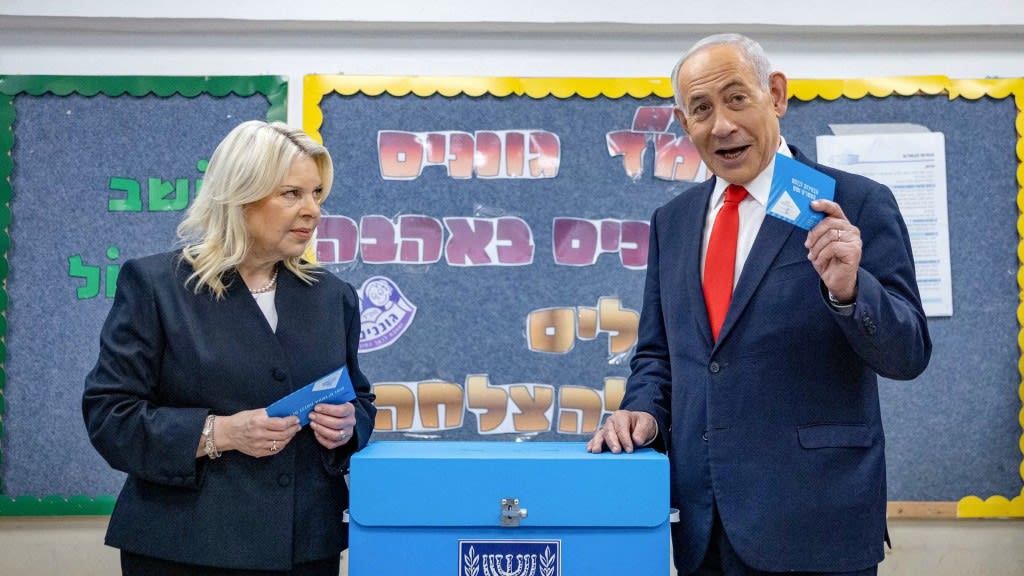
Exit polls show Prime Minister Benjamin Netanyahu’s right-wing bloc falling short of a parliamentary majority. Likud remains the largest party, but its lead has shrunk. The opposition bloc also lacks the 61 seats needed to govern. Neither side won a clear mandate. Coalition negotiations and court dates now dominate the agenda.
Seats and blocs: 50 to 53, both below 61
Channel 13’s exit poll projects Likud at 25 seats, the Integrity Party led by Eisenkot at 23, and Bennett’s Unity Party at 14. By bloc, the anti-Netanyahu camp is expected to win around 53 seats; Netanyahu’s right-wing religious bloc around 50. Forming a government requires 61 seats, so both sides are at least 8 seats short.
That’s a 14-seat drop from the 64 seats the right-wing bloc won in 2022. Likud is still the biggest party, but it can no longer dictate the direction of coalition talks.
Arab parties are projected to win 17 seats total, including about 10 for the Joint List, a record high. Mansour Abbas, leader of the United Arab List (Ra’am), said his primary goal is to replace the Netanyahu government by any means possible. Any Zionist camp trying to form a government cannot ignore the Arab parties.
Three coalition paths, each with serious obstacles
The first path is an opposition minority government. Eisenkot’s camp could theoretically form one with external support from Arab parties. But Eisenkot and his right-wing ally Bennett ruled out cooperating with Arab parties during the campaign, calling it a political liability. The Arab alliance has offered a “safety net” for a government that “drives out Netanyahu,” but direct participation remains politically fraught.
The second path is Netanyahu staying on as caretaker prime minister. If coalition talks stall, he can remain in office, maintain power during negotiations, and even drag things out until the next election.
The third path is a Likud-Integrity “national unity government.” This is theoretically possible and has some public support. But Eisenkot’s core campaign promise was to end Netanyahu’s rule. Joining forces with him right after the election would be political suicide, so the odds are very low.
Netanyahu’s legal and political risks
Netanyahu faces three corruption charges: Cases 1000, 2000, and 4000. He has repeatedly sought delays by citing his authority as prime minister and states of emergency. Once he loses the procedural buffer of the prime minister’s office, the trial is expected to speed up. If convicted of bribery, he faces up to 10 years in prison; fraud and breach of trust carry a combined maximum of 3 years. He denies all charges.
The other front is accountability for the October 7 attacks. This election was seen as voters’ reckoning with that event. One of the opposition’s core demands is a state inquiry and accountability. If the opposition forms a government, Netanyahu, as the then-prime minister, will be the central target of the investigation, and his governing record will be redefined.
He still has room to maneuver. A deadlock benefits him in the short term: caretaker status lets him stay in power, strike deals with various parties, or wait for the opposition alliance to fall apart. In his post-election remarks, he hinted at possibly joining forces again with U.S. President Trump to take action against Iran, shifting the agenda from personal accountability back to security issues to shore up his right-wing base.
Exit polls are not final. The Central Elections Committee will officially announce results on November 4, after which parties will begin coalition negotiations. Whether Netanyahu can continue to govern depends on whether he can secure 61 seats of support. If he cannot, the corruption hearings and the October 7 investigation will continue to advance.
About the Creator
Jin
Writer of reamstories
https://reamstories.com/jin
Enjoyed the story? Support the Creator.
Subscribe for free to receive all their stories in your feed. You could also become a paid subscriber, letting them know you appreciate their work.
Comments
There are no comments for this story
Be the first to respond and start the conversation.