
London is now permanently covered by Russian naval guns
A new warning about Russia’s naval presence highlights how Britain’s security environment has changed, with future Russian warships potentially capable of striking targets across the United Kingdom from the Channel.
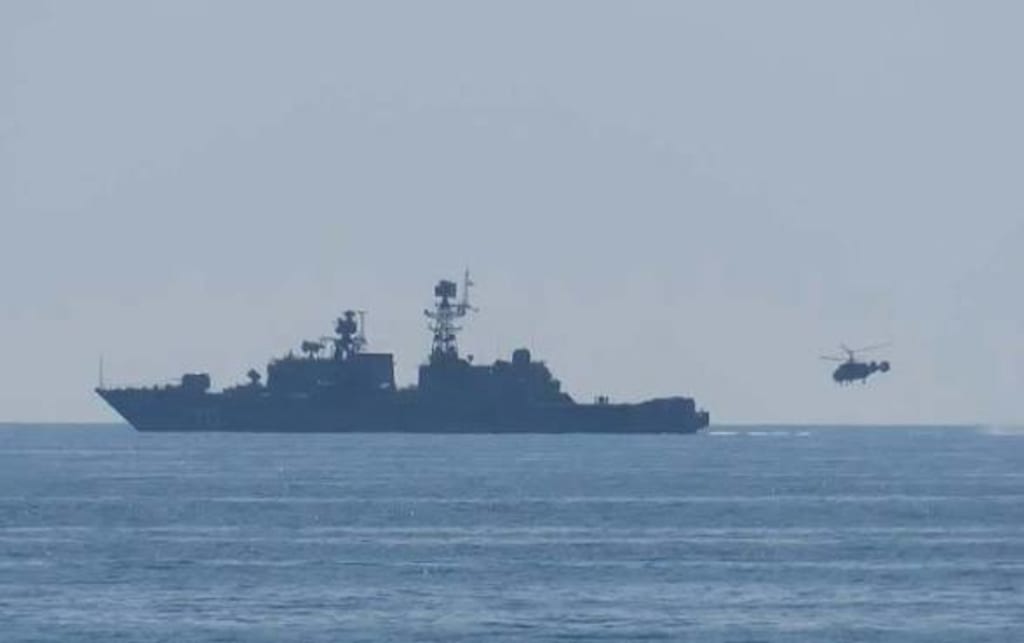
London has entered a new and uncomfortable era of military vulnerability, according to a stark warning about Russia’s expanding naval capabilities and its ability to operate closer to Britain. The dramatic claim that the British capital is now “permanently covered by Russian naval guns” does not mean Russian warships are currently firing at London. Instead, it describes a strategic reality in which Russian naval forces and future warships could potentially bring parts of Britain within striking range.
The warning comes amid growing concern across Europe about Russia’s military posture, its confrontation with NATO and the changing nature of maritime warfare. Recent reporting has highlighted the presence of Russian naval vessels in waters around Britain and the potential capabilities of newer Russian ships.
Why the English Channel Matters
The English Channel is one of the world's most strategically important waterways. It connects the North Sea with the Atlantic and lies directly between Britain and continental Europe.
For centuries, control of the Channel has been central to Britain's national defence. Today, however, modern weapons have changed the meaning of geographic distance.
A warship no longer needs to approach a coastline to use its most powerful weapons. Long-range missiles, advanced surveillance systems and modern naval sensors allow military forces to threaten targets hundreds of kilometres away.
This is why the appearance or potential deployment of Russian warships near the Channel attracts such attention. A vessel operating in European waters could potentially create a much larger strategic problem than its physical size might suggest.
The Russian Naval Threat Is Changing
The Russian Navy has traditionally relied heavily on submarines and long-range missiles as part of its ability to threaten NATO. Surface warships also remain important, particularly when equipped with modern precision weapons.
Recent reporting about the Russian frigate Neustrashimy has drawn attention because the vessel itself does not carry the same missile capability as some newer Russian warships. However, its presence in the region illustrates the wider challenge facing Britain.
According to the reported analysis, future successors could possess weapons capable of striking targets throughout Britain from positions in or around the Channel.
That distinction is important. The immediate threat posed by one particular ship should not be confused with the broader capabilities Russia could deploy through newer generations of naval vessels.
From Naval Guns to Long-Range Missiles
The phrase “Russian naval guns” can create an outdated image of battleships firing shells toward London. Modern naval warfare is fundamentally different.
Today's major naval threats are increasingly associated with cruise missiles, ballistic missiles, drones, electronic warfare and submarines.
A modern warship can potentially remain far from the target while launching precision weapons. That makes detection, tracking and deterrence more complicated for defenders.
Russia has invested heavily in long-range strike systems, while the war in Ukraine has demonstrated how relatively inexpensive drones and sophisticated missiles can challenge traditional assumptions about military security.
For Britain, this means that maritime defence is no longer simply about protecting shipping lanes or preventing an enemy fleet from reaching the coast. It is also about identifying launch platforms and defeating weapons before they reach their targets.
Britain Faces a Wider Security Challenge
The Russian threat is only one part of a much broader defence problem confronting the United Kingdom.
Britain must protect its territory, airspace, maritime approaches, undersea infrastructure and critical communications networks. Modern military competition increasingly extends below the sea, into cyberspace and into the electromagnetic environment.
Submarine cables are particularly important because they carry enormous quantities of international communications and financial data. Offshore energy infrastructure is another area of concern.
A hostile power does not necessarily need to launch a conventional attack to create serious disruption. Surveillance, cyber operations, sabotage and electronic interference can all create strategic consequences.
Why London Is Symbolically Important
London is not only Britain's capital; it is also the country's political, financial and diplomatic centre.
Any military system capable of reaching London therefore has significance far beyond the physical damage it could cause. The ability to threaten the capital can be used as a tool of political pressure and deterrence.
This is one reason military planners consider range and survivability so important.
A weapon does not have to be fired to have an impact. If an adversary knows that a target can be reached, the mere existence of that capability can influence government decision-making.
NATO Provides an Important Deterrent
Britain is not facing Russia alone.
As a NATO member, the United Kingdom operates within a collective defence alliance that includes major military powers across North America and Europe. British forces also work closely with allied navies, aircraft and intelligence services.
The Royal Navy continues to conduct operations with NATO partners, while Britain's nuclear deterrent represents another major component of its national security strategy.
The alliance's purpose is partly to ensure that an attack against one member would not be treated as an isolated event. This collective structure makes any direct attack on Britain considerably more consequential for an aggressor.
The Lessons of Ukraine
The war in Ukraine has transformed military thinking across Europe.
Before the conflict, many defence planners focused heavily on traditional platforms such as tanks, fighter aircraft and large warships. The war has demonstrated the enormous importance of drones, precision missiles, satellite intelligence, electronic warfare and rapidly changing battlefield technology.
Naval warfare has also been affected.
Ukraine, despite having limited conventional naval power, has demonstrated that unmanned systems and long-range weapons can impose serious risks on much larger naval forces.
For Britain, these developments reinforce the importance of layered defence. Protecting the country requires more than powerful warships. It requires integrated radar, air defence, intelligence, electronic warfare, drones and missile-defence capabilities.
What “Permanent Coverage” Really Means
The phrase “permanently covered” should therefore be understood as a description of strategic reach rather than a claim that Russian ships are continuously aiming guns at London.
The real concern is the changing distance between Russia's military platforms and Britain's critical targets.
As missile technology improves, geographic barriers become less protective. A warship does not need to enter the Thames or approach the British coastline to create a credible threat.
That reality is forcing Britain and its NATO allies to reconsider how maritime security should work in an era of long-range precision weapons.
Conclusion
The warning that London is now effectively within the reach of Russian naval weapons reflects a wider transformation in European security.
Russia's naval presence, modern missile technology and future warship designs mean Britain must consider threats that can emerge from much farther away than traditional military planning assumed.
The United Kingdom remains protected by the Royal Navy, the wider British armed forces and NATO's collective defence system. Nevertheless, modern warfare has made distance less reliable as a defence.
The most important lesson is not that London is about to come under naval attack. It is that the strategic environment around Britain has become more dangerous—and that maintaining credible deterrence increasingly depends on technology, intelligence, allied cooperation and the ability to detect and defeat threats before they reach the British mainland.
About the Creator
Enjoyed the story? Support the Creator.
Subscribe for free to receive all their stories in your feed.
Comments
There are no comments for this story
Be the first to respond and start the conversation.