
Kash Patel’s Pearl Harbor Snorkeling Controversy Sparks Debate Over Respect, Privilege, and Public Office
The FBI director’s restricted Pearl Harbor snorkeling excursion ignites national debate over historical respect, government privilege, and political optics.

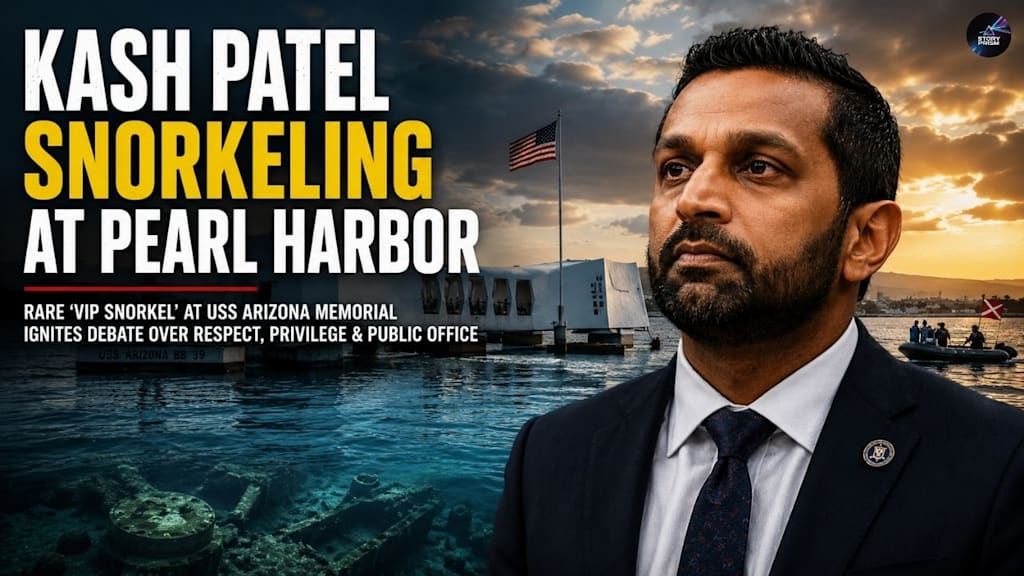
When reports surfaced that FBI Director Kash Patel participated in a private snorkeling excursion near the USS Arizona Memorial at Pearl Harbor, the reaction was immediate and deeply divided. For some Americans, the incident represented a troubling example of government privilege crossing ethical boundaries. For others, it was simply an official historical tour that had been exaggerated into political controversy.
The story first gained national attention after government emails obtained through reporting by the Associated Press revealed details of what officials described internally as a “VIP snorkel” excursion during Patel’s official Hawaii trip in 2025. The reports indicated the outing took place around the USS Arizona Memorial, one of America’s most sacred military sites and the resting place of more than 900 sailors and Marines killed during the Japanese attack on Pearl Harbor in 1941.
The incident quickly became more than a simple travel story. It evolved into a national conversation about symbolism, public conduct, and how senior government officials should behave at historically sensitive locations.
According to reports, Patel’s Hawaii visit included meetings with FBI personnel and law-enforcement officials. However, the controversy began after details emerged that military officials had coordinated special snorkeling access near the memorial during the trip. Critics questioned whether the activity blurred the line between official duties and recreational privilege.
The USS Arizona Memorial is not an ordinary tourist destination. The submerged battleship remains a war grave, and public access to the waters surrounding it is heavily restricted. Snorkeling in the immediate area is generally prohibited because of both preservation concerns and the memorial’s solemn significance.
That context is what made the revelation so politically explosive.
Several veterans and historians publicly expressed discomfort over the idea of recreational-style snorkeling near a military gravesite. Social media reactions intensified the criticism, with many arguing that the activity appeared disrespectful regardless of official approval. Others questioned why such special access was granted at all.
Supporters of Patel, however, strongly rejected the backlash.
FBI officials defended the excursion by insisting it was not a leisure event or party. Assistant Director Ben Williamson described it as a historical tour meant to honor fallen service members and strengthen interagency relationships during an official government trip. Supporters also argued that dignitaries and military leaders have occasionally received special access to sensitive historical sites in the past.
Still, the controversy did not fade.
Part of the reason the story gained traction is because it arrived during a period of broader scrutiny surrounding Patel’s leadership style and travel practices. Reports in recent months have raised questions about government aircraft usage, overseas travel schedules, and alleged personal activities conducted alongside official business. Patel has denied wrongdoing and accused critics of politically motivated attacks.
For critics, the Pearl Harbor incident became symbolic of a larger issue: whether powerful officials sometimes operate under a different set of expectations than ordinary citizens.
The emotional weight of Pearl Harbor itself also played a major role in public reaction.
For Americans, the USS Arizona Memorial is more than a historical landmark. It represents one of the defining tragedies in modern U.S. history. The attack on Pearl Harbor on December 7, 1941, killed over 2,400 Americans and pushed the United States into World War II. Every year, veterans, military families, and visitors travel to Hawaii to pay respects to those who died during the attack.
Because of that history, even legally approved activities near the memorial can generate strong emotional reactions.
Some observers noted that the phrase “VIP snorkel” itself may have worsened the public response. Critics argued the wording created the impression of exclusivity and privilege attached to a solemn military site. Even people who believed no formal rules were broken questioned whether the optics reflected good judgment.
In politics and public service, optics often matter as much as legality.
Public officials are frequently expected to avoid situations that could appear insensitive or self-serving, especially at locations tied to national tragedy. Whether Patel intended disrespect or not, the story demonstrated how quickly symbolic controversies can overshadow official responsibilities.
The debate also highlighted America’s increasingly polarized political environment. Reactions to the story often depended on political affiliation rather than purely historical or ethical concerns. Some conservatives dismissed the backlash as media sensationalism targeting a controversial Trump-aligned figure. Some liberals viewed the incident as evidence of arrogance and misuse of privilege.
That polarization ensured the story spread far beyond traditional political reporting.
Online discussions became heated as veterans, historians, commentators, and ordinary Americans debated where the line should exist between historical engagement and inappropriate conduct. Some argued that immersive historical experiences can deepen understanding and respect. Others insisted that certain places should remain untouched by anything resembling recreation.
The FBI itself now faces an additional communications challenge.
Even if officials believed the excursion was respectful and appropriate, the controversy demonstrates how sensitive historical symbolism can become in the modern media environment. Agencies increasingly must consider not only whether an action is permitted, but also how it may appear to the public once photographs, emails, or internal descriptions emerge online.
For Patel, the incident may ultimately become less about snorkeling itself and more about perception.
Throughout American political history, seemingly small symbolic moments have often shaped public opinion more powerfully than policy debates. Images, headlines, and emotional reactions can leave lasting impressions that are difficult to reverse.
Whether the Pearl Harbor snorkeling controversy fades quickly or remains part of Patel’s long-term public image will likely depend on future political developments and how both supporters and critics continue framing the story.
What is already clear, however, is that the incident touched a nerve far beyond ordinary government travel coverage. It raised enduring questions about leadership, historical respect, privilege, and the responsibilities carried by public officials when standing near places sacred to national memory.
About the Creator
Enjoyed the story? Support the Creator.
Subscribe for free to receive all their stories in your feed.
Comments
There are no comments for this story
Be the first to respond and start the conversation.