
Japan’s guilty pleasure: A tribute to the largest battleship ever built
The legendary Yamato remains a symbol of engineering brilliance, wartime ambition, and the enduring legacy of naval history.
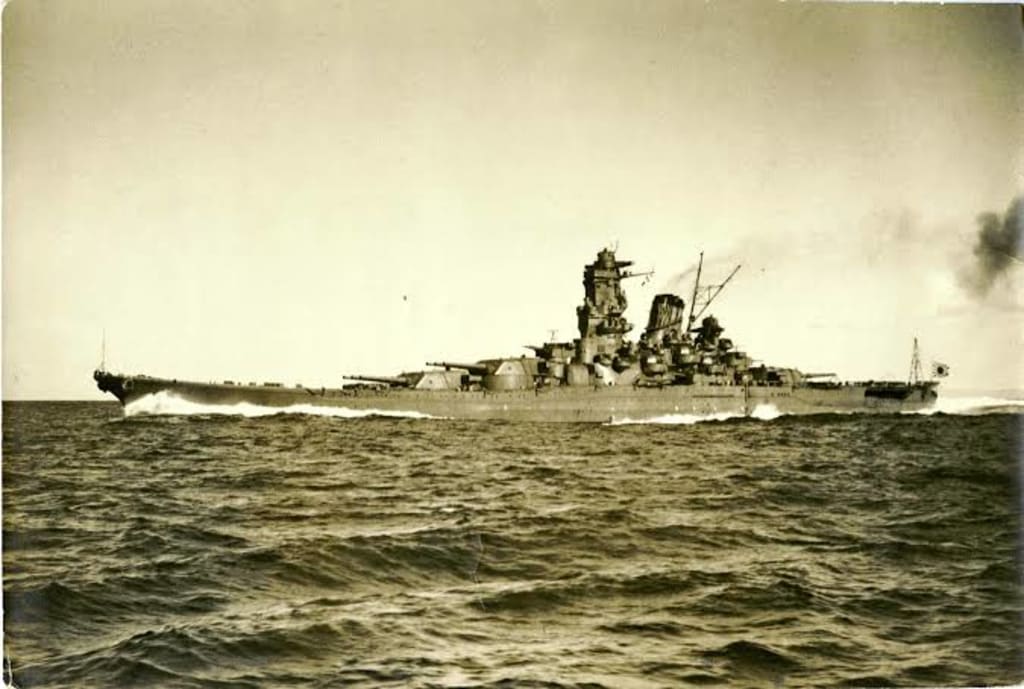
Few warships have captured the world's imagination quite like the IJN Yamato, the largest battleship ever built. Towering over every battleship of its era, Yamato represented the peak of Japanese naval engineering during World War II. More than eight decades after its launch, the vessel continues to fascinate historians, naval enthusiasts, and military analysts alike. Museums, documentaries, books, and films continue to celebrate its remarkable design while reflecting on the lessons learned from its dramatic fate.
Often described as Japan's "guilty pleasure," the Yamato symbolizes both extraordinary technological achievement and the strategic miscalculations of a changing era. While it stood as the pride of the Imperial Japanese Navy, its story also demonstrates how advances in air power transformed naval warfare forever.
Birth of a Naval Giant
Construction of the Yamato began in 1937 at the Kure Naval Arsenal under conditions of extraordinary secrecy. Japan sought to create a battleship capable of defeating any potential rival by building a vessel larger and more heavily armed than anything else afloat.
When commissioned in December 1941, Yamato displaced approximately 72,000 tons at full load, making it the largest battleship ever completed. Measuring over 263 meters (862 feet) in length, it dwarfed most contemporary warships.
The ship carried nine massive 46-centimeter (18.1-inch) main guns—the largest naval artillery ever installed on a battleship. Each shell weighed more than 1,400 kilograms and could strike targets over 40 kilometers away.
Engineering Beyond Its Time
The Yamato was a masterpiece of naval engineering. Designers incorporated exceptionally thick armor, sophisticated compartmentalization, and powerful propulsion systems that enabled the enormous vessel to reach speeds exceeding 27 knots.
Its heavily protected gun turrets alone weighed as much as many destroyers of the period. Multiple anti-aircraft batteries, advanced fire-control systems, and reinforced armor belts reflected Japan's determination to produce an almost invincible battleship.
Although impressive on paper, the ship was designed during an era when battleships were still considered the ultimate instruments of naval dominance.
Changing Nature of Naval Warfare
By the time Yamato entered service, naval warfare was rapidly evolving. Aircraft carriers had begun replacing battleships as the primary offensive force at sea.
The attack on Pearl Harbor, the Battle of Midway, and later Pacific campaigns demonstrated that aircraft could destroy heavily armored warships from great distances without requiring traditional battleship engagements.
Despite its immense firepower, Yamato rarely fought the decisive gun battles for which it had been built.
Service During World War II
Throughout much of the war, Yamato served as the flagship of the Imperial Japanese Navy. However, concerns about submarine attacks and air strikes often kept the vessel away from direct combat.
The battleship participated in several major operations, including the Battle of Leyte Gulf in 1944, one of history's largest naval battles.
Although Yamato engaged enemy forces during parts of the campaign, changing battlefield conditions limited its overall impact. Increasing American naval air superiority made even the world's largest battleship vulnerable.
Operation Ten-Go
Yamato's final mission came in April 1945 during Operation Ten-Go.
Facing overwhelming Allied superiority, Japan dispatched the battleship on what was effectively a one-way mission toward Okinawa. The plan called for Yamato to beach itself after reaching the island and serve as a stationary artillery platform supporting Japanese defenders.
Before reaching its destination, hundreds of American carrier-based aircraft intercepted the task force.
Successive waves of bombers and torpedo aircraft attacked relentlessly, overwhelming the battleship's defenses despite fierce anti-aircraft resistance.
After suffering multiple torpedo and bomb hits, Yamato exploded in one of the largest non-nuclear explosions ever recorded at sea, taking thousands of sailors with it.
Symbolism Beyond War
Today, Yamato occupies a unique place in Japanese culture. Rather than celebrating military conflict, many view the battleship as a symbol of sacrifice, engineering excellence, and the human cost of war.
The Yamato Museum in Kure attracts visitors from around the world. Exhibits include detailed models, historical artifacts, engineering displays, and personal stories of crew members who served aboard the vessel.
These exhibitions emphasize historical education and remembrance rather than glorification of conflict.
Engineering Legacy
Although Yamato failed to alter the course of World War II, its engineering achievements continue to influence naval historians and marine engineers.
Its construction required remarkable advances in metallurgy, shipbuilding techniques, heavy manufacturing, and industrial organization.
Modern naval architects still study aspects of Yamato's design to understand both its strengths and limitations.
Lessons for Modern Navies
The story of Yamato illustrates a timeless military lesson: technological superiority alone cannot guarantee victory.
Military strategy must continuously adapt to emerging technologies and changing operational environments. While Yamato represented the pinnacle of battleship development, the aircraft carrier had already become the dominant force at sea.
Today's navies face similar challenges as unmanned systems, cyber capabilities, artificial intelligence, and hypersonic weapons reshape maritime warfare.
Continued Global Fascination
Interest in Yamato remains remarkably strong decades after its loss. Numerous books, documentaries, films, video games, and historical studies continue exploring its construction, missions, and legacy.
Marine archaeologists have also examined the wreck site in the East China Sea, providing further insight into one of history's most famous warships.
The ship's combination of extraordinary engineering, dramatic history, and symbolic significance ensures its place among the world's most recognizable naval vessels.
Conclusion
The Yamato remains the largest battleship ever built and one of history's most iconic warships. It embodied Japan's industrial ambition and represented the height of battleship engineering at a time when naval warfare was rapidly changing.
While its operational career was relatively short, the lessons drawn from its construction, deployment, and eventual destruction continue to shape military thinking today. Rather than serving solely as a monument to naval power, Yamato stands as a reminder that innovation, strategy, and adaptability are equally essential in determining the outcome of conflict.
Its legacy endures not because it changed history through victory, but because it symbolizes both the extraordinary achievements and profound limitations of military technology during one of the most transformative periods in modern naval history.
About the Creator
Enjoyed the story? Support the Creator.
Subscribe for free to receive all their stories in your feed.
Comments
There are no comments for this story
Be the first to respond and start the conversation.