
Israel Accused of Weaponising Archaeology at Ancient West Bank Sites
Israel Accused of Weaponising Archaeology at Ancient West Bank Sites
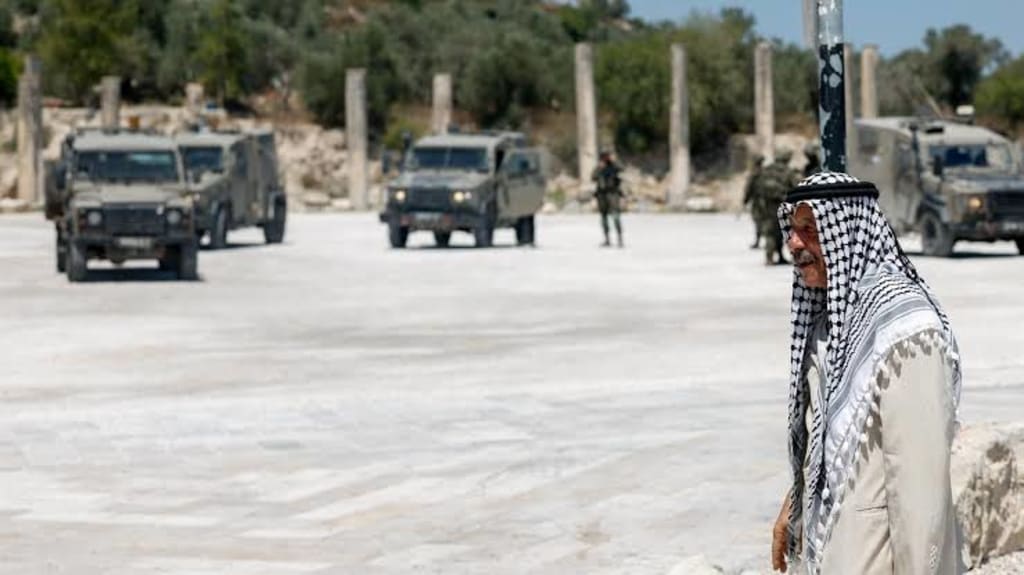
Archaeology in the West Bank has long been about more than uncovering ancient stones, pottery and ruins. In a territory where competing communities attach profound importance to history and ancestral connections, archaeological sites can become part of a much wider political struggle. Israel is increasingly facing accusations from Palestinian officials, researchers and critics that archaeology is being used to strengthen territorial claims and reshape the historical narrative surrounding the occupied West Bank.
The controversy centres on ancient sites, excavation projects, national parks and heritage programmes located in areas under Israeli control. Critics argue that archaeological discoveries are sometimes presented primarily through an Israeli historical framework while Palestinian historical connections receive less attention. Israeli authorities and archaeologists, however, reject the idea that archaeological research is simply a political instrument, maintaining that excavations are intended to preserve and study the region's exceptionally rich heritage.
Why Archaeology Matters in the West Bank
The West Bank contains thousands of years of human history. Archaeological remains from the Bronze Age, Iron Age, Roman, Byzantine and Islamic periods can be found across the territory. The landscape also contains sites associated with Judaism, Christianity and Islam.
That history gives archaeology unusual political importance. For Israelis and Palestinians, evidence of ancient settlement can influence arguments about cultural heritage, identity and connections to particular areas.
Critics say the problem begins when archaeological findings are transformed into political messaging. A discovery showing evidence of an ancient Jewish settlement, for example, may be presented as evidence of a long-standing Jewish connection to a location. While that historical connection may be genuine, opponents argue that it should not automatically determine modern political sovereignty or property rights.
Palestinian scholars have similarly emphasised the importance of Islamic, Christian and broader Palestinian heritage in the region, warning that selective interpretation can produce an incomplete understanding of the past.
The Politics of Excavation
The Israeli-Palestinian conflict has created an environment in which archaeological work can carry consequences beyond academia. Excavations require decisions about access, funding, conservation and public presentation. In the West Bank, those decisions can become politically sensitive because of the territory's contested status.
Some archaeological sites are located near Israeli settlements or within areas where Israel exercises extensive security and administrative control. Palestinian critics argue that heritage development around such locations can reinforce Israeli settlement activity and make territorial realities more permanent.
They also contend that archaeological parks and tourist infrastructure can change the physical and cultural character of particular areas. When ancient sites are incorporated into Israeli tourism networks, Palestinian communities sometimes fear that their own relationship with the landscape will be marginalised.
Israel disputes accusations that archaeology is being used to dispossess Palestinians. Israeli officials and many archaeologists argue that protecting ancient remains is a legitimate cultural responsibility and that political accusations should not erase genuine archaeological evidence.
Jerusalem and the Broader Historical Dispute
Although the West Bank is the main focus of the current debate, Jerusalem provides one of the clearest examples of how archaeology can intersect with politics.
Excavations around the Old City have uncovered significant remains from multiple historical periods. Discoveries connected with ancient Jerusalem are particularly sensitive because the city is central to Jewish, Christian and Muslim religious traditions.
Supporters of archaeological research say excavations help establish a factual understanding of the past. Critics respond that the selection of sites, interpretation of discoveries and presentation to tourists can influence which historical narratives receive greater public visibility.
This disagreement reflects a larger problem: archaeology cannot always be separated from the political context in which it is conducted. Ancient remains are physical evidence, but the meaning assigned to that evidence can vary depending on who controls a site, who funds research and how findings are presented.
Palestinian Heritage Under Pressure
Palestinian researchers and cultural organisations have repeatedly raised concerns about damage to archaeological sites, illegal digging, construction and insufficient protection of heritage. They argue that Palestinian archaeological resources need stronger protection and greater international attention.
At the same time, the West Bank has experienced rapid political and physical changes, including settlement expansion, infrastructure development and restrictions on movement. These changes can complicate archaeological preservation.
Palestinian archaeologists also face challenges in conducting research and managing heritage sites. Access to certain areas may depend on the political and administrative system governing them. This has contributed to accusations that Palestinians do not always have equal opportunities to document and promote their own historical heritage.
What Does “Weaponising Archaeology” Mean?
The phrase “weaponising archaeology” does not mean that archaeologists are literally using excavations as weapons. Instead, it describes an accusation that historical discoveries are being selectively used to support contemporary political objectives.
In this context, critics argue that archaeology can be employed to establish a narrative of exclusive historical ownership. Ancient Jewish history is undeniably part of the West Bank's archaeological record, but Palestinians and other researchers argue that it exists alongside evidence from many other civilisations and communities.
A balanced archaeological approach would therefore acknowledge the region's complex history rather than reducing it to a single political narrative.
Why Independent Research Matters
The controversy highlights the importance of independent archaeological standards. Researchers need access to sites, transparent excavation records and scientific methods that allow findings to be evaluated by experts regardless of political affiliation.
International archaeological organisations have also emphasised the importance of protecting cultural heritage during conflict and occupation. Documentation, conservation and responsible tourism can help prevent historical sites from becoming casualties of political disputes.
For ordinary visitors, the challenge is equally significant. Tourism can provide valuable income and encourage preservation, but heritage attractions can also influence how people understand a contested landscape. The language used on signs, websites, museums and guided tours can shape perceptions of who belongs to a place and how its history should be understood.
A Debate About the Past—and the Future
The dispute over archaeology in the West Bank ultimately reflects a deeper conflict over identity, territory and historical memory. Ancient ruins cannot resolve modern political disagreements, but they can become powerful symbols within them.
Israel maintains that archaeological research helps uncover and preserve the region's ancient history. Palestinian critics argue that heritage policies can be used to strengthen territorial claims and marginalise Palestinian narratives. Both positions exist within a landscape where archaeological evidence is extraordinarily rich but politically charged.
The most responsible approach is to recognise that the West Bank's history is not the property of a single era, religion or community. Its archaeological record reflects successive civilisations that lived, worshipped, traded and built communities across thousands of years.
Protecting that heritage should therefore mean preserving evidence from all periods and making it available for rigorous, independent study. Archaeology is most valuable when it expands historical understanding rather than narrowing it. In a region where the past continues to influence the present, protecting archaeological integrity may be one of the few ways to ensure that history remains a source of knowledge rather than another battlefield.
About the Creator
Enjoyed the story? Support the Creator.
Subscribe for free to receive all their stories in your feed.
Comments
There are no comments for this story
Be the first to respond and start the conversation.