
Iran War Update: Fragile Ceasefire in Lebanon Highlights a Wider Regional Conflict
A temporary Israel–Lebanon ceasefire brokered by the U.S. offers a brief pause in fighting, but Iran-linked tensions keep the region on edge as the wider conflict continues to simmer.

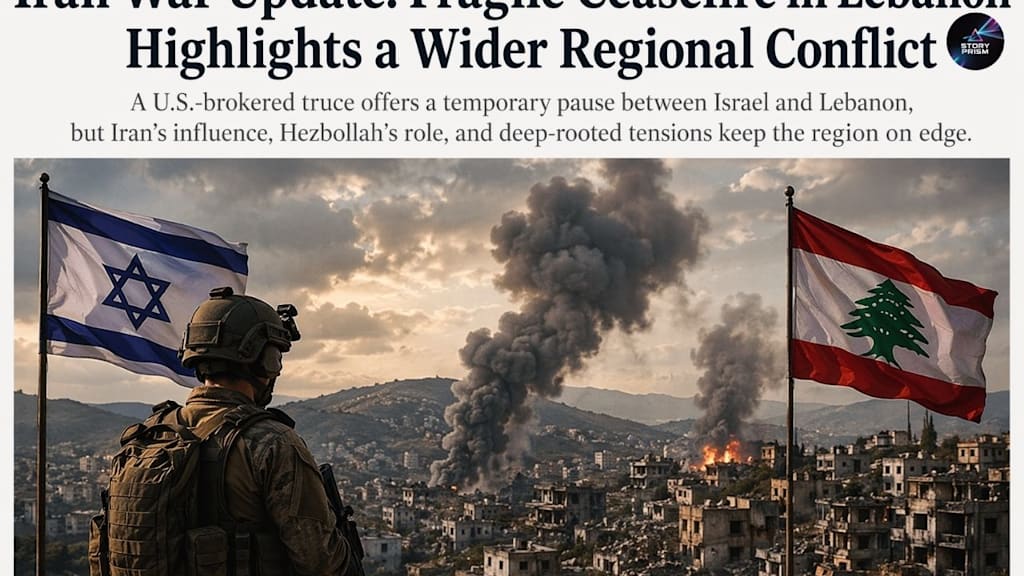
The conflict often described as the Iran War has entered a tense and uncertain phase following a newly announced 10-day ceasefire between Israel and Lebanon, brokered with the involvement of the United States. While the agreement briefly slows one of the most dangerous escalations in the Middle East in recent years, it does not resolve the deeper regional struggle involving Iran, Israel, Hezbollah, and shifting global alliances.
The ceasefire, announced on April 16, 2026, marks a temporary pause in hostilities along the Israel–Lebanon border. U.S. President Donald Trump presented the agreement as a diplomatic breakthrough aimed at preventing further escalation. The deal was reportedly reached through intensive negotiations involving Israeli and Lebanese leadership, with Washington acting as the primary mediator.
Despite the announcement, the ceasefire remains fragile. Israeli officials have made clear that military objectives in Lebanon have not changed, particularly the continued effort to weaken and dismantle Hezbollah’s military capabilities. At the same time, Hezbollah—an Iran-backed armed group—has expressed skepticism about the agreement and has not fully committed to long-term de-escalation. As a result, the ceasefire is widely viewed as a temporary pause rather than a comprehensive peace settlement.
Iran remains a central but indirect actor in the conflict. Through its long-standing support for Hezbollah, Tehran continues to exert significant influence over the military and political dynamics in Lebanon. This relationship has transformed the conflict from a localized border war into part of a broader regional confrontation involving Iran’s network of allied groups across the Middle East.
The United States has taken an increasingly active role in managing the crisis. Beyond brokering the ceasefire, Washington is also seeking to prevent the conflict from expanding into a direct Iran–Israel war. U.S. naval deployments in strategic waterways and ongoing diplomatic engagement reflect concerns about regional instability and global economic consequences, particularly the impact on oil supply routes and energy prices.
In Lebanon, the humanitarian situation remains severe. Months of fighting have resulted in widespread displacement, infrastructure damage, and civilian casualties. Even with the ceasefire in place, many residents remain hesitant to return to their homes in southern Lebanon due to fears that hostilities could resume at any moment. The damage to towns and villages near the border underscores the intensity of the recent escalation.
Hezbollah continues to be one of the most critical factors shaping the conflict’s trajectory. The group’s military capabilities, supported by Iran, have allowed it to sustain prolonged confrontation with Israel. Israeli air and ground operations targeting Hezbollah positions have intensified the destruction, while retaliatory strikes have further widened the scope of the conflict.
Regional analysts describe the current situation as a “controlled pause” rather than a step toward peace. Key issues remain unresolved, including Israel’s security demands, Hezbollah’s armed presence in Lebanon, and Iran’s broader strategic role in supporting allied militias across the region. Without progress on these core disputes, the risk of renewed fighting remains high.
Diplomatic efforts are expected to continue, with the United States reportedly planning further high-level meetings involving Israeli and Lebanese representatives. However, the success of these talks will depend heavily on whether Iran and its regional allies are willing to adjust their position, something that currently appears uncertain.
For now, the so-called Iran War remains a complex and evolving conflict rather than a single defined battlefield. The Lebanon ceasefire offers a brief moment of relief, but beneath it lies a wider struggle for regional influence that continues to shape the future of the Middle East.
About the Creator
Enjoyed the story? Support the Creator.
Subscribe for free to receive all their stories in your feed.
Comments
There are no comments for this story
Be the first to respond and start the conversation.