
Greece signs $3.5bn air defence deal with Israel
Athens is acquiring a new integrated air and missile defence network featuring David’s Sling, SPYDER, BARAK MX and advanced anti-drone technology as Greece accelerates military modernization.
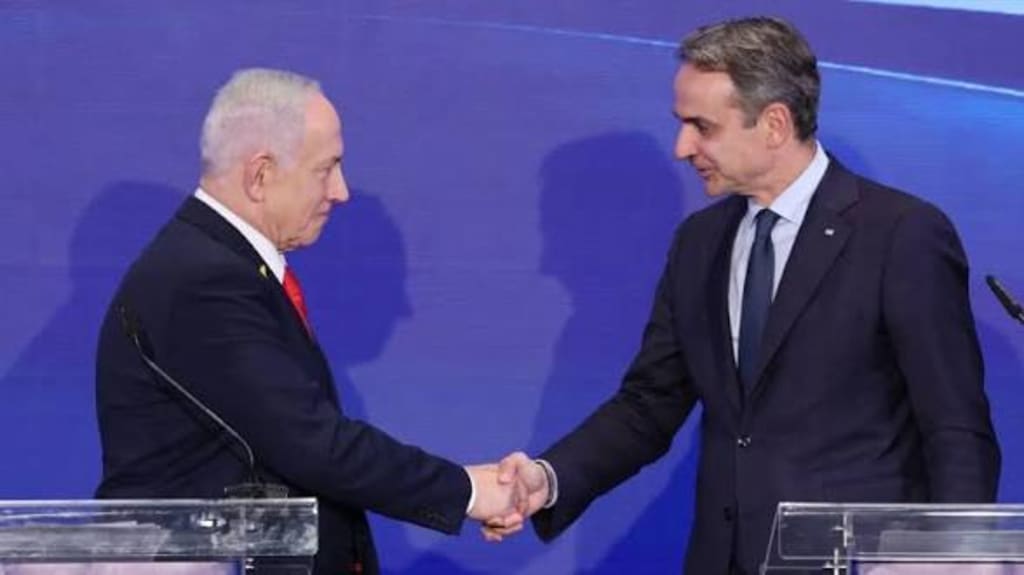
Greece has signed a landmark $3.5 billion defence agreement with Israel to establish a new multilayered air defence network, marking a major expansion of military cooperation between the two countries. The agreement, signed on August 31, 2026, is one of the largest defence deals ever concluded between Greece and Israel and represents a significant step in Athens’ effort to modernize its armed forces.
The programme, known as “Achilles Shield,” is designed to create an integrated defensive network capable of responding to a wide range of aerial threats. These include aircraft, drones, cruise missiles, rockets and ballistic missiles.
According to reporting by Reuters and the Associated Press, the agreement is valued at approximately €3 billion, equivalent to about $3.5 billion. Israel described it as its largest defence export agreement with Greece to date and one of the biggest deals in its defence industry’s history.
What Is the Achilles Shield?
The Achilles Shield programme is intended to connect several Israeli-developed defence technologies into a coordinated national network rather than operating each system independently.
The architecture will include systems from major Israeli defence companies such as Rafael Advanced Defense Systems and Israel Aerospace Industries. Among the principal components are David’s Sling, SPYDER and BARAK MX, supported by radar, command-and-control and counter-drone capabilities.
The multilayered approach is important because different weapons are designed to counter different types of threats.
Longer-range missile threats can be addressed by systems such as David’s Sling, while shorter-range threats and drones can be targeted by other components of the network. The result is intended to give Greek military planners multiple defensive options instead of relying on a single missile system.
David’s Sling Becomes a Key Part of Greece’s Defence Strategy
One of the most significant elements of the agreement is David’s Sling, an Israeli missile-defence system designed to intercept heavy rockets and ballistic missile threats.
Israel has used David’s Sling during real-world combat operations, giving the system considerable international attention. Greece is set to become only its second international customer after Finland, according to Reuters.
For Athens, acquiring a combat-proven system offers the possibility of strengthening protection around strategically important areas while complementing existing Greek air-defence assets.
The purchase also reflects a broader trend in which countries are seeking layered missile-defence architectures rather than depending exclusively on traditional fighter aircraft or individual surface-to-air missile batteries.
BARAK MX and SPYDER Add More Layers
The Greek system will also incorporate BARAK MX, developed by Israel Aerospace Industries. BARAK MX is designed to provide protection against aircraft and missile threats.
Another major component is the SPYDER system, produced by Rafael. SPYDER is intended to counter threats including aircraft and unmanned aerial vehicles.
Together, these systems are expected to provide Greece with overlapping defensive capabilities. This is particularly important as modern militaries increasingly face combinations of conventional aircraft, cruise missiles, ballistic missiles and large numbers of relatively inexpensive drones.
Instead of attempting to defeat every threat with one expensive interceptor, a layered system allows military commanders to select the most appropriate defensive response.
Anti-Drone Technology Included
The deal also includes counter-drone capabilities, including Rafael’s Drone Dome system.
The growing use of unmanned aerial vehicles has transformed modern warfare. Drones can be used for surveillance, targeting, electronic warfare and direct attacks, creating challenges for conventional air-defence systems.
Greece’s decision to include dedicated counter-drone technology demonstrates that Athens is planning for a broader range of future threats.
The new architecture will also feature a national command-and-control system and modern radar capabilities, allowing information from different sensors and defensive systems to be combined into a coordinated network.
Why Greece Is Investing Heavily in Defence
The agreement comes as Greece undertakes a major military modernization programme.
Athens has long maintained significant defence spending because of strategic tensions in the Eastern Mediterranean, particularly its complicated relationship with neighbouring Turkey. Greece is also seeking to upgrade its armed forces as warfare increasingly incorporates drones, precision missiles, electronic warfare and sophisticated surveillance technologies.
Reuters reported that Greece has budgeted around €28 billion through 2036 for military modernization, including plans involving F-35 fighter aircraft from the United States and naval acquisitions from European suppliers.
The Israeli air-defence agreement therefore forms part of a much wider modernization strategy rather than being an isolated purchase.
Greece and Israel Strengthen Strategic Ties
The agreement also demonstrates the growing defence relationship between Greece and Israel.
The two countries have expanded military cooperation through exercises, training and technology partnerships. Their closer relationship has become increasingly significant as security dynamics in the Eastern Mediterranean continue to evolve.
Israel has also become a major global exporter of air-defence and missile technologies. Israeli defence exports reached a record $19 billion in 2025, according to the Associated Press, reflecting strong international demand for systems developed through years of Israeli military experience.
For Israel, the Greek agreement represents another major international market for its defence industry. For Greece, it provides access to an integrated set of technologies intended to improve national airspace protection.
A Shift Toward Integrated Air Defence
Perhaps the most important feature of the deal is not any individual missile system but the attempt to connect multiple technologies into one defensive architecture.
Modern air threats rarely arrive in isolation. A military could face drones, cruise missiles and ballistic missiles at the same time, potentially overwhelming a single type of defence.
A multilayered network is designed to address this problem by combining sensors, command systems and different interceptors.
The Achilles Shield could therefore become an important part of Greece’s future military planning, particularly as Athens seeks to protect critical infrastructure, military installations and other strategic locations.
What the Deal Means for Greece
The $3.5 billion agreement represents a major investment in Greece’s long-term security strategy.
By combining Israeli missile-defence systems, radar technology, command-and-control infrastructure and anti-drone capabilities, Athens is attempting to build a more flexible defensive shield against increasingly complex aerial threats.
The programme also strengthens the strategic relationship between Greece and Israel while giving Israeli defence companies another major international customer.
As Greece continues its broader military modernization programme, the Achilles Shield is likely to become one of the most closely watched elements of its new defence architecture.
The agreement ultimately reflects a wider transformation in modern military planning: air defence is no longer simply about shooting down aircraft. It increasingly involves detecting and responding to drones, missiles, rockets and other threats through interconnected systems operating across multiple layers.
For Greece, the new Israeli-backed network is intended to provide precisely that capability—and could significantly reshape the country’s air-defence posture over the coming years.
About the Creator
Enjoyed the story? Support the Creator.
Subscribe for free to receive all their stories in your feed.
Comments
There are no comments for this story
Be the first to respond and start the conversation.