
Germany Silicon Carbide Wafer Market Set for Strong Growth Through 2034 as EV and Clean Energy Demand Accelerates
Germany’s Semiconductor Future Gets a Powerful Boost from Silicon Carbide Innovation

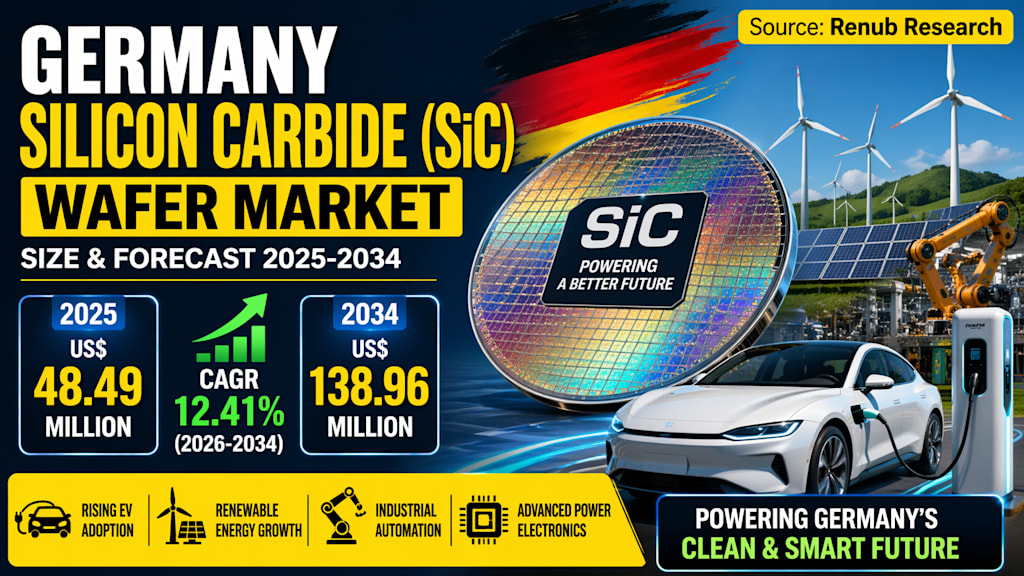
Germany is rapidly emerging as one of Europe’s most promising hubs for advanced semiconductor materials, and silicon carbide (SiC) wafers are becoming central to that transformation. According to the latest Renub Research analysis, the Germany Silicon Carbide Wafer Market was valued at US$ 48.49 million in 2025 and is forecast to reach US$ 138.96 million by 2034, growing at a robust CAGR of 12.41% from 2026 to 2034.
This sharp rise reflects Germany’s aggressive push toward electric mobility, renewable energy, industrial automation, and domestic semiconductor resilience. As industries demand faster, smaller, cooler, and more energy-efficient power electronics, silicon carbide is increasingly replacing conventional silicon in high-performance applications.
For Germany—already a leader in automotive engineering and industrial innovation—SiC wafers represent more than a market trend. They symbolize the country’s next technological leap.
What Makes Silicon Carbide So Valuable?
Silicon carbide is a wide-bandgap semiconductor material known for exceptional thermal conductivity, high breakdown voltage, and superior energy efficiency. Compared with traditional silicon, SiC performs better under extreme temperatures, high voltages, and fast switching conditions.
That makes it ideal for applications such as:
- Electric vehicle inverters
- Fast charging systems
- Solar and wind energy converters
- Industrial motor drives
- Smart grid systems
- Aerospace electronics
- Telecom RF devices
In practical terms, SiC helps systems waste less energy, generate less heat, and perform more efficiently—qualities every modern industry now values.
Electric Vehicles Driving Demand Across Germany
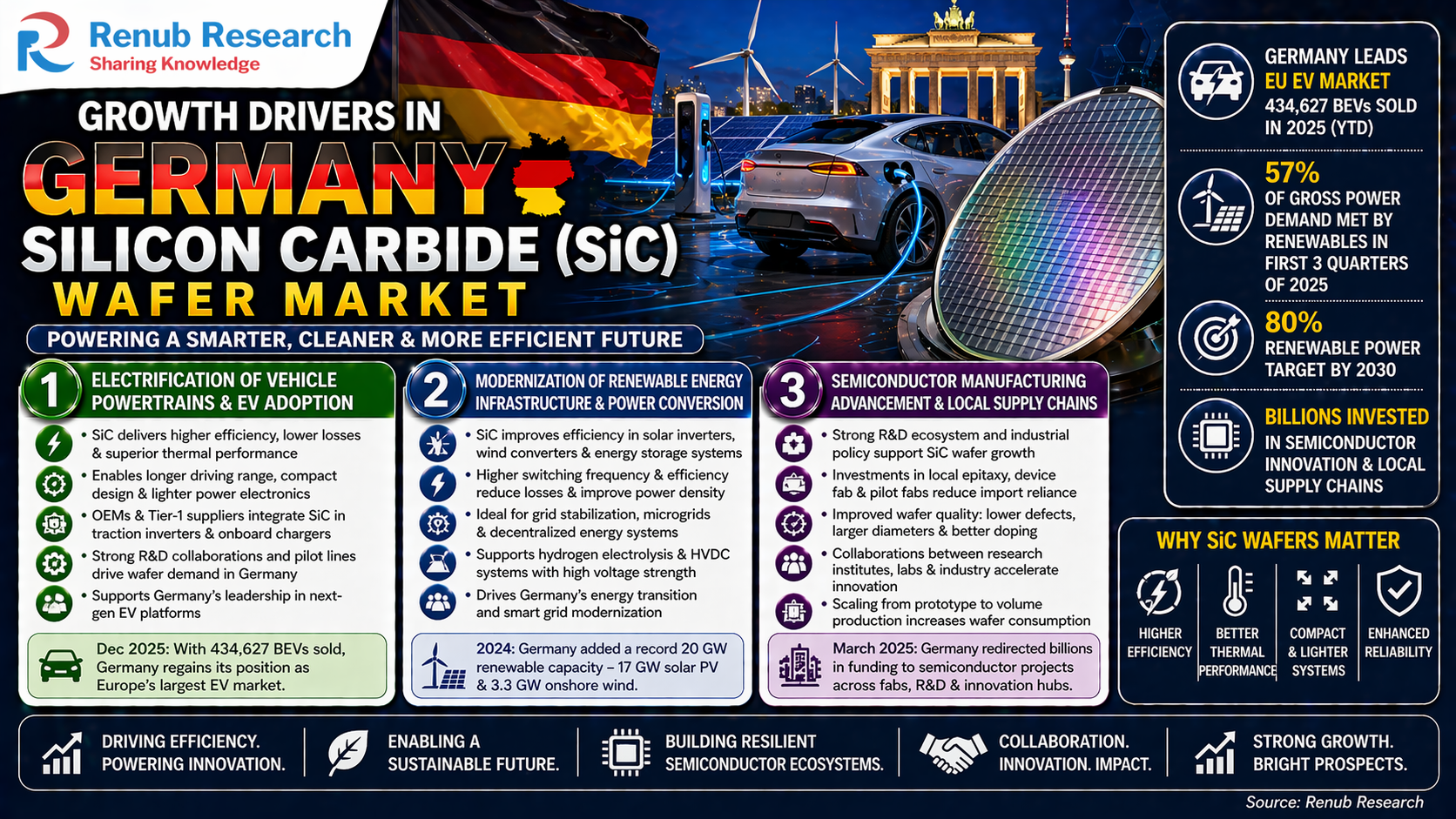
Germany’s globally respected automotive sector is one of the strongest catalysts behind SiC wafer demand. As automakers transition from combustion engines to electric drivetrains, the need for advanced power semiconductors is rising quickly.
SiC-based power devices improve EV efficiency by lowering switching losses and enhancing thermal performance. This allows:
- Longer driving range
- Faster charging capability
- Smaller cooling systems
- Reduced component weight
- Better overall battery efficiency
German OEMs and Tier-1 suppliers are increasingly integrating SiC modules into next-generation EV platforms. With battery electric vehicle sales surging, semiconductor suppliers are racing to secure wafer supply chains.
As Europe’s largest vehicle manufacturing nation, Germany’s EV expansion directly supports long-term SiC wafer growth.
Renewable Energy Transition Creates Massive Opportunity
Germany’s clean energy goals are another major reason the SiC wafer market is expanding. The country continues investing heavily in solar, wind, grid modernization, and energy storage infrastructure.
SiC devices are especially useful in renewable power systems because they enable:
- Higher switching frequencies
- Lower energy losses
- More compact inverter systems
- Better heat resistance
- Improved reliability in variable loads
From solar farms to wind converters and battery storage stations, silicon carbide is becoming a preferred material.
Germany reportedly met nearly 57% of gross power demand from renewables in the first three quarters of 2025, while aiming for 80% renewable power share by 2030. This clean energy roadmap creates enormous demand for efficient power electronics—and therefore more SiC wafers.
Semiconductor Sovereignty and Local Supply Chains
Germany is also strengthening its semiconductor independence. With global chip shortages exposing supply vulnerabilities, the country has expanded support for domestic chip production, R&D centers, and strategic materials.
SiC wafers are benefiting from investments in:
- Local epitaxy facilities
- Device fabrication plants
- Pilot fabs
- Advanced metrology labs
- Research partnerships with universities
These initiatives reduce dependence on imports while helping Germany build a more secure electronics ecosystem.
As Europe pushes semiconductor self-reliance, Germany’s SiC ecosystem could become a critical pillar of future supply chains.
Challenges the Market Must Overcome
Despite strong momentum, the Germany SiC wafer market still faces hurdles.
High Manufacturing Costs
Producing SiC wafers is far more complex than traditional silicon. Crystal growth, slicing, polishing, and defect reduction require expensive equipment and high energy consumption.
Manufacturers must also manage defects such as micropipes and dislocations, which can reduce yields and raise costs. Large-scale investment is needed for 150 mm and 200 mm wafer production lines.
Supply Chain Bottlenecks
Germany also depends on limited global suppliers for critical upstream inputs such as:
- High-purity raw materials
- Seed crystals
- Specialized crucibles
Any disruption can delay production or increase prices. Standardization of wafer quality remains another challenge as fabs demand consistent resistivity, flatness, and defect density.
6-Inch Wafers Gaining Commercial Importance
The 6-inch (150 mm) SiC wafer segment is playing a major transitional role between older smaller wafers and next-generation 200 mm formats.
These wafers offer:
- Better economies of scale
- Compatibility with existing fabrication systems
- Lower risk than immediate 200 mm migration
- Strong suitability for automotive and industrial devices
German manufacturers increasingly view 6-inch wafers as the practical bridge toward larger-scale commercial production.
Power Electronics Remain Largest Application Area
Among all uses, power electronics represent the biggest end-use segment for SiC wafers in Germany.
Applications include:
- EV traction inverters
- UPS systems
- Industrial motor drives
- Renewable energy converters
- High-voltage switching systems
As electrification spreads across factories, vehicles, and infrastructure, demand for high-quality SiC wafers will continue rising sharply.
Regional Hotspots in Germany
Munich
Munich is becoming a major innovation center thanks to automotive engineering, electronics expertise, and leading technical universities. Strong R&D activity supports wafer demand for EV and aerospace uses.
Frankfurt
Frankfurt’s logistics strength and industrial connections make it important for distribution, testing facilities, and European trade of semiconductor components.
Berlin
Berlin contributes through startups, clean-tech hardware development, micro-mobility, and experimental semiconductor applications.
Key Companies Shaping the Market
Several global and regional players are active in Germany’s silicon carbide ecosystem, including:
- Wolfspeed Inc.
- Coherent Corp.
- STMicroelectronics N.V.
- SK Siltron Co., Ltd.
- SiCrystal GmbH
These companies are helping scale supply, improve wafer quality, and accelerate commercialization.
Why Investors and Industry Should Watch This Market
Germany’s SiC wafer market sits at the intersection of several unstoppable megatrends:
- Electric mobility
- Renewable energy growth
- Industrial automation
- Smart grids
- Semiconductor localization
- High-efficiency electronics
Few materials are positioned to benefit from all of them simultaneously.
As production costs gradually decline and capacity expands, SiC could become one of the most valuable semiconductor categories in Europe.
Final Thoughts
Germany is not just adopting silicon carbide technology—it is helping define its future. With automotive giants electrifying fleets, renewable targets expanding rapidly, and semiconductor independence now a national priority, the demand outlook for SiC wafers is exceptionally strong.
From US$ 48.49 million in 2025 to US$ 138.96 million by 2034, the growth story is clear: silicon carbide is moving from niche material to industrial necessity.
About the Creator
Enjoyed the story? Support the Creator.
Subscribe for free to receive all their stories in your feed.
Comments
There are no comments for this story
Be the first to respond and start the conversation.