
German Airport Drone-Bomb Incident Raises Questions Over Possible Russian Involvement
Authorities investigate a suspected drone attack at a German airport as security officials examine possible links to foreign actors, including Russia.
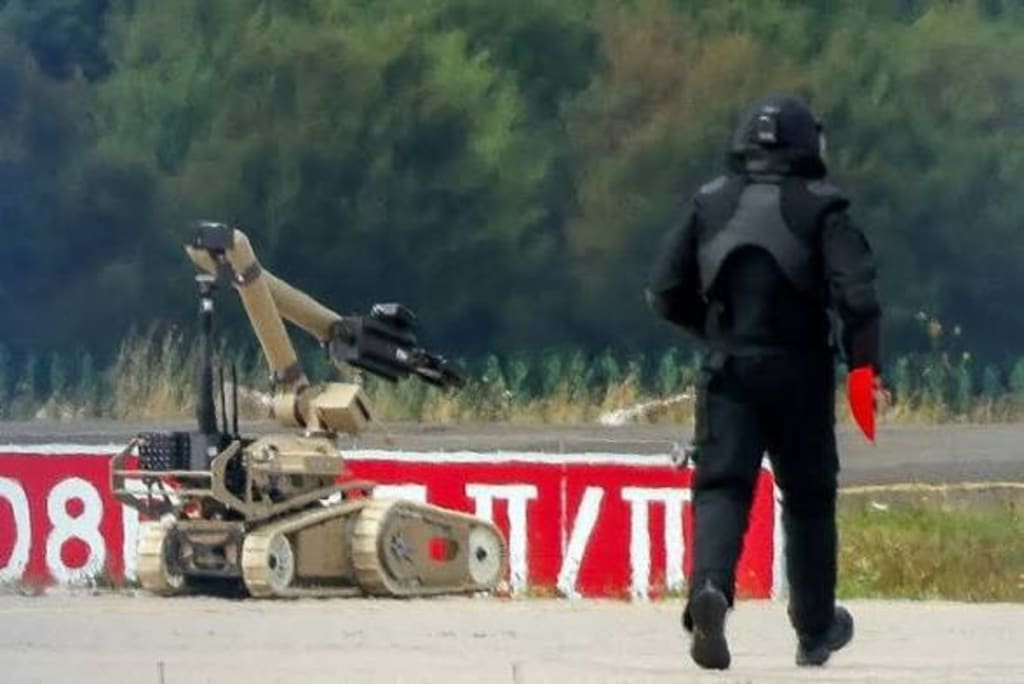
A suspected drone-related bombing incident at a German airport has triggered a major security investigation, with authorities examining whether the attack could have been connected to foreign interference. While no final conclusions have been announced, officials and security experts are closely analyzing possible links to Russia amid growing concerns about hybrid warfare, sabotage attempts, and the use of unmanned technology against critical infrastructure.
The incident has increased fears across Europe that airports, energy facilities, transportation networks, and other important sites could become targets in a new era of security threats. Investigators are working to determine who was responsible, how the device was deployed, and whether the attack was part of a broader campaign.
According to initial reports, the drone incident caused disruption at the airport and prompted emergency security measures. Authorities responded quickly by securing the affected area, assessing potential damage, and beginning a detailed forensic investigation. Specialists examined drone components, possible explosive materials, communication signals, and other evidence that could help identify the perpetrators.
German officials have warned that modern security threats increasingly involve low-cost technologies such as drones. Unlike traditional military equipment, drones can be purchased commercially, modified, and used for surveillance, disruption, or attacks with relatively limited resources.
The possibility of Russian involvement has become a major focus because European governments have repeatedly accused Moscow of using unconventional methods to influence and pressure Western countries. These methods, often described as hybrid warfare, can include cyberattacks, disinformation campaigns, espionage, and alleged sabotage operations.
Security analysts say Russia has both the motivation and technical capability to conduct covert operations, particularly as tensions between Moscow and Western nations remain high due to ongoing geopolitical conflicts. However, experts emphasize that suspicion alone does not prove responsibility, and investigators must rely on evidence before making official accusations.
German authorities are reportedly examining several possible scenarios, including whether the drone attack was carried out by an individual actor, an organized criminal group, or a state-linked operation. Investigators are also studying whether similar incidents in Europe could be connected.
Airports are considered highly sensitive targets because they represent critical transportation hubs and symbols of national infrastructure. Even a small drone incident can create significant disruption by forcing flight delays, temporary closures, and increased security inspections.
The incident has renewed debate in Germany over how prepared the country is to defend civilian infrastructure against drone threats. Security experts have called for stronger drone detection systems, improved monitoring technology, and clearer legal authority for authorities to respond quickly to unauthorized drone activity.
Modern airports already use advanced security measures, but drones present unique challenges. Small unmanned aircraft can be difficult to detect, especially when operating at low altitudes or in crowded urban environments. Traditional airport security systems were not originally designed to counter this type of threat.
European governments have increasingly focused on drone defense following several high-profile incidents involving unauthorized aircraft near military facilities, airports, and government buildings. Many countries are investing in counter-drone technology capable of detecting, tracking, and disabling suspicious devices.
Germany has also faced concerns over espionage and sabotage risks in recent years. Officials have warned that foreign intelligence services may attempt to exploit vulnerabilities in infrastructure, particularly during periods of international tension.
Russia has previously denied allegations of involvement in various incidents involving Western countries and has accused European governments of using security concerns for political purposes. Moscow has consistently rejected claims of conducting sabotage operations abroad.
Political leaders in Germany have urged caution while investigations continue. Officials have emphasized the importance of avoiding speculation but also acknowledged that foreign interference remains a serious national security concern.
The drone incident comes at a time when European countries are reassessing their security strategies. The growing availability of commercial drone technology has changed the nature of potential threats, making it easier for individuals or groups to conduct operations that were once only possible for military organizations.
Experts believe future security planning will require closer cooperation between airports, intelligence agencies, law enforcement, and technology companies. Sharing information about suspicious drone activity and improving rapid response capabilities will be essential to reducing risks.
Public awareness is also becoming an important part of security efforts. Authorities encourage citizens to report unusual drone activity near restricted areas, while warning against spreading unverified information that could complicate investigations.
If investigators discover evidence linking the attack to a foreign government, the diplomatic consequences could be significant. Germany and its European partners have previously responded strongly to confirmed cases of foreign interference, including diplomatic expulsions and additional security measures.
However, until forensic analysis and intelligence assessments are completed, officials are expected to avoid making definitive statements about responsibility. Establishing a connection between a drone attack and a state actor requires detailed evidence, including technical data, financial links, communication records, and operational planning.
The German airport drone-bomb investigation highlights a growing challenge facing countries worldwide: protecting civilian infrastructure from evolving technological threats. As drones become more accessible, governments must adapt security systems to address risks that were previously difficult to imagine.
Whether the incident was an isolated attack or part of a wider campaign remains unclear. What is certain is that the investigation will be closely watched across Europe, where concerns over security, foreign influence, and hybrid warfare continue to shape political discussions.
SEO Keywords: German airport drone attack, Russia involvement Germany, drone security threat Europe, airport sabotage investigation, hybrid warfare Europe, Germany national security, drone bomb incident, foreign interference.
About the Creator
Enjoyed the story? Support the Creator.
Subscribe for free to receive all their stories in your feed.
Comments
There are no comments for this story
Be the first to respond and start the conversation.