
France has seen its first 'fire-cloud'. What is it?
A rare and dangerous weather phenomenon linked to extreme wildfires has appeared in France, raising concerns among firefighters and climate experts about increasingly intense fire behavior.
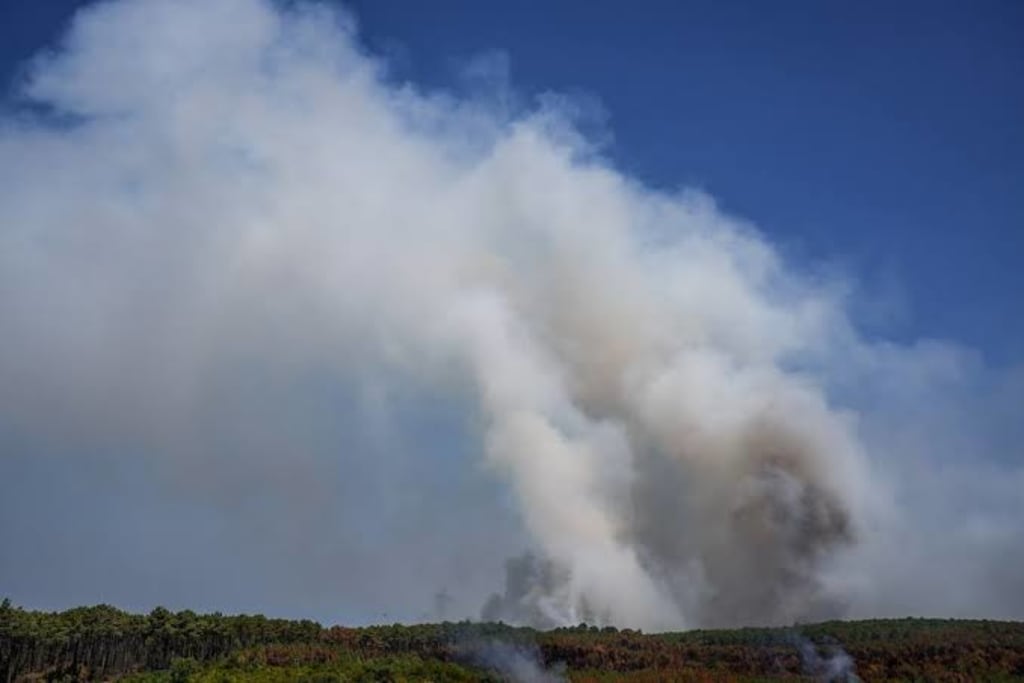
France has witnessed the formation of what experts describe as a “fire-cloud”, a rare and powerful phenomenon that occurs when intense wildfires create their own weather systems. The event has drawn attention from scientists, firefighters, and emergency officials because it demonstrates how modern wildfires can become more unpredictable and destructive under extreme conditions.
A fire-cloud, scientifically known as a pyrocumulonimbus cloud, forms when a large wildfire generates enormous amounts of heat. The intense energy from burning vegetation forces hot air, smoke, ash, and moisture high into the atmosphere. As this rising column cools, it can develop into a towering cloud similar to a thunderstorm.
Unlike ordinary clouds, a fire-cloud is directly created by the fire itself. It can influence the behavior of the wildfire below, making the flames more difficult to control. The phenomenon can produce strong winds, lightning, and even spread burning embers over long distances, creating new fires far away from the original blaze.
For firefighters battling major wildfires in France, the appearance of such a cloud represents one of the most challenging situations they can face. Traditional firefighting strategies become less effective because the fire begins interacting with the atmosphere, creating its own dangerous weather conditions.
Fire crews operating in affected areas have reported rapidly changing conditions, with winds shifting direction unexpectedly and flames becoming more intense. When a fire generates enough energy to create a pyrocumulonimbus cloud, firefighters must adjust their tactics to protect themselves and nearby communities.
The formation of a fire-cloud is usually associated with extreme wildfire conditions, including prolonged heatwaves, dry vegetation, and strong winds. Climate scientists have warned that these conditions are becoming more frequent in many parts of the world due to rising global temperatures and changing weather patterns.
France, like many Mediterranean countries, has experienced increasingly severe wildfire seasons in recent years. Hotter summers, reduced rainfall, and dry landscapes have created ideal conditions for fires to spread rapidly. Areas once considered less vulnerable are now facing greater risks as climate patterns continue to shift.
The appearance of a fire-cloud in France has been described by experts as a warning sign. While these phenomena are not new, their increasing occurrence highlights the growing intensity of wildfires. Scientists say that as temperatures rise, the possibility of extreme fire behavior may become more common.
One of the greatest dangers of pyrocumulonimbus clouds is their ability to create lightning. Unlike normal thunderstorms, lightning produced by a fire-cloud can ignite new fires in surrounding areas. This creates a dangerous cycle where one wildfire can generate additional outbreaks, making containment much harder.
Another major concern is wind generation. Fire-clouds can create powerful downward air currents that push flames in unexpected directions. This can overwhelm firefighting operations and force emergency teams to rapidly change evacuation plans.
Communities near wildfire zones are often the first to experience the impact. Residents may see dark smoke rising thousands of meters into the sky, while ash and embers travel through the air. Authorities often advise people to follow evacuation warnings quickly because conditions can change within minutes.
The growing threat of extreme wildfires has increased pressure on governments to improve prevention and emergency response systems. Experts argue that fighting fires after they start is not enough. Greater investment is needed in forest management, early warning technology, public awareness, and climate adaptation strategies.
Fire prevention measures include reducing dry vegetation, creating protective zones around communities, and improving monitoring systems that can detect dangerous fire behavior early. Satellite technology and weather modeling are increasingly used to help authorities predict how fires may develop.
Firefighters also receive specialized training to deal with extreme wildfire events. Understanding fire-cloud formation helps emergency crews recognize dangerous conditions and make safer decisions during operations. Protecting the lives of firefighters remains a top priority because these environments can become extremely hazardous.
The phenomenon has also renewed debate about climate change and its impact on natural disasters. Environmental researchers say that extreme heat events are increasing the likelihood of powerful wildfires capable of producing their own weather systems. They warn that societies must prepare for a future where such events may become more frequent.
Despite advances in technology and firefighting methods, experts emphasize that prevention remains the most effective strategy. Once a wildfire reaches the intensity required to create a fire-cloud, controlling it becomes significantly more difficult.
For France, the emergence of this rare phenomenon represents more than a single wildfire event. It is a reminder of the changing relationship between climate, weather, and natural disasters. Fire-clouds show how a wildfire can move beyond a simple ground-level emergency and become a complex atmospheric event.
As firefighters continue to battle extreme blazes across Europe, the appearance of pyrocumulonimbus clouds serves as a warning that wildfire risks are evolving. The challenge ahead will require cooperation between scientists, governments, emergency services, and communities.
The “fire-cloud” seen in France is not just a dramatic image in the sky. It is a powerful symbol of how extreme environmental conditions are reshaping the way the world responds to wildfires. As climate pressures continue to grow, understanding and preparing for these rare but dangerous phenomena will become increasingly important.
About the Creator
Enjoyed the story? Support the Creator.
Subscribe for free to receive all their stories in your feed.
Comments
There are no comments for this story
Be the first to respond and start the conversation.