
Five Days at the Podium: The Shortest White House Press Secretary Tenure in Memory
Katie Zacharia was hired to fight on television. The briefing room asked for a different skill, and the West Wing had a score to settle.
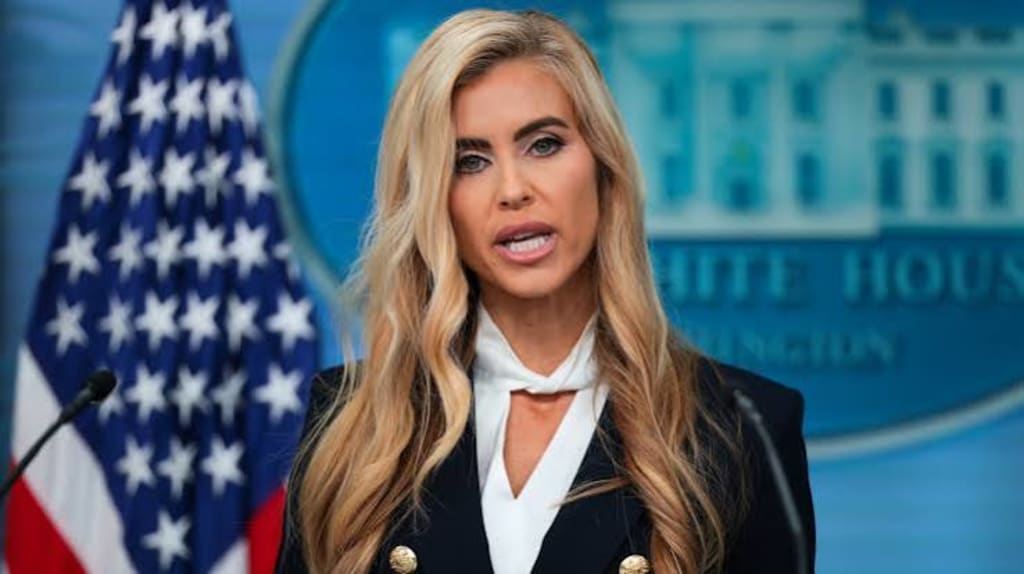
Katie Zacharia did not move to Washington. She had not even packed. Five days after President Trump handed her the job of White House press secretary in an Oval Office meeting, she was standing on the South Lawn while Marine One idled behind her, listening to the president of the United States tell reporters that he had advised her to “reconsider” her career choice. “Honestly, if I were you, I’d reconsider,” Trump said, recounting the conversation. “Katie, do you need this? I don’t think you need this.” Hours later, the White House confirmed she was “transitioning into a new role.” She had started on Monday. It was Friday. Anthony Scaramucci’s eleven-day record, the benchmark of Trump-world humiliation for nearly a decade, had been cut in half.
The speed made headlines. The reasons behind it were older and more revealing.
The first and only press briefing lasted fourteen minutes. For roughly eight of them, Zacharia read from a script, eyes down, her voice carrying the flat, hurried cadence of someone who had been handed a document ninety minutes earlier and told to perform competence. She called on three reporters. All three worked for outlets friendly to the president. She took, by most counts, five and a half minutes of questions before ending the session and walking out.
Somewhere in the middle of it, she referred to her husband as “my president.” She caught herself, laughed, and said, “Good slip.” The clip circulated before she had left the building.
Inside the West Wing, the reaction was not measured. “What the f**k is happening over there?” one Trump adviser asked after watching the briefing, according to CNN. Another adviser, speaking to CNN, put the question more precisely: “Did anyone vet her?” The answer, multiple White House officials confirmed, was no. Trump had seen Zacharia on Fox News, liked her combativeness, and offered her the job on the spot. He bypassed the formal vetting process, bypassed the chief of staff, and bypassed every institutional filter that exists to prevent exactly this outcome.
She was a known quantity only in the sense that Trump had watched her defend him on television. That is not the same as being qualified to stand behind the Brady podium and absorb questions from a press corps that has spent years sharpening its knives on this administration.
The briefing was survivable. The lawyer problem was not.
In her first briefing, a reporter asked Zacharia where she had passed the bar exam. She had been introduced by the president as “an attorney.” Her answer was a sentence that would follow her for the rest of her public life: “When I was in China.”
The sentence did not hold. Within a day, CNN reported that Zacharia had shared at least fifteen social media posts identifying her as an “attorney” between April 2025 and September 2026, amplifying Fox News headlines and One America News segments that used the title. The California bar association told CNN it had no record of her having been licensed to practice law in the state. The Wall Street Journal, citing a source familiar with her thinking, reported that she had taken the California bar exam in 2011 and failed it. She never took it again.
On Thursday night, Sean Hannity, a host whose interview chair has functioned for years as a soft hammock for Trump-aligned guests, did something unusual. He pressed. “You went to Pepperdine law school but you did not pass the bar exam, correct?” Hannity asked. Zacharia conceded the point. Hannity then asked whether she had ever taken the exam a second or third time. “No, I did not,” she said.
Her explanation made it worse. She said she had known she would be moving to China, so the exam result “didn’t matter” to her. She had taken it only so it would not be “on the record” that she declined to sit for it. She said advisers had told her she could call herself a “lawyer” but not an “attorney,” and that the posts were retweets. Hannity asked the question that any sentient political operative would have anticipated: “Why not just say, I went to Pepperdine Law School and chose a different career path? Why get into this long, drawn-out definition between the difference between a lawyer and an attorney?”
Zacharia had no answer that did not sound like a legal brief written by someone who had never practiced law.
In California, holding oneself out as a lawyer without bar admission is a misdemeanor. No one seriously expected prosecution. But the White House does not need a prosecutor to end a career. It needs a headline, and it had several.
By Friday morning, the question inside the West Wing was no longer whether Zacharia would leave, but how. Trump handled it with what the Daily Mail described as “uncharacteristic tenderness,” telling her she did not have to do this if she did not want to. The public framing, Trump advising her to “reconsider,” communications director Steven Cheung announcing a “transition” to a role “to be announced at a later date,” was designed to look like mercy rather than dismissal. It looked like neither.
The mechanics behind the exit were uglier. Multiple reports, led by the Daily Mail, described a “kill order” that came from his chief of staff, Susie Wiles, rather than from Trump. Wiles had been completely bypassed when Trump offered Zacharia the job. She learned about the hiring after the fact. When Zacharia’s weaknesses became public, the appearance on Hannity, a host with whom Wiles is close, was reportedly arranged with the explicit or implicit understanding that it would function as a test she was certain to fail. “Susie gave Fox News the kill order,” a source told the Daily Mail.
The language around her exit sounded like court politics. Wiles did not need to fire Zacharia herself. She needed Zacharia to be seen failing in a venue controlled by allies, so that the removal would look like a consequence rather than a coup. The five-day press secretary was bad at her job, and she was also the wrong person in an internal power struggle she did not know existed.
The timing made the sacrifice cheap. Three weeks before midterm elections, with Trump’s approval rating at 37 percent in the Wall Street Journal poll, the lowest of any president heading into a midterm in the survey’s history, the White House was not in a position to defend a spokesperson whose first week had produced a viral slip of the tongue and a bar-exam scandal. Democrats seized on the departure immediately. House Minority Leader Hakeem Jeffries posted that the press secretary was “gone” and that “MAGA extremists continue to fall apart.” A White House that could not keep a spokesperson for a week was not going to win an argument about competence. Better to fold, call it a transition, and move the story off the front page before the weekend.
Her next move explained more than the firing did.
She did not complain. She did not leak. She did not hint at the kill order, or the bypassed vetting, or the fact that she had been handed a job on a Friday and a podium on a Tuesday with a federal holiday in between. On Friday evening, she posted on X: “President Trump is a kind, wonderful, gracious, thoughtful, enthusiastic and hardworking man. I wish more Americans appreciated him. No one will ever make America great the way he has and continues to. It was an honor to work for him.”
The post was widely mocked. “Pathetic. Have some self-respect,” one critic wrote. The mockery misses the function. The post addressed the system that had discarded her, not the critics mocking it. In Trump’s orbit, failure can be forgiven. Disloyalty cannot. A person who fails can be reassigned, absorbed, given a “new role to be announced at a later date.” A person who complains becomes a story the president cannot control. Zacharia understood, even in the moment of her removal, that the only available move was to perform gratitude so total that it foreclosed any reading of her exit as a rebuke.
Her predecessor understood the same rules and played them better. Karoline Leavitt left in August after a tenure that had made her, at twenty-eight, one of the most effective spokespeople of Trump’s political career. She cited family reasons, and Trump praised her as a “real leader” and announced she would continue as an outside adviser. No one in the White House briefed against her. No one arranged a trap interview. She left with her reputation intact and her relationship with the president preserved, because she had spent her time at the podium making the story about Trump rather than about herself. When she spoke, the press heard the president’s voice. When Zacharia spoke, the press heard a woman reading a script and calling her husband the president.
That is the difference between a spokesperson and a loyalist. A spokesperson manages the principal’s message. A loyalist manages the principal’s ego. Trump has spent a decade blurring the distinction, hiring for the second and expecting the first. Occasionally he finds someone like Leavitt who can do both. More often he finds someone like Zacharia, whose television performances signaled aggression and allegiance but whose qualifications for the actual work had never been tested, because the actual work was never the point.
Five days gives nobody time to learn a job. It does give everyone time to see whether the person was hired for the job. Zacharia was hired because she had defended Trump on television and because the president, three weeks before an election, wanted someone who would defend him louder. She was fired because that is not the same skill as standing at a podium and surviving, and because the person whose authority had been bypassed in her hiring was waiting for the first sign of weakness.
She never moved to Washington. Her family stayed in California. She walked into the briefing room once, read for eight minutes, smiled at the wrong moment, called her husband the president, and then spent the rest of the week explaining why she had called herself a lawyer when she was not one. On Friday, she stood on the South Lawn and listened to the president of the United States tell the press that she might be happier doing something else. That night, she thanked him for the honor.
The podium was empty again by Monday. Someone else will stand behind it. The vetting process, such as it is, has not changed. The impulse that produced Zacharia, hire the fighter, skip the check, deal with the consequences later, has not changed either. Five days set a record. Nobody in the building treated it as a warning.
About the Creator
Jin
Writer of reamstories
https://reamstories.com/jin
Enjoyed the story? Support the Creator.
Subscribe for free to receive all their stories in your feed. You could also become a paid subscriber, letting them know you appreciate their work.
Comments
There are no comments for this story
Be the first to respond and start the conversation.