
Ferguson Marine delivers Type 26 blocks to BAE on Clyde
Ferguson Marine Strengthens Clyde Shipbuilding with Type 26 Delivery to BAE Type 26 Frigate Program Advances as Ferguson Marine Delivers Key Ship Blocks Ferguson Marine Marks Major Milestone in Royal Navy Frigate Construction Clyde Shipbuilding Gains Momentum with Type 26 Block Delivery Ferguson Marine Supports UK's Naval Future with Type 26 Components
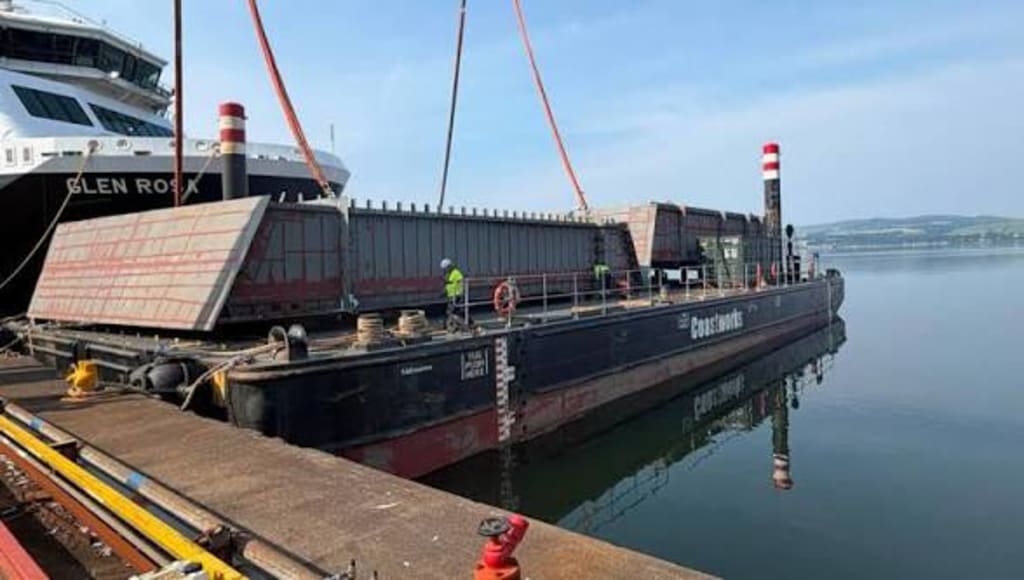
Ferguson Marine has reached an important milestone in its return to major naval manufacturing by successfully delivering structural units for a Royal Navy Type 26 frigate to BAE Systems on the River Clyde. The delivery represents a significant achievement for the Port Glasgow shipyard and highlights the growing role that Scottish shipbuilders are playing in one of the United Kingdom’s most important defence programs.
The announcement comes at a time when the Type 26 frigate program continues to expand. The advanced warships are being constructed by BAE Systems for the Royal Navy and are designed primarily for anti-submarine warfare, making them among the most sophisticated surface combatants planned for British naval service. The vessels are expected to play a central role in protecting carrier strike groups, securing maritime trade routes, and supporting NATO operations for decades to come.
According to Ferguson Marine, the delivered units were produced through collaboration among several Clyde-based maritime firms before being transferred to BAE Systems for integration into the wider shipbuilding process. The achievement demonstrates how modern warships are increasingly constructed through a distributed manufacturing model, where specialized components are fabricated at multiple sites before final assembly at a central shipyard.
The Type 26 program represents one of the largest naval construction projects currently underway in Europe. Eight vessels are being built for the Royal Navy, while international interest in the design has expanded its influence far beyond the United Kingdom. Canada and Australia have selected variants of the Type 26 design for their own future frigate fleets, while Norway has also committed to acquiring ships based on the platform. This growing international adoption has increased attention on the Clyde as a center of advanced naval manufacturing.
For Ferguson Marine, the delivery is particularly significant because it reflects the yard’s efforts to diversify beyond its traditional ferry-building work. The shipyard, which is owned by the Scottish Government, has faced substantial challenges in recent years due to delays and cost overruns associated with ferry projects. Securing defence-related contracts has therefore been viewed as an important opportunity to broaden the company’s workload and strengthen its long-term commercial prospects.
The relationship between Ferguson Marine and BAE Systems began with earlier agreements involving the fabrication of steel units for Type 26 frigates. In 2023, Ferguson secured work connected to HMS Belfast, the third ship in the Royal Navy’s City-class Type 26 fleet. Later agreements expanded that relationship, including contracts associated with HMS Birmingham, further integrating Ferguson into the wider supply chain supporting the naval program.
Industry observers note that the latest delivery demonstrates the effectiveness of collaborative shipbuilding across Scotland’s maritime sector. Rather than concentrating all manufacturing activities at a single location, modern naval construction relies on a network of suppliers, fabricators, engineers, and specialist contractors. This approach helps distribute economic benefits across multiple communities while allowing individual firms to focus on their areas of expertise.
The Clyde has long been associated with shipbuilding excellence. During the nineteenth and twentieth centuries, vessels constructed along the river earned a global reputation for quality and engineering innovation. Although the industry declined significantly in the late twentieth century, major defence programs such as the Type 26 have helped preserve highly skilled jobs and maintain advanced manufacturing capabilities in the region. Today, thousands of workers remain employed across Clyde shipyards and associated supply chains.
BAE Systems continues to invest heavily in modern production facilities to support the Type 26 program. New construction halls, advanced welding technologies, and modular assembly techniques are intended to improve efficiency and reduce build times. These facilities are currently supporting work on multiple vessels simultaneously, including HMS Belfast and HMS Birmingham, while additional ships move through various stages of construction and outfitting.
The modular nature of the Type 26 build process means that precision manufacturing is essential. Individual sections produced by suppliers must meet strict engineering standards before being transported and integrated into larger hull structures. Successful delivery of these units therefore reflects not only production capability but also the ability to satisfy demanding quality and certification requirements associated with naval construction.
Economic benefits from defence contracts are also an important consideration. Shipbuilding projects generate demand for steel fabrication, engineering services, logistics, equipment suppliers, and apprenticeship programs. Supporters argue that sustained naval investment helps preserve industrial skills that might otherwise disappear while creating opportunities for future generations of workers entering the maritime sector.
The successful delivery of Type 26 blocks to BAE Systems is therefore more than a routine manufacturing milestone. It represents continued confidence in Ferguson Marine’s capabilities, reinforces Scotland’s role within the United Kingdom’s defence-industrial base, and contributes to the construction of a new generation of warships designed to meet evolving security challenges.
As construction progresses across the Type 26 fleet, partnerships between major defence contractors and regional shipyards are expected to remain a key feature of the program. For Ferguson Marine, the latest delivery demonstrates tangible progress in securing a place within that future and underscores the continuing importance of the Clyde as a center of British shipbuilding excellence.
About the Creator
Enjoyed the story? Support the Creator.
Subscribe for free to receive all their stories in your feed.
Comments
There are no comments for this story
Be the first to respond and start the conversation.