
Europe’s Spy Chiefs Say Russia Is Preparing to Test NATO. The Baltics Are Saying: Don’t Panic.
Three intelligence leaders, one threat, and a widening split over how close Moscow really is to crossing Article 5.
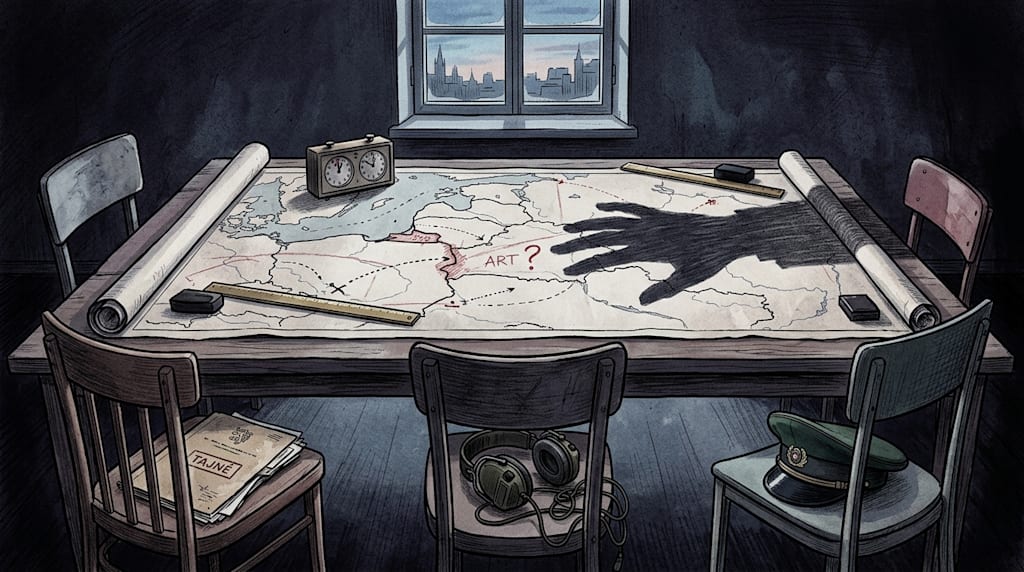
The eve of the storm: The Russian threat and NATO’s credibility dilemma in the eyes of European intelligence
A report based on September 2026 intelligence assessments
I. Warning
On September 20, 2026, The Guardian in London published a report. The headline was short: “European spy chiefs warn Moscow is planning more decisive action against NATO.”
The report quoted three European intelligence agency heads. Michal Koudelka, director of the Czech Security Information Service (BIS), said in an interview at its Prague headquarters that Russia could launch a “limited incursion, false-flag provocation and massive influence operation” against NATO territory, with a time window of “months, not years.” Thomas Nilsson, head of Sweden’s Military Intelligence and Security Service, said the armed drone incident at Leipzig Airport marked a change in kind. Normunds Mežviets, director general of Latvia’s State Security Service (VDD), said something that surprised his peers: “We don’t see indications of an imminent attack.”
Three people, three countries, the same intelligence, three interpretations. That disagreement is normal. Intelligence produces probabilities, not certainties. Decision-makers still have to act on them.
Polish Prime Minister Tusk chose the worst-case reading. He told parliament that intelligence assessments suggested Russia might attack NATO territory with drones or missiles in the coming months, to prove that “Article 5 is more theoretical than practical.” French President Macron called Tusk’s warning “sound and well-documented,” and on Friday urgently summoned party leaders and 2027 presidential candidates to Paris for consultations.
Estonian Foreign Ministry Secretary General Jonatan Vseviov wrote on social media: “If there is reason to fear an attack, rest assured: we will make that clear. Until then, keep calm, carry on and support Ukraine.” The implication was: not yet.
II. Three assessments
Koudelka’s office is in an inconspicuous building in Prague. BIS is the Czech counterintelligence agency, known during the Cold War for infiltration and counterinfiltration. Today its main targets are Russia and China. Koudelka has worked at the agency for thirty years. He lived through Crimea in 2014, the Skripal poisoning in 2018, and the 2021 Vrbětice arms depot explosion. After that explosion, the Czech Republic expelled 18 Russian diplomats on the grounds that GRU agents had carried it out.
In the interview he avoided the word “likely.” What he said was “it’s possible,” then he listed three scenarios: limited incursion, false-flag provocation, massive influence operation. All three occur below the threshold of Article 5. A limited incursion does not constitute an “armed attack.” A false-flag provocation can be denied. An influence operation does not involve military force at all. The Kremlin’s calculation is to cross the line every time, but never cross it.
Mežviets gave a different assessment in his office in Riga. Latvia borders Russia, with a 276-kilometer border, most of it forest and swamp. VDD’s daily work includes counterintelligence, counterterrorism and constitutional protection. Mežviets said he had seen signs that Moscow was preparing for “more decisive action,” but “whether these plans are direct and concrete, or merely part of an overall attempt to spread fear and uncertainty in Western societies, remains an open question.”
This is the precise intelligence-language expression of “insufficient evidence.” Koudelka sees capability. Russia has the capability to do these things. Mežviets asks about intent. Has Russia decided to do these things? Between capability and intent lies the Kremlin’s decision-making black box.
Nilsson was interviewed on the sidelines of a conference in Riga. His agency, the Swedish Military Intelligence and Security Service (MUST), is responsible for military signals intelligence and cybersecurity. He called the Leipzig incident a “game-changer,” for a specific reason. A drone carrying explosives was sent to a busy airport in the heart of Europe, targeting a Ukrainian cargo aircraft. German investigators subsequently identified two suspects. One was identified as a GRU member responsible for logistics. This was the first time Russia’s sabotage operations had escalated from arson and cyberattacks to an armed attack that could cause mass casualties.
“If an attack causes loss of life or severe damage to critical infrastructure, I think that is a game-changer,” Nilsson said. He used the conditional. In intelligence, the conditional means: this has not happened yet, but it has entered the realm of possibility.
III. From arson to drones
Over the past two years, Russia’s sabotage operations in Europe have changed in kind. In 2024, Western intelligence reports confirmed that Russian sabotage operations in Europe had increased fourfold compared with previous years. The Hague-based International Counter-Terrorism Centre counted 189 confirmed attacks and sabotage incidents since February 2022. The incidents span the continent, from Britain to Poland, from Germany to the Baltic states.
The early incidents were mostly arson and sabotage. In March 2024, a warehouse in east London caught fire. It contained military equipment bound for Ukraine. That same month, an IKEA store in Vilnius, Lithuania, was set on fire. The suspects were later linked to Russian intelligence. In May 2024, a shopping center in Warsaw, Poland, caught fire, and Polish Prime Minister Tusk publicly accused Russia of planning the arson. These incidents shared three features: random targets, crude methods, limited effects. Their main function was to create panic and test the West’s reaction threshold.
Beginning in 2025, target selection changed. Mežviets described the shift: “We see them looking to attack railway infrastructure, Ukraine support infrastructure. Right now we see a move towards defence industry targets.”
Germany became the main test case. In August 2026, Leipzig/Halle Airport was attacked by an explosives-laden drone. The German government formally accused Russia of carrying out the attack and took diplomatic measures. It closed the Russian Consulate General in Bonn, terminated the German-Russian cultural information center agreement, and demanded that Russian agency personnel and their families leave Germany as soon as possible. Russian Ambassador Nechayev rejected the accusations as “unsubstantiated,” “absurd” and “contrary to common sense.”
Almost at the same time, a defense manufacturing company in Bavaria was attacked by arson. Two Bulgarian suspects were arrested. Germany’s electricity network suffered two attempted acts of sabotage within 24 hours. Danish intelligence agency PET disclosed that Russia was recruiting Danish citizens through social media and gaming platforms to help plan sabotage against Danish defense companies.
These incidents point at the defense industrial chain supporting Ukraine. Methods escalated from random arson to premeditated armed attack. Effects escalated from panic to supply-chain disruption. Koudelka summarized the strategy as “escalate to de-escalate.” The Kremlin believes that by continuously escalating pressure, European countries will eventually reduce their support for Ukraine.
IV. The gray zone of Article 5
One sentence from Tusk’s parliamentary speech has been widely quoted: Russia’s goal is to prove that “Article 5 is more theoretical than practical.”
That description is precise, not rhetorical. It captures NATO’s core dilemma.
Article 5 of the Washington Treaty states that an armed attack against one member state shall be considered an armed attack against all member states, and each member state will take “such action as it deems necessary,” including the use of armed force. The key phrase is “as it deems necessary.” This gives each member state discretion. Article 5 is a political commitment, not an automatic declaration of war. We will respond together, but how and to what extent must be consulted.
Russia’s hybrid war is designed below the threshold of “armed attack.” If the armed drone in Leipzig had destroyed that Ukrainian cargo aircraft, would that count as an “armed attack”? If the sabotage device on a Polish railway had caused a train derailment, would that count? If GPS jamming over the Baltic had caused a civilian airliner to crash, would that count? These questions have no advance answers, only post hoc explanations.
In September 2025, about 20 Russian drones intruded into Polish airspace during a large-scale Russian attack on Ukraine. The Polish government invoked Article 4 to request consultations. NATO launched a military operation codenamed “Eastern Sentry.” Denmark sent two F-16 fighters and an air-defense frigate. France deployed three Rafale fighters. Germany sent four Eurofighters. Britain said it was ready to support at any time. By August 2026, Slovakia announced it would deploy up to 101 soldiers and a new type of counter-drone radar system.
Operation Eastern Sentry was more than a military deployment. Polish Defense Minister Kosiniak-Kamysz called it “proof that Allied unity has been translated into practical action.” But the operation also exposed NATO’s dilemma. In hybrid war, traditional military deterrence tools such as fighters, air defense systems and troop deployments are necessary but difficult to use against asymmetric threats such as sabotage, cyberattacks and information warfare.
Koudelka mentioned another effect: the continuous consumption of intelligence resources. “Now every fire or every malfunction needs to be investigated by intelligence services as a potential terror attack, and that is a good result for them.” The cost of this attrition warfare is low. Its erosion of alliance credibility is large.
V. Ratcliffe’s Moscow trip
In August 2026, CIA Director John Ratcliffe made an unannounced visit to Moscow. According to The New York Times, Ratcliffe met with Russian intelligence officials but did not meet with Putin. The trip aimed to “privately share his pessimistic assessment of the state of Russia’s war against Ukraine and urge Russia to reach an agreement before the military and economic situation deteriorates further.”
The Washington Post provided another dimension: “Newly obtained intelligence showed that the Kremlin believed the United States had been weakened by the Iran war, which provided an opportunity for Russia to escalate actions against U.S. interests and European allies.”
Ratcliffe stopped in Riga on his way to Moscow. Neither Mežviets nor Koudelka would comment on whether the stop was partly intended to warn the Kremlin not to attack NATO. Kremlin spokesman Peskov denied rumors of a Russian attack on NATO after the visit. He said they had “nothing to do with reality and nothing to do with the intentions of the Russian Federation.”
Before February 2022, U.S. officials repeatedly warned that Russia was preparing a full-scale invasion of Ukraine. The Kremlin repeatedly denied it. The invasion happened. European decision-makers remember that sequence. When Peskov says “nothing to do with reality,” no one can be sure whether it is the truth or another denial.
VI. Negotiation theater
In 2026, the United States tried again to push forward a peace process in Ukraine. In addition to Ratcliffe’s Moscow trip, U.S. envoys Steve Witkoff and Jared Kushner visited Moscow and, for the first time, Kyiv. Trump repeatedly claimed that Putin was interested in a deal.
Nilsson’s assessment: “I haven’t seen any signs that there is a serious consideration in Moscow about real negotiations. My assessment is that they are still thinking that they could achieve their strategic objectives, so they are just playing negotiation theatre.”
The battlefield supports that assessment. Ukraine continued to destroy Russia’s oil infrastructure with long-range strikes, targeting refineries and other facilities. Russia increased airstrikes on Ukrainian cities. In the early hours of one day in September 2026, Ukraine attacked Moscow and other Russian regions with hundreds of drones and missiles, one of the most intense air attacks of the war. Both sides are trying to maximize their position before possible negotiations.
Moscow has repeatedly said that providing weapons, intelligence and military advisers to Ukraine makes Western countries participants in the war and legitimate targets. So far it has avoided actions that might provoke a coordinated NATO response. Instead, there have been sabotage operations described by Western agencies, aimed at Ukraine’s most vocal supporters, and one-off incidents apparently intended to test boundaries.
Koudelka said the current Russian tactic is “escalate to de-escalate.” The Kremlin wants to push at weak points in Western societies to suppress their support for Ukraine’s war effort. “They believe if they escalate enough, then European countries will decide not to support Ukraine.”
VII. Between calm and panic
The Baltic states are in a strange position. For many years, they criticized Western Europe for being too soft on Russia. Now they are calling on some Western leaders to lower their public tone.
Mežviets’s concern is specific. Overstating the invasion threat could lead to capital flight, shrinking investment and social panic. Those consequences would weaken these countries’ resistance. Estonia’s Vseviov criticized “panic on social media,” calling on the public to “keep calm, carry on and support Ukraine.”
The Baltic position is a prudent management of how the threat is communicated, not a denial of it. The Baltic states border Russia. They know that panic itself can become a weapon. One of the Kremlin’s information warfare goals is to create division and fear in Western societies. If Western public discussion turns into panic about an imminent invasion, the Kremlin wins. It wins not because it actually invaded, but because it made the West consume itself in fear.
Mežviets said: “Before 2022, we constantly warned our Western European partners about the threat from Russia, but most of the time our voices were not listened to. In 2022, the approach of our partners changed. They said it turns out the Balts and the Poles had been right.” The implication: we do not need to exaggerate the threat to prove ourselves. The threat itself is enough.
VIII. A conclusion without conclusion
All three intelligence chiefs agree on one thing: whether or not a direct attack occurs, Russia’s sabotage operations in Europe will intensify in the coming months.
Nilsson described several goals of Russia’s sabotage activity: reducing support for Ukraine, creating divisions within NATO, and alarming European populations. “I think Moscow would love NATO to have endless discussion about Article 4 consultations, but coming up with no actions.”
Koudelka described another effect: the continuous consumption of intelligence resources. “Now every fire or every malfunction needs to be investigated by intelligence services as a potential terror attack, and that is a good result for them.”
Mežviets described the evolution of target selection: from randomized sabotage and arson to specific targets directly linked to Western support for Ukraine. “If you do this then the psy-op effect is reached anyway, so you get both things in one.”
These judgments point in the same direction. Russia’s hybrid war will not culminate in a single dramatic event. It will gradually erode Europe’s security through countless seemingly isolated incidents: a fire, a drone intrusion, a railway disruption.
Countering this threat requires more fighters and air defense systems. It also requires political will and institutional capacity to identify, attribute and rapidly respond to low-intensity attacks. NATO faces a classic gray-zone dilemma. If it responds forcefully to every low-intensity provocation, there is a risk of escalation into direct conflict. If it chooses restraint, it may be interpreted as weakness, further encouraging Moscow’s risky behavior.
In this dilemma, there is no perfect answer. There is continuous judgment, coordination and determination. As Koudelka said: “A lot of people are doing everything they can to make sure this doesn’t happen.” That is effort, not a guarantee. In intelligence, that is the working condition.
About the Creator
Jin
Writer of reamstories
https://reamstories.com/jin
Enjoyed the story? Support the Creator.
Subscribe for free to receive all their stories in your feed. You could also become a paid subscriber, letting them know you appreciate their work.
Comments
There are no comments for this story
Be the first to respond and start the conversation.