
Elections Live Updates: Wisconsin Democratic Governor Primary Sees Major Upset
David Crowley narrowly defeats progressive favorite Francesca Hong in Wisconsin’s Democratic gubernatorial primary, setting up a high-stakes November contest in a key battleground state.
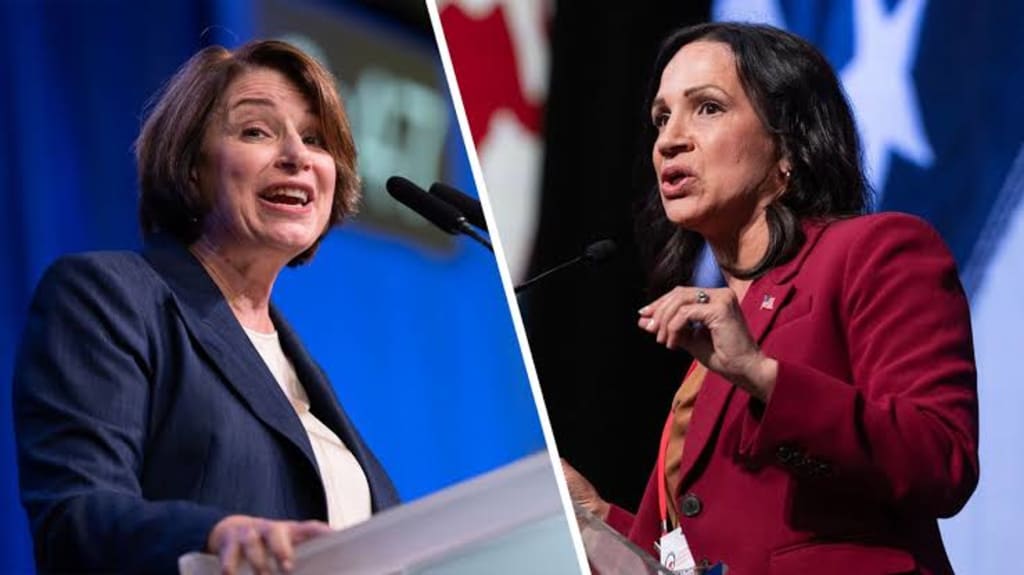
Wisconsin’s 2026 gubernatorial election took an unexpected turn after Milwaukee County Executive David Crowley secured the Democratic nomination in a remarkably close primary against state Representative Francesca Hong. The result surprised many observers because Hong had been viewed as the leading candidate during much of the campaign.
With most votes counted, Crowley held a lead of only a few thousand votes, illustrating just how competitive the Democratic contest became. The narrow result has immediately intensified attention on the November general election and what the primary outcome could mean for Democrats in one of America’s most closely contested states.
David Crowley Delivers an Election-Night Upset
Crowley’s victory represents one of the biggest surprises of the Wisconsin primary season. The Milwaukee County executive had faced a difficult campaign and briefly suspended his gubernatorial bid in July before returning to the race.
His comeback received a significant boost when outgoing Democratic Governor Tony Evers endorsed him. Evers, who has served as Wisconsin governor since 2019, decided not to seek another term. His endorsement helped Crowley present himself as a candidate capable of uniting different parts of the Democratic Party.
Crowley ultimately defeated Hong by an extremely narrow margin. Reports based on Associated Press results showed Crowley with approximately 39.8% compared with Hong’s 39.4%, a difference of just over 3,000 votes as most ballots were counted.
The close result demonstrates how competitive the Democratic primary became and how quickly the race changed during its final weeks.
Francesca Hong’s Progressive Campaign
Hong entered the race with a strong progressive profile and significant support among voters seeking a more left-leaning Democratic agenda.
Her campaign emphasized policies including universal childcare, expanded public education funding, paid leave and more affordable healthcare. She also proposed a temporary pause on new data-center construction, making technology infrastructure and environmental concerns part of her campaign message.
Hong's campaign also attempted to capitalize on growing enthusiasm among progressive voters. Recent Democratic primary victories by progressive candidates elsewhere had created expectations that Wisconsin could deliver another breakthrough for the movement.
Instead, the Wisconsin result produced a narrow setback.
Still, Hong's performance should not be dismissed. Coming within a few thousand votes of winning a major-party gubernatorial nomination in a battleground state demonstrates that progressive voters remain an important force within Wisconsin Democrats.
Why Wisconsin Matters
Wisconsin is widely regarded as one of the most important swing states in American politics. The state has repeatedly produced close elections, making the 2026 governor's race particularly significant.
Republicans selected U.S. Representative Tom Tiffany as their gubernatorial nominee, meaning Crowley will now face a Republican opponent who has been closely associated with President Donald Trump. Tiffany ran unopposed in the Republican primary.
The November election is therefore expected to become a major test of both parties' ability to attract independent voters, mobilize their bases and compete across Wisconsin's urban, suburban and rural communities.
For Democrats, Crowley has argued that his political approach gives the party its strongest opportunity to compete statewide.
The Electability Argument
One of the defining themes of Crowley's campaign was electability.
Rather than focusing primarily on ideological differences, Crowley argued that Democrats needed a candidate capable of building a broad coalition. His strategy emphasized strong Democratic turnout in Milwaukee, improved performance in suburban communities and maintaining support in rural areas.
That message appears to have resonated with enough primary voters to overcome Hong's earlier advantage.
The result could encourage other Democratic candidates in competitive states to emphasize practical governing records and coalition-building rather than relying exclusively on ideological enthusiasm.
What the Result Means for Democrats
The Wisconsin primary offers a complicated message for the Democratic Party.
On one hand, Crowley's victory demonstrates that moderate or establishment-backed candidates can still defeat progressive challengers, even during a period when progressive candidates have recently achieved notable primary victories.
On the other hand, Hong's near-win demonstrates that progressive politics remains highly competitive within the Democratic electorate.
The Wisconsin result therefore should not automatically be interpreted as a rejection of progressive ideas. Instead, it may indicate that Democratic voters are balancing ideological priorities with concerns about who can win a difficult general election.
The Associated Press described the result as a setback for the recent progressive momentum but noted that Hong's strong showing reflected significant dissatisfaction among Democratic voters.
The Democratic primary may be over, but the real campaign is now beginning.
Crowley must unite Democrats who supported Hong while simultaneously reaching voters who may not normally vote for Democratic candidates. His ability to consolidate the party could become one of the most important factors in the general election.
Hong's supporters will also be watching closely to see whether Crowley incorporates issues important to the progressive base.
Meanwhile, Republicans are likely to portray Crowley as part of the Democratic establishment while presenting Tiffany as the candidate who can bring a different political direction to Wisconsin.
November Could Be Highly Competitive
Wisconsin's gubernatorial contest is now positioned as one of the most closely watched state-level elections of 2026.
Crowley enters the general election with the advantage of having survived an intense Democratic primary, but the narrow victory also reveals divisions within his party. Tiffany, meanwhile, will attempt to capitalize on Republican enthusiasm and attract voters who are dissatisfied with Democratic leadership.
The final outcome will depend on turnout, economic concerns, healthcare, education, abortion policy, taxes, public safety and the broader national political environment.
For voters, the primary result has transformed a crowded Democratic contest into a direct general-election battle.
Conclusion
David Crowley's narrow victory over Francesca Hong has reshaped Wisconsin's 2026 governor's race. His comeback, supported by Governor Tony Evers, ultimately overcame Hong's strong progressive campaign and polling advantage.
The result highlights a continuing debate inside the Democratic Party over ideology, electability and the best strategy for competing in battleground states.
Now Crowley must turn a razor-thin primary victory into a broad statewide coalition. With Republican nominee Tom Tiffany waiting in November, Wisconsin voters are preparing for another high-stakes political contest that could attract national attention.
The Wisconsin governor's election is no longer simply about who won the Democratic primary. It has become an important test of which political strategy can persuade voters in one of America's most closely divided states.
About the Creator
Enjoyed the story? Support the Creator.
Subscribe for free to receive all their stories in your feed.
Comments
There are no comments for this story
Be the first to respond and start the conversation.