
Egypt says fire on ships at Damietta port caused by drone
Authorities investigate suspected drone incident as concerns grow over maritime security and regional instability
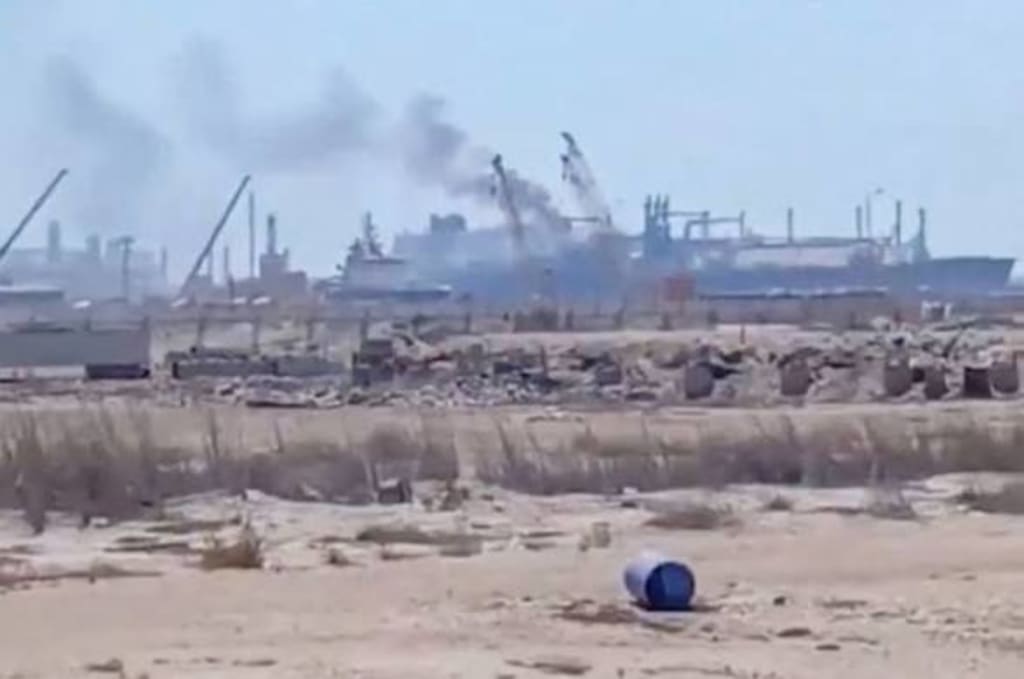
Egyptian authorities have announced that a fire involving ships at Damietta Port was likely caused by a drone, raising fresh concerns about the security of critical infrastructure and shipping routes in the Middle East. The incident, which occurred at one of Egypt’s most important Mediterranean ports, has prompted an official investigation and heightened attention to the growing risks facing maritime trade in a region already affected by geopolitical tensions.
According to officials, emergency teams responded quickly after reports of a fire aboard vessels located within the port area. Initial findings suggested that the blaze was linked to the impact of a drone, although authorities stated that investigations remain ongoing to determine the exact circumstances surrounding the incident. No immediate claims of responsibility were reported, and officials have emphasized the importance of completing a thorough technical assessment before reaching final conclusions.
Damietta Port is one of Egypt’s most significant commercial gateways, handling large volumes of cargo and serving as an important link between Egypt and international markets. Located on the Mediterranean coast, the port plays a strategic role in regional trade and logistics, supporting both domestic economic activity and international shipping operations.
The reported drone-related fire comes at a time when concerns about maritime security have increased across the Middle East. Shipping companies, governments, and international organizations have closely monitored developments in the region as conflicts and political tensions have created new challenges for global trade routes.
Security analysts note that ports, energy facilities, and transportation infrastructure have become increasingly vulnerable to modern threats involving unmanned aerial vehicles. Drones can be used for surveillance, intelligence gathering, or direct attacks, making them a growing concern for authorities responsible for protecting critical assets.
Egypt has invested heavily in strengthening security around major ports, transportation networks, and economic infrastructure. The country’s strategic location, including its proximity to the Suez Canal, makes maritime stability a matter of both national and international importance. Any disruption affecting shipping operations can have consequences that extend beyond Egypt’s borders.
Emergency response teams reportedly worked to contain the fire and prevent further damage to nearby facilities and vessels. Port operations were closely monitored following the incident, with authorities evaluating whether any adjustments were necessary to maintain safety and continuity of trade activities.
The investigation is expected to involve multiple agencies, including maritime authorities, security services, and technical specialists. Experts will likely examine physical evidence, surveillance footage, flight data, and damage patterns to determine how the incident occurred and whether additional security measures are required.
Maritime trade remains one of the foundations of the global economy, with millions of tons of goods moving through ports every day. Incidents involving ships or port infrastructure can affect supply chains, insurance costs, and transportation schedules, particularly when they occur in strategically important locations.
Industry observers say the Damietta incident highlights the changing nature of security threats facing the shipping sector. Traditional concerns such as piracy and smuggling have increasingly been joined by risks involving drones, cyberattacks, and advanced technologies capable of disrupting commercial operations.
Egypt’s economy depends significantly on trade, logistics, tourism, and revenues connected to maritime transportation. Protecting key infrastructure is therefore considered essential to maintaining economic stability and investor confidence. Authorities have repeatedly emphasized their commitment to safeguarding critical facilities against emerging threats.
The incident has also attracted attention from international shipping companies operating in the region. Businesses involved in global trade carefully monitor security developments because disruptions can affect shipping schedules, fuel costs, and overall operational efficiency. Even isolated incidents can influence risk assessments and insurance decisions.
Regional tensions have led many governments to review their defensive capabilities against unmanned aerial systems. Advances in drone technology have made these devices more accessible and capable, creating new challenges for security agencies around the world. Counter-drone systems are increasingly being deployed at airports, military installations, ports, and other sensitive locations.
Experts caution that while drones can cause significant damage, determining responsibility can be difficult. Investigators often need to analyze technical evidence, flight characteristics, and operational methods before identifying the source of an attack. As a result, official investigations may take time before definitive conclusions are reached.
The Damietta Port incident underscores the importance of preparedness in an era where critical infrastructure faces a wider range of threats than ever before. Governments and private operators are investing in surveillance systems, detection technologies, and emergency response capabilities to reduce vulnerabilities and improve resilience.
For Egypt, maintaining the security of its ports is especially important because of the country’s central role in international commerce. The nation serves as a key connection point between Europe, Africa, Asia, and the Middle East, making uninterrupted maritime operations a priority for both economic and strategic reasons.
While authorities continue their investigation, the incident serves as a reminder of how rapidly modern security challenges can emerge. A single drone-related event has the potential to disrupt operations, damage infrastructure, and raise concerns among businesses and governments alike.
As investigators work to establish the full facts, attention will remain focused on the lessons that can be learned from the incident and the measures needed to prevent similar occurrences in the future. Whether viewed as an isolated event or part of a broader regional security challenge, the fire at Damietta Port highlights the growing importance of protecting maritime infrastructure in an increasingly complex geopolitical environment.
About the Creator
Enjoyed the story? Support the Creator.
Subscribe for free to receive all their stories in your feed.
Comments
There are no comments for this story
Be the first to respond and start the conversation.