
Denmark Kept the Flag. America Took the Radar.
Inside the 75-year deal that gave the U.S. permanent control of Greenland, and left 56,000 people asking who really owns their future.
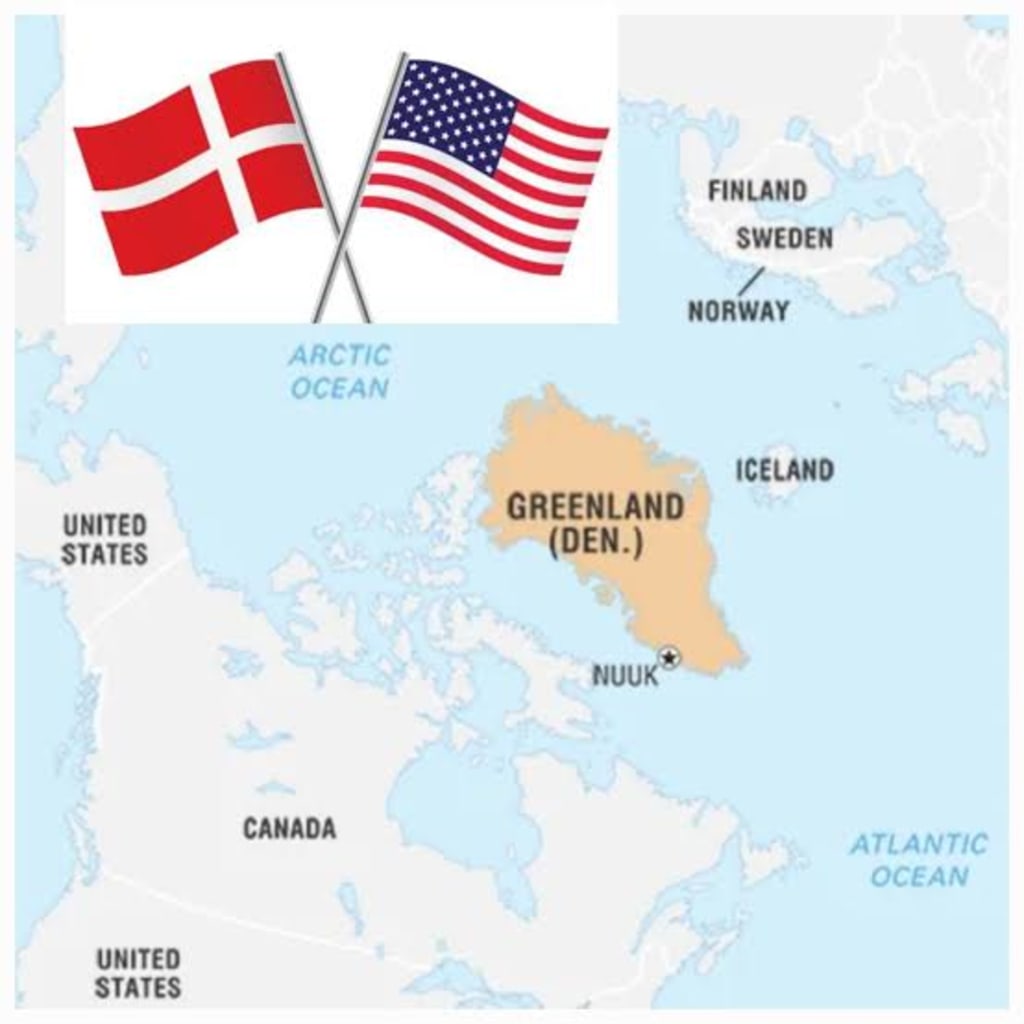
The separation of sovereignty and governance: how the US-Denmark Greenland agreement reshapes the Arctic order
I. The tents came before the signature
On April 27, 1951, Copenhagen. Danish Foreign Minister Rasmussen signed his name to the Greenland Defense Agreement. Article 2 was clear: the United States had the right to “construct, install, maintain, and operate” military facilities on Greenland, station personnel, and control the landing and mooring of ships, aircraft, and water-based craft. No one drew the boundaries of those facilities. Before the ink on the signature was dry, U.S. Army engineers were pitching tents on the frozen ground of Greenland’s northwest coast. The runway at Thule Air Base had not yet taken shape, but radar antennas were already rising.
Over the next seventy-four years, the Danish Parliament voted twice more. In December 2023, during a visit to the United States, Danish Foreign Minister Rasmussen signed a draft new defense agreement allowing the U.S. military broad use of three Danish air bases: Karup, Skrydstrup, and Aalborg. On June 11, 2025, the Danish Parliament passed the agreement by 94 votes to 11. Two of the opposing votes came from Greenland’s representatives in the Danish Parliament. Article 30, Section 3 of the act was explicit: the agreement did not apply to the Faroe Islands or Greenland.
That act, which excluded Greenland, instead opened space for the Greenland question.
In March 2025, the motorcade of the U.S. Vice President’s wife stopped at Nuuk Airport. Staff members went door to door, hoping local residents would accept a visit. Nuuk is Greenland’s capital, with a population of less than twenty thousand. One Inuit hunter said no. A second said no. A third said no. The U.S. delegation stayed in Nuuk for four hours and did not open a single door. That same month, Trump told reporters at the White House: “We need Greenland. For national security, we need it.” He did not mention rare earths. But in the act passed by the Danish Parliament in June 2025, U.S. military contractors’ mineral exploration activities in Greenland were exempt from tariffs and VAT.
II. The clauses escalate in three steps
On September 18, 2026, Trump announced on social media that the United States had reached an agreement with Denmark and its autonomous territory Greenland. Under the agreement, the United States would obtain “permanent control” over Greenland’s security and all other related matters. The U.S. side would not have to pay for it.
The agreement’s clauses escalate in three steps.
The first step is indefinite duration. Trump made clear this was an arrangement “with no expiration date.” The United States would have full capability to take measures it deemed necessary to safeguard Greenland and U.S. security. Even if Greenland eventually achieves independence through self-determination, the U.S. military presence on the island will not automatically lapse due to a change in sovereignty. The State Department said the agreement gives the United States permanent access, base use, and overflight rights, and that “even if Greenland becomes independent in the future, the relevant arrangements will continue.”
The second step is exclusivity. Trump said that from now on, “no adversary of the United States may establish a military base, maintain a military presence, or make sensitive investments in Greenland without explicit written approval from the U.S. side.” This clause grants the United States a veto over Greenland’s external security relations. In his statement, Greenlandic Prime Minister Nielsen said the agreement “recognizes Greenland’s interests and our position in international cooperation.” He did not say how much autonomy Greenland retained over its own external security cooperation.
The third step is the expansion of military presence. Trump announced that the United States would “immediately begin the process of establishing a large-scale military presence in suitable areas of Greenland.” The United States currently operates only one major facility in Greenland, Pituffik Space Base, with more than 600 military personnel stationed there. During the Cold War, the United States at one point had as many as 17 military facilities in Greenland. A “large-scale military presence” means a substantial upgrade of the U.S. military deployment in the Arctic.
Stacked together, these three steps constitute an institutional arrangement different from traditional defense cooperation. The 1951 agreement allowed the United States to carry out military construction within “defense areas.” But the preamble of that agreement explicitly placed these arrangements under the NATO framework, and Denmark retained the right of “free movement.” The new agreement removes these restrictions.
III. Sovereignty is in Denmark’s hands; governance is in Article 4, Section 2
In a statement in Copenhagen, Danish Prime Minister Frederiksen said: “This agreement recognizes the sovereignty and territorial integrity of the Kingdom of Denmark, as well as the right of the people of Greenland to self-determination.”
In a statement in Nuuk, Greenlandic Prime Minister Nielsen said: “The agreement recognizes Greenland’s interests and our position in international cooperation.”
Both statements are correct. Greenland is legally an autonomous territory of the Kingdom of Denmark, with a high degree of autonomy. Defense and foreign affairs are managed by the Danish government. The Greenland Self-Government Act, which took effect in 2009, stipulates that Greenland has the right to achieve independence in the future through a referendum. The Danish Prime Minister’s statement is legally impeccable.
Between the preservation of legal sovereignty and the transfer of actual control, however, there is enormous tension.
One of the core functions of a sovereign state is to decide autonomously on military presence and security arrangements on its territory. When the United States obtains exclusive military access, the right to unilaterally build additional bases, and a veto over third-country military presence, Denmark and Greenland’s autonomy in security affairs has already been substantially compressed. The 1951 agreement granted the United States broad military authority, but Denmark retained two key rights: stationing Danish military liaison personnel within defense areas, and consulting with U.S. commanders on “important local matters.” The new agreement’s clauses do not mention similar arrangements. Mark Jacobsen, an associate professor at the Royal Danish Defence College, once pointed out that Pituffik Base is central to defending the United States, because “if Russia launches missiles at the United States, the shortest route for nuclear missiles is via the Arctic and Greenland.” The ability to defend the United States is not the same as the power to decide one’s own security policy.
The United States has sought to rewrite its defense agreement with Denmark, seeking “complete autonomy” for its military presence in Greenland. It has even considered taking back the military base as U.S. territory, obtaining a U.S. “military enclave” in Greenland. If the “sovereign base” model ultimately takes root in Greenland, following the British “Sovereign Base Areas” model in Cyprus, the United States would have full sovereign attributes over Pituffik Base and its surrounding area. Denmark would nominally maintain sovereignty over the rest of Greenland.
As of the day the agreement was announced, the full text had not been made public. Exactly what legal powers Trump’s “permanent control” includes, and how these powers connect with the existing authority of Denmark and Greenland, remain to be explained. U.S. Secretary of State Rubio’s statement has already given the characterization: the agreement “permanently and thoroughly” resolves Washington’s national security concerns regarding Greenland. Greenland will long remain part of the North American strategic defense area.
IV. Two structural predicaments
Why is the United States so fixated on Greenland? Trump’s stated reason is national security. The AN/FPS-132 Missile Attack Warning Radar system deployed at Pituffik Space Base can detect space targets 5,500 kilometers away. It is one of six such radars in the U.S. missile attack warning system. The base hosts the U.S. Space Force’s 12th Space Warning Squadron, which provides missile warning, space surveillance, and space control to North American Aerospace Defense Command and Space Force Command. Greenland’s high latitude gives it excellent geographical conditions, allowing direct detection of more than 800 deep-space targets. The shortest path for strategic missiles from Europe to North America passes directly over Greenland.
The United States already had these in 1951. Under the 1951 defense agreement, it already operated bases in Greenland and did not need to acquire sovereignty. What changed is that after the melting of Arctic ice, Greenland’s strategic value expanded from a single missile warning outpost to a node combining shipping lane control, resource access, and Arctic military presence.
According to 2025 data from the U.S. Geological Survey, Greenland has approximately 1.5 million metric tons of rare earth reserves, ranking 8th globally. The Geological Survey of Denmark and Greenland estimates actual reserves could be as high as 36.1 million metric tons. Greenland possesses 25 of the EU’s 34 critical raw materials and 43 of the 50 minerals listed by the United States as critical to national security. But there is a gulf between theoretical reserves and extractable capacity. Eighty percent of Greenland is covered by ice. Extreme climate and strict environmental regulations drive up extraction costs. “At current prices and production costs, Greenland’s rare earth resources are not economically viable in the near term.”
This means that what the United States is locking in is not current rare earth supply, but future exclusive access. In March 2025, while the U.S. delegation could not open doors in Nuuk, the tax exemption clause for mineral exploration was already written into the documents on the negotiating table between the United States and Denmark.
Denmark’s situation is a problem on another level. Denmark’s geopolitical environment has deteriorated sharply since the Russia-Ukraine conflict, with increased Russian military activity in the Baltic and the Arctic. Sweden, Norway, and Finland have all signed similar defense agreements with the United States. If Denmark does not follow suit, it will become a weak link in the Nordic security net. Signing the agreement is a strategic trade-off: exchanging the transfer of security control for a U.S. defense commitment in Greenland. Danish Defense Minister Poulsen said in January 2026 that Arctic security is central to Denmark and its allies, and Denmark will “further enhance operational capabilities in the region” with allies. But who is the subject of “enhancing operational capabilities”? The answer is in the agreement text.
Two structural predicaments collided. The United States cannot tolerate any strategic node outside its control. Denmark cannot independently guarantee its own security outside the NATO framework. This is not a misunderstanding. It is not a conflict created by an external villain. It is the collision of two structural predicaments. Greenlandic Foreign Minister Egede put it bluntly: “Our dream is self-determination, but for now we must first protect the future. If the United States takes us over, the dream of self-determination will no longer exist.”
V. The pothos on the windowsill in Nuuk
Greenlandic independence movement leader Aqqaluk Lynge is 78 this year. In the 1970s, he co-founded the pro-independence party Inuit Ataqatigiit and long criticized Danish colonial rule. His position has changed. He told Reuters: “We feel betrayed by the United States. We are in a very difficult position, and now the only ones who can save us are Denmark and Europe.”
Trump’s threats changed the political wind in Greenland. In the March 2025 Greenlandic parliamentary election, the pro-Denmark Democrats, who advocate gradual independence, saw their support surge from about 9 percent to 30 percent, becoming the largest party. The radical party that had long held high the banner of “immediate independence” lost support. Trump’s remarks did not make Greenlanders more willing to become independent. Instead, they made more people choose to remain temporarily under Denmark’s shelter.
Greenland has a population of about 56,000, of whom more than 90 percent are Inuit. Lynge’s grandmother did not have the right to vote before 1953. When she was born, she was a “colonized person,” without voting rights or human rights protections. Lynge said his goal in struggling was “to be able to obtain protection in international law and in daily life.”
Trump’s threats to annex Greenland have already caused a clear psychological impact on local society. A survey of 308 Greenlandic residents found that the proportion experiencing psychological distress in the past year rose from 7 percent to 31 percent. Trump’s threats, the survey found, affected the mental health and well-being of islanders. Two local businesspeople began stockpiling food and ammunition. Mining executive Jensen’s 21-year-old son told him he wanted to buy ammunition to prepare for potential conflict.
During an interview in Nuuk, Nielsen had a pothos on the windowsill behind him. As he said, “The agreement recognizes Greenland’s interests,” he tapped his fingers on the table three times.
Europe’s reaction remained at the level of statements. EU High Representative for Foreign Affairs and Security Policy Kallas once said transatlantic relations had “suffered a major blow.” Twenty-three members of the European Parliament signed a letter to the President of the European Parliament. They proposed that if the United States continues to threaten to control Greenland, the European Parliament should freeze debate and voting on the EU-U.S. trade agreement. These letters were archived. The trade agreement continued to advance.
Swedish Prime Minister Kristersson said on social media that at Denmark’s request, Sweden had dispatched military personnel to Greenland. The German Ministry of Defense announced it was sending military forces to Greenland. Denmark launched the multinational military exercise “Arctic Endurance,” planned to last until the end of 2026. These actions took place before the agreement was signed. After the agreement is signed, how they will continue to operate under the framework of “without prior written permission from the U.S. side,” no one has given an answer.
VI. The same color
In 1951, the radar operator at Thule Base saw the tracks of Soviet bombers on the screen. That year, the base runway had just been paved. The thermometer in the tent read minus forty degrees. The operator’s breath condensed into a thin mist on the screen. He wiped it with his sleeve and kept staring at the arc extending from the Arctic.
In 2026, the radar operator at Pituffik Base sees merchant ship signals from the Arctic shipping lanes on the screen. They are marked in the same color as Russian missile warning signals. Pituffik has the U.S. military’s northernmost deep-water port and airport on Earth. It is the only U.S. base in the Arctic capable of handling large aircraft. Of the 12 C-130 transport aircraft of the U.S. Air Force’s 139th Squadron, 10 are equipped with skis. The crews call them “Ski Birds.” They provide long-term logistical support to the two U.S. polar research camps in Greenland. They often deliver ice core drilling samples to the United States to monitor the effects of global warming on Arctic ice.
Denmark still holds sovereignty over Greenland. The people of Greenland can still vote to decide their own future. Greenlandic Prime Minister Nielsen says the agreement “recognizes Greenland’s interests.” Danish Prime Minister Frederiksen says the agreement “recognizes the sovereignty and territorial integrity of the Kingdom of Denmark.”
But the radar screen at Pituffik Base is not in Nuuk, not in Copenhagen. It is in the servers at Peterson Space Force Base in Colorado.
About the Creator
Jin
Writer of reamstories
https://reamstories.com/jin
Enjoyed the story? Support the Creator.
Subscribe for free to receive all their stories in your feed. You could also become a paid subscriber, letting them know you appreciate their work.
Comments
There are no comments for this story
Be the first to respond and start the conversation.