
Costa Rican Diplomat Emerges as Strong Contender to Become First Female UN Secretary-General
Rebeca Grynspan has taken an early lead in the race to succeed António Guterres, raising the possibility that the United Nations could appoint its first woman secretary-general.
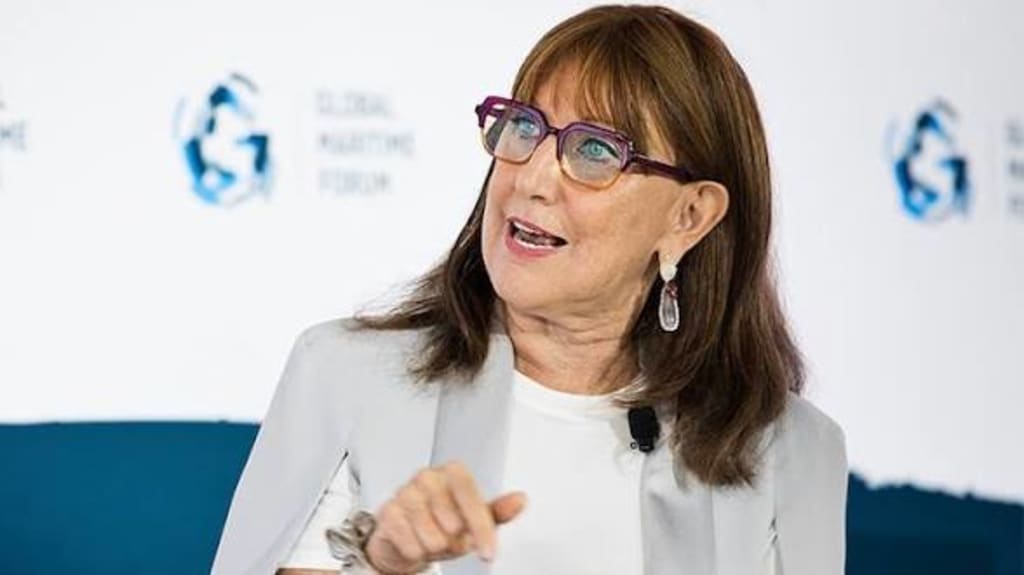
A new chapter may be opening in the history of the United Nations as Costa Rican diplomat and economist Rebeca Grynspan emerges as one of the strongest contenders to become the organisation's next secretary-general. An informal Security Council poll has placed Grynspan at the front of the early field, strengthening hopes among advocates who have long called for the UN's top diplomatic position to be held by a woman.
The race remains far from decided, however. The appointment requires agreement within the Security Council before the General Assembly formally appoints the successful candidate. The process is therefore shaped not only by qualifications and diplomatic experience but also by the complex geopolitical interests of the five permanent Security Council members.
Rebeca Grynspan's Early Lead
Grynspan's candidacy has gained momentum following the first informal Security Council straw poll. According to Reuters, she received 10 “encourage” votes, putting her narrowly ahead of Guyanese candidate Carolyn Rodrigues-Birkett, who received nine, while International Atomic Energy Agency chief Rafael Grossi received seven.
Although the poll is not a formal election, it provides an important indication of how candidates are initially being viewed by Security Council members.
The result has immediately increased attention on Grynspan, particularly because the UN has never had a woman serve as secretary-general since its establishment in 1945.
Her position is therefore significant on two levels. She is competing for one of the most influential diplomatic posts in the world while also representing an opportunity for a historic gender milestone at the United Nations.
A Long International Career
Grynspan brings extensive experience in economics, government and international diplomacy to the contest.
Costa Rica officially nominated her for the secretary-general position in March 2026, describing her as a leader with extensive international experience, a commitment to multilateralism and the management skills required for the UN's demanding role.
Before entering the current contest, Grynspan served as secretary-general of the United Nations Conference on Trade and Development, commonly known as UNCTAD, beginning in 2021. Her work placed her at the centre of international discussions about global trade, development, inequality and economic challenges.
She has also held senior positions within Costa Rica's government and international institutions, giving her experience across both domestic policymaking and multilateral diplomacy.
Why Her Background Matters
The next UN secretary-general will inherit an organisation operating in an increasingly divided international environment.
Wars, humanitarian emergencies, climate change, economic inequality and disagreements among major powers have placed enormous pressure on the UN system. The organisation is frequently expected to coordinate international responses despite divisions between its most powerful member states.
Grynspan's background in development and international economics could therefore become an important part of her appeal.
The secretary-general does not function like a president with independent executive authority. Instead, the position depends heavily on negotiation, persuasion, diplomacy and the ability to build consensus among countries with competing interests.
The United Nations itself explains that the Security Council must recommend a candidate before the General Assembly appoints the secretary-general. A successful Security Council recommendation requires at least nine votes and no veto from any of the five permanent members: China, France, Russia, the United Kingdom and the United States.
The Historic Possibility of a Female UN Chief
Perhaps the most significant aspect of Grynspan's candidacy is the possibility of breaking one of the UN's longest-standing leadership patterns.
Since the organisation was founded after the Second World War, every secretary-general has been a man. The current selection process has therefore generated renewed international discussion about whether the next leader should finally be a woman.
Grynspan is not the only female candidate. The field includes several experienced women, including Guyana's Carolyn Rodrigues-Birkett, former Chilean president Michelle Bachelet and former Ecuadorian foreign minister María Fernanda Espinosa.
The presence of several highly qualified women means that the debate is no longer simply about whether a woman could lead the UN. It is increasingly about which candidate can build the broad international coalition required to win.
Geopolitics Could Decide the Race
Despite Grynspan's early advantage, the straw poll does not guarantee victory.
The five permanent members of the Security Council possess veto power, making their positions particularly important. A candidate could receive substantial support from other countries but still fail to secure the recommendation if a permanent member objects.
The selection process can therefore become a prolonged diplomatic negotiation.
Further rounds of informal polling are expected as governments assess candidates and determine which contender has the greatest chance of achieving the necessary consensus. Reuters has reported that a second informal poll was being targeted for August 21.
Grynspan's Message of Multilateralism
One of the central themes surrounding Grynspan's candidacy is the defence of multilateral cooperation.
At a time when international institutions face criticism and major powers increasingly pursue competing strategic interests, the next secretary-general will need to persuade governments that cooperation remains valuable.
Grynspan's career at UNCTAD gives her direct experience with the economic consequences of international instability. Her supporters argue that this background could help her address the development, trade and inequality issues that frequently intersect with security and political crises.
Her personal history has also attracted attention. Reports have noted that her parents were Holocaust refugees who eventually settled in Costa Rica, an experience that has contributed to her emphasis on peace and international cooperation.
What Happens Next?
The UN selection process will continue through diplomatic consultations, candidate evaluations and Security Council polling. Eventually, the council must agree on a recommendation before the General Assembly formally appoints the next secretary-general.
António Guterres is expected to leave office at the end of 2026 after two five-year terms.
Until a final recommendation is reached, Grynspan should be regarded as a leading contender rather than the confirmed next UN chief.
Conclusion
Rebeca Grynspan's emergence at the top of the first Security Council straw poll has transformed her candidacy into one of the most closely watched developments in the race for the next United Nations secretary-general.
Her extensive international career, economic expertise and experience leading UNCTAD give her a substantial diplomatic profile. More importantly, her potential appointment could make history by placing the first woman at the head of the United Nations.
But the road to the UN's top office is determined by diplomacy as much as credentials. With several strong candidates competing and the permanent Security Council members holding veto power, the final outcome remains uncertain.
For now, Grynspan has achieved something important: she has established herself as an early frontrunner in a race that could fundamentally change the history and image of the United Nations.
About the Creator
Enjoyed the story? Support the Creator.
Subscribe for free to receive all their stories in your feed.
Comments
There are no comments for this story
Be the first to respond and start the conversation.