
Cold War Bomber to Get 21st-Century Hypersonic Missile: America's B-52 Enters a New Era
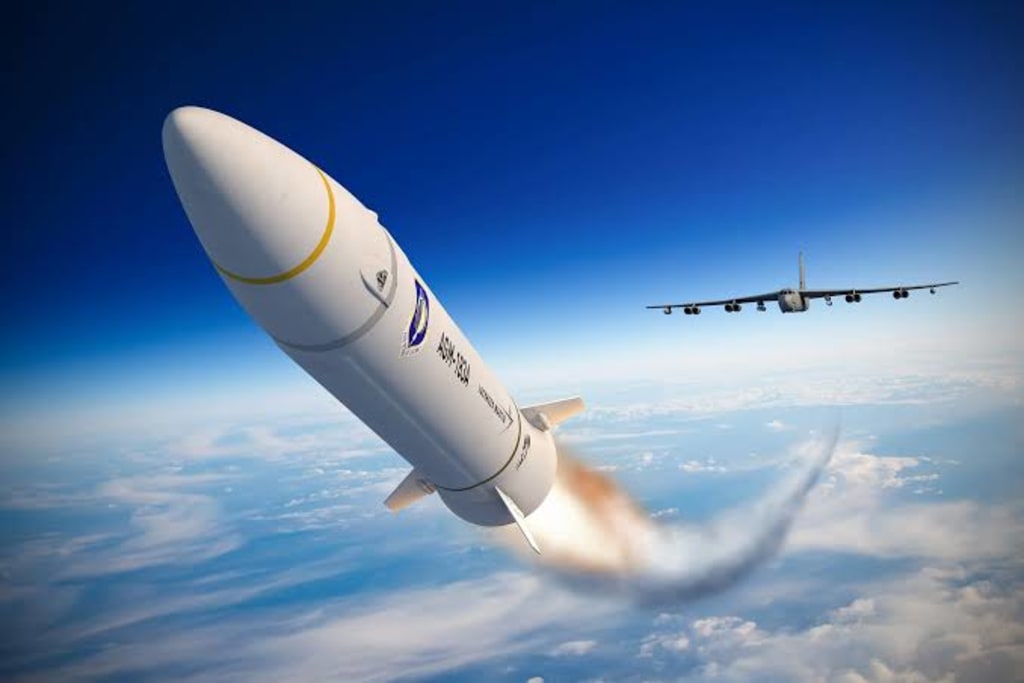
The legendary B-52 Stratofortress is receiving a powerful modern upgrade as the United States moves its AGM-183A hypersonic missile toward production, combining Cold War engineering with advanced military technology.
Introduction
A military aircraft designed during the Cold War is preparing for another chapter in aviation history. The American B-52 Stratofortress, one of the world's most recognizable long-range bombers, is set to receive a new generation of hypersonic weapons. More than seven decades after its first flight, this aircraft continues to demonstrate why a strong original design can remain relevant in a rapidly changing technological world.
The development involves the AGM-183A Air-Launched Rapid Response Weapon (ARRW), a hypersonic missile developed for the United States Air Force. In October 2026, Lockheed Martin received a $694 million production contract, marking an important step toward bringing the weapon into service.
This development represents more than an aircraft upgrade. It highlights how military forces are combining proven platforms with advanced weapons to respond to modern security challenges.
The B-52: A Cold War Aircraft That Refuses to Retire
The B-52 Stratofortress first entered operational service in the 1950s. Originally developed during a period of intense competition between the United States and the Soviet Union, the aircraft was designed to carry nuclear weapons over long distances.
However, military technology and global security requirements have changed considerably since then. Instead of depending only on traditional bombing missions, the B-52 has evolved into a sophisticated platform capable of launching precision-guided weapons from considerable distances.
Its large payload capacity, long operational range and ability to carry different types of weapons make it valuable to the American military.
The aircraft is also undergoing significant modernization. Planned improvements include new engines, upgraded radar, advanced communications and updated cockpit systems. These changes are intended to keep the B-52 operational into the 2050s.
What Is the AGM-183A Hypersonic Missile?
The AGM-183A ARRW is an air-launched hypersonic boost-glide weapon. It is designed to travel at speeds exceeding Mach 5, meaning more than five times the speed of sound.
Unlike traditional cruise missiles, which generally use powered flight throughout much of their journey, a boost-glide weapon follows a different approach.
First, a rocket booster accelerates the missile to extremely high speeds and altitude. The booster then releases a hypersonic glide vehicle, which travels toward its intended target.
The weapon's high speed and flight characteristics are designed to make interception more difficult for conventional air-defence systems.
The AGM-183A is intended to provide the United States with another option for striking important targets from a distance without requiring the launching aircraft to approach heavily defended areas.
A Major Development: The $694 Million Production Contract
One of the most important developments occurred in September 2026, when the US Air Force awarded Lockheed Martin a $694 million contract for ARRW production. The agreement was publicly announced in October.
The contract marks a significant change in the programme's direction. The missile previously faced serious challenges, and the Air Force had considered ending the programme in 2023 following unsuccessful development and testing efforts.
Its return to the production stage demonstrates the continuing American interest in developing operational hypersonic weapons.
However, important details remain undisclosed. The exact number of missiles covered by the contract and their delivery schedule have not been publicly confirmed.
Moving into production is an important milestone, but it does not automatically mean that the missile has achieved full operational deployment.
Why the B-52 Is an Important Launch Platform
The B-52 offers several advantages as a potential hypersonic missile carrier. Its size allows it to carry large weapons, while its long range provides flexibility in planning military operations.
Another important advantage is its established role as a stand-off weapons platform. Instead of flying directly into dangerous airspace, a bomber can launch long-range missiles from a safer distance.
The B-52 has already participated in ARRW flight-testing activities. The Air Force has also identified the B-1B Lancer as another aircraft for integration and testing.
This approach allows the military to combine existing aircraft with developing weapons rather than relying entirely on new bomber designs.
Why Hypersonic Weapons Matter in Modern Warfare
Hypersonic weapons have become an important subject in international defence discussions. Several major military powers are investing in technologies designed to increase missile speed, manoeuvrability and the ability to penetrate sophisticated defensive systems.
Traditional missile defence systems can face significant challenges when attempting to track and intercept weapons travelling at extremely high speeds.
Nevertheless, hypersonic technology is not without limitations. Development costs, testing difficulties, heat management, guidance accuracy and reliable production remain important engineering challenges.
The United States is therefore pursuing several technological approaches to strengthen its long-range strike capabilities.
The Future of the B-52 Stratofortress
The modernization of the B-52 demonstrates that military innovation does not always require replacing older aircraft with completely new designs.
The US Air Force is investing in improvements that will extend the aircraft's service life and expand its capabilities. New engines, radar systems and advanced weapons could help the bomber remain useful for decades.
At the same time, the United States continues developing next-generation aircraft, including the B-21 Raider, which is designed for future strategic missions.
The combination of modern aircraft and upgraded legacy platforms provides different capabilities for changing military requirements.
Conclusion
The decision to move the AGM-183A hypersonic missile into production marks an important moment for American military aviation. The B-52 Stratofortress, originally designed in the Cold War era, is once again becoming part of a major technological transformation.
Its potential combination with hypersonic weapons demonstrates how decades-old engineering can remain valuable when supported by modern innovation.
Although production does not mean that every operational challenge has been solved, the development signals a serious effort to strengthen America's long-range strike capabilities.
The B-52's story is far from over. Its next chapter may show how the aircraft that helped define Cold War military aviation can continue adapting to the demands of 21st-century warfare.
About the Creator
Enjoyed the story? Support the Creator.
Subscribe for free to receive all their stories in your feed.
Comments
There are no comments for this story
Be the first to respond and start the conversation.