
Backlash Grows as China Expands Nuclear Arsenal and Faces New Pressure Over Congo’s Cobalt
China’s growing nuclear capabilities and its dependence on Congolese cobalt are drawing fresh international scrutiny over military power, critical minerals and global supply-chain security.
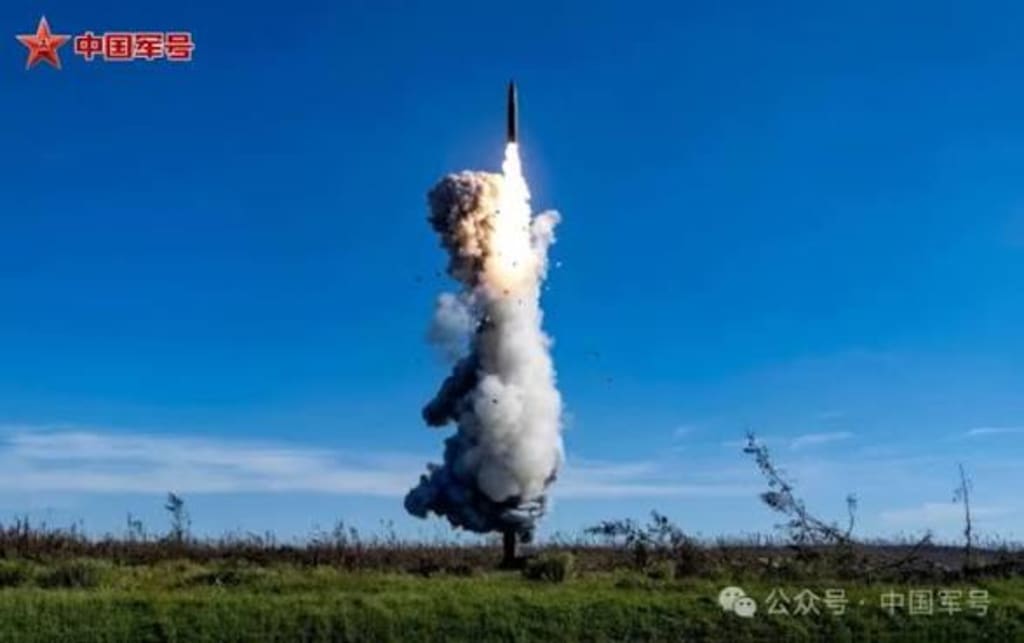
China is facing increasing international scrutiny on two fronts that appear unrelated but are becoming increasingly important to global security: the rapid expansion of its nuclear arsenal and its deep dependence on critical minerals from the Democratic Republic of Congo (DRC). As Beijing strengthens its strategic military capabilities, concerns are also growing over the environmental, economic and security implications surrounding Congolese cobalt exports.
The combination is creating a complicated geopolitical picture. China is one of the world's fastest-growing nuclear powers, while it is also the dominant player in the global cobalt supply chain. Recent investigations into uranium contamination in Congolese cobalt have added another layer of concern, raising questions about mining oversight, radioactive materials and the security of international mineral supply chains.
China’s Rapid Nuclear Expansion
China's nuclear modernization has accelerated significantly over the past several years. The U.S. Department of Defense estimated that China's nuclear stockpile had risen to more than 600 operational warheads by 2024, compared with roughly 200 in earlier assessments. U.S. officials have also projected that China's arsenal could exceed 1,000 operational warheads by 2030.
The expansion involves more than simply producing additional warheads. Beijing has been developing new missile systems, nuclear submarines, strategic bombers and supporting infrastructure designed to make its nuclear forces more survivable and credible.
China maintains that its nuclear policy is defensive and has repeatedly emphasized its no-first-use position. Nevertheless, the speed and scale of its modernization have generated concern in Washington and among arms-control specialists.
The buildup is contributing to a broader global nuclear competition involving the United States, Russia and other nuclear-armed states. As several countries modernize their arsenals simultaneously, analysts fear that traditional arms-control mechanisms could become increasingly difficult to maintain.
Congo’s Cobalt Becomes a Strategic Issue
At the same time, China has a powerful position in another critical sector: cobalt.
The Democratic Republic of Congo is the world's leading producer of cobalt, a mineral essential to many lithium-ion batteries used in electric vehicles, electronics and energy-storage systems. China has developed a major role in processing Congolese cobalt and has invested heavily in mining operations in the country.
This relationship has provided China with an important advantage in the global clean-energy supply chain. However, it has also generated criticism over resource dependence, environmental standards and the distribution of economic benefits.
Recent reporting has introduced an even more serious issue. An investigation published in July 2026 found evidence of recurring uranium contamination in cobalt ores from parts of the DRC's copper belt. Some cobalt shipments have reportedly contained radioactive material above legal or international transport limits.
The issue is particularly sensitive because uranium is associated with nuclear security. Although naturally occurring uranium in mineral ores does not automatically represent a weapons threat, inadequate monitoring can create risks if radioactive material is improperly handled, diverted or smuggled.
Why the Cobalt-Uranium Connection Matters
The connection between cobalt and uranium has attracted attention because many Congolese cobalt shipments ultimately travel to China, the world's largest cobalt-processing center.
Investigators have raised questions about whether uranium contained in Congolese cobalt ores could be recovered during industrial processing. Experts cited in recent reporting have said that such recovery is technically plausible, although there is no public evidence proving that China is secretly diverting Congolese uranium for weapons production.
That distinction is important.
China already has access to uranium through legitimate international markets and possesses a substantial civilian nuclear industry. Therefore, the existence of uranium in imported cobalt ore should not automatically be interpreted as evidence of a weapons program.
Nevertheless, the discovery highlights weaknesses in international monitoring systems. The DRC's mining sector is vast, and border controls and radiation screening remain difficult. Congolese authorities have reportedly sought international assistance to improve radiation detection at major export routes.
Could Congo Restrict Mineral Access?
The possibility of tighter Congolese export controls could create challenges for industries that rely heavily on cobalt.
Any substantial interruption to Congolese cobalt supplies could affect battery manufacturers, electric-vehicle producers and technology companies. It could also encourage companies and governments to search for alternative sources in Australia, Indonesia, Canada and other mineral-producing countries.
For China, the challenge is more complicated because Beijing has invested heavily in the Congolese mining sector and has built extensive processing capacity at home. Losing reliable access to Congolese cobalt would therefore represent more than a simple commercial problem; it could weaken an important component of China's strategic position in global supply chains.
Growing International Backlash
China's nuclear expansion and its dominance of critical-mineral supply chains are increasingly viewed together as examples of Beijing's growing strategic influence.
Critics argue that China's expanding military capabilities and economic leverage require stronger international safeguards. Supporters of Beijing, however, contend that China is responding to an increasingly competitive international environment and that its nuclear force remains significantly smaller than those of the United States and Russia.
The debate is unlikely to disappear.
For Western governments, reducing dependence on Chinese-controlled supply chains has become a strategic priority. Investments in alternative cobalt sources, battery recycling, mineral processing and new supply routes are therefore expected to continue.
A New Geopolitical Balancing Act
The developments surrounding China's nuclear arsenal and Congo's cobalt exports demonstrate how modern geopolitics increasingly connects military power with natural resources.
Nuclear weapons influence strategic deterrence, while minerals such as cobalt influence energy security, manufacturing and technological competition. When these issues intersect with fragile mining regions and weak regulatory systems, the consequences can extend far beyond national borders.
China's nuclear expansion does not itself prove that Beijing intends to use its growing arsenal aggressively. Similarly, uranium contamination in Congolese cobalt does not prove that China is exploiting the material for military purposes.
But both developments highlight the need for greater transparency.
As the world enters a period of intensified competition over weapons, technology and critical minerals, governments will face growing pressure to strengthen arms-control dialogue, improve mineral-tracking systems and ensure that strategic resources are traded safely.
The biggest lesson may be that military security and economic security can no longer be treated as separate issues. In an increasingly interconnected world, the minerals powering electric vehicles, the nuclear forces shaping deterrence and the supply chains linking Africa to Asia are all becoming part of the same global strategic equation.
About the Creator
Enjoyed the story? Support the Creator.
Subscribe for free to receive all their stories in your feed.
Comments
There are no comments for this story
Be the first to respond and start the conversation.