
Australia’s Virginia-Class Nuclear Submarines to Get Lockheed Martin Combat Systems Under AUKUS
Lockheed Martin’s new role strengthens Australia’s path toward a sovereign nuclear-powered submarine capability. The Virginia-class program could transform Australia’s naval power and defense industry in the Indo-Pacific. AUKUS deepens as Australia builds the technical expertise needed to operate and sustain its future submarine fleet. Australia prepares for a new era of undersea warfare with advanced U.S. technology and local defense expertise.
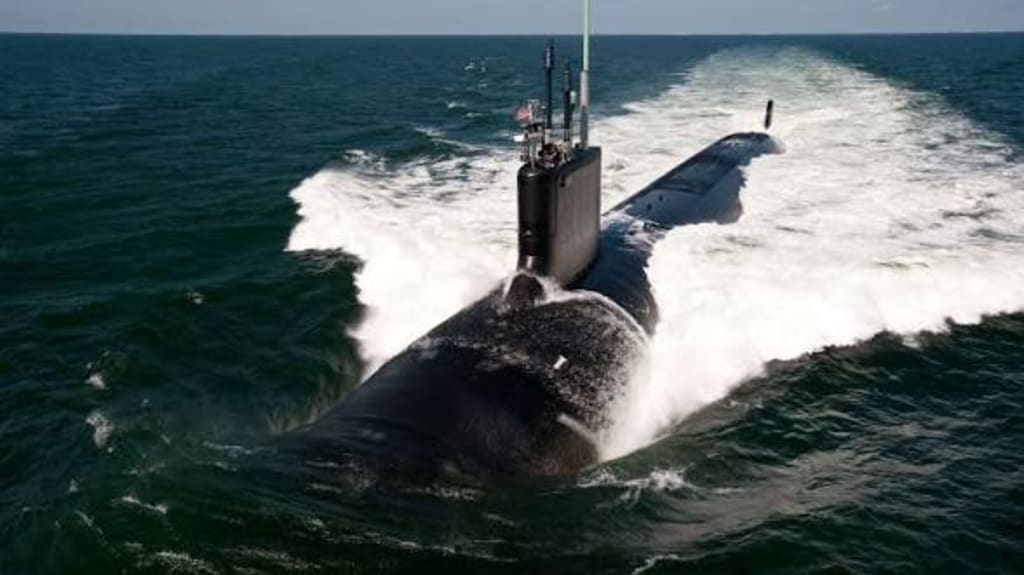
Australia’s ambitious plan to acquire nuclear-powered submarines has entered another important phase, with Lockheed Martin Australia moving forward with the development of a sovereign combat-systems integration capability for the Royal Australian Navy’s future Virginia-class submarines.
The development is part of the AUKUS security partnership between Australia, the United Kingdom and the United States. It is designed not only to provide Australia with highly capable nuclear-powered submarines but also to build the Australian industrial and technical expertise required to operate, maintain and upgrade their sophisticated combat systems.
The Australian Submarine Agency has awarded Lockheed Martin Australia a multi-year contract valued at approximately A$29.3 million to establish this capability. The announcement represents a significant step toward Australia's goal of becoming capable of independently sustaining key elements of its future submarine fleet.
Lockheed Martin’s New Role
Lockheed Martin has extensive experience with the combat systems used aboard U.S. Navy submarines. Under the Australian program, its role will involve integrating, testing and supporting combat-system improvements for Australia's Virginia-class submarines.
Australia originally selected Lockheed Martin Australia as its preferred Combat System Integration Partner in May 2026. The Australian government said the partnership would create opportunities for local workers and industry while developing technical skills needed to support the future fleet.
The new capability is important because a submarine's combat system is central to how it detects, tracks and responds to threats. Rather than treating the combat system as a static piece of equipment, Australia intends to develop the ability to continuously improve and sustain it throughout the submarines' operational lives.
This means Australian personnel and companies will increasingly participate in activities involving integration, testing, maintenance and future upgrades.
Australia’s Virginia-Class Submarine Plan
Under AUKUS, Australia plans to acquire three Virginia-class nuclear-powered submarines. The Australian government says it expects to acquire its first sovereign Virginia-class submarine in the early 2030s. The submarines will be conventionally armed but nuclear powered, giving them the endurance and ability to remain submerged for extended periods.
Australian officials describe the acquisition as one of the country's largest-ever defence projects. The future fleet is intended to strengthen Australia's ability to operate over long distances and contribute to deterrence in the Indo-Pacific region.
The Virginia-class is already one of the most advanced attack-submarine designs operated by the United States. Its nuclear propulsion system allows it to remain underwater for long periods without needing to surface for air or conventional fuel.
For Australia, that endurance is particularly significant because of the country's enormous maritime environment and its long sea approaches.
Why the Combat System Matters
A nuclear-powered submarine is not simply a vessel powered by a nuclear reactor. Its effectiveness also depends heavily on sensors, communications, weapons-management systems and the software and hardware connecting those components.
The combat system effectively brings these capabilities together.
Lockheed Martin says its Australian role will include technology integration, training and sustainment while helping develop a local workforce capable of supporting and upgrading the submarines.
This could eventually give Australian industry a much deeper role in maintaining advanced submarine technology.
The importance of this capability also extends beyond the three Virginia-class submarines. Australia plans to work with the United Kingdom on the future SSN-AUKUS submarine, which is expected to become the long-term foundation of Australia's nuclear-powered submarine fleet.
Building Australian Sovereign Capability
One of the most important aspects of the arrangement is the emphasis on Australian sovereignty.
Although the Virginia-class submarines originate from the United States, Australia intends for its vessels to operate under Australian command. The Australian government has repeatedly stated that the submarines will be sovereign Australian assets under Royal Australian Navy command and at the direction of the Australian government.
Developing domestic combat-system expertise is an important part of that objective.
Australia currently has extensive experience operating conventional Collins-class submarines, but nuclear-powered submarines require different levels of engineering knowledge, maintenance infrastructure and workforce training.
The government expects the broader AUKUS submarine effort to create thousands of jobs and develop advanced manufacturing and engineering capabilities across the Australian economy.
AUKUS and the Indo-Pacific
The submarine program is also closely connected to Australia's wider defence strategy.
The Indo-Pacific is becoming increasingly contested, with major powers expanding naval capabilities and competing for influence. Australia views long-range, stealthy submarines as an important tool for maintaining deterrence and protecting maritime approaches.
The Australian government argues that nuclear-powered submarines will provide greater endurance and operational flexibility than conventional submarines. They are expected to complement other Australian capabilities, including aircraft, surface ships, missiles and uncrewed systems.
AUKUS also provides a framework for deeper cooperation between the Australian, American and British defence industries.
Challenges Remain
Despite the latest progress, the Virginia-class program faces major challenges.
Building and sustaining nuclear-powered submarines requires specialized infrastructure, highly trained personnel and strict safety procedures. Australia is developing these capabilities while simultaneously maintaining its existing Collins-class fleet.
There are also questions about submarine production capacity, costs and delivery schedules. Critics of AUKUS have argued that Australia's reliance on U.S. submarine production creates risks if American shipyards cannot produce boats quickly enough. Recent Australian political debate has highlighted concerns about possible delays and the enormous cost of the program.
Supporters counter that the program is a long-term national-security investment and that the capability cannot be created quickly.
The Road Ahead
The Lockheed Martin contract is therefore more than another defence procurement announcement. It represents an effort to establish an Australian industrial base capable of supporting some of the world's most sophisticated military technology.
The immediate focus will be on establishing the combat-system integration capability, developing skilled Australian personnel and connecting local companies with the broader AUKUS supply chain.
Over time, these capabilities are expected to support Australia's Virginia-class submarines and contribute to the future SSN-AUKUS program.
If successfully implemented, the initiative could transform Australia's submarine workforce and defence industry. It could also give Canberra a greater degree of control over the technology required to sustain its future nuclear-powered fleet.
The Virginia-class submarines are still years away from becoming a major part of Australia's operational fleet. But with the latest Lockheed Martin agreement, the infrastructure and technical foundation for that future capability is already being built.
About the Creator
Enjoyed the story? Support the Creator.
Subscribe for free to receive all their stories in your feed.
Comments
There are no comments for this story
Be the first to respond and start the conversation.